Automattic Names Jeremy Klaperman Interim CFO Following Boardroom Shakeup and Matt Mullenweg’s Return


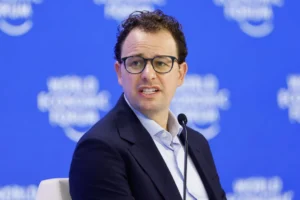
Automattic, the prominent web development company behind WordPress.com, WooCommerce, and Tumblr, has appointed Jeremy Klaperman as its new interim Chief Financial Officer. Klaperman previously served as the CFO of WordPress VIP, the company’s high-performance enterprise business unit. The leadership transition, communicated internally to employees via Slack on Friday, follows a turbulent sequence of events that involved an unsuccessful attempt by Automattic’s board of directors to oust longtime Chief Executive Officer Matt Mullenweg.
The corporate upheaval has fundamentally reshaped the executive leadership team and board composition at Automattic, leaving the company to rebuild its administrative structure while attempting to maintain business continuity across its sprawling ecosystem of open-source and commercial products.
Chronology of a Corporate Power Struggle
The events leading to Klaperman’s appointment unfolded rapidly over a matter of days in mid-September 2026. The crisis began when a faction of Automattic’s board of directors moved to force CEO Matt Mullenweg into a leave of absence, effectively attempting to remove him from power.
During Mullenweg’s brief 33-hour absence, then-Chief Financial Officer Mark Davies stepped in as interim CEO, while Chief Legal Officer Andy Missan participated in administrative maneuvers that included signing reciprocal severance deals. However, the boardroom coup quickly lost momentum as employee backlash, shareholder concerns, and legal challenges mounted.
Mullenweg successfully rallied support and returned to his position as CEO just over a day later. The failed ouster resulted in immediate repercussions for the board members who had orchestrated the vote. Those directors departed the company, leaving several vacancies on the board that have yet to be officially filled. Additionally, executives who aligned with the boardroom maneuver—including former CFO Mark Davies and Chief Legal Officer Andy Missan—exited Automattic permanently.
In the wake of these departures, Mullenweg turned to trusted internal figures to stabilize company operations. Klaperman, who had previously filled in as Automattic’s CFO during one of Davies’ previous sabbaticals, was chosen to resume the financial leadership role on an interim basis.
Rebuilding the Executive Ranks
Beyond the financial department, Automattic is actively moving to shore up its legal division. In his internal communications to staff, Mullenweg announced that an unnamed candidate has verbally accepted the position of Chief Legal Officer, replacing the departing Andy Missan. The swift recruitment of legal leadership underscores the company’s urgency in resolving administrative instability and safeguarding its corporate governance.
The exits of Davies and Missan came under heavy scrutiny following reports that the departing executives had signed reciprocal severance packages during Mullenweg’s brief window away from the company. These developments highlighted the high-stakes legal maneuvering that occurred during the brief executive vacuum.
Despite the abrupt departures and the ongoing search for permanent replacements, Mullenweg sought to project absolute confidence in the company’s stability. In his Slack post to employees, he addressed financial concerns head-on.
"I have 100% confidence in our cash and financial position," Mullenweg wrote, emphasizing that the company’s foundational metrics remain strong. "There is still work to do, but everything is within our control and depends only on Automattic’s ability to execute."

Governance and Board Restructuring
The composition of Automattic’s board of directors remains in a state of transition following the departure of the directors who voted to remove Mullenweg. While new board members have not yet been publicly named, Mullenweg advised employees to "stay tuned" for forthcoming announcements regarding the board’s new roster.
Amid the turnover, certain stabilizing figures remain attached to the company’s governance structure. Notably, Stephen Wolfram—the renowned computer scientist, creator of Mathematica and Wolfram|Alpha, and a special advisor to Automattic—will retain his position on the advisory board.
The next official meeting of Automattic’s board of directors is scheduled for September 23, where executive leadership and remaining advisors are expected to outline a path forward, address the governance vacuum, and establish criteria for evaluating both internal and external candidates for the permanent CFO and executive positions.
Background and Ecosystem Context
Automattic occupies a uniquely influential position in the global digital landscape. Founded in 2005 by Matt Mullenweg alongside fellow developers of the open-source WordPress software, the company has grown into a titan of web infrastructure. WordPress itself powers a massive percentage of all websites on the internet, ranging from independent blogs to major enterprise media outlets.
Through strategic expansions and major acquisitions—including the purchase of Tumblr in 2019 and WooCommerce, the dominant e-commerce platform for WordPress—Automattic manages a vast portfolio of digital properties. The enterprise wing, WordPress VIP, serves high-profile corporate clients requiring robust security, scalability, and dedicated support, making the stability of its financial leadership critical to large-scale enterprise contracts.
The events of September 2026 represent one of the most severe internal governance crises in Automattic’s two-decade history. Historically, the company has maintained a distinct culture blending open-source community ideals with commercial enterprise operations. The friction between board-level governance and Mullenweg’s long-standing vision for the company appears to have catalyzed the recent power struggle, culminating in a swift realignment of power that favored the company’s founder.
Analysis of Implications for Automattic’s Future
The rapid resolution of the leadership crisis prevents a prolonged institutional vacuum, but Automattic faces several critical challenges in the immediate aftermath.
First, client and partner confidence must be maintained. Enterprise clients utilizing WordPress VIP and WooCommerce rely heavily on predictable operational and financial management. By elevating Jeremy Klaperman—an insider intimately familiar with the VIP business unit’s financial structures—Automattic has signaled continuity to its high-value corporate partners.
Second, the company must successfully reconstitute its board of directors with individuals who align with its strategic vision while ensuring robust, independent oversight. The upcoming board meeting on September 23 will serve as a vital litmus test for how smoothly the post-crisis administration can operate.
Finally, Automattic must navigate the cultural and structural fallout among its workforce. The abrupt removal and reinstatement of a CEO, accompanied by the swift departure of key financial and legal executives, inevitably creates internal tension. Mullenweg’s explicit focus on execution and internal control suggests that leadership’s immediate priority is pivoting away from corporate governance disputes and returning the focus toward product development and market expansion.
As Automattic prepares for its upcoming board meeting and evaluates candidates for its permanent executive vacancies, the tech industry will be watching closely to see how the web giant stabilizes its leadership and charts its course for the future.
Related posts: