Destination XL Faces Headwinds as Sales Decline and Leadership Pivots Toward Growth Strategy

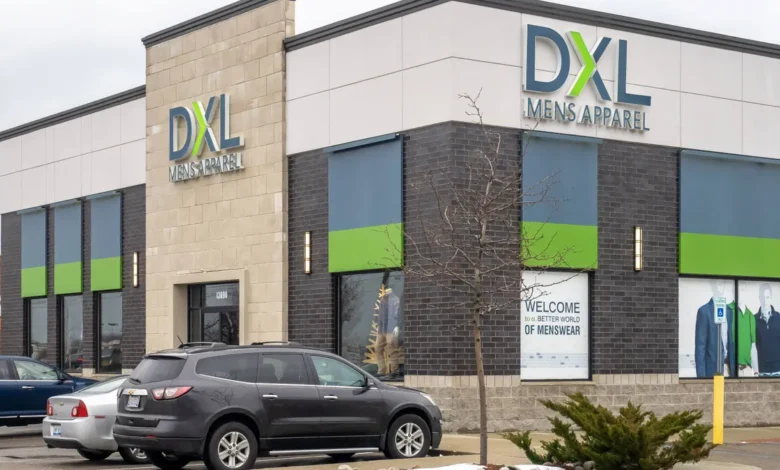
Destination XL Group, operating as DXL Men’s Apparel, continues to navigate a challenging macroeconomic and retail landscape, marked by persistent sales declines into the second quarter of the fiscal year. Despite the downward pressure on near-term revenue, newly installed interim leadership remains optimistic, signaling to financial analysts that a turnaround and the resumption of sustainable sales growth are on the horizon.
The latest financial results underscore the friction points currently facing the specialty big-and-tall retailer. However, the company is not passively absorbing these blows. Instead, DXL has unveiled a comprehensive, multi-pillar strategic pivot designed to modernize its operations, address structural shifts in its consumer base—including the rising popularity of weight-loss pharmaceuticals—and optimize its physical store footprint to maximize long-term asset productivity.
Chronology and Recent Financial Trajectory
The trajectory of DXL’s recent financial performance highlights a volatile period for the retailer, characterized by shifting consumer behaviors and broader economic headwinds. In the fourth quarter of the previous fiscal year, the company reported a notable 6% year-over-year sales decline. This contraction raised immediate concerns among investors regarding consumer discretionary spending and store traffic stability.
By the first quarter of the current fiscal year, the rate of decline showed signs of moderating, with DXL posting a 2.1% year-over-year sales decrease. This sequential improvement offered a glimmer of hope that the retailer was finding a floor in consumer demand. However, the recently reported second-quarter results revealed that sales declines deepened slightly compared to the first quarter, proving that the road to recovery would be neither linear nor immediate.
Recognizing the need for strategic stability and aggressive operational oversight, leadership changes quickly followed. Lionel Conacher stepped into the role of interim chief executive officer, taking the reins to guide the enterprise through its next phase of transformation. Furthermore, to inject fresh perspective and specialized expertise into its commercial operations, DXL appointed retail veteran Jimmy Olsson to the newly established position of chief growth officer on September 2. Olsson brought a wealth of executive experience from prominent apparel and retail brands, including Todd Snyder, Walmart, Coach, American Eagle Outfitters, and Gap Inc., positioning him to spearhead the company’s structural overhaul.
Underpinning the Slump: Traffic, Priorities, and GLP-1 Medications
To effectively combat falling sales, DXL’s leadership undertook detailed customer surveys and analytical studies to diagnose the root causes of reduced store traffic and delayed purchasing decisions. According to executive commentary during the latest earnings call, the overall slowdown in customer traffic is multifaceted, stemming from a convergence of macroeconomic and lifestyle factors.
Chief among these factors are shifting spending priorities amid persistent inflationary pressures and a broader consumer trend toward delayed discretionary purchases. However, a particularly unique and disruptive structural shift identified by DXL involves the widespread adoption of GLP-1 weight-loss medications.
The impact of GLP-1 receptor agonists on the retail apparel sector has become a major talking point across the industry. For a big-and-tall specialty retailer like DXL, the phenomenon presents both a distinct short-term challenge and a long-term opportunity. Company surveys indicate that a meaningful portion of DXL’s traditional customer base is currently utilizing GLP-1 medications. During the active phase of their weight-loss journeys, many of these consumers temporarily halt apparel purchases entirely, as their changing body sizes render existing wardrobes obsolete while discouraging investment in transitional clothing that they expect to outgrow quickly.
Despite this temporary lapse in purchasing, DXL’s customer insights reveal a reassuring trend: the vast majority of consumers utilizing weight-loss drugs express a clear intention to return to DXL once they reach a stable body size. Recognizing this behavioral pattern has allowed management to reframe the challenge not as a permanent loss of customer lifetime value, but as a temporary pause that requires targeted engagement and specialized sizing solutions.
Real Estate Optimization and Portfolio Productivity
As part of its broader strategy to restore financial health and improve operational efficiency, DXL is taking a critical look at its brick-and-mortar retail footprint. Management has explicitly stated that the overarching goal of its real estate strategy is to significantly improve return on assets (ROA).
To achieve this, the company plans to shutter three underperforming store locations within the current year. Looking ahead to the next fiscal year, a much larger operational lever will come into play: several dozen store leases are coming up for renewal. While not every lease up for renewal will result in a store closure, leadership has announced a rigorous, case-by-case evaluation process for each expiring contract.
The rationale behind these potential closures centers on volume transference. By strategically closing locations that exhibit low productivity while ensuring that customer volume can successfully transfer to a nearby, higher-performing DXL store, the retailer aims to streamline its cost structure and make its overall store portfolio substantially more productive. This disciplined approach to real estate management reflects a broader trend in the specialty retail sector, where companies are prioritizing margin health and capital efficiency over sheer physical expansion.

The Four-Pillar Growth Strategy and the Power of Technology
To reverse the current sales trajectory and reignite top-line growth, newly appointed Chief Growth Officer Jimmy Olsson has rolled out a comprehensive four-pillar growth strategy. Designed to modernize the brand and deepen consumer engagement, the strategy focuses on driving more foot and digital traffic, sharpening product storytelling, expanding private label offerings, and creating more compelling reasons for consumers to choose DXL over mainstream competitors.
A cornerstone of this modernization effort is the continued leverage of DXL’s proprietary FitMap body scanning technology. In an apparel category where fit is paramount—particularly for big-and-tall consumers undergoing physical transitions—technology offers a distinct competitive advantage. DXL has already scanned more than 150,000 customers using the system. Furthermore, behavioral data from the most recent 12-month cohort indicates that customers who utilize the body scanning technology demonstrate higher average spending levels compared to their pre-scanning behavior. By scaling the adoption of FitMap, DXL aims to remove friction from the shopping experience and build long-term customer loyalty.
In tandem with technological integration, Olsson emphasized that aggressive new customer acquisition remains the top commercial priority for the enterprise, especially in light of the recent traffic misses reported during the quarter. Expanding brand awareness through targeted marketing campaigns and refining the positioning of DXL’s exclusive private label brands will be instrumental in attracting first-time shoppers who may have previously struggled to find well-fitting apparel in traditional retail channels.
Industry Implications and Outlook
The challenges and strategic maneuvers currently defining Destination XL Group offer a clear lens through which to view the broader specialty apparel market. As retailers grapple with evolving consumer demographics, lifestyle interventions like GLP-1 medications, and the ongoing need to balance physical and digital channels, agility has become a prerequisite for survival.
DXL’s transparent approach to addressing the GLP-1 phenomenon highlights how retailers must adapt their merchandising and customer relationship management to align with modern health trends. Rather than ignoring the temporary dip in demand from transitioning consumers, DXL is actively preparing to capture these customers on the back end of their weight-loss journeys by emphasizing fit, utilizing advanced sizing technology, and maintaining brand touchpoints throughout the consumer’s lifecycle.
While near-term hurdles remain evident in the form of ongoing sales declines and necessary store rationalizations, interim CEO Lionel Conacher and his executive team remain confident in the fundamentals of the business. By executing disciplined real estate management, investing in high-yield technological tools like FitMap, and deploying a focused four-pillar growth strategy under experienced leadership, DXL is positioning itself to stabilize operations and lay a durable foundation for future profitability and market share expansion.