The Algorithmic Identity Crisis: How Digital Platforms Monetize Your Predictability and Stifle Personal Evolution

Last quarter, one major technology conglomerate generated fifty-five billion dollars in advertising revenue derived from the digital footprints of its users. This figure equates to approximately seven thousand dollars every second, a continuous stream of capital extracted from the behavioral data of individuals worldwide. In the modern digital economy, the fundamental premise of the user-platform relationship has shifted: the user is no longer the customer, but the product being refined, packaged, and sold to the highest bidder.
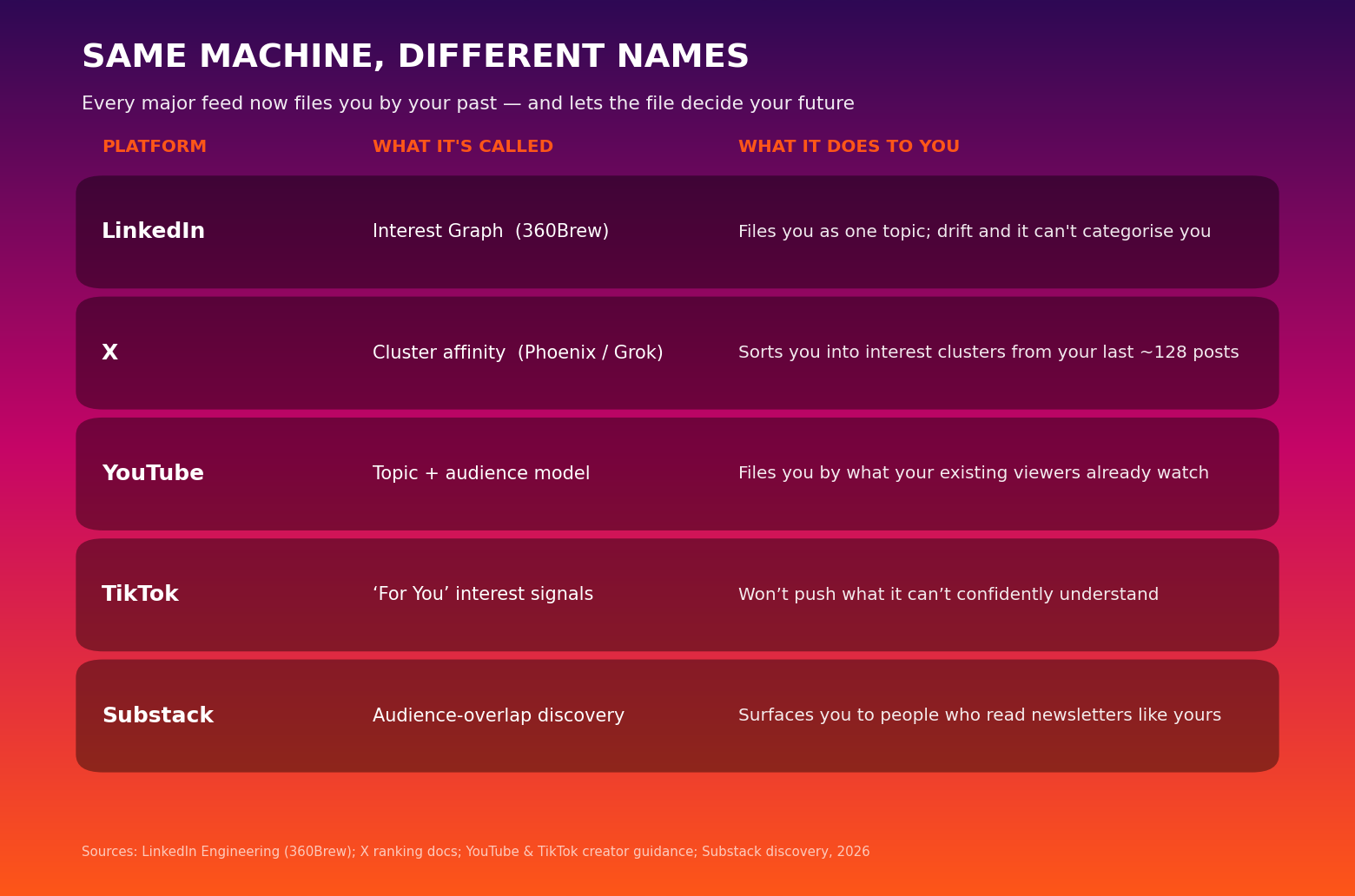
The architecture of this revenue model relies on the creation of a granular, static profile for every user. By tracking likes, clicks, dwell time, and purchase history, platforms develop an algorithmic identity. This data allows advertisers to target specific demographics with high precision. The more predictable a user remains, the more valuable they become to the system. Conversely, when a user evolves or pivots their interests, they disrupt the data model, leading to a phenomenon known as algorithmic suppression.
The Mechanism of Digital Confinement
The algorithmic feed is designed to maximize engagement, which is mathematically synonymous with maximizing advertisement exposure. Consequently, the systems prioritize content that reinforces a user’s established behavioral patterns. For creators, this creates a "black box" environment where visibility is tethered to historical performance rather than current creative output.

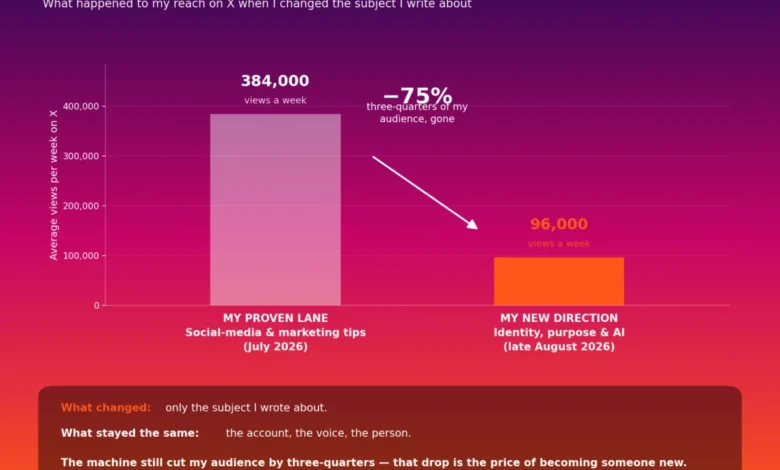
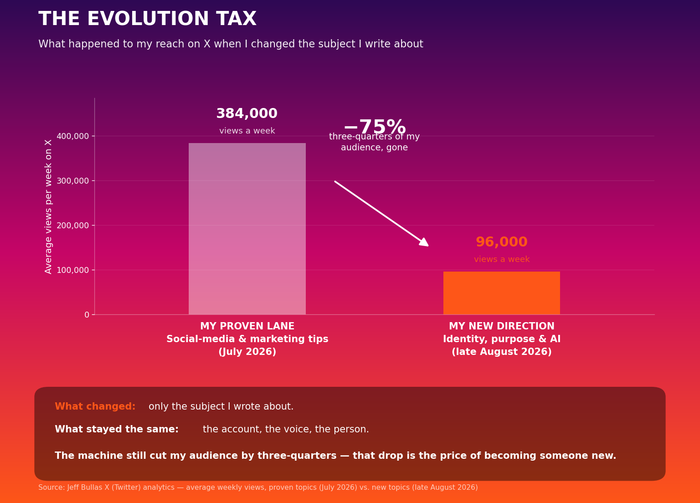
When a creator deviates from their established niche, the machine loses its ability to accurately categorize the audience. This failure in data matching results in a sharp, often unannounced, reduction in reach. The system, optimized for efficiency rather than artistic or intellectual development, effectively penalizes creators for personal or professional growth.
A Chronology of Platform Evolution and Data Extraction
The transition from open web discovery to curated algorithmic feeds did not occur overnight. The following timeline outlines the evolution of this data-driven landscape:
- 2010–2014: The rise of social media dominance shifted the internet from a decentralized web of sites to a centralized hub of "feeds." During this period, platform algorithms began prioritizing time-on-site metrics.
- 2015–2019: The "Interest Graph" era matured, where platforms moved from social networking to interest-based targeting. Algorithms began aggressively segmenting users into silos based on engagement history.
- 2020–2023: The rapid expansion of the creator economy saw millions of professionals rely on these platforms for their primary income. During this time, the "black box" effect became a significant professional risk, with creators experiencing sudden "shadow-banning" or reach throttling upon changing their content direction.
- 2024–Present: The integration of Generative AI has further complicated the ecosystem. Platforms are now shifting toward "Search Generative Experiences," where the AI synthesizes information from the web, effectively keeping the user on the platform and denying traffic to the original creators who provided the source data.
Statistical Reality of the Creator Economy
The financial disparity between platform earnings and creator compensation is well-documented. Research from industry analysts and creator-led studies indicates that platforms typically retain between 20 and 45 percent of the total revenue generated by content, while simultaneously dictating the terms of visibility.
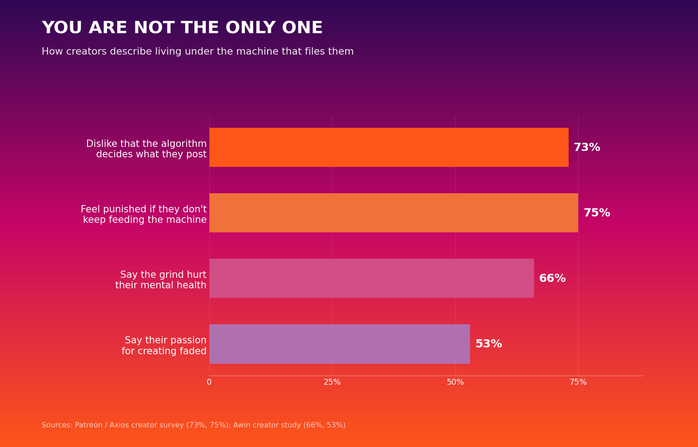
Data from recent surveys conducted by creator-focused organizations reveals that approximately 75 percent of creators report significant frustration with algorithmic volatility. This is not merely a matter of convenience; it is a structural issue affecting the viability of the profession. For instance, in a comparative analysis of content reach, posts that align with a creator’s historical "identity" consistently outperform high-quality content that represents a shift in direction. In some documented cases, creators experienced a decline in reach by over 80 percent simply by altering the subject matter of their output.
The Implications of AI-Driven Content Synthesis
Perhaps the most significant threat to the current creator model is the development of AI-driven synthesis in search engines. In 2026, industry reports suggested that nearly 25 percent of all search queries are now resolved by AI-generated answers provided directly on the search engine results page (SERP).
This represents a fundamental pivot in the value proposition of the internet. Previously, platforms functioned as conduits for traffic, rewarding content creators with clicks. Today, the platforms are becoming the destinations themselves. By "eating" the content to train their large language models (LLMs) and then serving the synthesized answers directly to users, platforms are effectively cutting creators out of the value chain entirely. The publisher provides the labor, the AI provides the answer, and the platform collects the advertising revenue.
Economic and Sociological Analysis
From an economic standpoint, the current digital model is a form of digital enclosure. By creating "walled gardens," platforms ensure that users and creators are incentivized to remain within a specific ecosystem. The "algorithmic identity" acts as a form of social and economic currency that the platform controls.
Sociologically, this creates a homogenization of thought and expression. Because the machine rewards predictability, it incentivizes individuals to suppress their own evolution. This has led to a stagnation in digital culture, where creators are pressured to produce the same content repeatedly to satisfy the algorithm’s demand for consistency. The psychological impact on creators—who often view their output as an extension of their personal development—is profound, leading to burnout and a loss of creative agency.
Strategic Responses and Potential Paths Forward
The response to this environment is not necessarily to abandon digital platforms, but to fundamentally alter the strategy of engagement. Observers in the digital media space suggest several "de-risking" strategies:
- Audience Ownership: Moving from platform-dependent metrics to owned channels, such as email newsletters, proprietary websites, or decentralized protocols. This ensures that the creator maintains a direct line of communication with their audience, independent of algorithmic gatekeepers.
- Intentionality Over Volume: Shifting focus from "chasing reach"—which serves the platform’s interest—to building depth. A smaller, more engaged audience that chooses to follow the creator’s growth is inherently more valuable than a large, passive audience that is prone to scrolling past.
- Diversification of Content: Actively resisting the urge to specialize in a single, narrow topic. By maintaining a broader range of interests, creators can potentially signal to the algorithm that their value lies in their perspective, not merely their niche.
- Leveraging New Algorithmic Paradigms: There is evidence that some newer, more advanced algorithms are beginning to prioritize "novelty" and "relevance" over rigid historical categorization. Recognizing and adapting to these shifts early can provide a competitive advantage.
The Possibility of a Different Machine
Critics of the current system argue that the algorithmic status quo is not a natural law, but a set of design choices. A platform could theoretically be built to reward growth, exploration, and the pursuit of new knowledge rather than penalizing it. Such a platform would view user curiosity as a positive signal rather than a categorizational inconvenience.
However, the current financial incentives strongly favor the status quo. As long as the primary business model of the internet remains the sale of human attention to advertisers, the demand for predictable, monetizable profiles will persist.
Moving Beyond the Container
The journey of the professional creator in the 21st century is characterized by a constant tension between the need for reach and the desire for intellectual freedom. The "container" of the platform is designed to house the version of the user that existed yesterday.
The challenge for the individual is to recognize that they are not the inventory of these companies. While the tax on change—measured in reduced reach and lower engagement—is a reality, it is not a permanent barrier. For those who choose to evolve, the path forward requires a deliberate decoupling of one’s identity from the platform’s categorization.
In conclusion, while the infrastructure of the internet is currently biased toward the extraction of value from predictable human behavior, the capacity for individual growth remains an inherent human quality. By focusing on building independent audiences and prioritizing high-signal interactions over mass-market reach, creators can begin to reclaim their agency. The machine may be built to sell who you were, but it cannot prevent you from becoming who you are meant to be. The decision to walk away from the pre-packaged identity is the first step in reclaiming the digital landscape from those who seek to commodify the human experience.