Google Expands Meridian Open-Source Marketing Mix Modeling Tool With Global GeoX Launch and Agentic Features

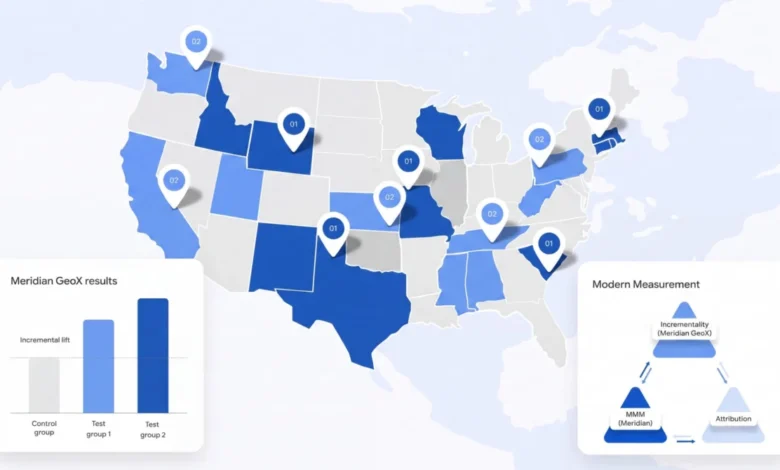
Google has rolled out a major suite of updates to Meridian, its open-source marketing mix modeling (MMM) framework, significantly enhancing its capabilities in causal measurement, incrementality testing, and long-term brand tracking. The centerpiece of this release is the global rollout of Meridian GeoX, which transitions out of its beta phase to achieve general availability worldwide. Alongside GeoX, Google has integrated AI-driven agentic tools to streamline model construction and expanded the platform’s capacity to process nuanced brand signals, such as branded search query volumes.
These updates arrive as the digital advertising ecosystem faces mounting pressure from privacy regulations, the phasing out of third-party cookies, and the limitations of traditional platform-level attribution. By combining econometric modeling with geographic experimentation, Google aims to provide advertisers with a robust, transparent framework to evaluate multi-channel media investments and justify major capital allocation decisions to executive leadership.
The Evolution of Meridian: Background and Context
Introduced as an open-source solution to help brands navigate complex media landscapes, Meridian has rapidly become a focal point for enterprise-level marketing analytics. Standard digital attribution models frequently struggle to capture the full customer journey, often overcrediting the last platform a consumer touched while ignoring upper-funnel brand awareness campaigns, offline touchpoints, and cross-channel synergies.
Marketing mix modeling addresses these gaps by using historical time-series data to estimate the return on investment (ROI) for various marketing channels. However, traditional MMM has historically suffered from key vulnerabilities: it relies heavily on statistical assumptions, requires deep data science expertise, and can produce outputs that are difficult to validate when external market factors—such as seasonality, competitor actions, or macroeconomic shifts—coincide with campaign launches.
Recognizing these challenges, Google previewed Meridian GeoX in May as an open-source methodology designed to run geographic incrementality experiments. By moving GeoX into general availability on a global scale, Google is bridging the historical divide between top-down econometric modeling and bottom-up experimental validation.
Global Launch of Meridian GeoX
Meridian GeoX allows advertisers to design and execute geographic split-test experiments, establishing treatment and control markets to measure the true incremental impact of media investments. Unlike platform-specific attribution tools that rely heavily on individual user tracking, geographic testing operates at a regional level. This makes GeoX particularly valuable in an era of stringent privacy regulations and identifier scarcity.
Crucially, GeoX is platform-agnostic. Marketers are not restricted to evaluating Google media properties alone; the tool can be deployed to test campaigns running across rival walled gardens, programmatic display networks, linear television, and out-of-home (OOH) placements. For brands managing fragmented media mixes, this cross-platform capability provides a unified methodology to assess where incremental dollars generate genuine business value.
Furthermore, the results derived from GeoX experiments are designed to feed directly back into the core Meridian MMM framework. By injecting empirical incrementality findings into the historical model, analysts can calibrate their algorithms with real-world causal evidence. This dual approach mitigates the uncertainty inherent in pure statistical modeling, offering a more defensible foundation for budget optimization.
Agentic AI Tools Streamline Model Construction
Building and maintaining complex marketing mix models has traditionally required dedicated data science teams capable of writing custom code, cleaning messy datasets, and diagnosing convergence errors. To lower these technical hurdles, Google has introduced agentic AI capabilities directly into the Meridian architecture.
These new intelligent agents function as real-time assistants throughout the model-building lifecycle. They are capable of auditing data inputs for anomalies, identifying structural errors, and offering automated troubleshooting guidance before an analysis is finalized. By automating routine validation tasks, the agentic tools reduce the manual friction associated with data preparation.
Concurrently, Google has re-engineered parts of Meridian’s computational backend to improve processing speeds. Because econometric modeling of large enterprise datasets is computationally intensive—often necessitating dedicated GPU infrastructure—these backend performance enhancements allow data teams to iterate through model variations more efficiently.

Despite these automation upgrades, the core responsibilities of the marketing team remain unchanged. Analysts must still curate the underlying business datasets, determine which variables belong in the model, and exercise critical judgment when interpreting the output. The agentic tools are designed to assist with the technical mechanics of modeling rather than replace human strategic oversight.
Capturing Long-Term Brand Signals and Query Volumes
Another vital component of Google’s Meridian update is the integration of advanced brand metrics, most notably Branded Google Query Volume. Historically, MMM tools have excelled at measuring immediate, lower-funnel conversions but have struggled to accurately attribute the cumulative impact of upper-funnel brand investments.
Campaigns such as television broadcasts, mass-market video streaming ads, or large-scale billboard installations often build brand equity over extended periods before a consumer makes a purchase. By incorporating branded search query volume into Meridian, the platform enables marketers to observe how consumer interest fluctuates in response to upper-funnel media activity.
However, industry analysts emphasize that interpreting brand signal data requires caution. An uptick in branded search volume cannot be definitively attributed to a single marketing campaign in isolation. Concurrent promotional discounts, competitor PR crises, seasonal demand spikes, and breaking news cycles can all artificially inflate or suppress branded search queries. Meridian addresses this complexity by evaluating brand signals within the broader context of the entire model, allowing it to parse long-term trends alongside immediate sales data.
Strategic Implications for Advertisers and Enterprise Budgets
The integration of GeoX incrementality testing, agentic modeling assistants, and brand-building metrics carries profound implications for enterprise marketing departments. Chief Marketing Officers (CMOs) frequently face skepticism from chief financial officers (CFOs) and executive boards when attempting to defend multi-million-dollar budget reallocations based solely on abstract model outputs.
By pairing econometric modeling with empirical data from geographic experiments, marketers can present a dual-layered argument. When a GeoX test confirms the predictions of a Meridian model regarding a specific media channel, the resulting business case becomes significantly more persuasive to non-technical leadership. Conversely, divergences between models and experiments provide valuable diagnostic signals, prompting teams to re-evaluate their underlying assumptions and channel valuations.
Implementation Challenges and Resource Requirements
Despite being distributed as a free, open-source software project—meaning organizations avoid costly enterprise licensing fees—implementing Meridian and GeoX requires substantial organizational resources.
The deployment of Meridian demands robust technical infrastructure, with Google explicitly recommending GPU-backed computing environments to handle the heavy econometric computations. Similarly, Meridian GeoX has rigorous data prerequisites. Organizations must possess granular, daily time-series datasets and sufficient geographic market variation to construct statistically valid treatment and control groups.
Moreover, the financial cost of experimentation must be factored into any deployment strategy. Running geographic incrementality tests often requires advertisers to dynamically scale up, reduce, or temporarily blackout advertising expenditures across specific regional markets. For smaller brands with limited geographic scale or tight media budgets, these experimental constraints may temporarily restrict accessibility.
Future Outlook for Open-Source Measurement
As the digital advertising landscape continues to evolve past traditional cookie-based tracking and deterministic attribution, frameworks like Meridian represent a significant shift toward probabilistic, privacy-safe measurement.
The successful global rollout of GeoX and the introduction of automated agentic workflows signal Google’s intent to make advanced causal analytics accessible to a broader enterprise audience. As more brands adopt these tools, industry observers will closely monitor how empirical geographic experiments align with large-scale econometric models—and how organizations utilize these insights to navigate an increasingly complex media ecosystem.