Waymo Robotaxi Service Resumes in San Francisco Following City-Wide Power Outage and Renewed Calls for Stricter Autonomous Vehicle Regulation

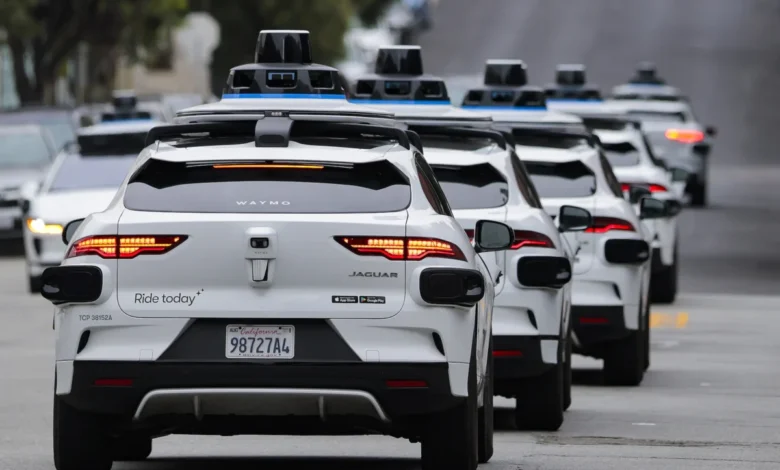
San Francisco’s innovative yet often contentious autonomous vehicle landscape saw a temporary disruption on July 18, 2026, when Waymo, the Alphabet-owned self-driving technology company, announced the resumption of its robotaxi service after making "temporary adjustments" due to a significant power outage. The incident, which affected approximately 7,000 PG&E customers across the city, highlighted the delicate operational dependencies of advanced autonomous systems on urban infrastructure and reignited debates surrounding the regulation and resilience of driverless cars in complex metropolitan environments. The brief pause, lasting roughly an hour, was implemented by Waymo to assess the scale and impact of the power disruption, underscoring the company’s protocol for prioritizing safety and coordinating with local officials during unforeseen city-wide events.
Initial Service Disruption and Resumption
On the afternoon of July 18, 2026, at approximately 12:30 PM PDT, a widespread power outage struck various districts within San Francisco. Almost immediately, Waymo customers attempting to hail a robotaxi were met with notifications indicating a temporary pause in service. A screenshot widely circulated on social media platforms revealed Waymo’s message to its San Francisco users: "Service temporarily paused" and a crucial detail, "freeway routes are unavailable." This immediate cessation of specific operations signaled an active response from the autonomous vehicle operator to the unfolding situation.
Upon inquiry from TechCrunch, a Waymo spokesperson initially provided a measured statement: "We are making temporary adjustments to our service while we monitor local conditions. We know riders depend on us, and we will return to normal operations as soon as possible." This initial response indicated a cautious approach, focusing on real-time monitoring and a commitment to service restoration. However, as the situation evolved and power began to be restored in affected areas, Waymo provided a follow-up clarification. The company spokesperson added that Waymo "decided to pause service for approx. one hour to assess the scale of the power outage affecting a large portion of San Francisco and coordinate with local officials." This clarification not only detailed the duration of the pause but also emphasized the proactive measures taken to understand the city-wide impact and engage with relevant authorities, a critical aspect of managing autonomous fleets in dynamic urban settings. By late afternoon, service was reported to have largely resumed, albeit with potential residual impacts on wait times or available routes as the system fully recalibrated.
The San Francisco Power Outage: Details and Scope
The power outage itself was a significant event, impacting approximately 7,000 Pacific Gas and Electric Company (PG&E) customers. While the exact cause was not immediately disclosed, such outages in San Francisco can stem from a variety of factors, including equipment failure, underground cable issues, high demand during heatwaves, or even external factors like vehicle accidents affecting power poles. PG&E, as the primary utility provider for the region, typically mobilizes crews to assess damage, isolate affected sections, and restore power systematically. The scale of this particular outage, affecting thousands of residents and businesses, undoubtedly created a ripple effect across city services and infrastructure, including traffic signals, communication networks, and, as demonstrated, the operational capabilities of advanced autonomous systems.
For autonomous vehicles, a power outage presents a multifaceted challenge. While the vehicles themselves carry onboard power, the disruption extends beyond their immediate energy supply. Crucially, traffic signals may cease to function, creating complex intersections where human drivers often struggle, and autonomous systems must rely on their sophisticated perception and prediction capabilities. Furthermore, communication infrastructure, vital for remote assistance, real-time mapping updates, and dispatch services, can be compromised. Although Waymo’s vehicles are designed to operate independently and safely in various degraded conditions, a widespread outage necessitates a more holistic assessment of the operating environment. The decision to pause service underscores a recognition of these cumulative risks and a preference for caution over continued operation in potentially unpredictable circumstances.
A Pattern of Incidents: Historical Context for Autonomous Vehicle Disruptions
This recent service disruption is not an isolated incident but rather fits into a growing pattern of operational challenges faced by autonomous vehicle companies in San Francisco. The city, with its dense urban fabric, challenging topography, and unique microclimates, serves as both an ideal testing ground for advanced self-driving technology and a crucible exposing its limitations.
Just seven months prior, in December 2025, Waymo experienced a significant service suspension in San Francisco when a power blackout caused a number of its robotaxis to stall on city streets. That incident led to concerns about potential traffic obstructions and the ability of autonomous fleets to clear themselves from active roadways during emergencies. Vehicles, designed with fail-safe protocols, often enter a minimal risk condition (MRC) when encountering unforeseen anomalies, which can involve stopping safely. However, when multiple vehicles do this simultaneously in a high-traffic area, it can exacerbate congestion.
An even more prominent incident occurred earlier in the same year, during the Fourth of July celebrations. A fireworks show near the Golden Gate Bridge led to an unexpected paralysis of traffic, partly attributed to a cluster of autonomous vehicles that reportedly struggled to navigate the unusual conditions, including heavy pedestrian traffic, altered road closures, and potentially compromised GPS signals from dense crowds or signal interference. These events, though distinct in their immediate causes, collectively painted a picture of autonomous systems struggling with highly dynamic, unpredictable, or degraded urban environments. They highlighted the need for robust contingency planning and enhanced communication protocols between AV operators and city emergency services.
San Francisco’s Stance: Calls for Enhanced Regulation
The recurring nature of these incidents has not gone unnoticed by San Francisco’s civic leadership. Mayor Daniel Lurie has been particularly vocal in advocating for tougher state regulations governing autonomous vehicles. Following the July 18 outage, his office reiterated calls for the California Public Utilities Commission (CPUC) and the Department of Motor Vehicles (DMV) – the state agencies primarily responsible for AV regulation – to implement stricter rules. Mayor Lurie’s primary concern revolves around ensuring that autonomous vehicles can "adequately address how autonomous vehicles operate during major incidents, planned or not."
His proposals often center on several key areas:
- Mandatory Incident Reporting: Requiring more granular and timely reporting of all incidents, including those involving disengagements, remote interventions, or operational anomalies during unusual events.
- Emergency Response Protocols: Establishing clear, enforceable protocols for how AVs should behave during emergencies (e.g., fires, power outages, mass gatherings) and how AV companies should coordinate with first responders to prevent interference or obstruction.
- Performance Metrics for Degraded Conditions: Demanding specific performance benchmarks for AVs operating in adverse weather, communication blackouts, or other degraded urban conditions.
- Local Authority Input: Giving local municipalities like San Francisco more direct input and veto power over the expansion and operational parameters of AV services within their jurisdictions, rather than having decisions solely made at the state level.
These calls reflect a broader frustration among some city officials and emergency services personnel who have reported instances of AVs blocking emergency vehicles, interfering with fire department operations, or creating unexpected traffic bottlenecks. The city’s position is that while innovation is welcome, public safety and seamless urban functionality must take precedence, especially when new technologies are deployed at scale on public roads.
The Broader Regulatory Landscape for Autonomous Vehicles
The regulatory framework for autonomous vehicles in California is a complex interplay between state agencies and ongoing political pressure. The CPUC, which regulates ride-hailing services, has been instrumental in granting permits for commercial robotaxi operations. The DMV, meanwhile, is responsible for the safety testing and deployment of AVs. Both agencies operate under a mandate to foster technological innovation while ensuring public safety.

The expansion of Waymo and Cruise (another major AV operator) in San Francisco has been a point of contention. While proponents argue that AVs offer safety benefits by eliminating human error and can contribute to reduced traffic and emissions, critics, including city officials and transit advocates, point to the operational hiccups and potential public safety risks. The CPUC’s decision in August 2023 to allow Waymo and Cruise to significantly expand their commercial operations in San Francisco faced strong opposition from the city attorney’s office, the San Francisco Municipal Transportation Agency (SFMTA), and various disability advocacy groups. They argued that the companies had not demonstrated sufficient reliability or safety, particularly during emergency scenarios.
This ongoing tension highlights a fundamental challenge: how to balance the desire for technological advancement and the potential benefits of autonomous vehicles with the immediate need to maintain public safety and efficient urban services. Each incident, such as the July 18 power outage, serves as a data point in this larger regulatory debate, providing ammunition for both sides and influencing future policy decisions.
Technological Resilience and Operational Challenges
Autonomous vehicles, including Waymo’s fleet, are equipped with sophisticated arrays of sensors (Lidar, radar, cameras), high-definition maps, and advanced AI algorithms designed to perceive their environment, predict behaviors, and navigate safely. They are engineered with redundancies and fail-safe mechanisms. For instance, if a primary sensor fails, secondary sensors can take over. If connectivity is lost, the vehicle can often continue to operate based on its pre-loaded maps and last-known instructions or enter a safe "minimal risk condition" by pulling over.
However, a city-wide power outage introduces a different class of challenges. Beyond direct impacts on traffic signals and communication networks, power outages can affect the broader ecosystem AVs operate within. For example, if charging infrastructure is compromised, it can impact fleet readiness. More subtly, the overall predictability of the urban environment decreases. Human drivers might react erratically to non-functional traffic lights, creating unusual traffic patterns that are harder for even advanced AI to model. While Waymo’s vehicles are programmed to recognize and respond to dark traffic lights as a four-way stop, a proliferation of such scenarios across a large area simultaneously elevates the complexity and potential for error.
The decision to pause service for an hour, rather than continuing to operate, suggests that Waymo’s internal risk assessment determined that the cumulative effects of the outage created an operating environment that exceeded predefined safety parameters for optimal service. It reflects a cautious approach, prioritizing data gathering and coordination with city officials before fully re-engaging, a practice that aligns with responsible deployment of novel technology.
Public Trust and the Future of Robotaxi Deployment
Each incident involving autonomous vehicles, whether a minor stall or a temporary service disruption, has a tangible impact on public perception and trust. For a technology still in its nascent stages of widespread adoption, building and maintaining public confidence is paramount. Reports of stalled vehicles or service interruptions, even if quickly resolved, can reinforce skepticism among the general populace and fuel arguments from critics.
Waymo and other AV companies are in a delicate position. They must demonstrate not only the technical prowess of their systems but also their ability to integrate seamlessly and safely into the complex, unpredictable reality of urban life. This includes proving their resilience in the face of infrastructure failures, natural disasters, or major public events. The July 18 outage, while a temporary setback, underscores the continuous need for these companies to transparently communicate their safety protocols, learn from every incident, and actively collaborate with city stakeholders.
The future of robotaxi deployment in major cities like San Francisco hinges on this delicate balance. If autonomous vehicles can consistently demonstrate superior safety records, enhance urban mobility, and prove their reliability even under stress, they will likely gain broader acceptance. However, if incidents continue to fuel concerns about public safety and operational robustness, the path to widespread adoption could become significantly more challenging, potentially leading to more restrictive regulations that slow innovation.
Economic and Societal Implications
Beyond the immediate operational challenges, incidents like the San Francisco power outage affecting Waymo service carry broader economic and societal implications. For Waymo, a service pause, however brief, means lost revenue and potential customer frustration, impacting the company’s profitability and market penetration efforts. For the broader economy, reliable autonomous transportation promises increased efficiency, reduced congestion, and new economic opportunities. Disruptions, however, can erode confidence in these projected benefits.
Societally, the integration of AVs raises questions about urban planning, infrastructure investment, and the future of work. As cities contemplate a future with widespread AV deployment, understanding their vulnerabilities to external factors like power outages becomes critical for infrastructure resilience planning. The need for robust digital infrastructure, reliable power grids, and advanced communication networks becomes even more pronounced when they underpin essential services like autonomous transportation.
Moreover, the debate over AV regulation highlights a societal tension between fostering innovation and ensuring public safety. Striking the right balance is crucial for harnessing the transformative potential of autonomous technology without compromising the well-being and trust of citizens. The discussions spurred by incidents in San Francisco are not unique to the city but are reflective of a global dialogue on how to safely and effectively integrate this revolutionary technology into our daily lives.
Looking Ahead: Navigating Innovation and Safety
The July 18, 2026, power outage and its impact on Waymo’s San Francisco operations serve as a microcosm of the larger challenges and opportunities facing the autonomous vehicle industry. It demonstrated Waymo’s proactive approach to safety by temporarily pausing service, but also highlighted the inherent vulnerabilities of complex technological systems to external infrastructure failures.
Moving forward, the focus for Waymo and other AV developers will likely be on enhancing not just the in-vehicle intelligence but also the resilience of their operational frameworks. This includes improving predictive analytics to anticipate infrastructure disruptions, developing more sophisticated real-time coordination mechanisms with city services, and continuously refining protocols for operating in degraded or unpredictable environments. For regulators, the challenge remains to craft policies that are agile enough to accommodate rapid technological advancements while robust enough to safeguard public interests. The ongoing dialogue between AV companies, city officials, emergency services, and the public will be critical in shaping a future where autonomous vehicles can truly deliver on their promise of safer, more efficient, and more accessible transportation. The San Francisco experience, marked by both innovation and growing pains, will undoubtedly continue to be a significant case study in this evolving journey.
Related posts: