New Study Reveals Optimal YouTube Posting Times for Long-Form Videos and Shorts

A comprehensive analysis of nearly 2 million YouTube videos has provided updated, data-driven guidance on the optimal times for content creators and marketers to publish their videos, distinguishing for the first time between long-form content and the increasingly popular YouTube Shorts. The study, conducted by Buffer, a leading social media management platform, pinpoints Sunday at 10 a.m. as the prime slot for long-form videos, while YouTube Shorts achieve peak engagement on Fridays at 4 p.m., 6 p.m., and 7 p.m. This crucial distinction underscores a significant shift in audience consumption patterns and algorithmic behavior on the platform, offering valuable insights for anyone seeking to maximize their content’s reach.
The findings, derived from measuring the median engagement of 1.8 million videos across every hour and day of the week, highlight that while content quality, compelling titles, and engaging thumbnails remain paramount, strategic timing can provide a measurable boost. Early engagement signals—such as clicks, watch time, and likes—are critical for YouTube’s algorithm to determine whether to recommend a video more widely. By publishing during peak audience activity, creators can capitalize on these initial signals, potentially amplifying their content’s visibility without significant additional effort.
The Evolving Landscape of YouTube Engagement
YouTube, since its inception, has continuously evolved, introducing new content formats and refining its recommendation algorithms to cater to diverse viewer preferences. Initially dominated by longer-form videos, the platform adapted to the rise of short-form content with the introduction of YouTube Shorts. This development has profoundly impacted how content is created, consumed, and algorithmically distributed. Long-form videos typically require a more focused viewing experience, often consumed during leisure hours or dedicated browsing sessions. In contrast, Shorts are designed for quick, on-the-go consumption, often scrolled through during breaks or as a form of casual entertainment.
Buffer’s latest analysis reflects these shifting dynamics, providing a stark contrast to their previous 2025 study, which generally favored late afternoon on weekdays for overall YouTube content. The current data clearly delineates separate optimal windows for each format, acknowledging their distinct distribution mechanisms and audience consumption habits. Long-form videos rely heavily on initial engagement to gain momentum, whereas Shorts, by design, are continuously resurfaced by YouTube’s recommendation engine over days or even weeks, making the immediate publish time slightly less critical but still influential for initial traction. This separation of data offers more precise recommendations, moving beyond a one-size-fits-all approach.
Optimal Times for Long-Form YouTube Videos
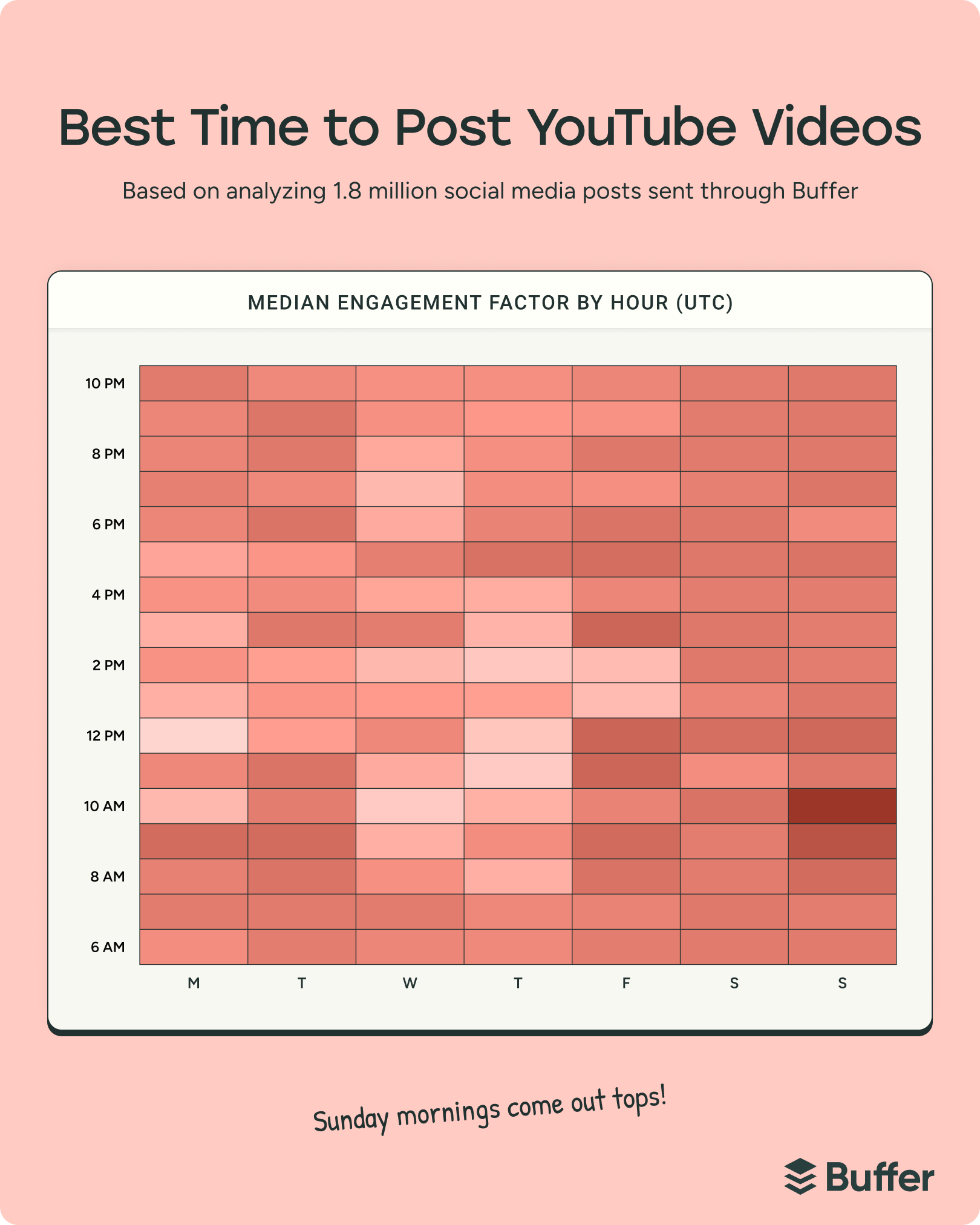
For long-form content, the study unequivocally identifies Sunday at 10 a.m. (local time) as the single best time to post, exhibiting the highest engagement across the entire week. This suggests that audiences are most receptive to in-depth viewing experiences during weekend mornings, perhaps as part of their Sunday routine. Generally, long-form videos uploaded during the morning hours, between approximately 8 a.m. and 11 a.m., consistently achieved higher engagement levels.
A closer look at the data reveals specific peaks and troughs throughout the week:
- Monday: The best time to post is 9 a.m., followed by 10 p.m. and 7 a.m. This indicates viewers are keen to start their week with engaging content, with a secondary window for late-evening viewing.
- Tuesday: Publishing at 9 a.m. is optimal, with 11 a.m. and 8 a.m. also performing strongly. Tuesday stands out as one of the best weekdays for long-form content, with its morning window (8 a.m. to 11 a.m.) consistently delivering high engagement.
- Wednesday: While generally a weaker day for long-form engagement, 7 a.m., 3 p.m., and 5 p.m. offer reasonable performance. Creators might consider these slots if Wednesday is a necessary part of their publishing schedule.
- Thursday: This emerges as the weakest day for long-form video engagement. The best times are 5 p.m. and 6 p.m., along with an early morning slot at 7 a.m. Midday and early afternoon on Thursday show particularly low engagement, suggesting a potential shift to Friday if possible.
- Friday: Uniquely among weekdays, midday performs best, with 12 p.m. being a standout slot with one of the highest engagement factors of the week (0.70). Other strong times include 11 a.m. and 3 p.m. Friday lunchtime presents a compelling alternative to Sunday for high engagement.
- Saturday: Engagement is moderate and consistent throughout the day, with 12 p.m., 10 a.m., and 3 p.m. being the top choices. This day is suitable for channels targeting weekend-centric audiences.
- Sunday: As the undisputed champion, Sunday at 10 a.m. recorded an engagement factor of 0.95, significantly outperforming other slots. 9 a.m. (0.80) and 12 p.m. (0.67) also performed exceptionally well, cementing Sunday mornings as the prime time for long-form content.
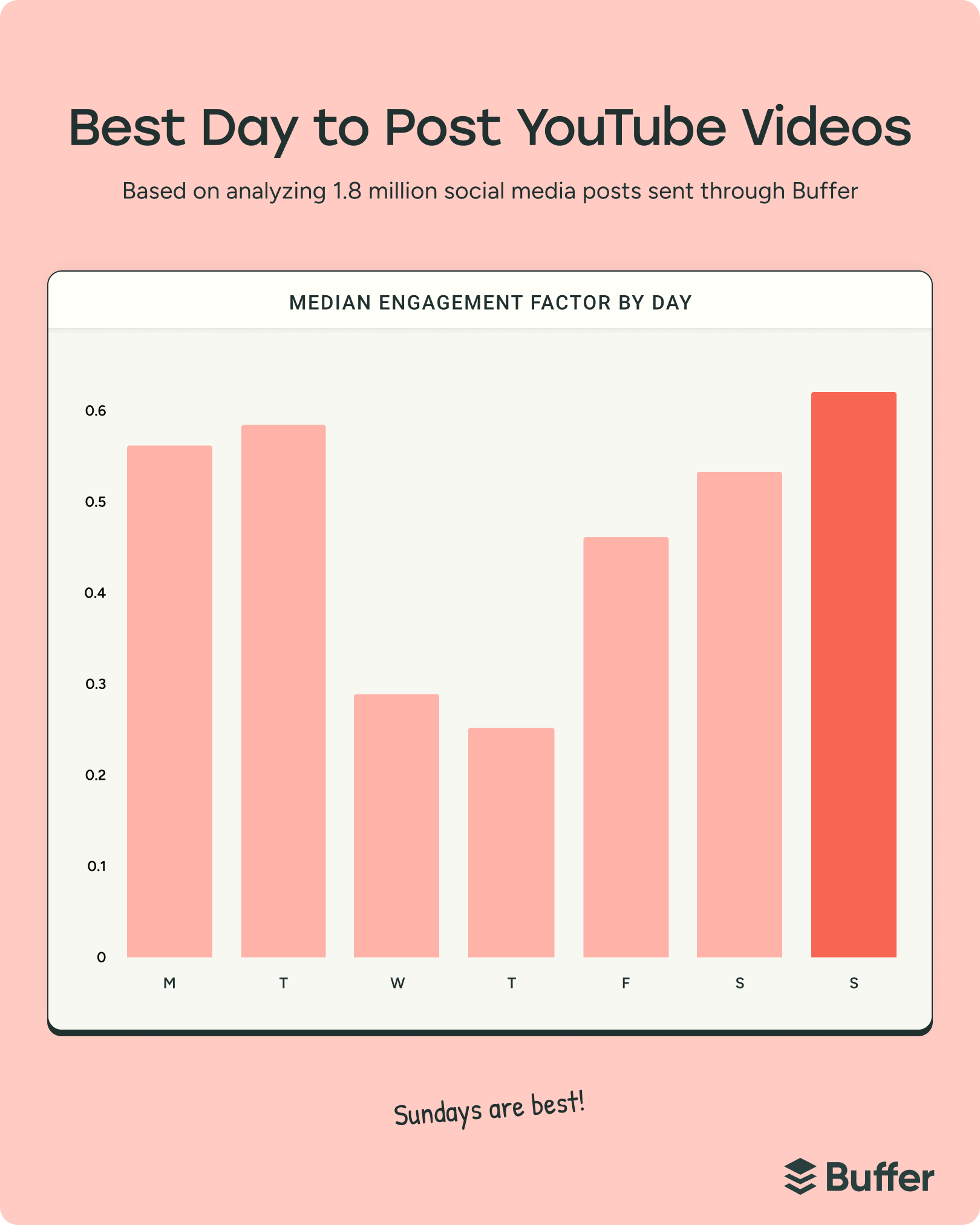
The shift towards weekend and morning dominance for long-form videos represents a notable reversal from previous analyses. The weakest days for long-form content are Wednesday and Thursday, both falling below the neutral engagement threshold. Creators are advised to be particularly strategic on these days or consider reallocating resources to stronger performing days like Sunday, Tuesday, or Monday. For long-form content, it is also recommended to publish an hour or two before the audience’s peak active hours, allowing YouTube sufficient time to process and index the video for immediate surfacing when viewers come online.
Optimal Times for YouTube Shorts
YouTube Shorts present a distinctly different engagement pattern, predominantly thriving in the evening hours. The data clearly indicates that Friday is the best day for Shorts, with 4 p.m., 6 p.m., and 7 p.m. taking the top three slots for peak engagement. This trend aligns with the understanding that short-form content is often consumed as a wind-down activity at the end of the day.
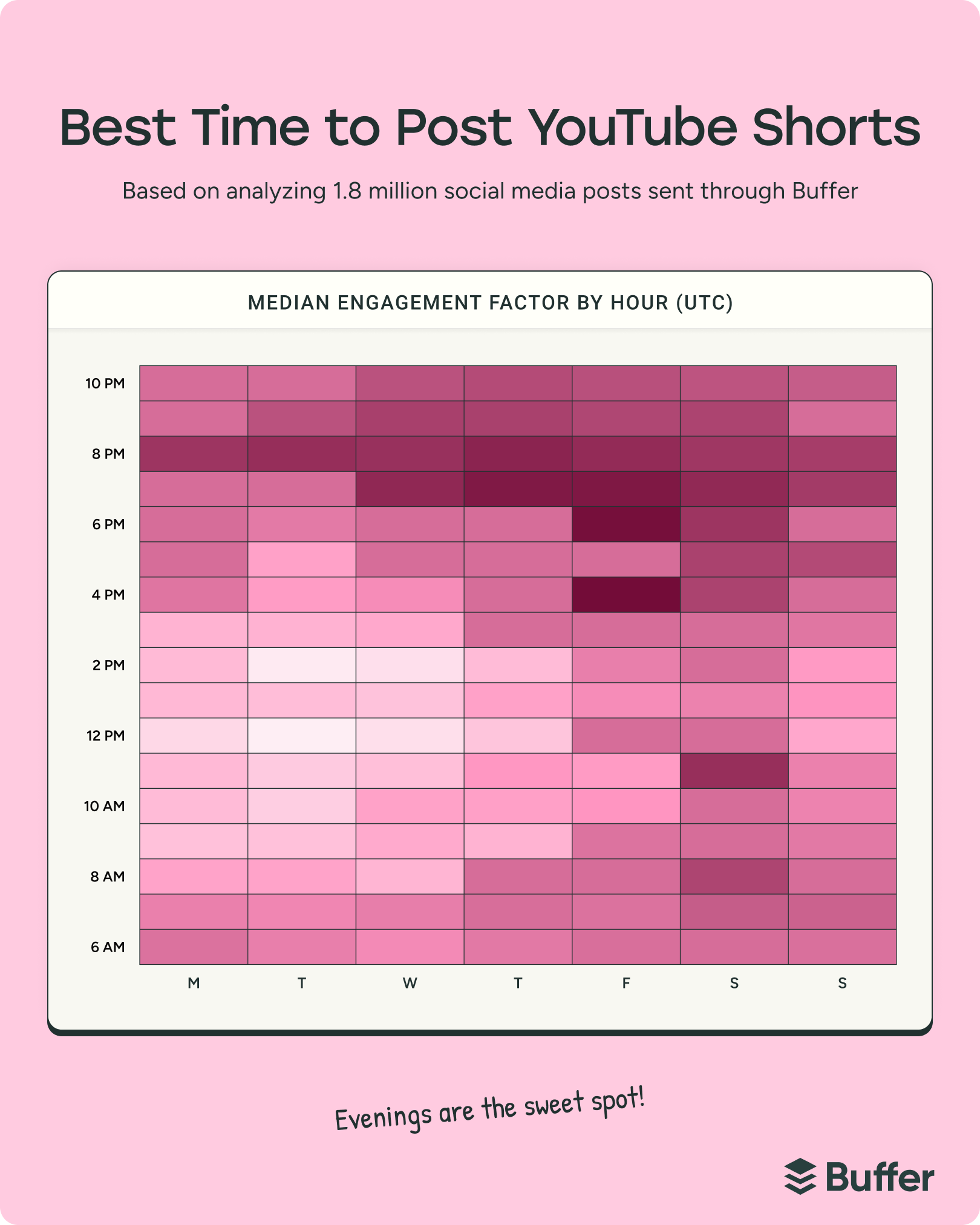
Specific daily insights for Shorts include:
- General Evening Peak: Across the week, YouTube Shorts engagement typically peaks between 6 p.m. and 11 p.m.
- Worst Times: Afternoon slots, particularly between 12 p.m. and 5 p.m., generally show lower engagement, with Friday afternoon being a notable exception due to its late-afternoon surge.
- Saturday: This is the only day where a morning slot (11 a.m.) makes it into the top three, suggesting a potential early-day window for Shorts content on weekends, possibly during leisure or pre-evening activities.
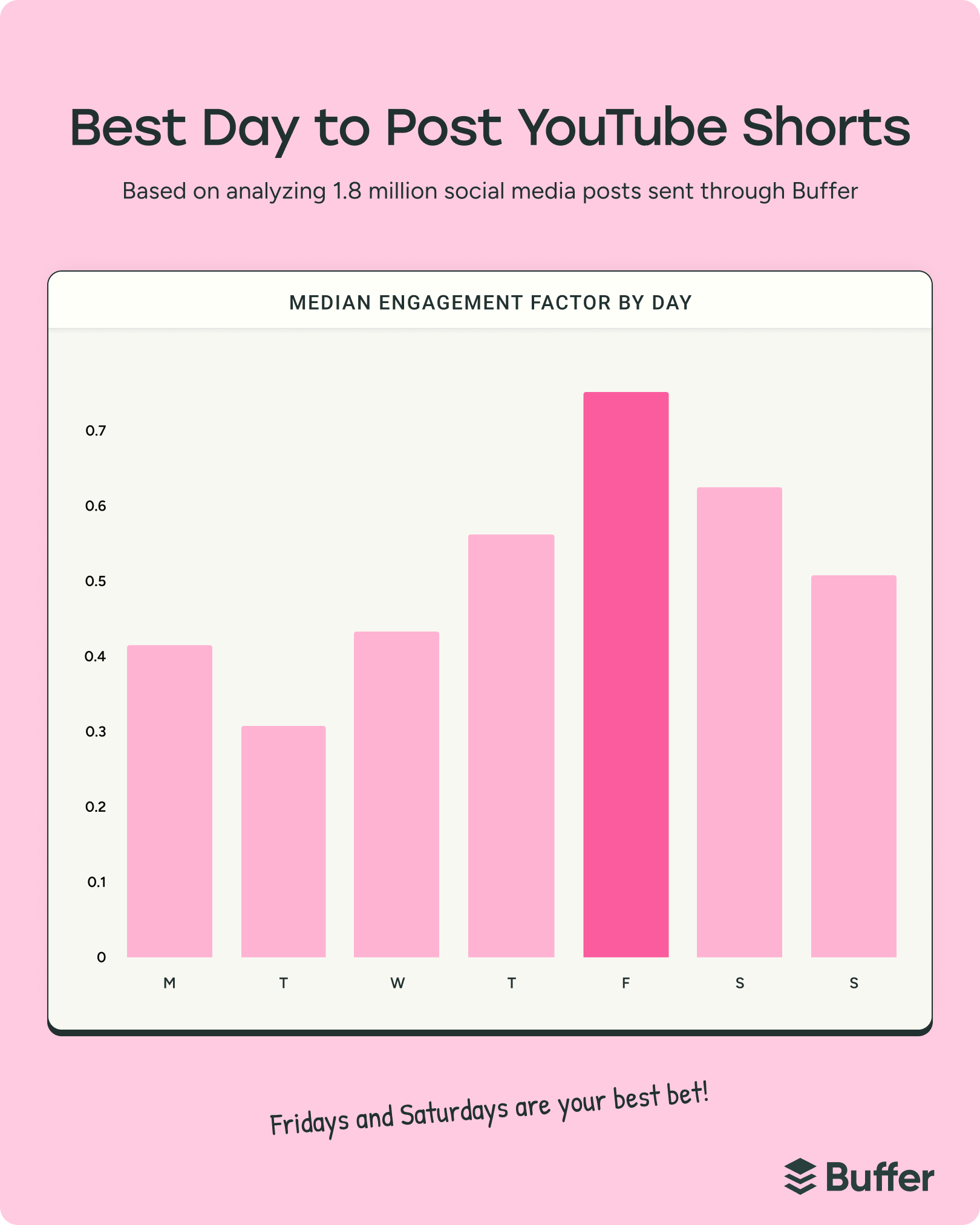
- Best Days Overall: Friday leads the pack, followed by Saturday and Thursday. This emphasizes the strength of the latter half of the week for short-form content.
- Worst Days Overall: Tuesday and Monday exhibit the lowest engagement for YouTube Shorts. Channels focusing solely on Shorts might consider concentrating their efforts from Thursday through Saturday, with Friday as a priority.
The divergent optimal posting times for long-form videos and Shorts present an advantageous scenario for creators who produce both formats. There is almost no overlap in their peak engagement windows, allowing for a strategic schedule where long-form content can be published in the mornings and on weekends, while Shorts can be reserved for evening drops without internal competition.
Finding Your Unique Optimal Posting Time
While Buffer’s extensive analysis provides invaluable general recommendations, it is crucial for every creator to understand that their specific audience may exhibit unique viewing behaviors. These broad patterns serve as a strong starting point, but fine-tuning a YouTube posting schedule requires delving into one’s own channel analytics.
YouTube Studio offers robust, real-time analytics that can pinpoint a channel’s precise audience activity. To leverage this tool:
- Access YouTube Studio: Navigate directly to studio.youtube.com. This centralized control panel provides comprehensive insights into video performance, subscriber growth, and audience demographics.
- Go to Analytics: On the left-hand sidebar, click the "Analytics" tab. This section offers an overview of viewership, watch time, and engagement metrics.
- Navigate to Audience: Within the Analytics section, select the "Audience" tab at the top. Here, creators can explore detailed information about their viewers, including location, age, gender, and the types of content they consume.
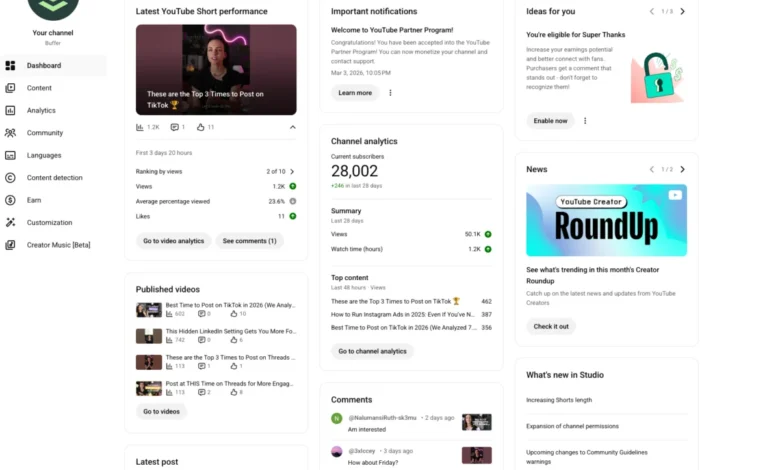
- Locate "When your viewers are on YouTube": Scroll down within the Audience tab to find a unique heatmap. This graph, presented in local time, visually represents audience activity. Darker purple shades indicate peak activity, while lighter shades show less active periods. These dark slots are the most direct indicators of when your specific audience is most engaged.
It is advisable to check these analytics regularly, as the data reflects the past 28 days and audience behavior can shift. By combining Buffer’s broad insights with personalized YouTube Studio data, creators can develop a highly optimized publishing strategy.
Beyond Timing: A Holistic Approach to YouTube Success
While posting time can offer a valuable algorithmic edge, it is merely one component of a successful YouTube strategy. The foundational elements that drive long-term channel growth and viewer retention remain paramount. A holistic approach encompasses:
- Content Quality: High-quality, engaging, and valuable content is the ultimate driver of watch time and repeat viewership. This includes both the production value and the substance of the information or entertainment provided.
- Compelling Titles: A strong, keyword-rich title that accurately reflects the video’s content and sparks curiosity is essential for attracting initial clicks.
- Optimized Thumbnails: Visually appealing and informative thumbnails are critical for standing out in search results and recommendations, acting as the first visual hook for potential viewers.
- Audience Understanding: Deep knowledge of your target audience’s interests, preferences, and demographics allows for tailored content creation and effective promotion.
- Consistency: A regular publishing schedule, even if not daily, helps build audience expectation and loyalty, signaling to YouTube that your channel is active and reliable.
- Engagement Strategies: Actively interacting with comments, running polls, and encouraging community participation fosters a loyal subscriber base.
- SEO Optimization: Utilizing relevant keywords in titles, descriptions, and tags helps YouTube understand your content and recommend it to the right audience.
In conclusion, Buffer’s latest study provides actionable, refined guidance for YouTube creators navigating the platform’s dynamic ecosystem. The clear differentiation between optimal posting times for long-form videos and Shorts underscores the platform’s evolution and the necessity for tailored strategies. By integrating these general insights with personalized audience data from YouTube Studio, creators can fine-tune their publishing schedules, providing their content with the best possible chance to capture early engagement and algorithmic favor, ultimately contributing to sustained channel growth and success.