Khosla Ventures Breaks Decades-Long Silicon Valley Tradition With First Expansion to New York City


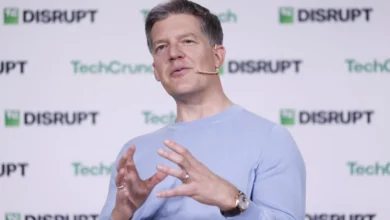
Silicon Valley venture capital firm Khosla Ventures is officially crossing the country, marking a monumental shift in its operational strategy by establishing its first-ever physical office outside of its traditional stronghold on Sand Hill Road in Menlo Park, California. The announcement was delivered by veteran venture capitalist Keith Rabois during a high-profile appearance at TechCrunch’s StrictlyVC event in the West Village of New York City. The new outpost, situated on 14th Street, is slated to open its doors this fall, signaling a broader geographic evolution not only for the firm itself but for the venture capital landscape bridging the West Coast and the East Coast.
The move is particularly striking given Khosla Ventures’ historical aversion to multi-office expansion. Despite managing billions in assets and funding some of the world’s most recognizable technology startups over the last decade and a half, the firm has famously eschewed opening even a San Francisco satellite office, let alone a presence on the opposite side of the country. For Rabois, who has spent the majority of his 13-year tenure in venture capital deeply entrenched in the Menlo Park ecosystem, the transition represents both a professional milestone and a personal alignment with his recent relocation to the East Coast. Rabois moved to the region to be closer to his family, including his husband, Jacob Helberg, who serves as the Under Secretary of State for Economic Growth, Energy, and the Environment, and their children based in Washington, D.C.
A Novel Blueprint: The Executive Briefing Center
Rather than serving as a standard satellite office meant merely to house remote partners, the new 14th Street location has been conceptualized with a unique operational model. While it will accommodate a select cohort of Khosla investors—including Rabois himself—its primary differentiator will be a dedicated space dubbed an "executive briefing center."
According to Rabois, this center is designed to serve as a high-throughput matchmaking hub for early- and growth-stage portfolio companies. Four days a week, the firm plans to rotate groups of 10 to 12 portfolio startups through the space to pitch, network, and secure enterprise contracts directly with Fortune 500 executives.
"The portfolio companies love this," Rabois told attendees at the StrictlyVC event. "They get pilots and customers, and so it’s going to be a very vibrant office because of that." By leveraging New York City’s unique status as the corporate headquarters for traditional banking, media, retail, and legacy enterprise giants, Khosla aims to offer its technological disruptors a direct pipeline to legacy buyers—a logistical feat that has traditionally required cross-country travel for founders based on the West Coast.
Talent Density: The New York vs. Bay Area Equation
The establishment of a permanent New York foot-print inevitably raises questions regarding the depth and density of regional talent, a metric by which the San Francisco Bay Area has historically measured its unrivaled supremacy. When queried about whether New York can match the technical and executive recruiting pools of Silicon Valley, Rabois offered a nuanced assessment divided strictly by seniority and specialization.
At the junior and entry-level tiers, Rabois expressed absolute confidence in the local labor market. Pointing to Ramp, the high-profile fintech unicorn he has backed repeatedly, Rabois highlighted how the company has successfully cultivated a dense and exceptional talent pipeline by hiring directly out of East Coast universities.
"Individual contributor level, right out of school, absolutely," Rabois stated, emphasizing that the region’s top-tier academic institutions supply a steady stream of elite technical talent. "We’ve been tapping into right-out-of-school graduates and been able to create a critical density of talent from the intern class [onward] that is extraordinary."
However, recruiting senior technical talent, such as architect-level engineers and senior system designers, presents a markedly different set of challenges. Rabois acknowledged that while senior technical talent is scarcer locally, modern software development practices may mitigate the need for massive headcounts. "Senior engineers, architect-level — no, I think that’s a challenge," he said, adding that "fortunately, maybe in the modern age, you need less of these people per company than you have historically."
The Executive Commute Dilemma and the Bottom-Up Strategy
Perhaps the most pronounced operational bottleneck identified by Rabois is the severe difficulty of recruiting seasoned executive leadership—such as Chief Financial Officers or Senior Vice Presidents of Sales—within an in-office corporate culture framework in New York City.
The underlying obstacle, according to Rabois, is not a lack of qualified executives, but rather the friction of geography and lifestyle. Many of the most experienced senior executives reside in commuter suburbs well outside the city limits. For a company demanding a strict five-day in-office presence, the daily commute can become a major deterrent.
"If you have an in-office culture, most of the more senior people that live and reside in the New York area live outside the city, and the commute in and out of the city for an office environment can be very painful," noted Rabois, drawing on his own upbringing in a New York commuter suburb. "When you need to recruit proven executive talent, and you really believe in an in-office culture, [that has] been very challenging."
For startups like Ramp, the strategic workaround has been to deliberately sidestep the executive talent hunt entirely, opting instead for a deliberate "ground-up" philosophy. Rather than hiring high-cost, battle-tested executives from outside, the company has focused on promoting internally and cultivating leadership from junior cohorts.
"We don’t hire senior people. We just build from the bottom up, ground up. It’s a very conscious strategy, very intentionally, for the last three years," Rabois explained. While noting that this approach works exceptionally well for specific operational models, he conceded that filling specialized roles like a CFO or head of enterprise sales with seasoned veterans remains difficult when those individuals cannot easily afford or manage a family-friendly lifestyle directly within Manhattan.
A Shifting Paradigm: East Coast vs. West Coast Tech Dominance
Khosla Ventures’ expansion into Manhattan places the firm within an elite, albeit expanding, cohort of premier West Coast venture capital institutions establishing official outposts in New York. While firms like Sequoia Capital and Andreessen Horowitz have maintained localized East Coast presences for years, their footprints have historically remained modest relative to their massive Menlo Park and San Francisco operations.
The timing of Khosla’s move also coincides with broader macroeconomic and demographic shifts within the American technology sector. A landmark report released by commercial real estate services firm CBRE revealed that New York City has narrowly surpassed the San Francisco Bay Area in total tech talent headcount for the first time in the 13-year history of the firm’s tracking data. This historic crossing was largely catalyzed by traditional finance and enterprise institutions aggressively snapping up artificial intelligence and software engineering talent, even as traditional Silicon Valley technology employers enacted widespread headcount reductions.
Despite empirical real estate and employment data pointing toward New York’s ascendance as a premier technology hub, local skepticism remains palpable among industry insiders. Reaction to the CBRE findings among attendees at the StrictlyVC gathering reflected a lingering cultural bias favoring the West Coast’s legacy dominance, with one local attendee bluntly remarking, "I heard about that study… I don’t buy it."
Broader Implications for Venture Capital
As construction continues on Khosla Ventures’ 14th Street office ahead of its anticipated fall opening, the move serves as a bellwether for the maturation of the East Coast tech ecosystem. By embedding venture capitalists directly alongside Fortune 500 decision-makers and next-generation startups, Khosla is betting that proximity to traditional enterprise will outweigh the traditional Silicon Valley model of isolated, campus-style innovation.
Whether other legacy venture firms will follow Khosla’s lead across the country remains to be seen. However, as artificial intelligence and enterprise software demand deeper integration with traditional industries centered in New York, the historical hegemony of Sand Hill Road is facing its most significant geographic challenge to date.
Related posts: