Nvidia CEO Jensen Huang Takes Surprise Phone Call From President Donald Trump Onstage at All-In Summit

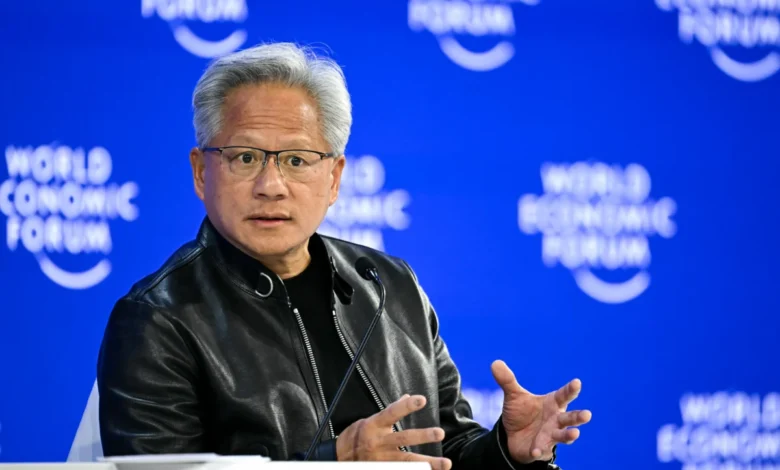
The intersection of artificial intelligence, high-stakes politics, and live-event unpredictability collided in Los Angeles on a Monday morning when Nvidia Chief Executive Officer Jensen Huang accepted an unexpected phone call directly from President Donald Trump while onstage at the All-In Summit. The impromptu moment, which instantly sent shockwaves through corporate public relations teams, occurred in front of a live audience and a panel of high-profile venture capitalists who host the popular podcast.
Rather than sending the call to voicemail or stepping away from the microphone, Huang embraced the interruption. Addressing the hosts—tech investors Chamath Palihapitiya, Jason Calacanis, and White House advisers David Friedberg and David Sacks—Huang announced to the crowd, “I’m onstage with the besties.” In a move that defied conventional corporate crisis management guidelines, Huang attempted to patch the commander-in-chief through to the auditorium’s audio system, trading standard media training protocols for direct, unscripted political engagement.
The resulting exchange highlighted the increasingly porous boundary between Silicon Valley’s technological elite and the federal government, while laying bare fundamental divisions over the future velocity of artificial intelligence development, infrastructure expansion, and international competitiveness.
Chronology of an Unprecedented Onstage Call
The sequence of events unfolded during a morning panel session that focused heavily on the rapid trajectory of generative artificial intelligence and the strategic choices facing industry leaders. Minutes before the phone began to ring, Huang and the All-In podcast hosts were deep into a discussion regarding recent public commentary from Anthropic CEO Dario Amodei. Amodei had recently published a widely discussed essay advocating for a deliberate slowdown in the pace at which frontier AI capabilities are advanced, a precautionary stance shared by prominent figures such as OpenAI CEO Sam Altman and SpaceX CEO Elon Musk.
Huang’s perspective has consistently diverged from this go-slow philosophy, favoring aggressive iteration and rapid scaling to maintain technological dominance. As the panel debated the merits and risks of pacing AI capability development, Huang’s mobile device buzzed. Recognizing the caller, he opted for transparency.
Faced with technical hurdles typical of live stage setups, Huang fumbled momentarily with the audio routing. Hearing the delay, President Trump quipped over the line, “The great thing about life is Jensen can develop the most complex computer chip in the world… but he can’t figure out how to put you on speaker.” After requesting an auxiliary microphone from stagehands, Huang successfully projected the president’s voice into the auditorium.
The Trump Administration Stance on AI Acceleration
Once connected, President Trump did not mince words regarding the proposals to artificially throttle AI progress. Directly addressing the debate initiated by industry leaders like Amodei, the president framed calls for deceleration as a strategic vulnerability that would ultimately benefit geopolitical rivals.
“They’re just playing right in the hands of a lot of people that don’t want to see it happen,” Trump stated over the speakerphone. “That could be political people. It could also be China. And we’re not going to let that happen. It’s a hoax.”
Huang responded in agreement, telling the president, “You’re right. We’re not going to let that happen, sir,” drawing an immediate wave of applause from the conference attendees.
The rhetoric reflects a broader ideological alignment between the current White House administration and key figures within the venture capital ecosystem, such as Y Combinator CEO Garry Tan. Proponents of this view frequently characterize mounting public resistance to the massive physical infrastructure required by AI—specifically large-scale data centers—as part of a coordinated campaign or international psyop designed to cripple American economic growth and technological supremacy.
Supporting Data and the Reality of Public Resistance
While administration officials and technology executives attribute local resistance to data center development to external manipulation or hostile foreign actors, sociological data suggests a more domestic and straightforward root cause.
Recent comprehensive polling conducted by Gallup highlights a significant gulf between Silicon Valley ambitions and local community sentiments. According to the data, approximately 70 percent of Americans actively oppose the construction of data centers within their local areas. When asked to specify their primary reservations, more than 50 percent of respondents pointed directly to the severe strain these facilities place on local environmental resources, particularly electricity grids and water supplies required for cooling. Furthermore, roughly 20 percent of polled citizens cited tangible concerns regarding local cost-of-living increases, housing market pressures, and an overall degradation of their quality of life.
These local concerns have manifested in legislative and regulatory battles across multiple states. For instance, new clean power regulations implemented in jurisdictions like Massachusetts have targeted data center energy consumption, while communities in states such as Virginia—historically a major hub for data processing infrastructure—have seen fierce municipal pushback over zoning and noise pollution.
Despite acknowledging the need for operational prudence, President Trump sought to reassure the tech executive and the audience that regulatory friction would not be allowed to halt the sector’s momentum.
“We have to be a little bit careful… We have to do things and we have to do them prudently, but that doesn’t mean we’re going to stop an industry,” Trump affirmed. “So I’m with you all the way. I didn’t even know how you felt about it. I just hoped you felt the same way as me. We’re going to lead.”
Broader Implications for the Tech Sector and Governance
The impromptu phone call at the All-In Summit serves as a microcosm of the current era in American technology policy, characterized by direct, personal relationships between executive leadership and regulators, bypassing traditional bureaucratic channels.
For Nvidia, a company that has risen to unprecedented economic prominence as the primary hardware supplier for the generative AI boom, maintaining a close alignment with federal priorities is a matter of paramount commercial and strategic interest. As export controls on advanced semiconductors to nations like China remain a central pillar of U.S. foreign and economic policy, Nvidia finds itself at the geopolitical nexus of the global tech race.
At the same time, the divergence between executive enthusiasm for rapid AI scaling and widespread public skepticism regarding infrastructure burdens points to a coming political bottleneck. While administration backing can smooth the path for federal permitting and supply chain prioritization, tech companies and data center developers will continue to face formidable localized opposition from voters concerned with utility bills, grid reliability, and environmental degradation.
Ultimately, Jensen Huang’s decision to air a presidential phone call live on stage highlights a stark reality: the future of artificial intelligence will not be decided solely in research laboratories or corporate boardrooms, but through a high-stakes negotiation between rapid technological ambition, national security imperatives, and the domestic realities of local communities.