LinkedIn Engagement Shifts Dramatically in 2026: New Data Reveals Peak Professional Activity in Late Afternoons and Evenings

A comprehensive analysis of millions of posts across major social platforms, including LinkedIn, has unveiled a significant shift in professional engagement patterns for 2026. Data meticulously compiled by Buffer, a leading social media management platform, indicates that the traditional prime hours for LinkedIn activity, once firmly rooted within the 9-to-5 workday, have now migrated to late afternoons and evenings. This evolving trend, mirroring observations on consumer-centric platforms like Instagram and TikTok, signals a fundamental change in how professionals interact with career-focused content.
The in-depth study, spearheaded by Buffer’s resident data scientist, Julian Winternheimer, involved sifting through over 4.8 million LinkedIn posts. Winternheimer’s team has been tracking these engagement metrics for approximately two years, providing a robust historical context for the latest findings. The 2026 data presents a notable departure from previous years, particularly 2025, when peak LinkedIn engagement was almost exclusively confined to standard working hours, experiencing a sharp decline after 5 p.m. This year, the research clearly demonstrates that late afternoon and evening slots are now consistently delivering some of the strongest engagement numbers observed on the platform. Professionals are evidently still seeking and interacting with valuable content, but their timing has adapted to post-work routines.
The Evolving Landscape of Professional Engagement
The shift in LinkedIn user behavior is not merely a statistical anomaly; it reflects broader societal and technological changes that have reshaped the modern professional’s daily routine. The rise of remote and hybrid work models, significantly accelerated by global events, has blurred the lines between personal and professional time. Commutes, once dedicated to passive activities, now often include active content consumption on mobile devices. Furthermore, the increasing integration of professional networking into personal digital habits means that users are more likely to engage with platforms like LinkedIn during their leisure hours. This phenomenon suggests that LinkedIn, while maintaining its professional core, is increasingly competing for attention with other social media platforms in the evening hours, as users scroll through various feeds for information, entertainment, and connection.
This evolution signifies that the "professional" persona is no longer strictly confined to the office chair. Individuals are consuming industry news, connecting with peers, and building their personal brands outside of conventional work hours, often during their commutes, while unwinding in the evening, or even late at night. The transition from a structured, in-office work environment to more flexible schedules has granted professionals greater autonomy over their digital interactions, allowing them to engage with career-focused content when it best suits their personal rhythm, rather than being dictated by office hours.
Methodology and Key Findings
Buffer’s research underscores the undeniable impact of timing on content visibility and interaction on LinkedIn. The platform’s algorithm heavily relies on engagement signals—reactions, comments, and reposts—to determine a post’s value and its subsequent reach. Consequently, posts that garner higher early engagement are more likely to be amplified and shown to a broader audience. Julian Winternheimer’s analysis pinpoints specific posting windows where content consistently achieves superior engagement rates.
"Our data unequivocally demonstrates that strategic timing can significantly enhance a post’s performance on LinkedIn," explained Winternheimer. "While the quality and relevance of content remain paramount, publishing when your audience is most active provides a crucial advantage. The shift we’re seeing towards evening engagement is a powerful indicator of changing user habits, and marketers and content creators must adapt their strategies accordingly."
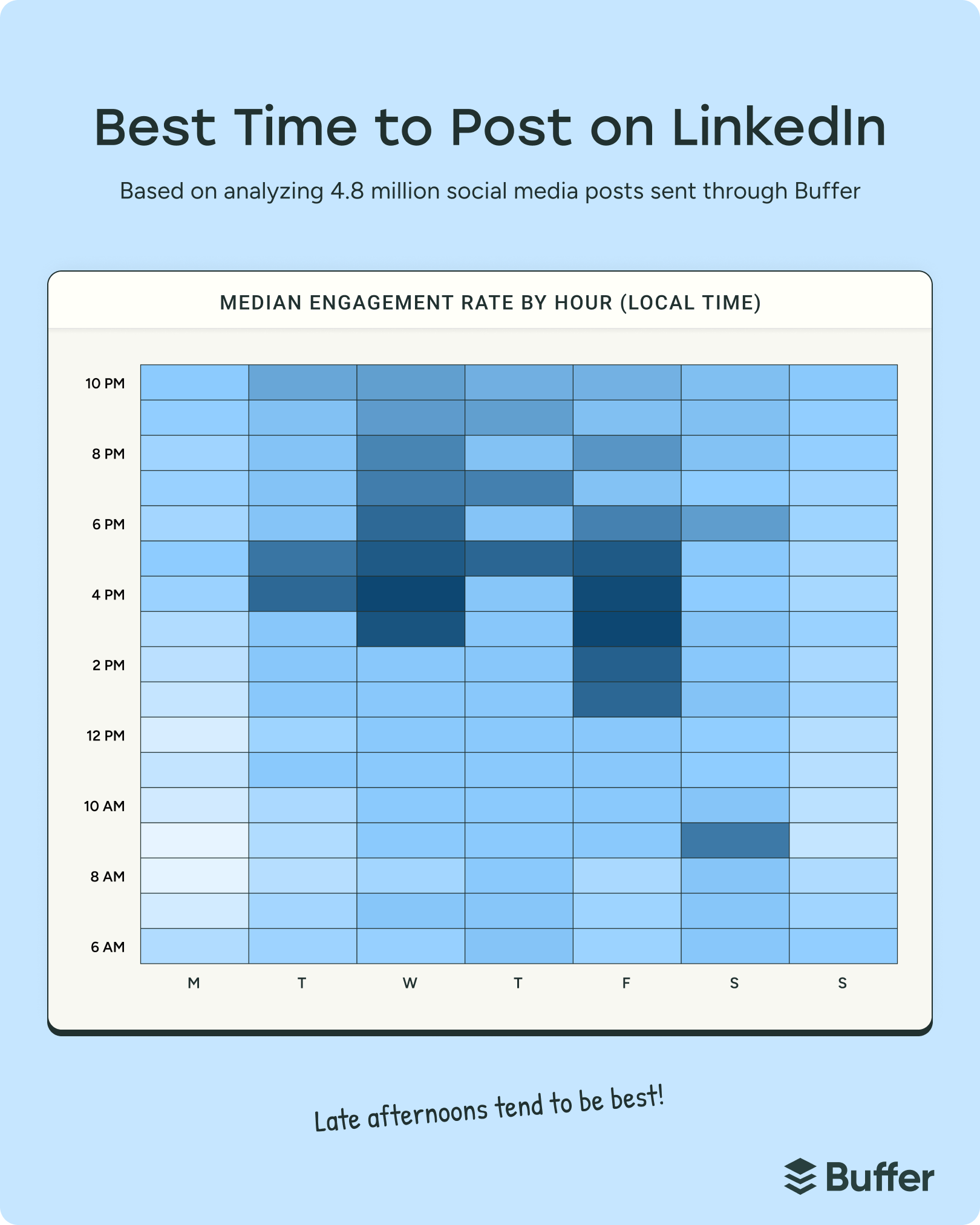
The primary finding highlights that the optimal time to post on LinkedIn for maximum engagement generally falls between 3 p.m. and 8 p.m. on weekdays. Specifically, posts shared at 4 p.m. on Wednesday and between 3 p.m. and 4 p.m. on Friday emerged as the top performers overall. This data, normalized by local time zone, ensures that a 4 p.m. recommendation applies universally to the target audience’s local time, eliminating the need for complex time zone conversions. This crucial detail ensures that content creators worldwide can apply these insights directly to their local markets without complex calculations.
Detailed Daily Engagement Patterns
The comprehensive heatmap generated from Buffer’s data visually articulates these shifts, with darker blocks indicating higher engagement times. The pronounced dark areas in the late afternoon and evening, contrasting with lighter morning segments, clearly illustrate the evolving trend.
- Monday: While generally a lower engagement day compared to midweek, optimal posting times on Monday are surprisingly late: 10 p.m., followed by 5 p.m. and 9 p.m. This suggests professionals are catching up on content after the initial rush of the workweek or engaging in evening reflection, possibly planning their week ahead.
- Tuesday: Similar to Monday, Tuesday exhibits slightly lower overall engagement. However, the best times are 4 p.m., 5 p.m., and 10 p.m., reinforcing the late-day engagement pattern. This indicates a gradual build-up of activity as the week progresses, but still skewed towards the latter part of the day.
- Wednesday: This day stands out as the undisputed champion for LinkedIn engagement. The peak time is 4 p.m., which ranks among the highest-engagement slots of the entire week. Other strong contenders are 3 p.m. and 5 p.m., forming a robust afternoon-to-early-evening window. Content deemed most important should ideally be scheduled for Wednesday, capitalizing on this mid-week surge in professional activity.
- Thursday: Continuing the trend, Thursday’s prime time is 5 p.m., with strong performance extending into 7 p.m. and even 9 p.m., indicating sustained evening activity. Professionals are likely winding down their core tasks and transitioning into a mode of discovery and connection before the weekend.
- Friday: Despite being the end of the traditional workweek, Friday remains a strong day for engagement. The best time is 3 p.m., right as professionals are starting to wind down, followed closely by 4 p.m. and 5 p.m. This period likely captures individuals in a more relaxed, reflective mood, open to consuming content and engaging with their network.
- Weekends: Saturdays and Sundays generally show significantly lower engagement. If posting on Saturday is necessary, 9 a.m. offers the highest potential, with 6 p.m. and 10 p.m. also showing some activity. For Sunday, 10 p.m. and 9 p.m. are the best options, along with an early 6 a.m. slot, though these times remain far less impactful than weekday peaks. Weekend engagement, though lower, often reflects a more casual or personal interaction with professional content, perhaps for personal development or passive job seeking.
The Best Day to Post: Wednesday Reigns Supreme
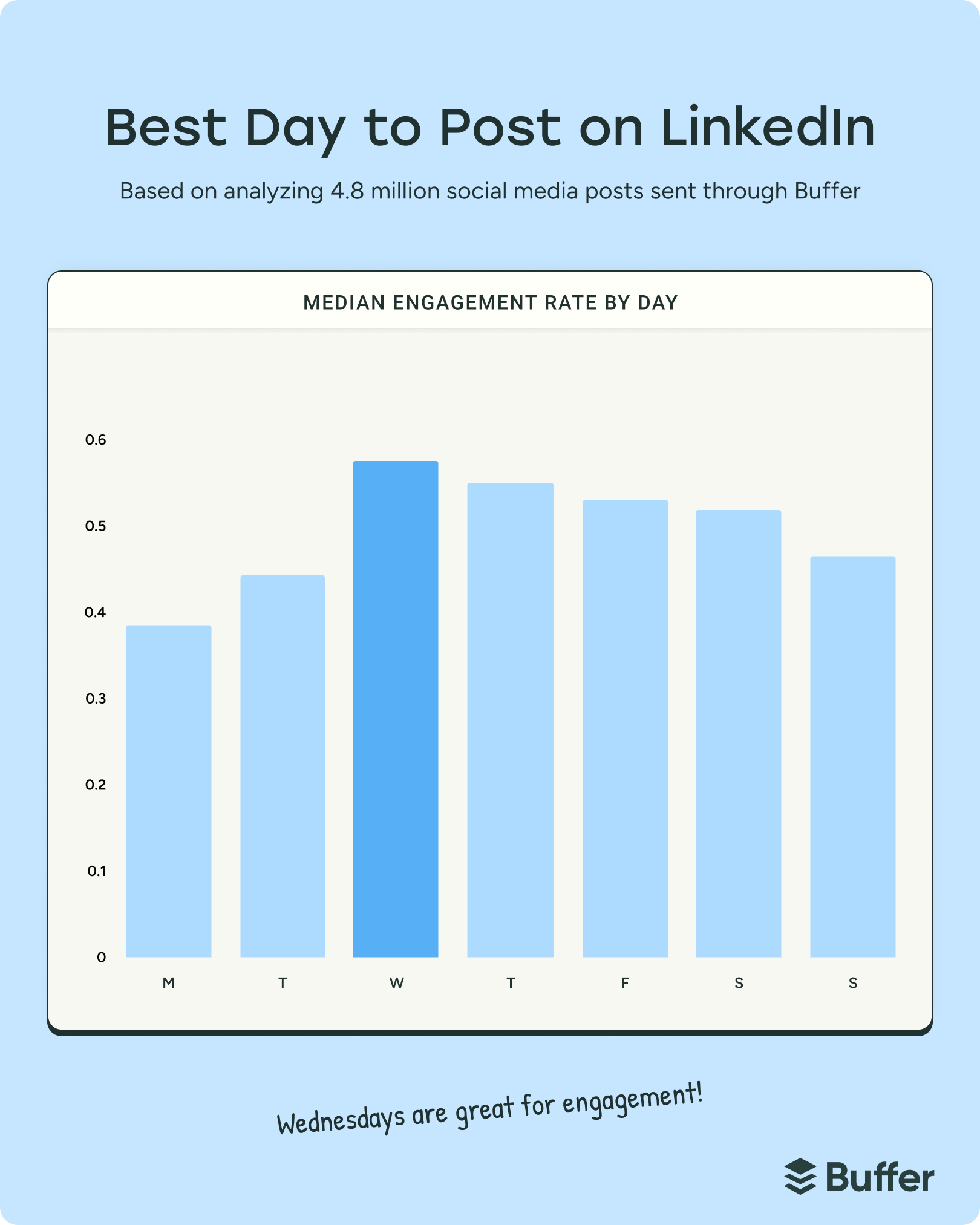
Zooming out to a weekly perspective, Wednesday unequivocally emerged as the best day for posting on LinkedIn, garnering the highest overall engagement. Thursday followed closely, with Friday securing the third-highest spot. This mid-to-late week dominance aligns with the theory that professionals are fully immersed in their work by Wednesday, actively seeking valuable content and industry insights, but have not yet mentally transitioned into weekend mode. This period represents a sweet spot where professional focus is high, and the willingness to engage with relevant content peaks.
Conversely, Monday and Tuesday recorded the lowest engagement levels in Buffer’s dataset. Monday, in particular, showed the weakest performance of the week. This supports the "heads-down" work theory, where professionals are typically focused on initiating their week’s tasks, leaving less time for social media engagement. However, it is crucial to note that other research, including some cited by LinkedIn’s own marketing blog, has occasionally highlighted Tuesday as an active day. This discrepancy underscores the dynamic nature of social media trends and the importance of individual audience analysis. It reminds content creators that while general trends provide a strong foundation, personalized testing and monitoring remain indispensable.
Implications for LinkedIn Marketing Strategies
These findings carry significant implications for anyone leveraging LinkedIn, from individual professionals building their personal brand to large corporations managing their company pages.
- Strategic Scheduling: The most immediate action is to re-evaluate existing content calendars. Prioritizing high-value content for Wednesday, Thursday, and Friday afternoons and evenings is now critical. This means shifting resources and planning cycles to align with these newly identified peak windows.
- Content Adaptation: The shift to evening engagement might also influence content type. While professional, insightful content remains key, there could be a subtle lean towards content that is more digestible or reflective, suitable for a post-work mindset. Carousel (document) posts, for instance, have been shown to generate up to 596% more engagement than text-only posts, suggesting a preference for rich, easily consumable formats that deliver value quickly. Videos, polls, and thought-provoking questions might also perform well during these times, as users are seeking engagement and connection.
- Audience-Centric Approach: While the general trends are powerful, the "every audience is different" caveat remains vital. Marketers must use these insights as a starting point, then delve into their own LinkedIn analytics to identify their unique audience’s peak activity times. A company targeting shift workers, for example, might find entirely different optimal times compared to one targeting traditional office workers. Industries also play a role; tech professionals might have different digital habits than those in healthcare or manufacturing.
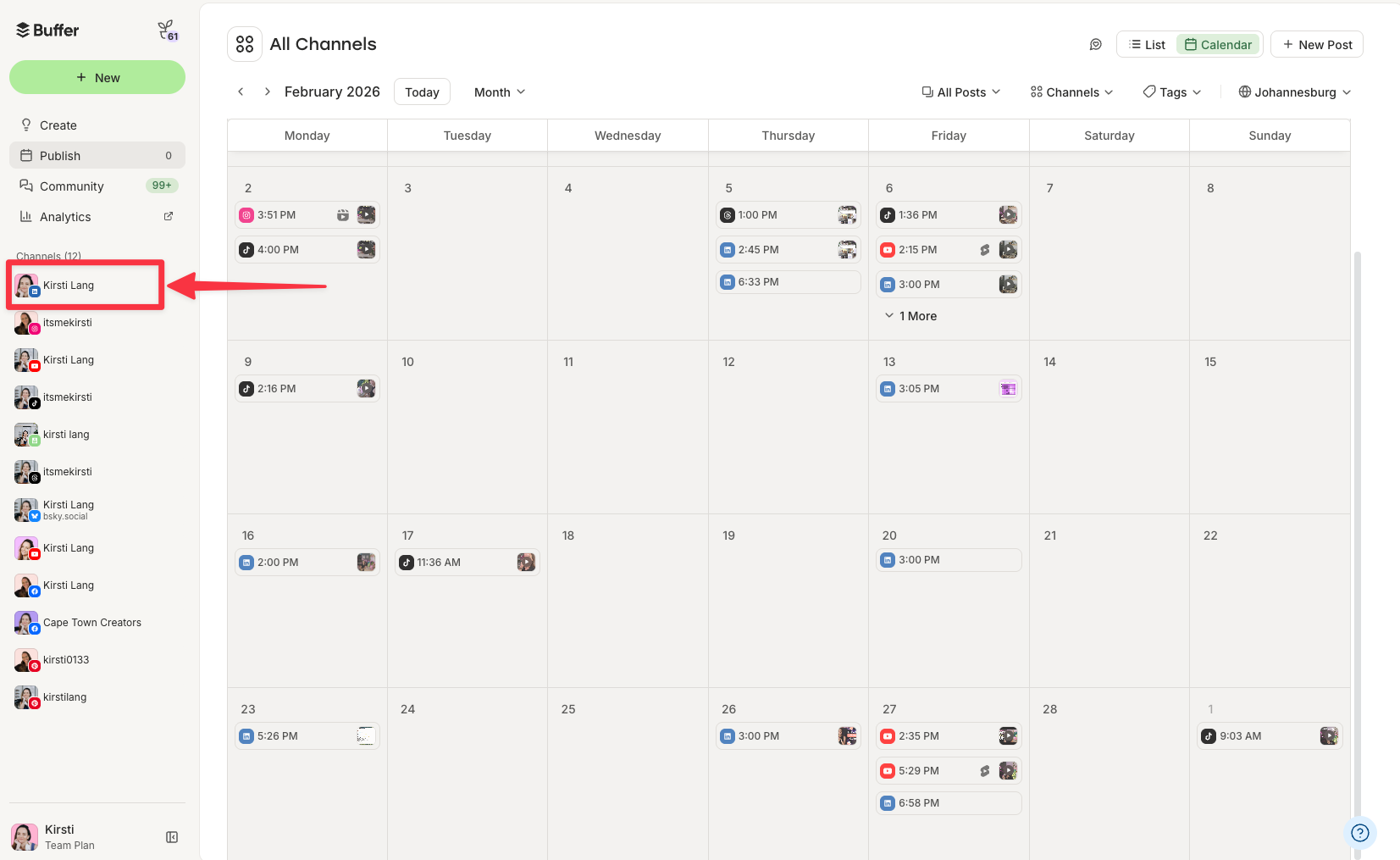
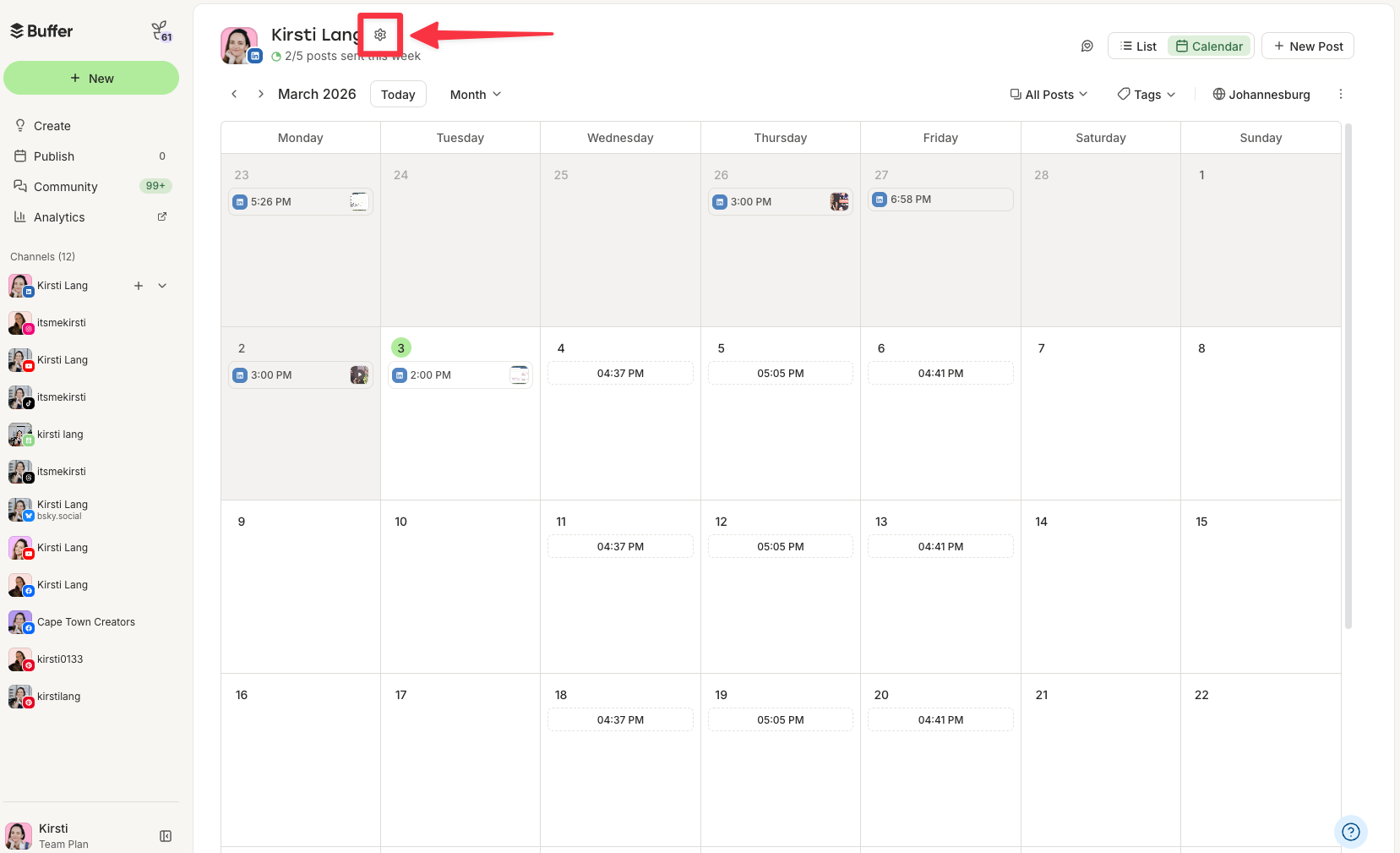
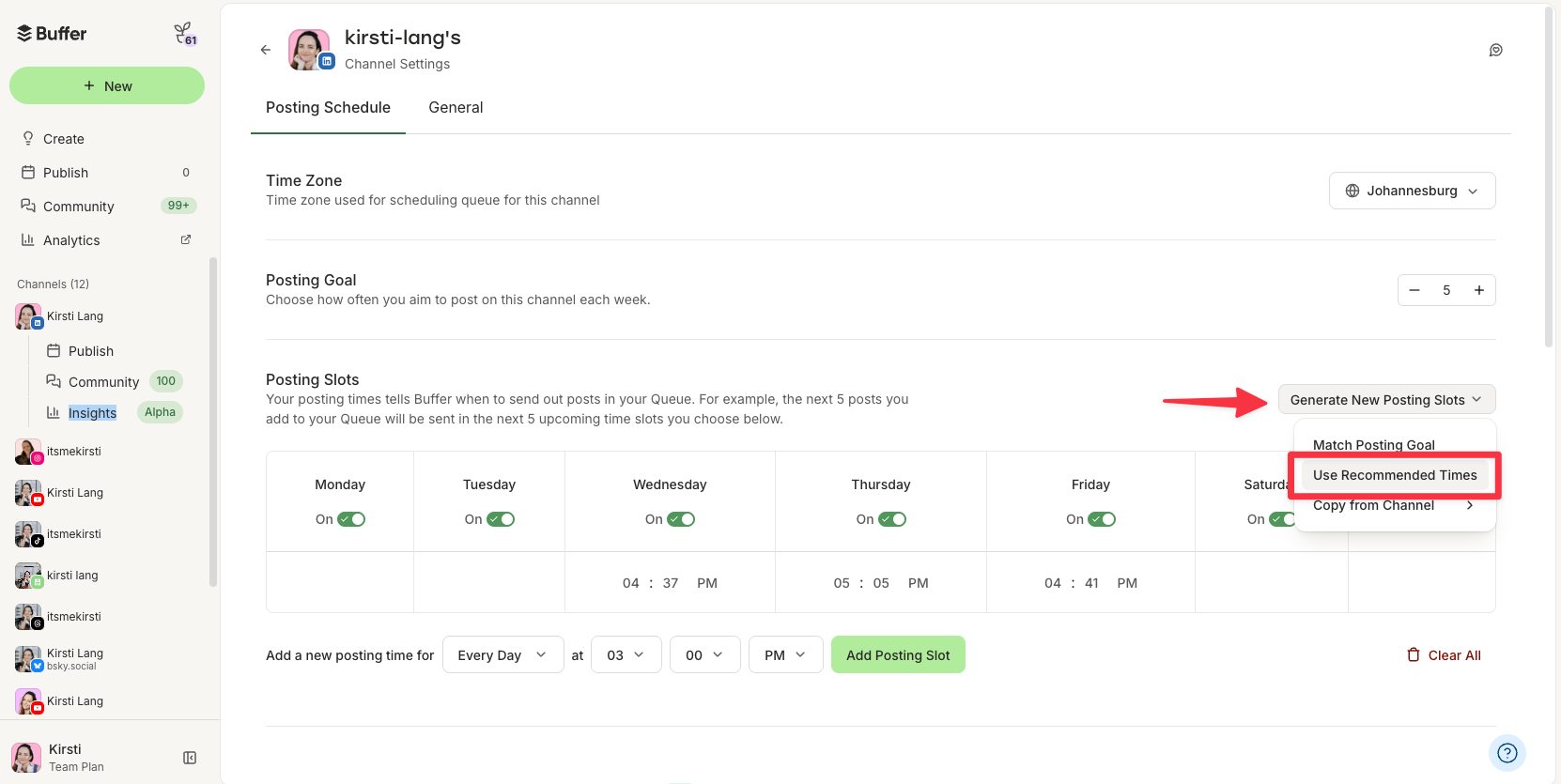
- Leveraging Tools: Social media management tools like Buffer become invaluable. These platforms can automatically suggest and schedule posts during these newly identified high-engagement windows, streamlining the process and ensuring consistent application of data-driven strategies. Buffer’s system allows users to set their posting schedule to automatically incorporate the best times for LinkedIn and other platforms, making it effortless to capitalize on these insights and free up time for content creation and strategy.
Understanding the LinkedIn Algorithm and Engagement
The LinkedIn algorithm is a complex system designed to prioritize and distribute content it deems valuable and relevant to individual users. Engagement—reactions, comments, and reposts—serves as a critical signal to this algorithm. A post that quickly accumulates interactions suggests to LinkedIn that the content is resonating with its audience, thereby increasing its likelihood of broader distribution. While strong engagement does not guarantee virality, it significantly enhances a post’s visibility and reach. This makes optimizing for peak engagement times a foundational element of any successful LinkedIn content strategy.
The concept of a "golden hour" for LinkedIn posts, referring to the immediate period after publication when early engagement can build momentum, aligns with this algorithmic understanding. While LinkedIn has not specified an exact duration, the principle holds: publishing when your target audience is most likely to be active and interact can give a post a stronger initial push, potentially leading to exponential reach. This initial boost can trigger a positive feedback loop, where increased visibility leads to more engagement, further boosting visibility.
Looking Ahead: Continuous Adaptation is Key
The 2026 data from Buffer highlights that social media platforms and user behaviors are in a constant state of flux. The dramatic shift in LinkedIn engagement from traditional work hours to late afternoons and evenings underscores the need for continuous monitoring and adaptation in digital marketing strategies. What worked last year may not be effective this year, and what is optimal today may change again in the future.
The insights provided by Buffer, grounded in an extensive analysis of millions of posts, offer a critical roadmap for navigating this evolving landscape. By embracing these data-driven recommendations and diligently analyzing their own performance metrics, professionals and brands can significantly enhance their presence and impact on LinkedIn, ensuring their valuable content reaches the right audience at the right time. The key to sustained success lies not just in understanding current trends, but in building a flexible strategy capable of evolving with the dynamic digital world.
Furthermore, the study also provided crucial insights into posting frequency and content types. Buffer’s analysis of over 2 million LinkedIn posts revealed that posting 2 to 5 times per week is an excellent starting point, yielding around 1,182 more impressions per post and a 0.23 percentage point increase in engagement rate compared to posting just once a week. This frequency appears to be the threshold where LinkedIn’s algorithm recognizes consistent activity and begins to favor content distribution. For those capable of higher frequency, posting 6 to 10 times per week can further boost gains by an additional 5,001 impressions per post, while posting 11 or more times per week leads to a dramatic lift of nearly 17,000 more impressions per post and three times the engagement. These benefits hold true regardless of follower count, from profiles with hundreds to those with tens of thousands.
In terms of content format, carousel (document) posts are currently the strongest performers, generating substantially higher engagement. This suggests that LinkedIn users appreciate content that is visually engaging, easily digestible in sequential slides, and often packed with actionable insights or detailed information. Combining strategic timing with optimized content formats and consistent frequency will be the ultimate recipe for maximizing reach and engagement on LinkedIn in 2026 and beyond. This integrated approach will allow professionals and brands to not only adapt to current trends but also to proactively shape their presence on the world’s leading professional networking platform.