The Strategic Imperative of Social Media Customer Service in the Modern Digital Economy

The landscape of customer relationship management has undergone a seismic shift as social media platforms transition from spaces for brand promotion to critical frontlines for customer support. Today, over 75% of consumers express a preference for interacting with businesses through the same messaging channels they use to communicate with friends and family, fundamentally altering the expectations placed on enterprise support teams. As organizations navigate this digital transformation, the integration of reactive and proactive social media support, powered by a blend of human expertise and artificial intelligence, has become a primary driver of customer loyalty and long-term revenue growth.

The Evolution of Digital Support Channels
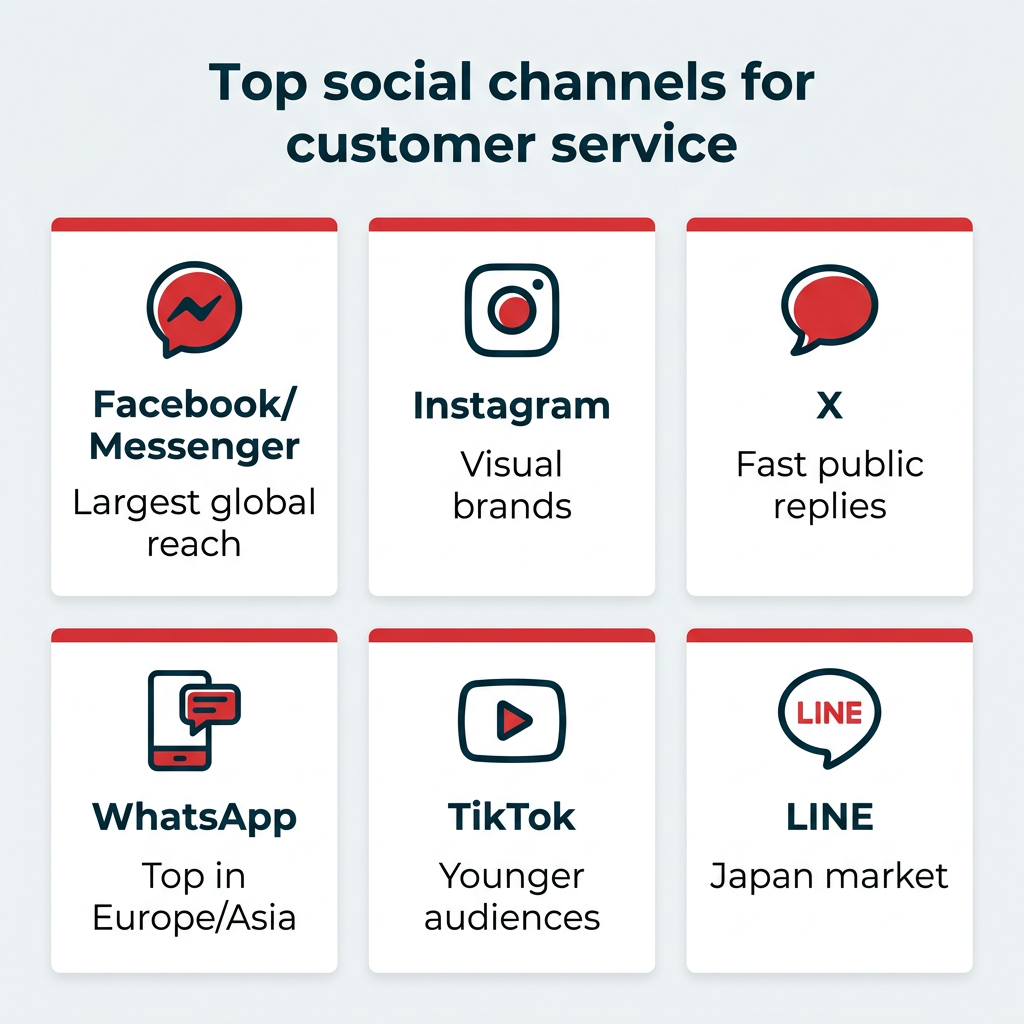
Historically, customer support was sequestered within isolated email threads or telephone queues. However, the rise of platforms such as Facebook, Instagram, X (formerly Twitter), LinkedIn, and TikTok has dismantled these silos. By 2027, industry analysts project that self-service technologies and live chat will officially surpass traditional phone and email channels as the primary methods for consumer-brand interactions.
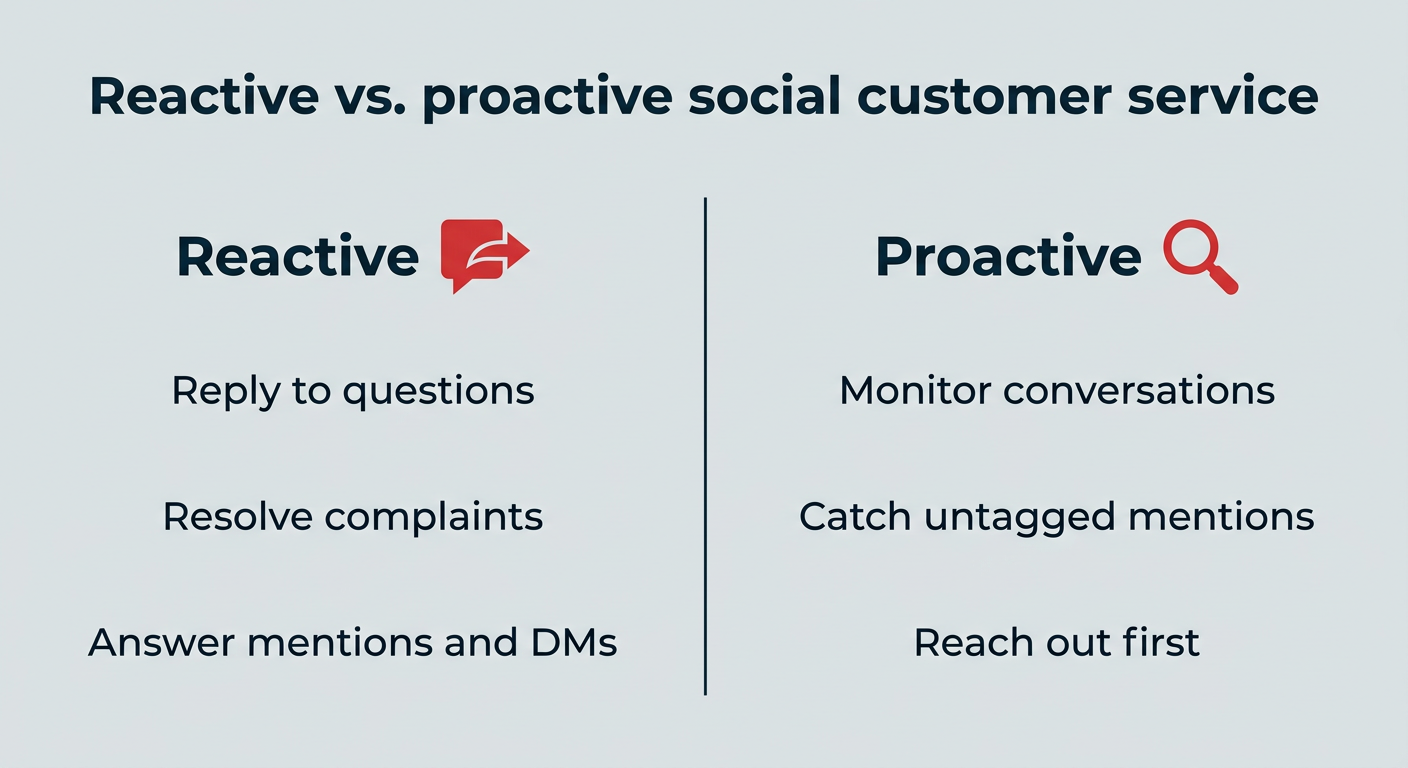
This evolution is characterized by two distinct operational methodologies: reactive and proactive engagement. Reactive support remains the standard, focusing on responding to direct mentions, inquiries, and complaints lodged by users. Conversely, proactive support utilizes social listening tools to identify consumer sentiment and potential service issues—often before a customer formally reaches out—allowing brands to mitigate negative experiences before they escalate into public relations liabilities.

Data-Driven Impact on Revenue and Brand Perception
The transition toward robust social customer service is not merely a matter of convenience; it is a financial imperative. Research from Accenture indicates that organizations that effectively integrate generative AI into their customer-facing initiatives can expect to see a 25% increase in revenue over a five-year period compared to competitors who prioritize productivity alone.
Furthermore, the public nature of social media interactions creates a unique "double duty" for support agents. Every public-facing response serves as a demonstration of corporate values. When a company resolves a grievance openly and efficiently, they are not only retaining one customer but also signaling their brand reliability to an entire audience of prospective buyers. Marketing data confirms this phenomenon, as social media now contributes more to B2B customer acquisition than traditional digital advertising or email marketing campaigns.
The Hybrid Ownership Model
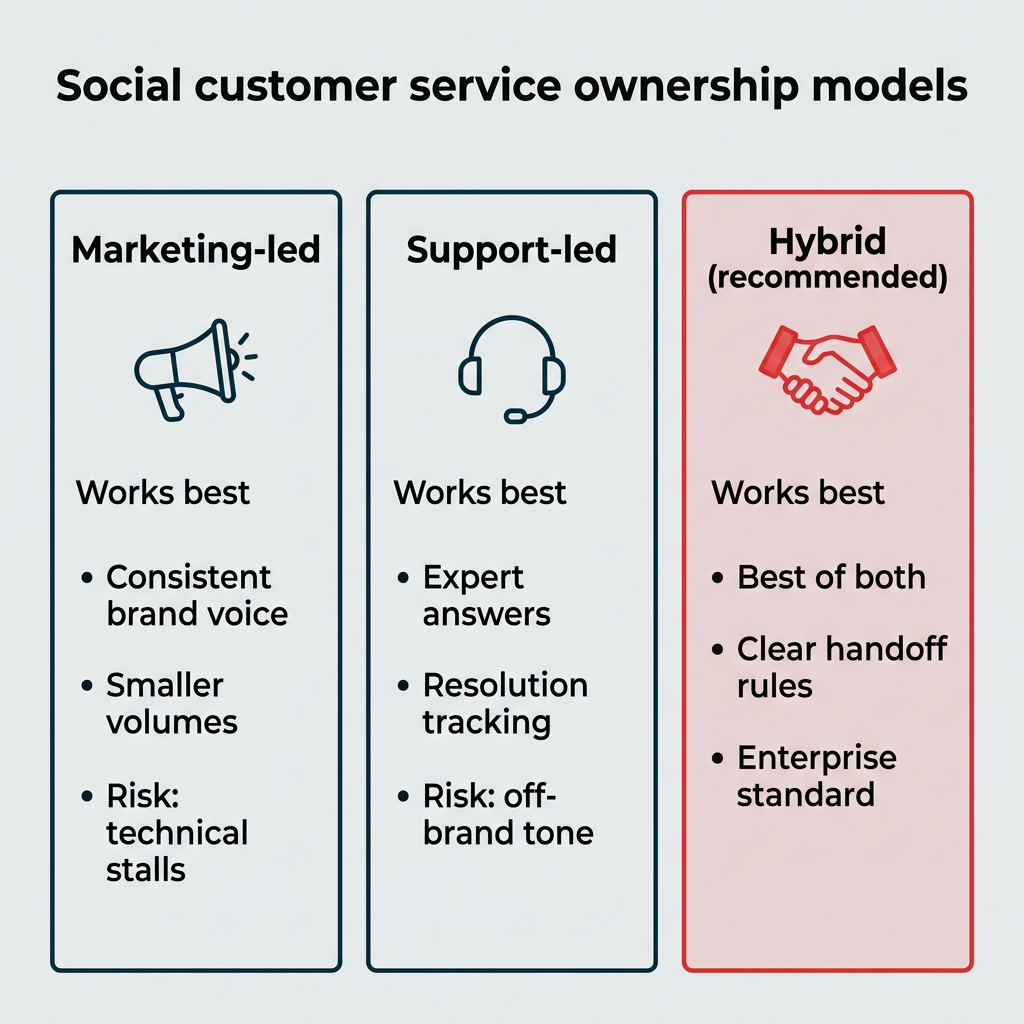
As organizations scale their social operations, a critical question emerges regarding internal ownership: should social support fall under the purview of marketing or dedicated customer service departments? Current industry consensus favors a hybrid model. In this framework, marketing teams maintain the brand voice and engagement strategy, while customer support teams handle complex technical inquiries and escalations.
This structure relies on a centralized, unified inbox—a technology that aggregates comments, private messages, and mentions from disparate platforms into a single dashboard. By leveraging this unified view, enterprises can implement clear escalation paths, ensuring that no request is neglected. For example, when a high-stakes issue arises, the system can automatically route the ticket to a senior support agent while maintaining a consistent communication style that aligns with the brand’s marketing voice.

Proactive Engagement and Social Listening
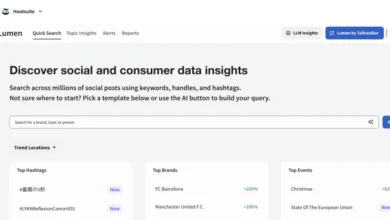
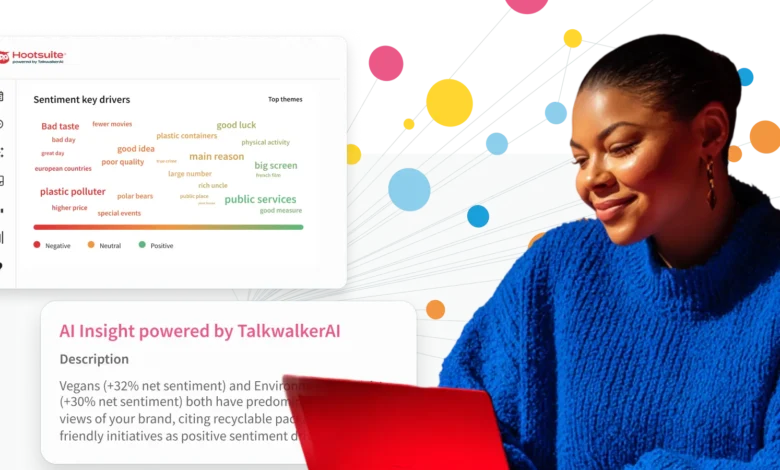
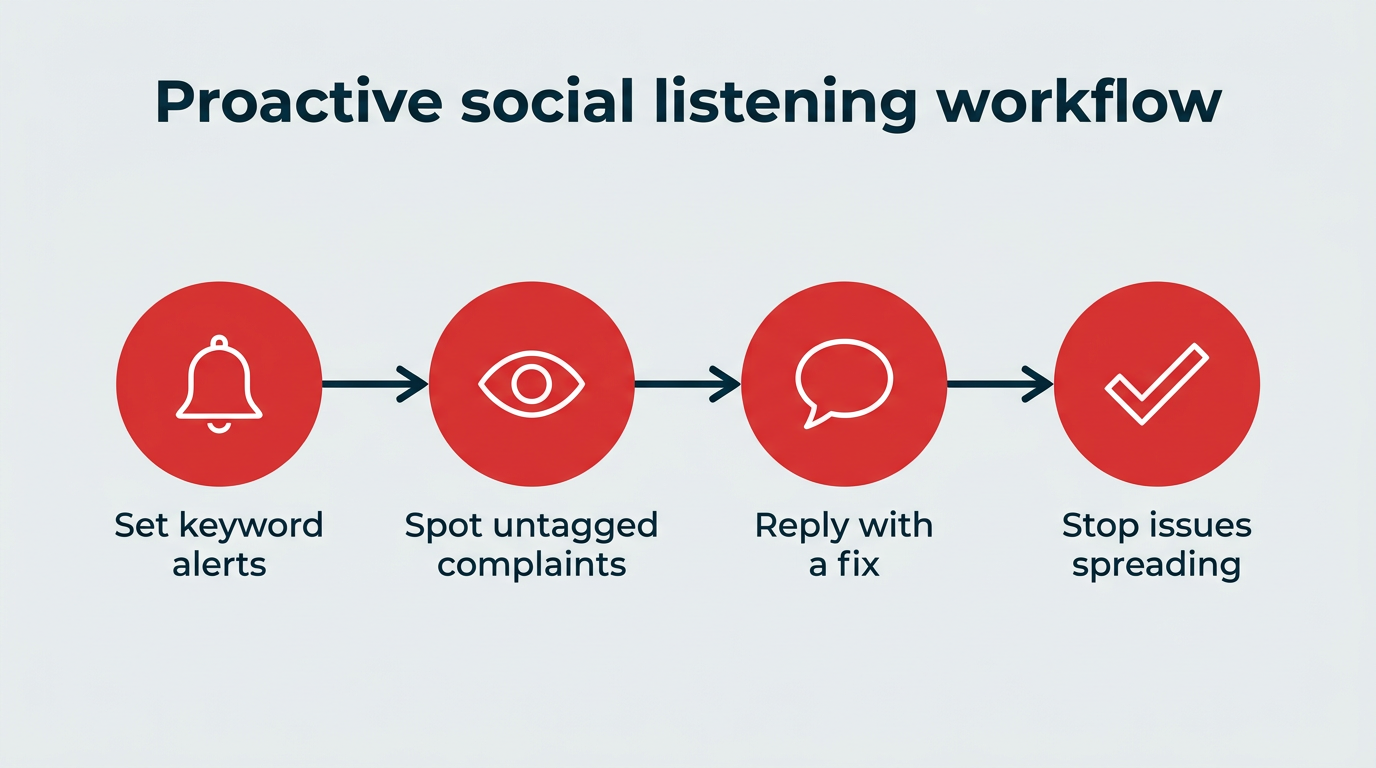
The maturity of a brand’s social strategy is often measured by its ability to engage in proactive listening. Modern tools, such as advanced social listening applications, enable firms to scan billions of online data points for specific keywords, product mentions, and even common misspellings or expressions of frustration.
This capability is particularly vital for crisis management. When a product fails to function as intended, customers often voice their complaints without tagging the brand’s official handle. Through proactive keyword monitoring, organizations can identify these "untagged" conversations, step in with technical support, and resolve the underlying issue. This not only prevents a single complaint from snowballing into a viral thread but also demonstrates a level of attentiveness that can convert frustrated users into brand advocates.

The Role of Artificial Intelligence and Automation
The integration of artificial intelligence—specifically generative AI and sophisticated chatbots—has become the standard for maintaining high-volume support without linear increases in headcount. Recent statistics show that approximately 61% of consumers prefer self-service channels for routine inquiries, and 55% have interacted with chatbots to resolve simple problems.
However, the efficacy of these tools hinges on their ability to offer personalized, context-aware assistance. Modern AI systems no longer rely on rigid, scripted responses; instead, they are designed to retain context throughout a conversation, understand sentiment, and offer a seamless transition to a human agent when a situation becomes too complex for automation. The goal is to deploy AI for high-frequency, low-complexity tasks, thereby freeing human agents to provide high-touch, empathetic support for critical issues.
Best Practices for Professional Response
To maintain an effective social presence, organizations must adhere to rigorous standards of professionalism. First and foremost is the "one-hour rule," where brands aim to provide an initial response to inquiries within 60 minutes. This speed is critical, as 77% of customers expect near-instantaneous interaction when they reach out via social channels.
When handling negative feedback, the approach must be strategic. The primary objective is to move the conversation from a public, high-visibility forum to a private, controlled environment as quickly as possible. By acknowledging the issue, offering a direct path to resolution, and correcting any misinformation politely, brands can preserve their reputation. It is also imperative to note the legal implications of online discourse; in extreme cases of defamation, courts have held individuals accountable for false negative reviews, though the most effective defense remains a track record of consistently helpful and professional public engagement.
Measuring Success: Beyond Vanity Metrics
Success in social media customer service is measured by performance metrics that directly correlate to business outcomes. Key Performance Indicators (KPIs) include:
- Average Response Time: The speed at which an initial contact is acknowledged.
- Customer Satisfaction Score (CSAT): The qualitative feedback provided by customers post-interaction.
- Resolution Rate: The percentage of issues effectively closed within a single interaction or thread.
- Net Promoter Score (NPS): A measure of customer loyalty and the likelihood of recommendation.
By tracking these metrics alongside traditional engagement data—such as likes and comments—leadership teams can view support as a revenue-generating function rather than a cost center. This shift in perspective allows for more accurate reporting on how customer support directly influences retention rates and customer lifetime value.
Future Implications for Enterprise Strategy
As we move toward 2027, the gap between organizations that treat social media as a genuine support channel and those that use it only for broadcasting will widen. The successful firms will be those that view every interaction as an opportunity to build trust, refine their product offering through customer feedback, and lower their cost-to-serve through intelligent automation.
Ultimately, the goal of social media customer service is to provide a seamless, human-centric experience at scale. Whether through a high-speed public response on X or an automated, AI-driven resolution via a private messenger app, the fundamental requirement remains the same: the customer must feel heard, valued, and efficiently served. Organizations that commit to this standard will find themselves better positioned to weather the volatility of the digital marketplace and secure a competitive advantage that is both sustainable and measurable.