How Query Fan-Out is Redefining Search Visibility and Content Strategy

Your content can rank on the first page of Google and still never be cited or mentioned by LLMs. This reality marks a tectonic shift in the digital marketing landscape, moving away from traditional keyword-based optimization toward a new paradigm centered on "query fan-out." To succeed in the era of AI-driven search, brands must understand that the old rules of search engine optimization—where rank position was the primary metric for success—are being rewritten by the internal mechanisms of models like ChatGPT, Perplexity, and Google’s AI Overviews.
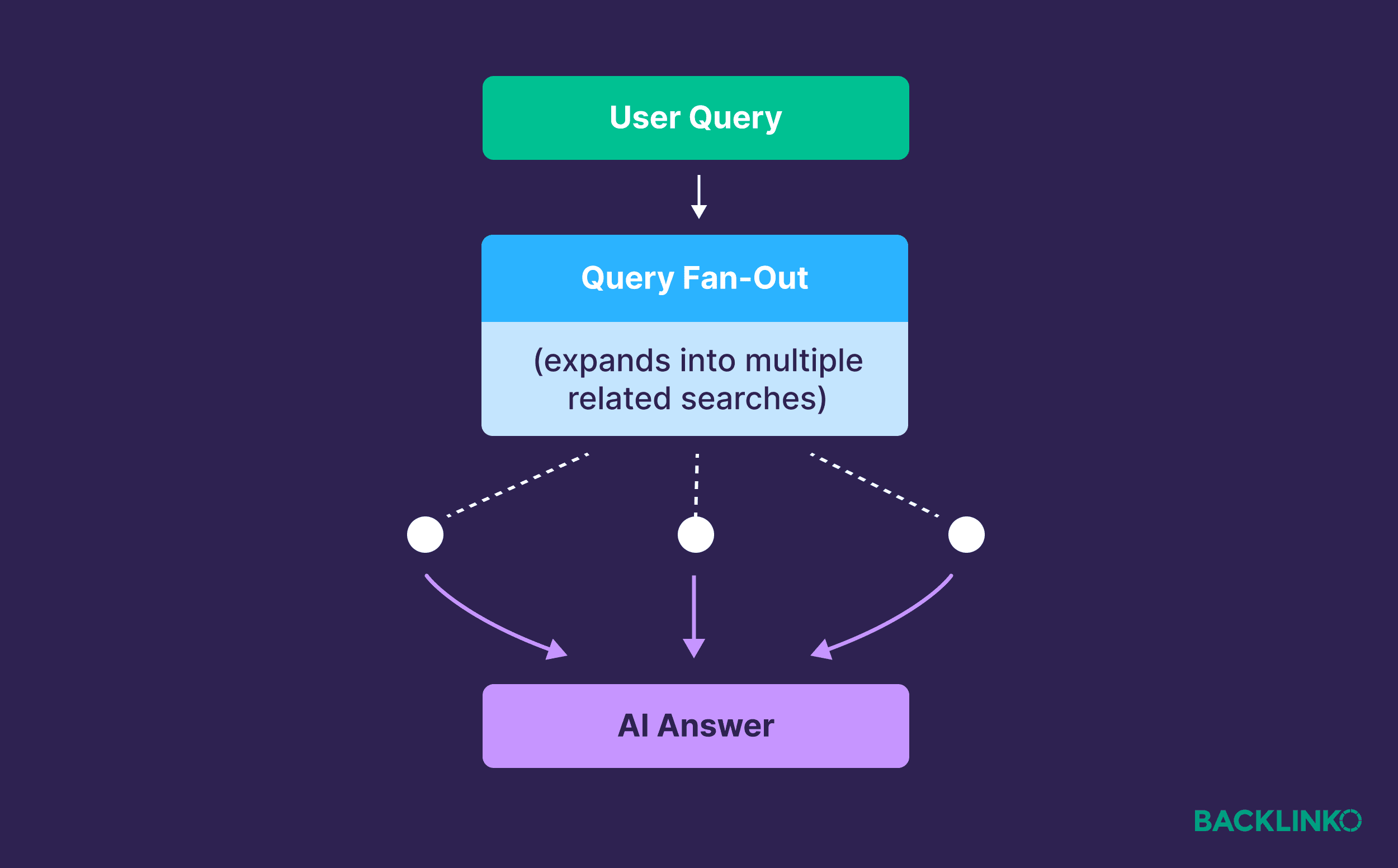
Understanding query fan-out is essential to grasping why high-ranking content often gets ignored by AI. When a user submits a query to an AI system, the system does not simply retrieve the highest-ranking web page. Instead, it initiates a background process known as query fan-out. In this phase, the AI decomposes the user’s original, often broad, prompt into a series of highly specific sub-queries. This allows the model to synthesize a comprehensive, multi-faceted answer by pulling data from a diverse array of sources—including niche editorial sites, Reddit threads, and specific product pages—regardless of their position in traditional search engine results.
The Mechanics of Query Fan-Out
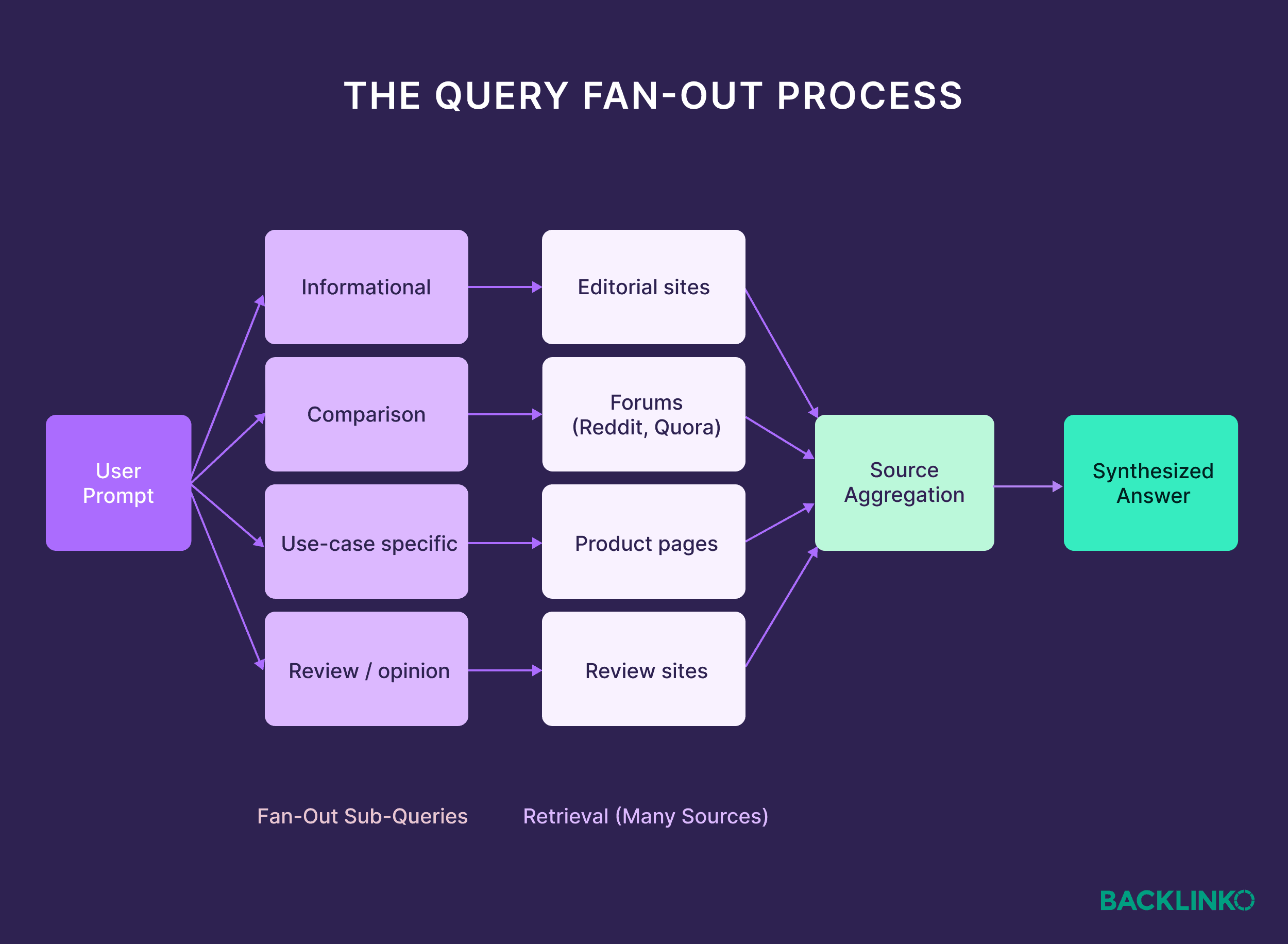
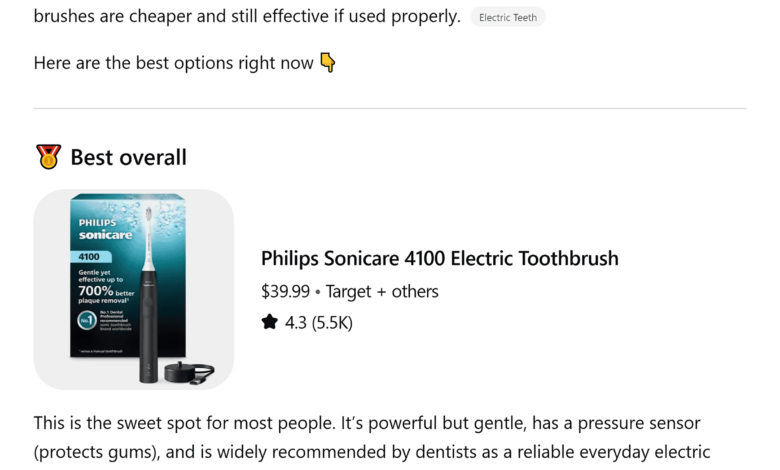
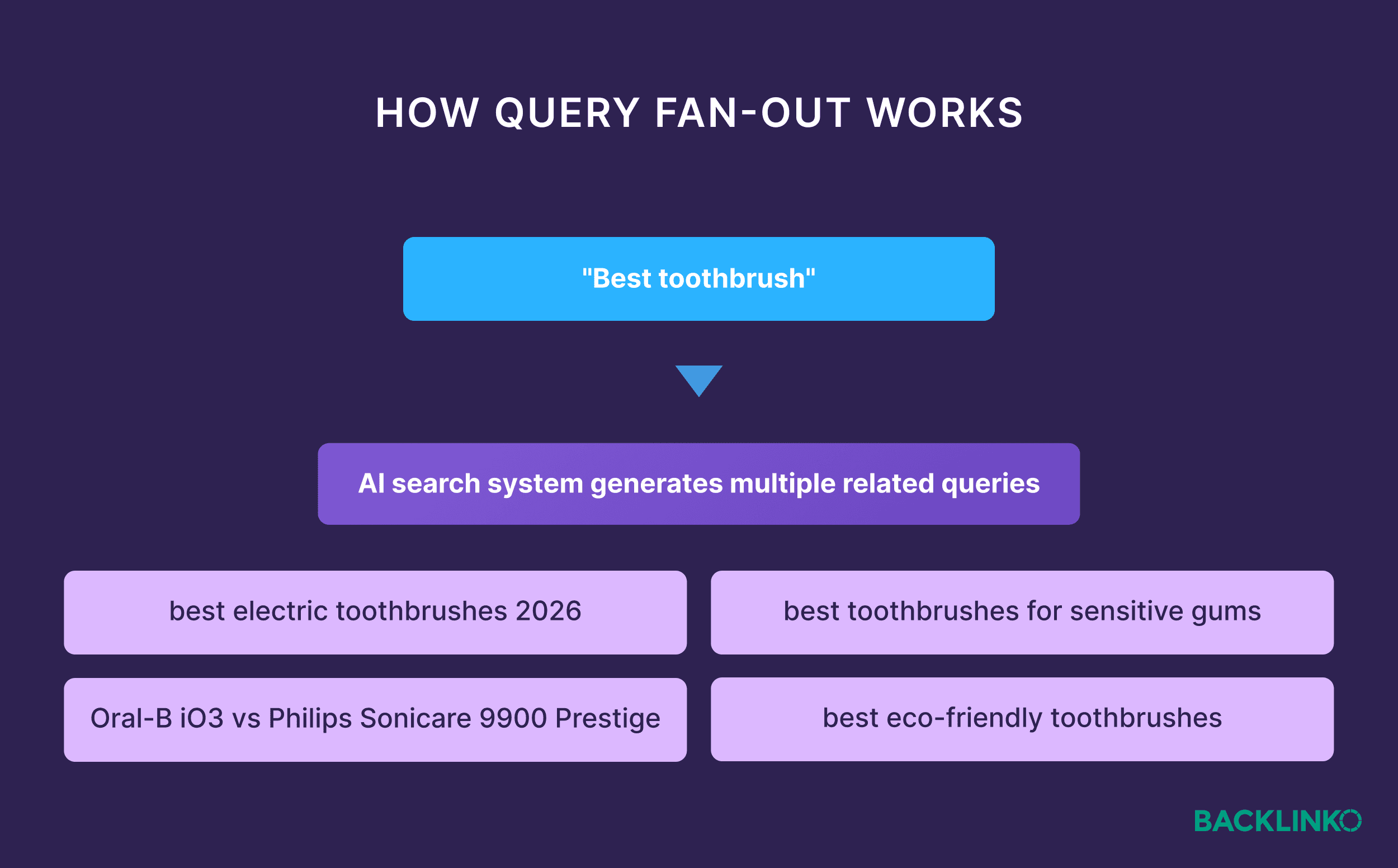
Query fan-out is not just a search feature; it is an analytical process designed to maximize the utility of an AI response. By breaking a single user query into multiple sub-questions, the AI effectively creates a more granular map of the information needed to resolve the user’s intent. For instance, a simple search for "best toothbrush" might trigger sub-queries like "best electric toothbrushes for sensitive gums," "Oral-B vs. Philips Sonicare comparison," and "best eco-friendly toothbrushes."
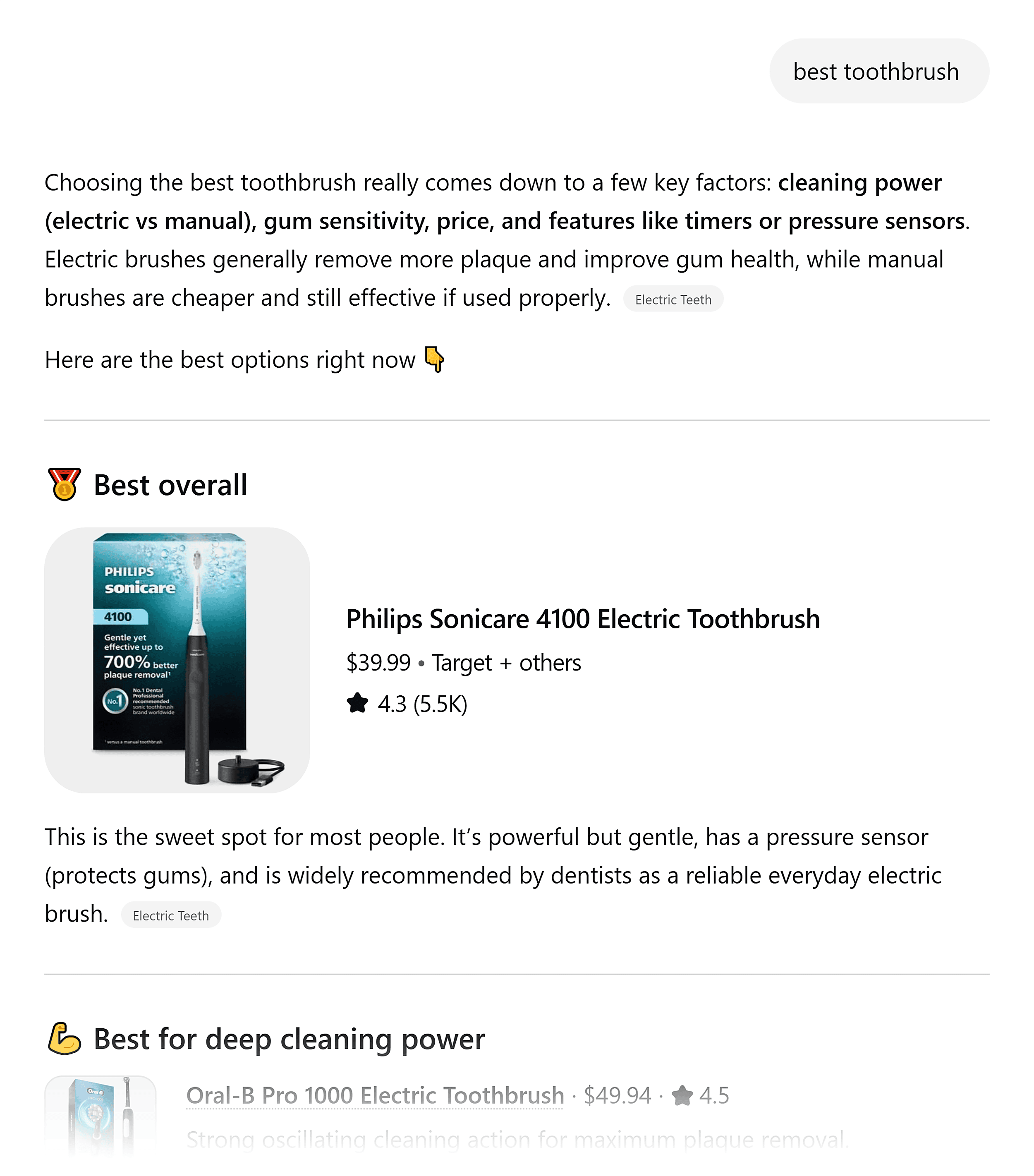
This process allows the AI to provide a synthesized answer that anticipates the user’s needs, often covering top-rated picks, price ranges, and technical comparisons in a single, cohesive response. The goal of this "fanning out" is to eliminate the need for the user to conduct multiple searches. Consequently, if a brand’s content does not address these sub-queries—either directly through its own pages or through third-party mentions—the brand is unlikely to be featured in the final answer. In the AI search era, coverage and retrievability are the new kings of search engine performance.
Why Traditional SEO is No Longer Enough
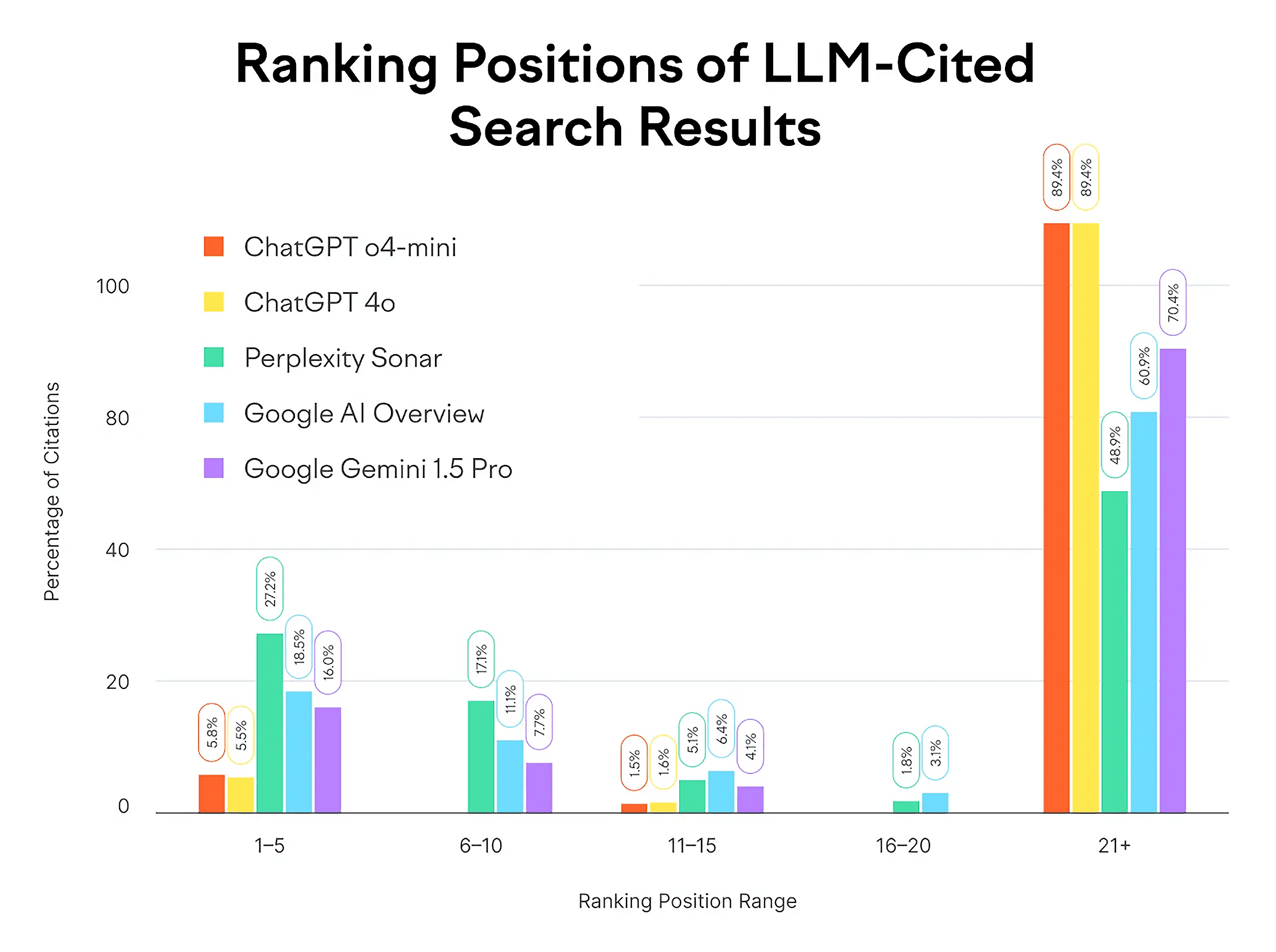
The shift toward AI-centric discovery has created a significant disconnect between traditional SEO rankings and AI citations. According to a recent study by Semrush, ChatGPT cites pages from search positions 21 and beyond in nearly 90% of its responses. This data indicates that the AI is prioritizing the depth and relevance of specific passages over the overall domain authority or ranking position of the page.
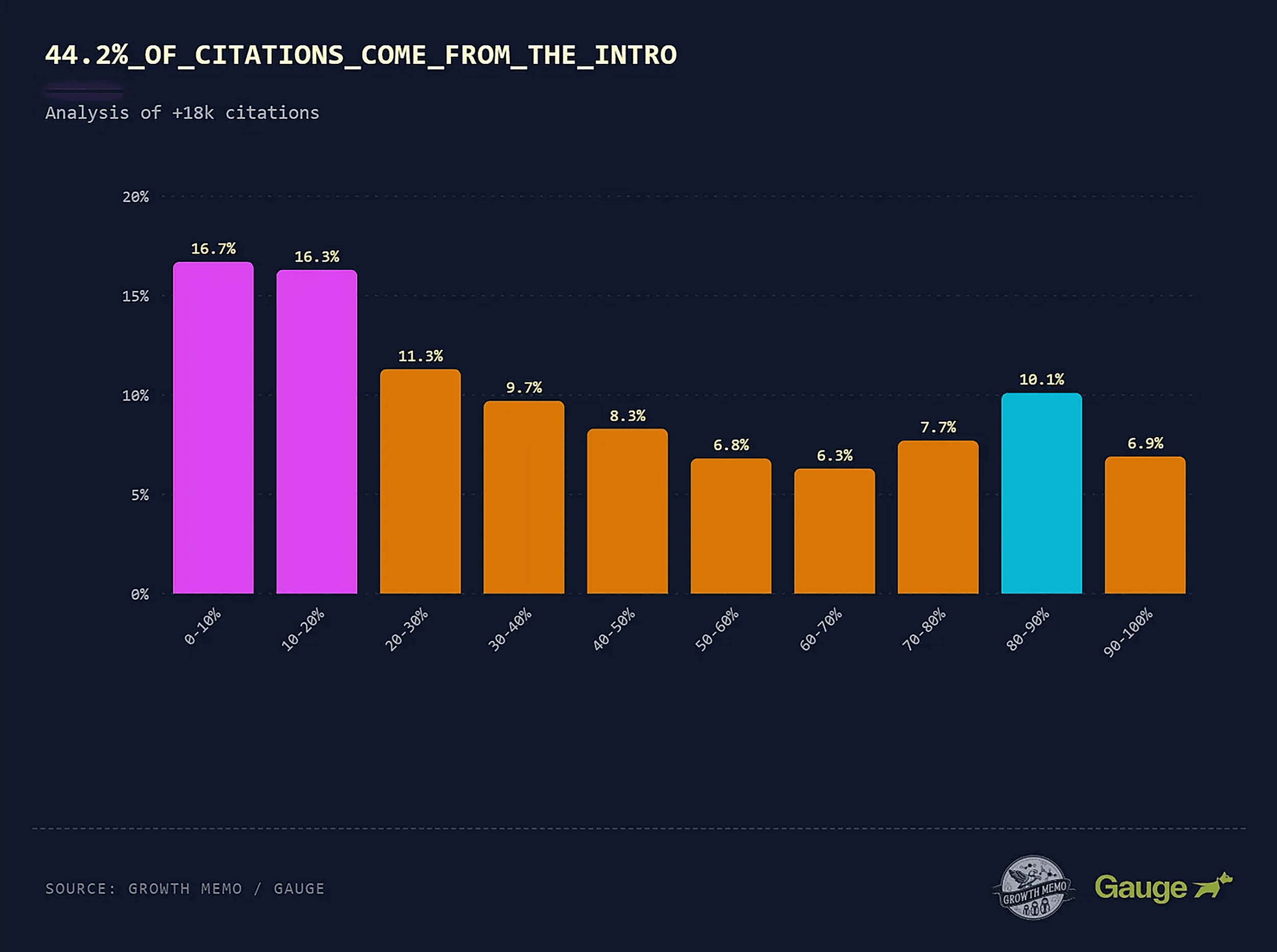
Furthermore, AI systems do not retrieve entire pages; they retrieve specific passages. Analysis by growth expert Kevin Indig suggests that 44.2% of citations in AI responses are drawn from the first 30% of a page, while 31.1% come from the middle, and 24.7% from the final third. This underscores the necessity of front-loading critical information. Brands that bury their answers at the bottom of long-form articles are effectively invisible to the AI’s extraction algorithms.
The Collapse of the Traditional Marketing Funnel
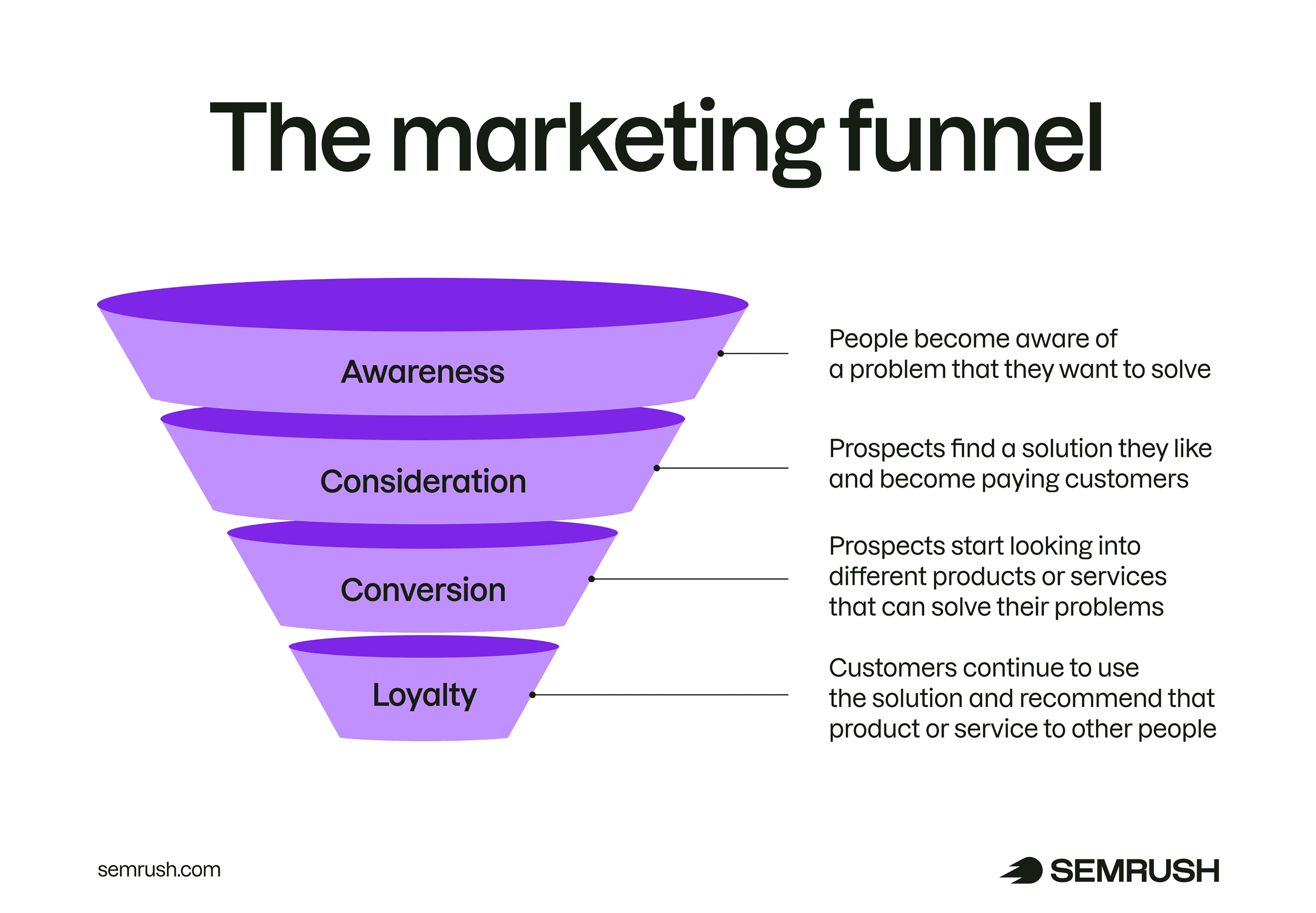
Historically, digital marketing has operated on a linear funnel model: awareness, consideration, and decision. SEO professionals have traditionally optimized specific pages for specific stages of this funnel. However, query fan-out effectively collapses this journey into a single interaction. Because an AI can pull information from across the entire spectrum of the buying process—awareness-level context, consideration-level comparisons, and decision-level specifics—all within one response, a brand’s content must now perform across the entire funnel simultaneously.

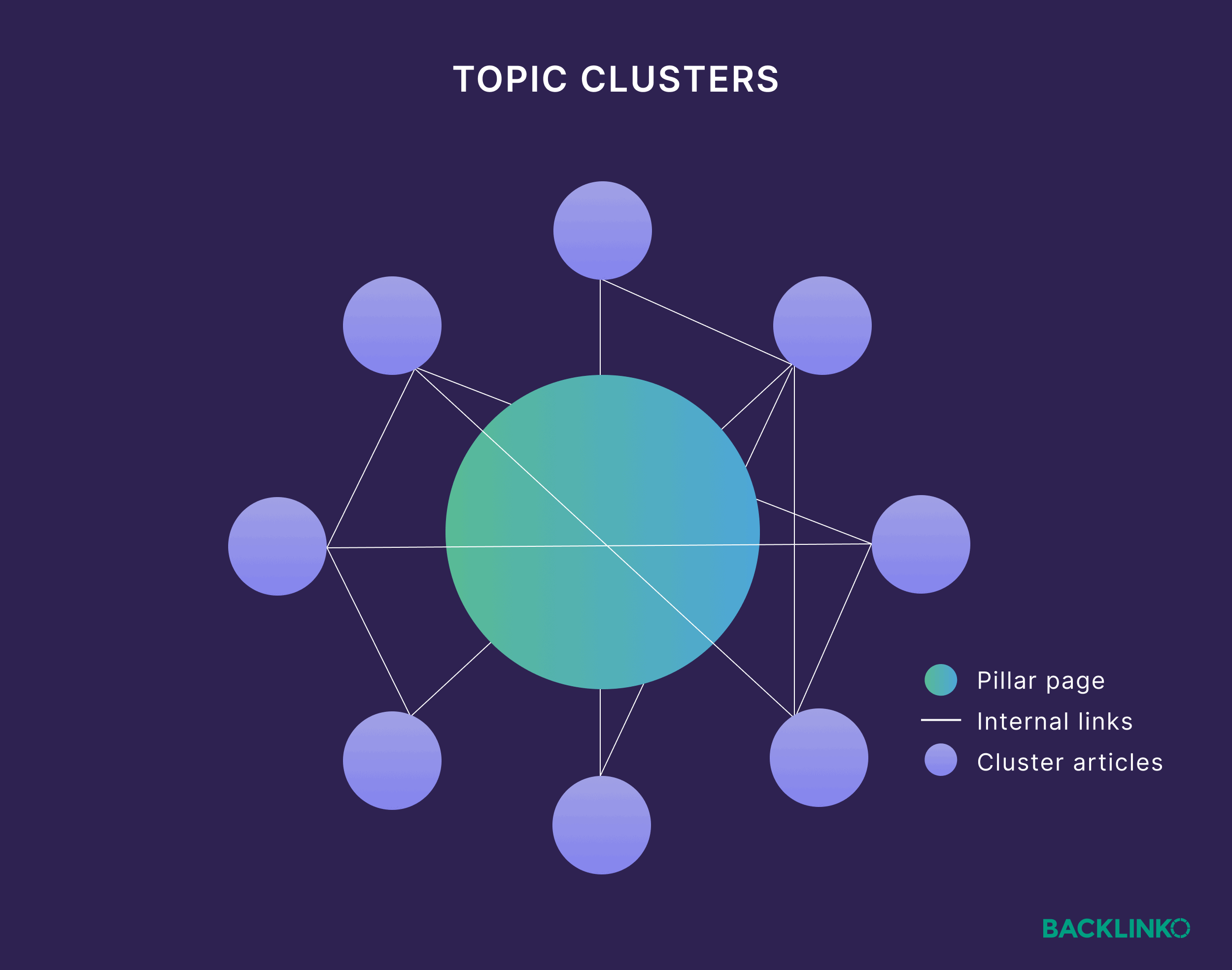
This creates a new mandate for content strategists: move away from siloed keyword targeting and toward comprehensive, topic-cluster-based coverage. By building a network of well-connected pages that cover a full topic, brands can establish the "topical authority" necessary to be the go-to source for the AI when it fans out its sub-queries.

A Six-Step Workflow for AI Visibility
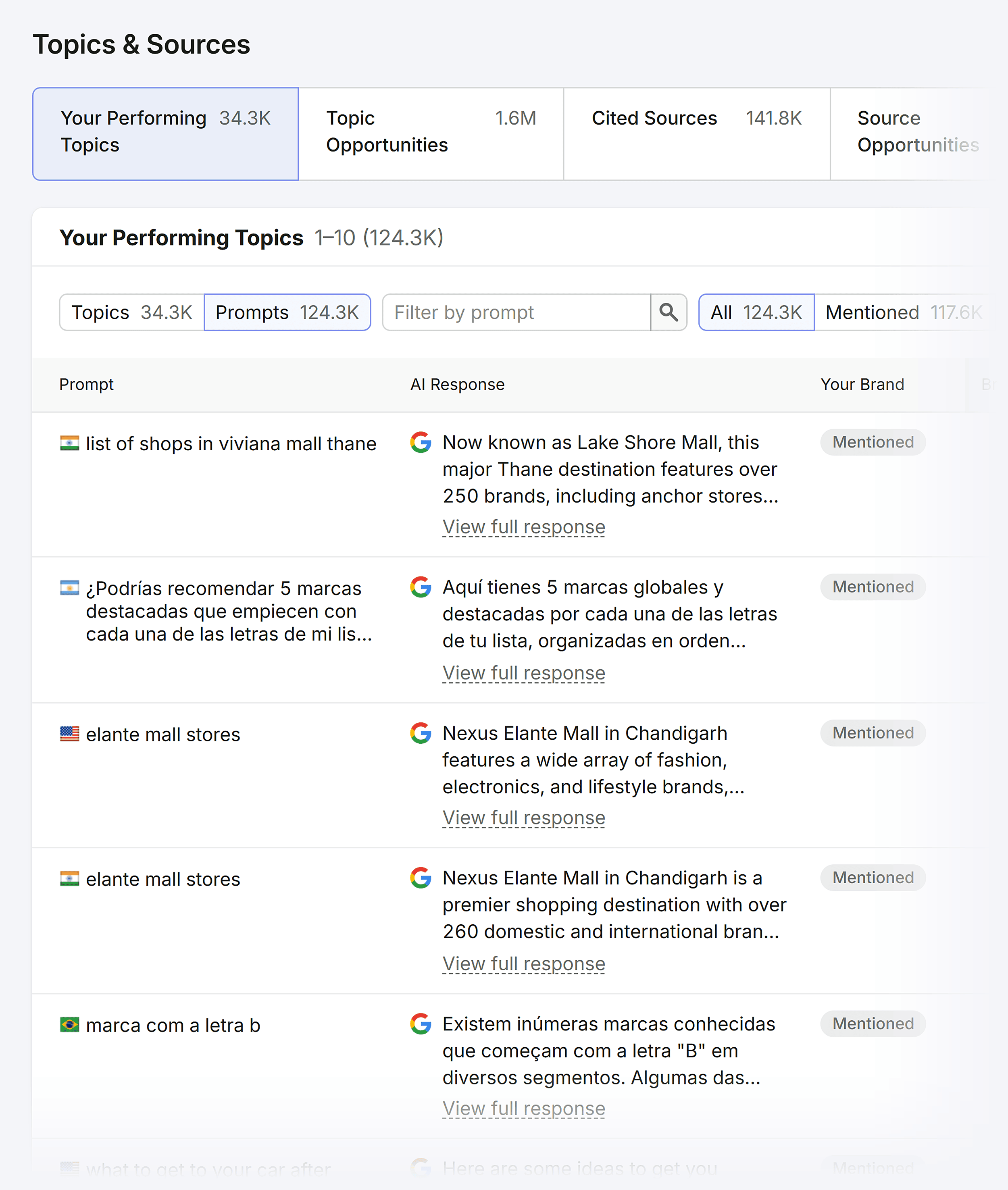
To navigate this landscape, brands should adopt a repeatable workflow designed to earn AI citations.
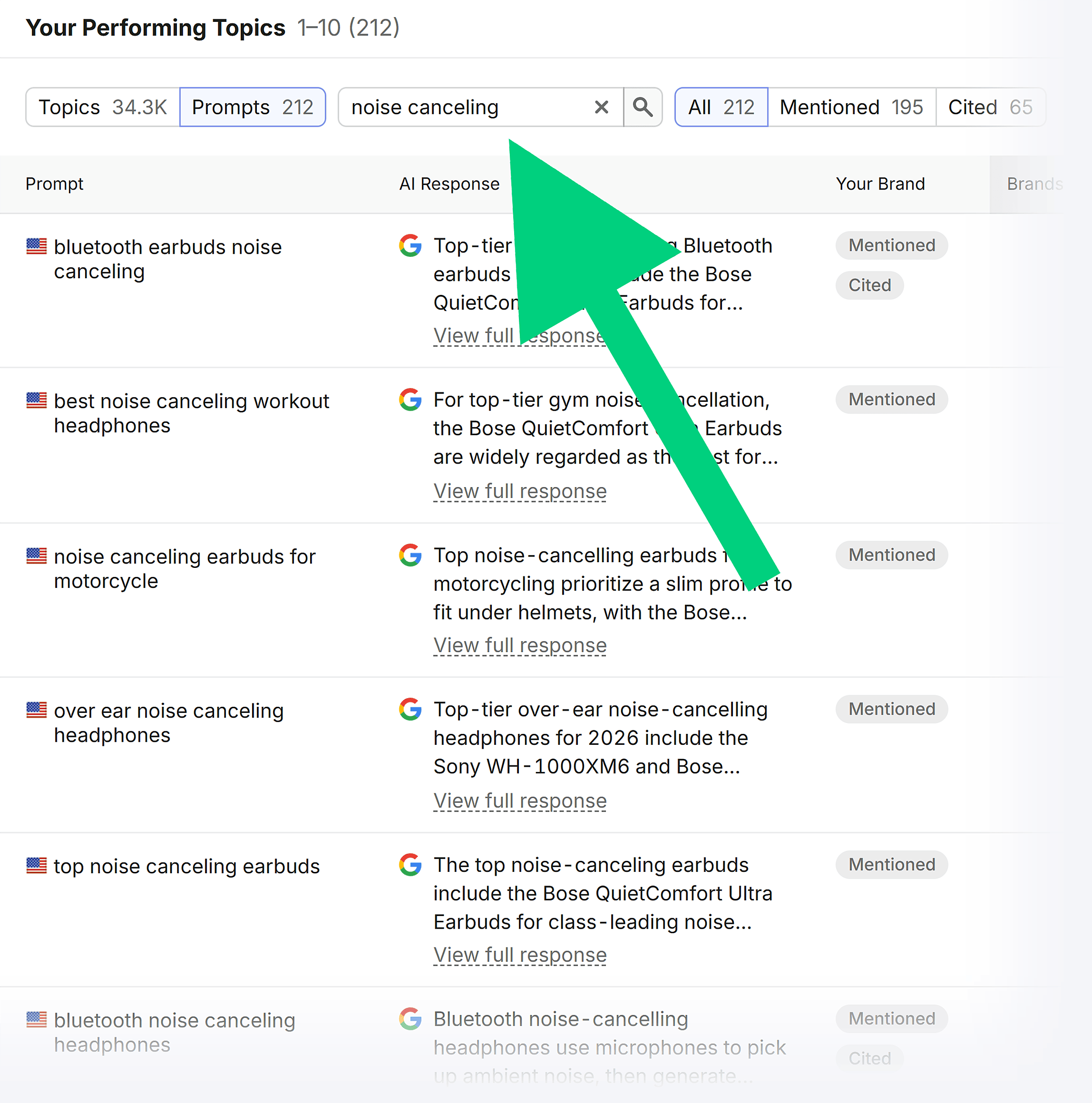
Step 1: Identify "Money Prompts"
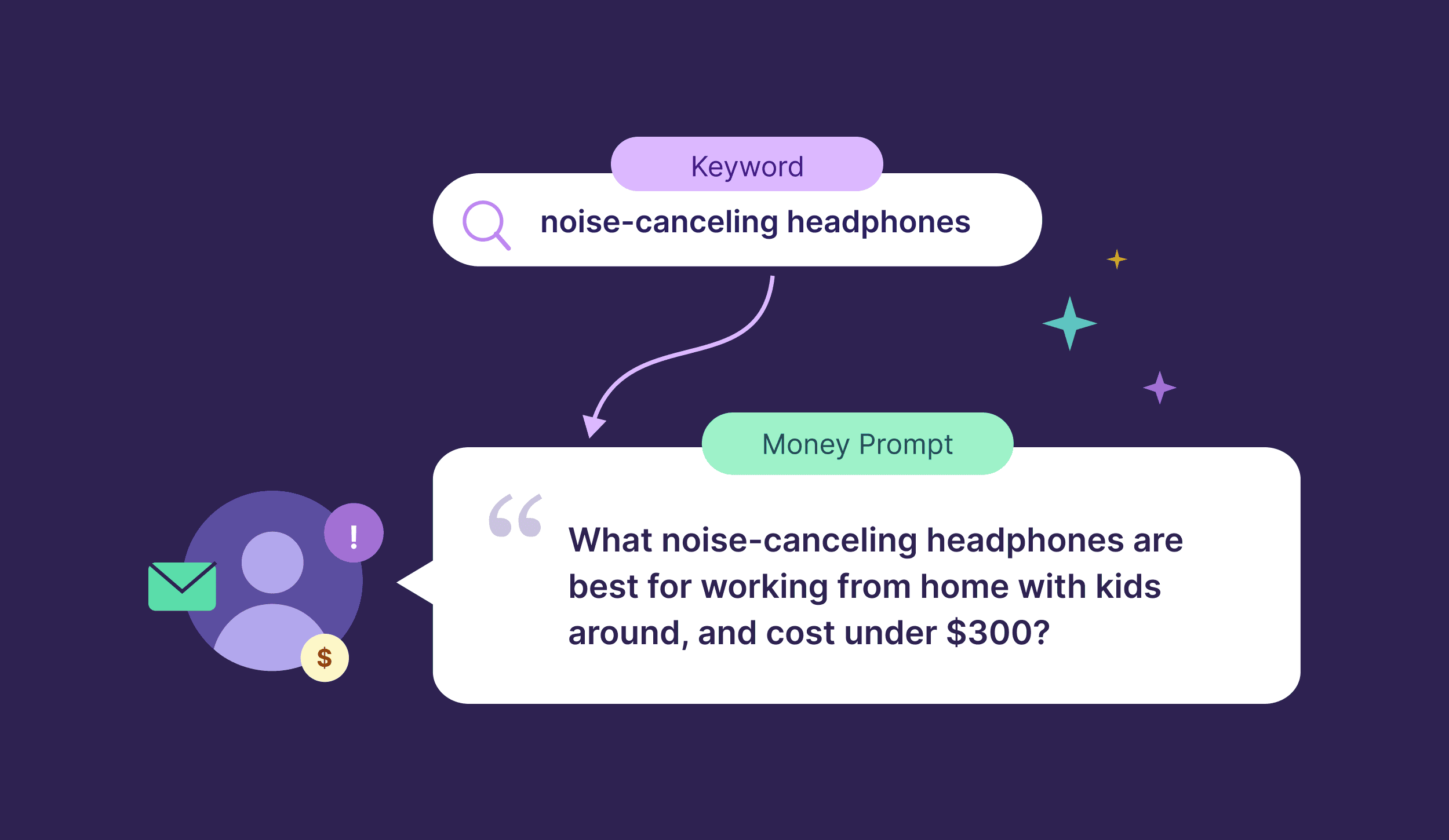
Money prompts are the high-commercial-intent questions that your ideal customers ask AI tools. Unlike traditional keywords, these are conversational and specific. For example, rather than the keyword "noise-canceling headphones," a money prompt might be "What noise-canceling headphones are best for working from home with kids around, and cost under $300?" Brands can use tools like the Semrush AI Visibility Toolkit to identify exactly what users are asking and which sources the AI is currently citing.
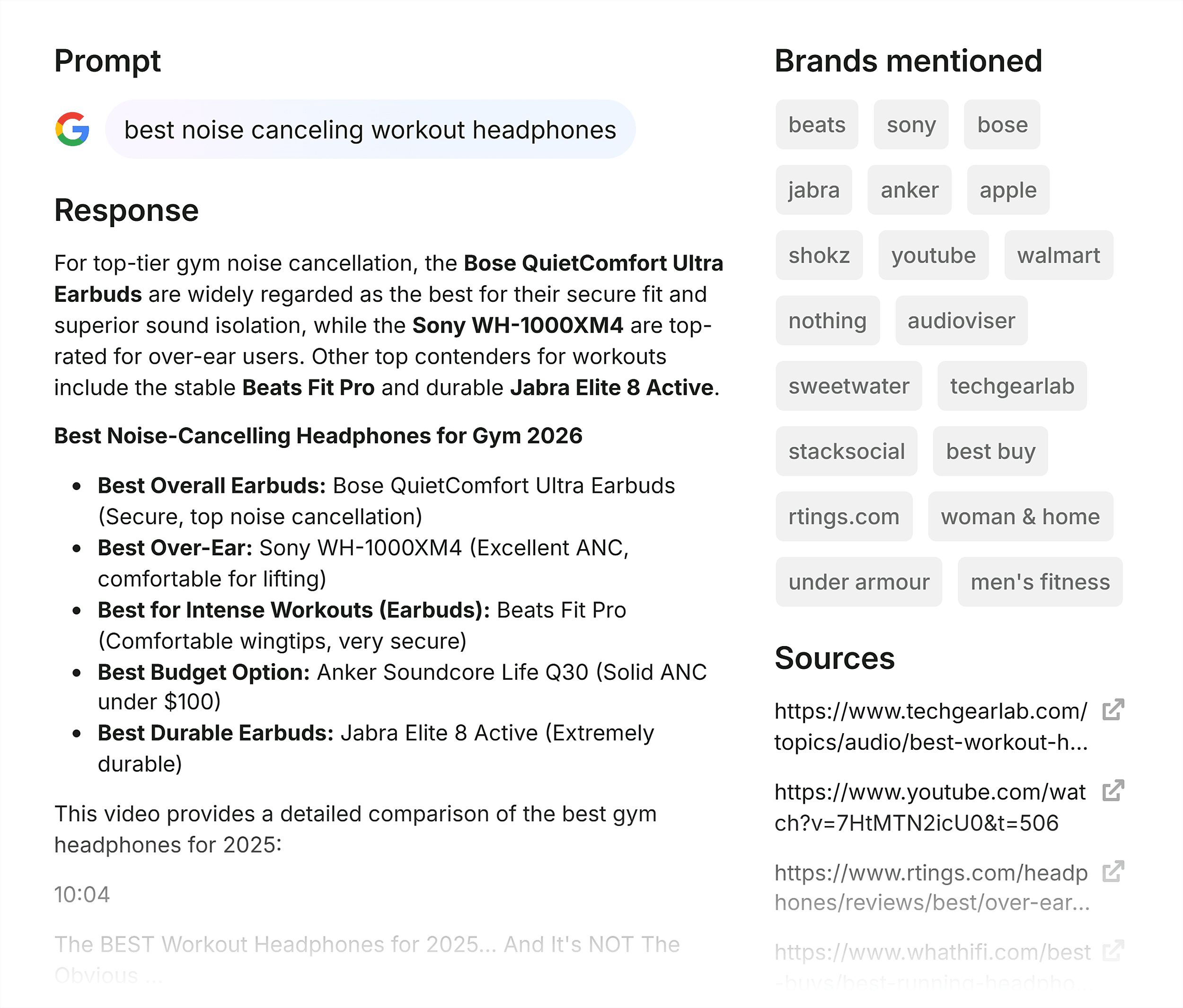
Step 2: Generate Fan-Out Sets
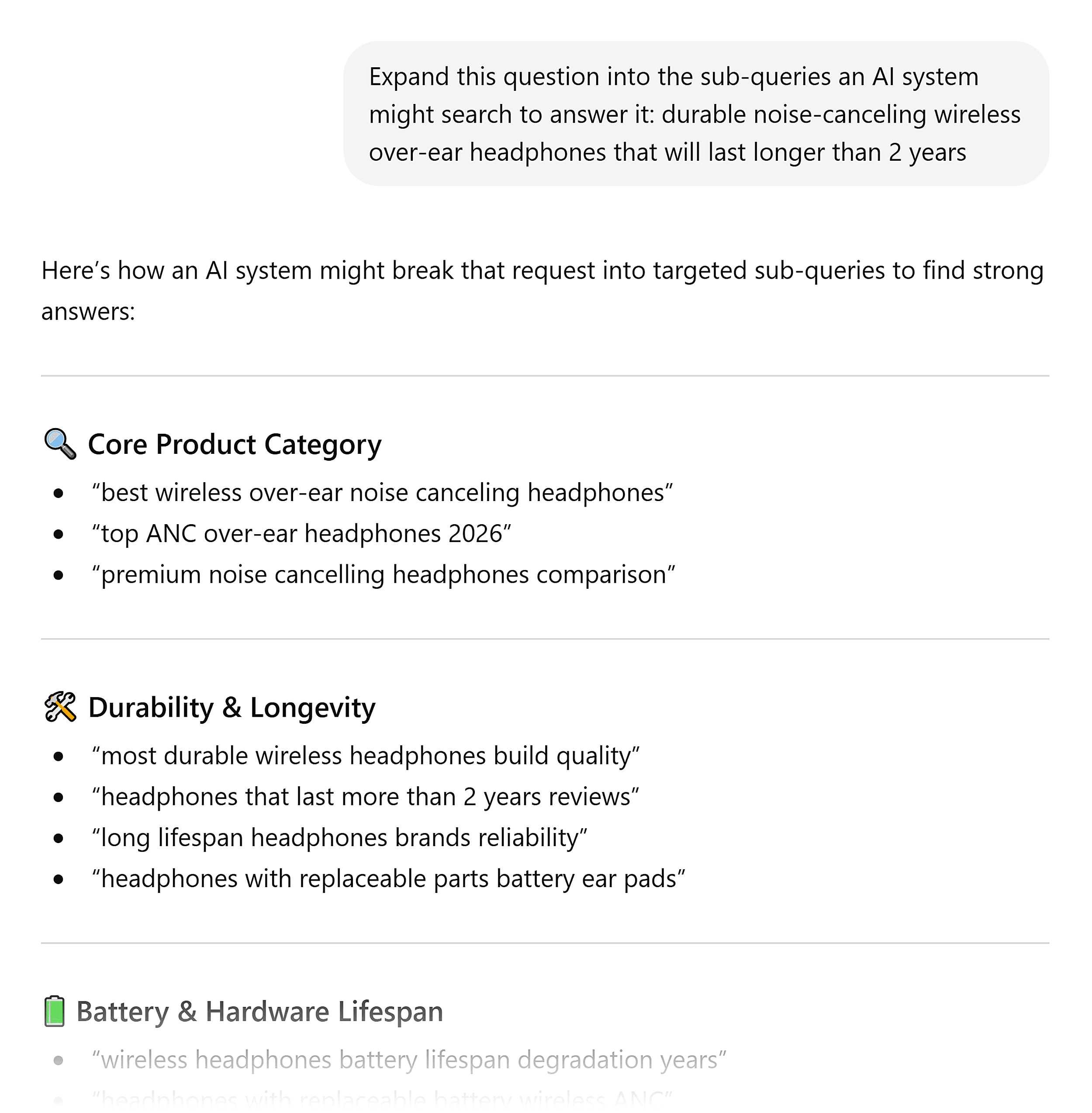
Use AI to understand its own processes. By inputting your money prompts into an AI tool and analyzing the resulting sub-queries, you can identify the gaps in your current coverage. Dedicated tools, such as browser-based fan-out analyzers, can capture the sub-queries an AI runs behind the scenes in real time, giving you a clear picture of the content areas you need to build.
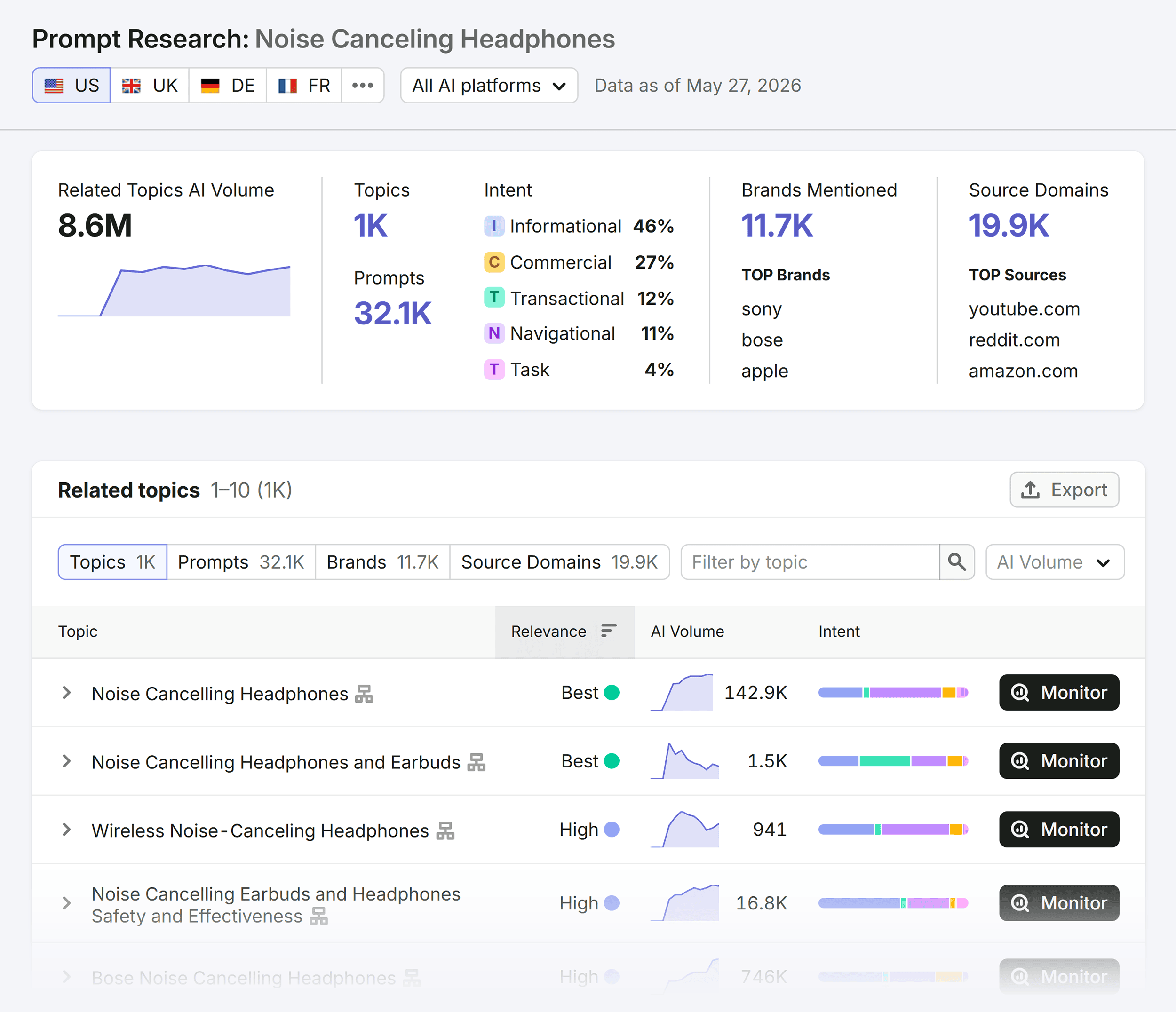
Step 3: Categorize by Intent
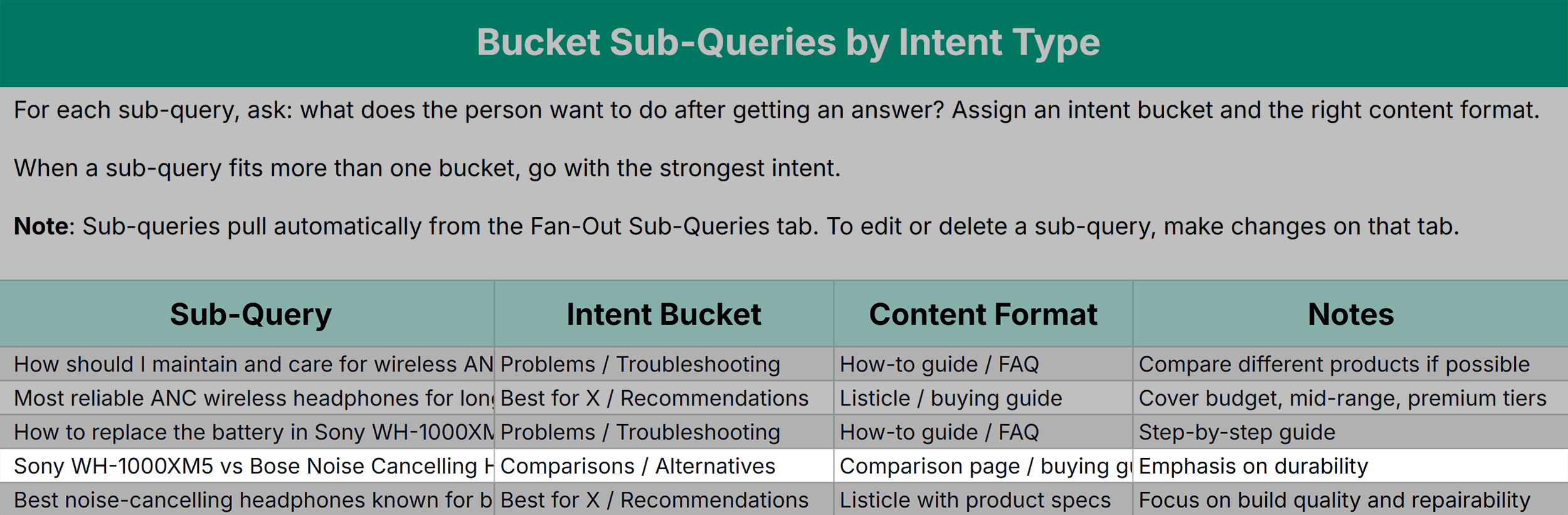
Not all sub-queries require the same content format. By bucketing sub-queries into categories—such as definitions, comparisons, recommendations, or troubleshooting—you can determine the appropriate content format. For instance, a "comparison" sub-query demands a head-to-head table, while a "problem/troubleshooting" sub-query requires a clear, step-by-step how-to guide.
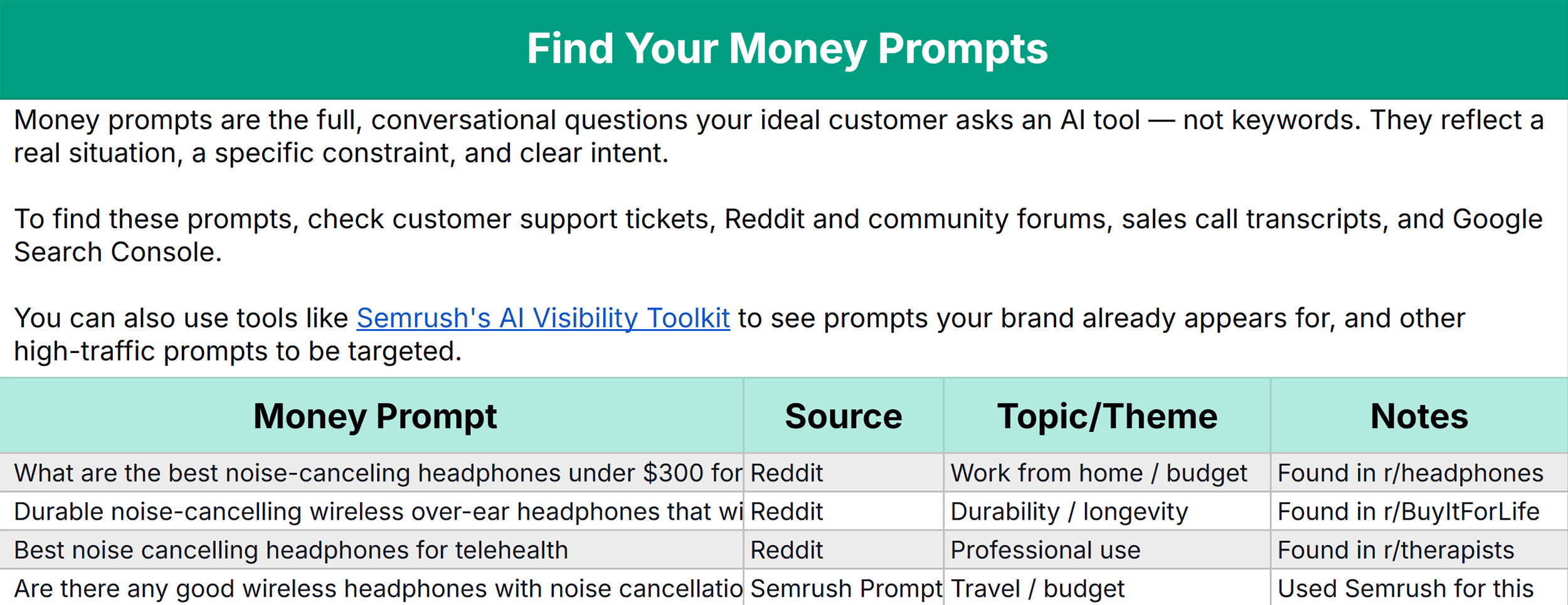
Step 4: Audit for Content Gaps
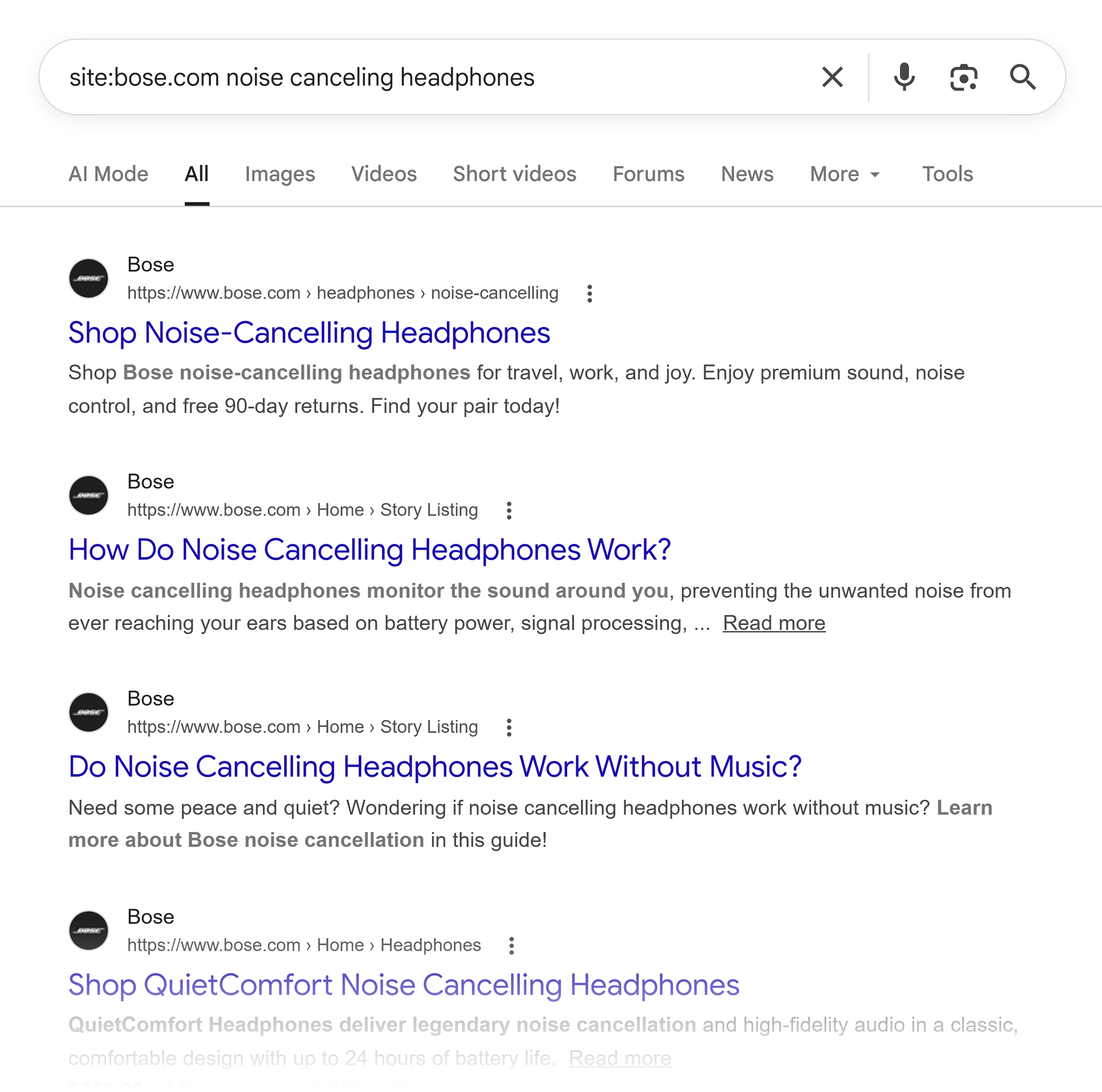
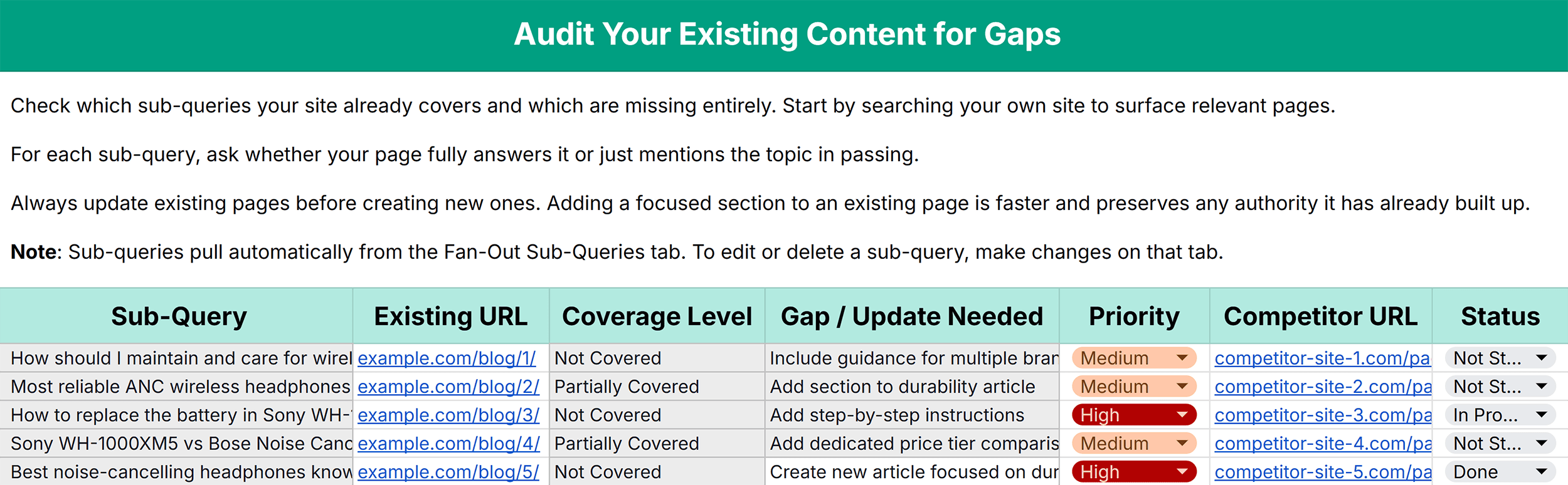
Perform a content gap analysis by searching your own site for the identified sub-queries. If a sub-query isn’t covered, create a dedicated page. If it is partially covered, add a self-contained section to an existing page that answers the question directly without relying on surrounding text.
Step 5: Structure for Extraction
Clean, structured data is the key to being cited. Use descriptive subheadings (H2s and H3s), incorporate bullet points, and utilize schema markup to signal to the AI that your content is a direct answer to a sub-query. Front-load your most important information to ensure it is in the first 30% of your content, where the AI is statistically most likely to look.
Step 6: Measure and Refine
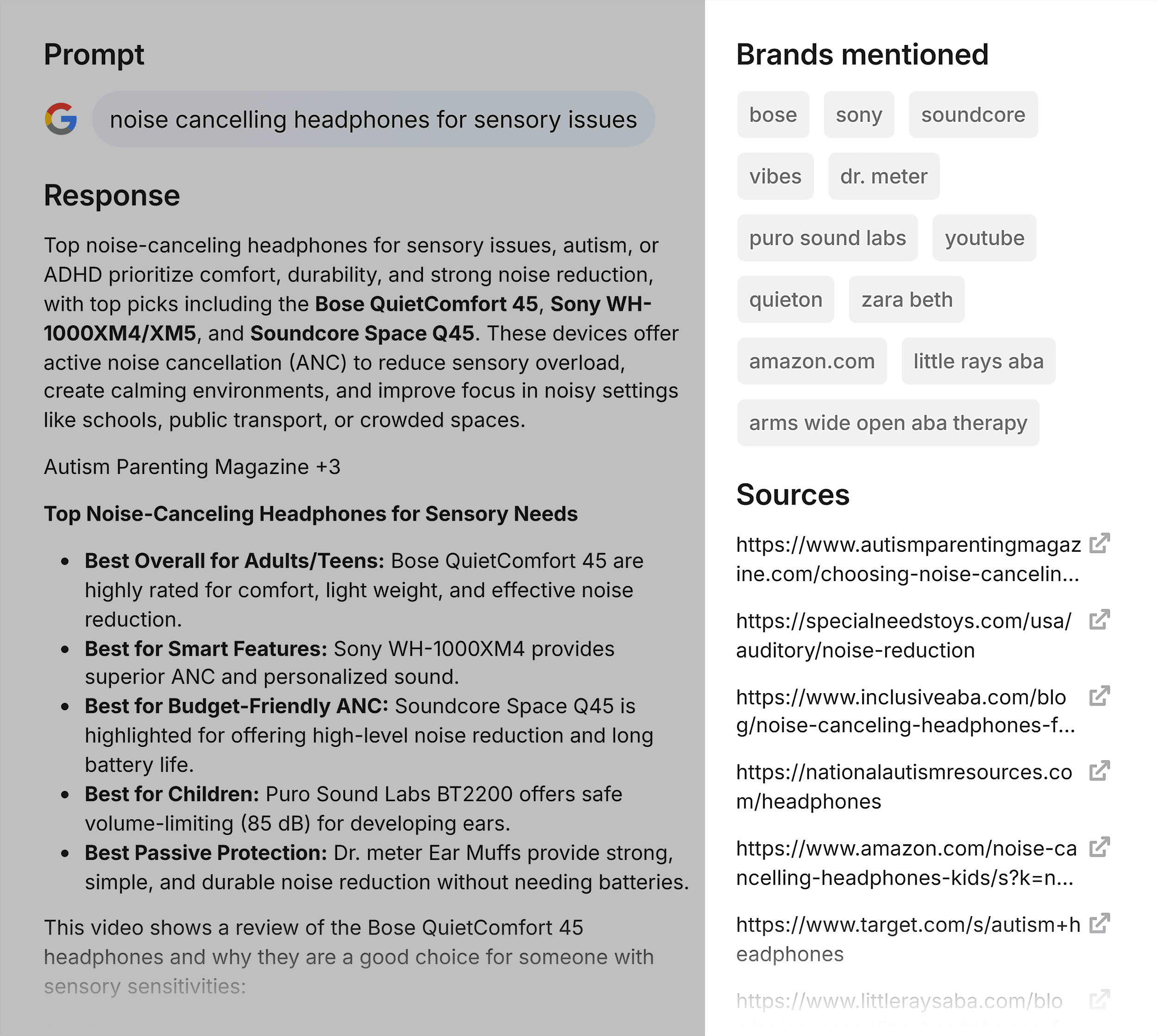
Performance in AI search must be tracked using specific AI-focused metrics. Regularly re-run your money prompts across multiple platforms to monitor changes in mentions and sentiment. Tools that provide an "AI Visibility Score" or "Perception Sentiment" can help you determine if your efforts are resulting in more citations or if competitors are gaining ground.
Implications for the Future of Search
The rise of query fan-out represents the "commoditization" of information search. As platforms like Google, OpenAI, and Perplexity compete to provide the fastest and most accurate answers, the value of the "link" continues to diminish, replaced by the value of the "answer."
While traditional SEO will remain relevant for navigating brand-specific searches and legacy traffic, the battle for the "zero-click" user is now won through technical, structured, and comprehensive content. Brands that adapt their strategies to be "AI-friendly"—by prioritizing clarity, structure, and depth—will not only survive the transition but will likely dominate the next generation of search. Those that cling to the old metrics of page rank and individual keyword volume risk becoming entirely invisible in the AI-mediated web.