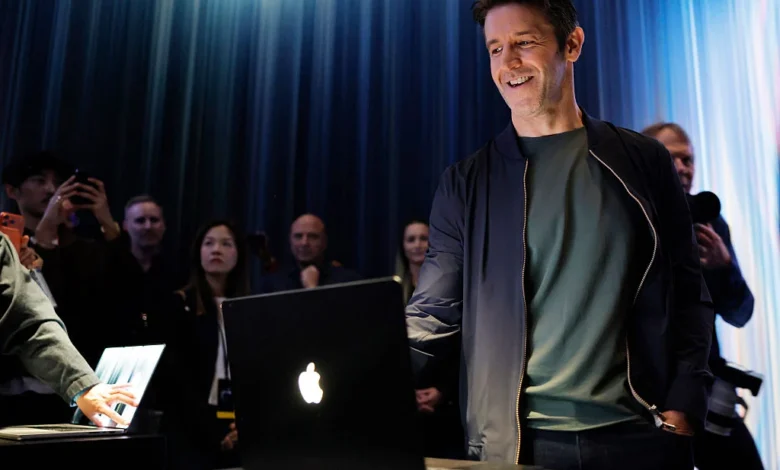
Apple Inc. finds itself at a critical juncture in its storied history of consumer technology innovation, navigating an era dominated by rapid advancements in artificial intelligence. Recently, newly appointed Apple CEO John Ternus addressed long-standing industry critiques regarding the tech giant’s deliberate pacing in the artificial intelligence sector. In a wide-ranging discussion with veteran technology journalist Steven Levy for Wired, Ternus pushed back against the narrative that Apple has fallen behind its Silicon Valley competitors, articulating a philosophy centered on user-centric integration rather than hasty technological deployment.
The remarks arrive at a fascinating cultural and corporate moment for the Cupertino-based company. Following the summer rollout of a significantly overhauled and more powerful version of Siri—a feature whose release had faced frustrating delays—observers have fiercely debated whether Apple’s hardware-first ecosystem is adequately equipped for an AI-first future. Ternus, who formally transitioned into the chief executive role at the beginning of September 2026 after years of leading hardware engineering, acknowledged the relentless external commentary while projecting calm confidence about the company’s trajectory.
The Evolution of Apple’s AI Strategy and Timeline
To understand Apple’s current positioning in the artificial intelligence landscape, one must examine the chronology of recent developments that have shaped public perception. For years, major competitors such as OpenAI, Google, Microsoft, and Meta have aggressively rolled out expansive large language models, standalone conversational chatbots, and cloud-integrated productivity tools. These rapid-fire deployments captured the tech industry’s imagination and established a frantic pace that many felt legacy hardware giants were struggling to match.
Apple’s approach, by contrast, has historically prioritized polish, on-device privacy, and deep hardware-software synergy over immediate market saturation. The timeline of Apple’s recent AI push highlights this measured cadence:
- Late 2023 to Early 2024: Industry pressure mounts as generative AI tools dominate the consumer tech discourse, with analysts frequently questioning Apple’s pipeline for conversational agents and machine learning integration.
- Mid-2024: Apple introduces foundational elements of its machine learning framework under the banner of Apple Intelligence, emphasizing localized processing and privacy protections that leverage specialized silicon. However, advanced capabilities for its flagship virtual assistant, Siri, remain on the horizon.
- Late 2025: Delays surrounding the next-generation architecture of Siri spark widespread media coverage, with critics labeling Apple as a laggard in the generative AI race.
- Summer 2026: Apple officially launches the long-awaited, deeply integrated, and significantly more powerful iteration of Siri, marking a turning point in how users interact with their devices via natural language processing.
- September 1, 2026: John Ternus officially assumes the position of CEO, stepping into the spotlight during a crucial transitional period for the firm’s product ecosystem.
- October 31, 2026: Ternus sits down with Wired’s Steven Levy, offering a definitive defense of Apple’s philosophy on artificial intelligence and consumer technology.
Balancing Innovation with Intentional Design
During his interview with Levy, Ternus directly confronted the criticism that Apple has been slow to adopt generative AI paradigms. While conceding that "everyone has an opinion" regarding the company’s pace, Ternus maintained a steadfast stance on the corporate vision, stating, "I really like where we’re at."
Rather than measuring success by the sheer speed of feature rollouts or the deployment of raw computational models, Ternus emphasized that Apple views artificial intelligence as an underlying medium rather than a standalone novelty. "We are absolutely going to leverage AI in our new products," Ternus explained. However, he drew a firm line regarding how those capabilities should be delivered to the end user. "We don’t want to ship AI for AI’s sake. When we’re doing it right, people won’t have to think about whether it was AI that made this happen or more traditional software. What matters is, did we build something that they really love?"
This philosophy reflects a decades-long design ethos at Apple, where complex underlying engineering—such as touch interfaces, biometric authentication, or specialized neural engines—is deliberately abstracted into seamless, intuitive user experiences. By focusing on utility over spectacle, Apple aims to sidestep the fatigue associated with rushed AI implementations that have occasionally plagued competing platforms.

The App Ecosystem Dilemma and the Future of Software
As artificial intelligence rapidly evolves, industry analysts have increasingly raised fundamental questions about the long-term viability of traditional software paradigms. Specifically, some futurists argue that autonomous AI agents capable of executing complex multi-step tasks across the web and operating systems could eventually render traditional applications obsolete. In this hypothetical future, users might no longer need to open individual apps for banking, travel booking, or messaging; instead, a unified conversational agent would handle these requests seamlessly behind the scenes.
When Levy pressed Ternus on whether such agentic AI workflows might fundamentally disrupt Apple’s lucrative app ecosystem and business model, the CEO offered a philosophical counterpoint rooted in the human element of creation. "That could make life really easy, I suppose," Ternus remarked, acknowledging the theoretical convenience of autonomous software. Yet, he immediately pivoted to the core values that drive the company’s hardware and software divisions: "The creation of products is a deeply human and personal thing, something that we love to do."
This perspective underscores Apple’s dual identity as both a software platform holder and a premier hardware manufacturer. Devices like the iPhone, iPad, Mac, and Apple Watch are meticulously engineered physical objects designed to house digital experiences. For Apple, the interface between human and machine is not merely a utility to be optimized away by invisible algorithms, but a craft defined by tactile engagement, visual design, and personal expression.
Industry Implications and Market Analysis
Ternus’s public defense sheds light on the broader economic and strategic realities facing the consumer electronics sector. As smartphone and personal computer markets mature, hardware upgrades have increasingly relied on software-driven differentiation. Artificial intelligence represents the most significant paradigm shift in computing since the advent of mobile apps, forcing every major player to redefine its value proposition.
For Apple, the challenge lies in balancing its ironclad commitment to user privacy—which heavily favors on-device processing via custom Apple Silicon over energy-intensive cloud data centers—with the immense computational demands of modern generative models. While competitors have leveraged massive cloud infrastructure to scale their AI ambitions rapidly, Apple has methodically built out neural engine capabilities within its proprietary chips, ensuring that user data remains secured locally.
Market analysts note that while this privacy-first, hardware-integrated approach may result in longer development cycles, it also fosters profound brand loyalty and customer trust. As consumers become increasingly sensitive to data privacy concerns and algorithmic fatigue, Apple’s restrained, polished integration of AI features may ultimately resonate more deeply with mainstream users than rushed, feature-heavy alternatives.
Looking Ahead
As John Ternus settles into his tenure as Chief Executive Officer, his early leadership messaging signals continuity combined with a pragmatic realism regarding the technological landscape. By refusing to chase fleeting industry trends and instead anchoring Apple’s AI initiatives to tangible user delight and privacy preservation, Ternus is doubling down on the foundational principles that transformed the company into a global technology titan.
Whether this measured approach will satisfy impatient investors and fast-moving tech critics remains to be seen. However, as the newly reformed Siri and subsequent AI-infused product lines continue to roll out across the global ecosystem, Apple is clearly signaling that it intends to dictate its own timeline—one focused not on being first to market, but on redefining what it means to get technology right.
Related posts: