Inside the Secretive World of AI World Models: Why Industry Pioneers Are Playing It Safe

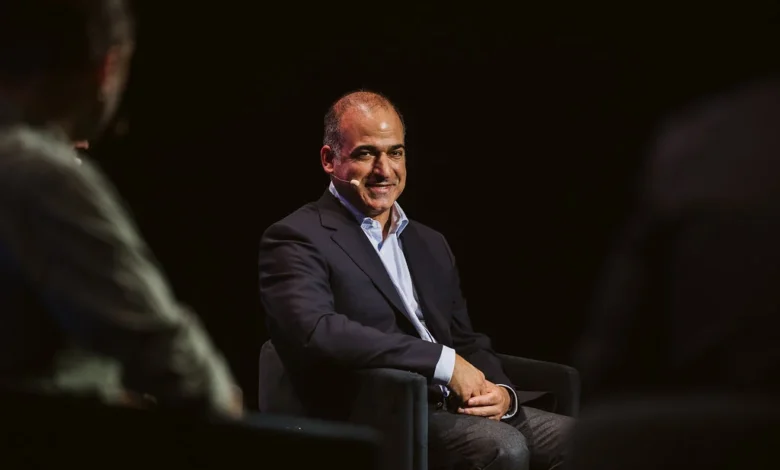
The artificial intelligence sector is currently fixated on a frontier known as "world models"—systems designed to automate spatial intelligence, simulate physics, and understand how physical environments function. Yet, despite commanding massive venture capital inflows and generating immense technological buzz, the leading pioneers in this space are practicing a degree of corporate secrecy that borders on the paranoid. Moderating a panel on world models at the All In conference this week laid bare the mysterious dynamics governing the field, highlighting a landscape defined by heavy funding, high-stakes versatility, and an acute reluctance to discuss commercial timelines.
The primary heavyweights driving this domain are Yann LeCun’s AMI Labs and Fei-Fei Li’s World Labs. Both organizations have successfully accumulated substantial capital and top-tier talent, positioning themselves at the bleeding edge of machine learning research. However, when measured by traditional commercial metrics—specifically, near-term revenue generation and product deployment—they rank remarkably low. Unlike the rapid enterprise software monetization seen in generative text or chatbot applications, the foundational work happening inside world model labs remains stubbornly disconnected from immediate consumer-facing or enterprise-ready products.
Decoding the Mechanics and Ambitions of Spatial Intelligence
At their foundational core, world models seek to bridge the gap between digital intelligence and physical reality by automating spatial intelligence. While current large language models excel at processing text and code, world models attempt to build an internal representation of the physical world, predicting how objects move, interact, and persist over time.
This technological capability opens up a vast array of potential commercial and scientific applications. In the automotive sector, advanced spatial intelligence underpins complex self-driving systems, allowing vehicles to anticipate pedestrian movements and hazardous road conditions far beyond simple sensor-fusion. In robotics, world models could eventually allow humanoid machines to navigate cluttered rooms, manipulate delicate objects, and adapt to unfamiliar physical layouts without explicit pre-programming. Furthermore, the technology holds immense promise for interactive media, computer-generated imagery (CGI), and advanced simulation environments for video games and architectural design.
Yet, bridging the gap between theoretical capability and practical commercialization has proved elusive. During the conference panel, Michael Rabbat—co-founder of AMI Labs and the company’s vice president of world models—faced direct inquiries regarding the specific products and timelines his organization is actively pursuing. Rabbat’s response underscored the prevailing atmosphere of discretion in the industry: "We’ll talk about it when we’re ready to talk about it." In subsequent correspondence, he clarified that AMI remains firmly entrenched in the foundational research and building phase, declining to elaborate on public product roadmaps or launch dates.
The Broader Industry Silence and the Supply Chain Blind Spot
To evaluate AMI Labs objectively, it is necessary to account for its youth; the organization has been operational for less than a year, making a period of internal incubation standard practice for deep-tech startups. However, this intentional caginess is not an isolated phenomenon limited to a single startup; it permeates the entire world-modeling ecosystem.
World Labs, co-founded by computer science luminary Fei-Fei Li, has arguably brought the most visible product to market with Marble. Demonstrations of the platform showcase capabilities ranging from streamlined media creation and CGI asset generation to the construction of explorable 3D environments suitable for video games. While select robotics use cases have also been teased, industry observers note that Marble frequently functions more as a proof-of-concept capability showcase than a fully realized vertical software product.
This wall of silence extends outward to touch external vendors and suppliers who form the backbone of the ecosystem. On the sidelines of the conference, Alex de Vigan, CEO of Physicl—a specialized data supplier catering to the burgeoning world model sector—offered a candid assessment of the information asymmetry. De Vigan confirmed that Physicl’s proprietary training data has been actively utilized by leading labs to advance their model architectures, yet he remains entirely in the dark regarding the final destination or application of that data. "I wish they would tell us more," de Vigan remarked. "We could build more useful data if we knew what they were working on."
The Versatility Dilemma: Why Focus Is Being Delayed
A significant driver of this widespread mystery is the sheer, sweeping versatility of world models as an architectural paradigm. At its simplest, a world model functions as a navigable, predictive map of physical space, akin to the underlying spatial awareness models utilized by autonomous vehicle pioneers like Waymo. However, the identical underlying mathematical framework utilized to help a vehicle navigate dense urban traffic can theoretically be repurposed to train a robotic arm in a warehouse, or to transform a few seconds of standard video footage into an interactive, explorable 3D environment.
AMI Labs has already explored preliminary partnerships across a remarkably diverse array of sectors, including advanced manufacturing, biomedicine, robotics, and clinical decision-support software for physicians through its collaboration with Nabia. Statistically and operationally, it is improbable that a single lab will successfully commercialize all of these distinct verticals simultaneously. Yet, leadership teams are deliberately resisting the urge to hyper-focus on a single commercial application.
This hesitation is rationalized by the nature of modern venture funding and the threat of preemptive competition. Because world model startups enjoy access to generous, readily available capital, there is minimal immediate financial pressure to narrow their strategic scope. More importantly, declaring a definitive commercial target prematurely carries severe strategic risks. If AMI Labs or World Labs were to publicly announce a breakthrough in humanoid robotics hardware integration or next-generation Hollywood rendering infrastructure, the competitive landscape would shift overnight. Such an announcement would instantly draw the aggressive attention of rival neolabs, well-funded competitors, and tech giants like OpenAI and Anthropic, all of which possess the capital resources to pivot into promising new markets.
The "Dark Forest" Competitive Strategy
The current trajectory of the world model industry creates a paradoxical economic environment. The same abundant venture capital that allows foundational labs to quietly build advanced infrastructure under the radar is simultaneously funding a legion of potential future rivals. When the definitive path to mass-market monetization finally crystallizes, these well-financed competitors will be poised to contest the space.
Consequently, preserving the element of surprise is viewed as a vital defensive mechanism. By keeping development details opaque, pioneering labs can extend their research windows, accumulate proprietary datasets, and fortify their technological moats before entering the fray of open market competition. Science fiction enthusiasts frequently draw comparisons between this calculated corporate behavior and the "dark forest hypothesis" popularized by author Cixin Liu: in an uncertain environment populated by powerful, competing actors, the safest survival strategy is to remain hidden and avoid attracting unnecessary attention.
Implications for the Future of AI and Robotics
As the artificial intelligence sector looks toward the remainder of the decade, the maturation of world models will likely serve as the critical inflection point for physical AI, bridging the divide between digital cognition and physical actuation. Whether these secretive labs choose to unveil their commercial intentions in the near term or continue their stealth operations, the economic implications are vast. For suppliers, investors, and enterprise clients, navigating this fog of war will require patience as the foundational architects of spatial intelligence prepare for their eventual emergence from the woods.
Related posts: