Signal Completes Cross-Platform Secure Backup Rollout with Release of Version 8.30 for iOS and Desktop

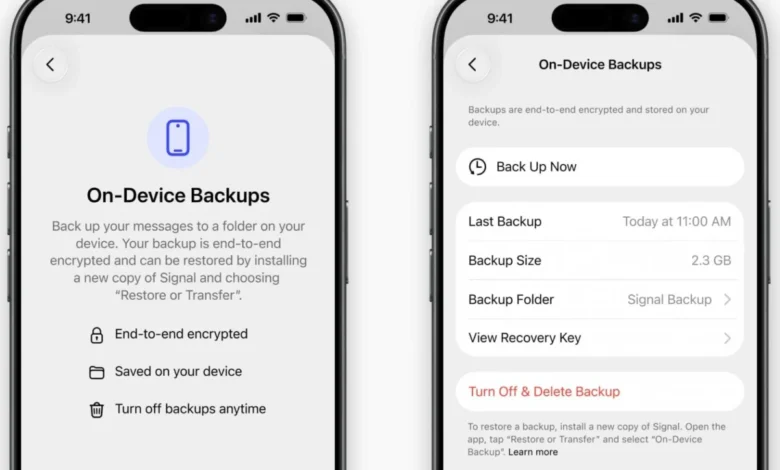
The rollout of Signal version 8.30 marks a significant milestone for the privacy-focused messaging application, bringing end-to-end encrypted backup support to iOS and desktop operating systems while standardizing the format across Android, Linux, macOS, and Windows. Nearly a year after the initial deployment of secure cloud backups on Android devices, this latest update fulfills Signal’s long-term objective of providing comprehensive, multi-platform data retention options without compromising user privacy. The newly released version introduces a unified cross-platform backup format, local Wi-Fi Aware direct device transfers for iOS users, and architectural enhancements designed to optimize storage efficiency.
By extending robust encryption-backed recovery mechanisms to Apple and desktop ecosystems, Signal addresses a long-standing user demand. Historically, migrating chat histories between different operating systems or recovering lost data on non-Android platforms presented substantial friction, often forcing users to choose between device-locked migration tools or sacrificing historical chat logs entirely. With version 8.30, the messaging platform bridges this gap, ensuring that communication records remain portable and protected by default across the entire spectrum of supported hardware.
Evolution of Signal Backup Architecture
The journey toward a unified, cross-platform backup infrastructure has been methodical. Prior to the Android rollout nearly a year ago, Signal relied primarily on traditional, manually managed local backup files that required users to manually transfer SQLite databases between directories—a process that was both cumbersome and prone to user error. Furthermore, cross-platform synchronization between mobile and desktop clients was historically limited to real-time message relaying, meaning that desktop apps lacked access to historical messages predating their linkage.
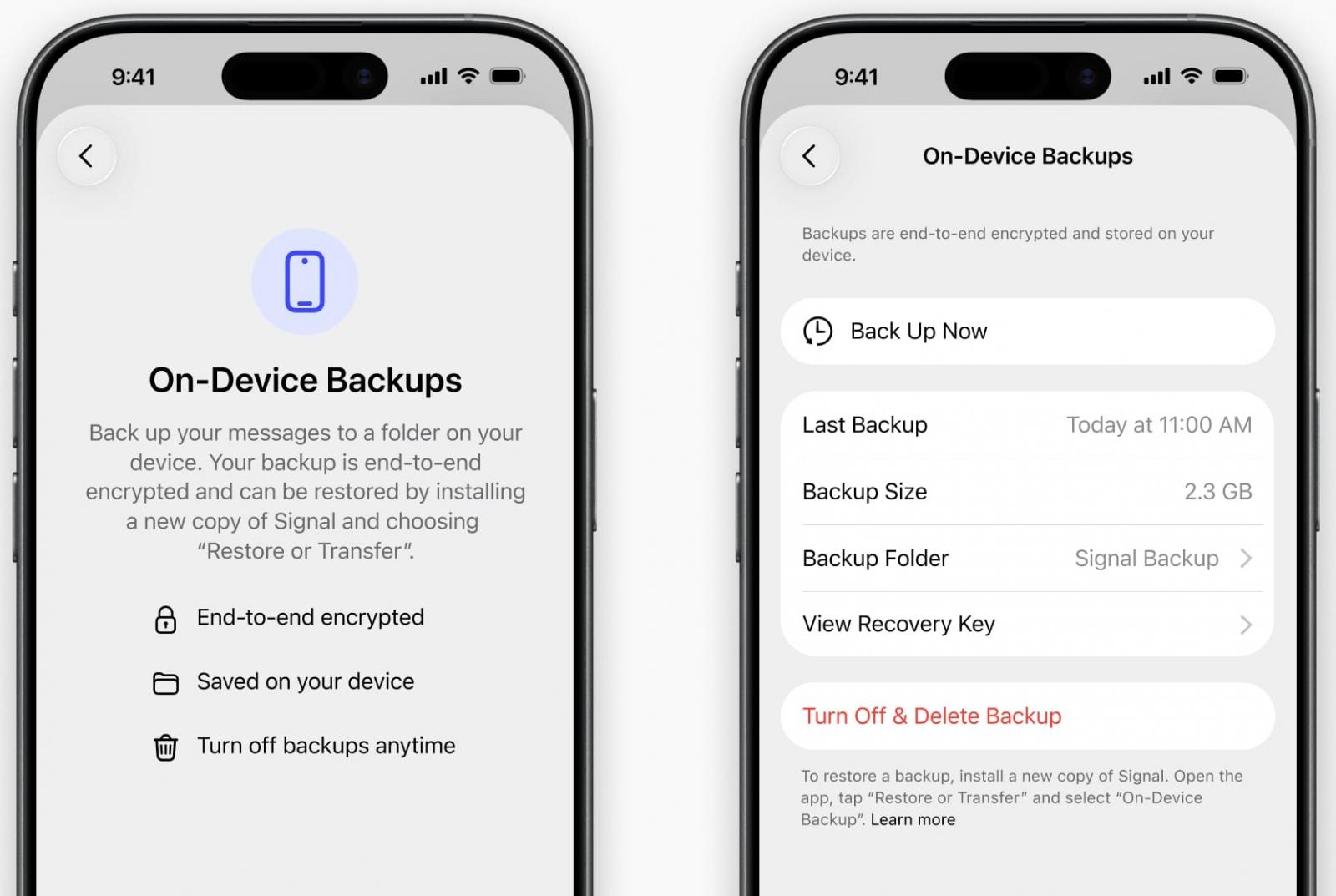
Recognizing the necessity for a seamless yet secure archiving mechanism, Signal’s engineering team designed a dual-pronged backup strategy: Signal-hosted cloud backups and unrestricted on-device local backups. The cloud-based option accommodates free users with a limitation of 45 days of media history and a 128 KB cap per individual message, while expanding storage capacities significantly up to 100 GB for paid subscribers. Conversely, the local on-device backup system imposes no size restrictions, catering to power users with extensive media archives.
Security remains a foundational pillar of this architecture. Both backup modalities are thoroughly end-to-end encrypted, requiring a user-generated recovery key to decrypt the stored payloads. However, Signal-hosted backups incorporate an additional layer of security: a supplemental key that rotates on a daily basis within a hardware-isolated Trusted Execution Environment (TEE). This design ensures forward secrecy, mitigating the risk of long-term compromise even if portions of the cloud infrastructure are exposed.
Despite these robust cryptographic safeguards, the centralization of decryption capabilities has drawn the attention of advanced threat actors. Security researchers and intelligence analysts have observed that the persistence of on-device backup recovery keys makes them prime targets for state-sponsored hacking groups and domestic law enforcement agencies alike. Because a single on-device recovery key is mathematically capable of decrypting all historical backup files generated by that instance, adversaries have increasingly focused their exploitation vectors on harvesting these keys from compromised endpoints.
Technical Enhancements in Version 8.30
The deployment of version 8.30 introduces several critical structural upgrades that redefine how data is handled, stored, and synchronized across devices. Chief among these is the complete overhaul of the Android backup ecosystem, which has been re-architected to align with the new, universal cross-platform format now operational on iOS and desktop clients.
Storage efficiency has also received a substantial upgrade. Media files are no longer bundled inextricably into the core backup archives; instead, they are now stored separately. The application’s underlying sync engine now identifies duplicate files across conversations, storing identical media assets only once. This deduplication process drastically reduces the footprint of backup archives and eliminates redundant synchronization cycles, preserving both network bandwidth and local storage capacity.
For premium subscribers, version 8.30 introduces a flexible media offloading feature. Users can configure their local storage to purge aging media files, retaining only lightweight thumbnails locally while maintaining the ability to automatically fetch full-resolution assets on-demand from Signal-hosted cloud backups. This hybrid approach mirrors cloud-native storage management seen in mainstream consumer operating systems, tailored specifically to the privacy constraints of an end-to-end encrypted environment.
Device linking has similarly been streamlined. When a user establishes a connection between a primary device and a newly linked secondary client, the new endpoint now automatically queries and retrieves older attachments that may have previously been missing from the local chat history. For Apple users, the iOS 8.30 client introduces direct iPhone-to-iPhone data migration. Utilizing a local, end-to-end encrypted Wi-Fi Aware peer-to-peer connection, this mechanism bypasses traditional cloud routing entirely, resulting in significantly faster and more reliable device-to-device transfers.
Handling of Ephemeral Data and Edge Cases
A persistent design challenge in encrypted messaging architectures is the harmonization of permanent archiving features with ephemeral communication tools, such as disappearing messages. Signal’s backup system implements strict logic to govern how vanishing content interacts with long-term storage.
Under the updated protocol, the backup engine actively ignores any disappearing messages configured to vanish within a 24-hour window, ensuring these transient communications are entirely excluded from both local and cloud archives. For users who maintain simultaneous local and cloud backups, the system prevents synchronization loops; utilizing a hosted backup does not inadvertently overwrite or purge independent local archives. However, during any restoration procedure, expired disappearing messages present within local backups are systematically skipped to preserve the intended lifecycle of the data.
Strategic Implications and Future Outlook
The completion of this multi-platform backup rollout represents a watershed moment for Signal as it positions itself against traditional, less secure consumer messaging monoliths. Historically, privacy advocates frequently cited the absence of seamless, encrypted cloud backups as a primary usability barrier preventing mainstream adoption of secure messaging applications. By solving this engineering problem without compromising its zero-knowledge cryptographic guarantees, Signal has narrowed the feature parity gap with commercial competitors like WhatsApp and Telegram.
Nevertheless, the integration of long-term backups inherently alters the threat model for high-risk users, such as investigative journalists, political dissidents, and human rights defenders. While end-to-end encryption protects data in transit and at rest on servers, the introduction of persistent recovery keys and cloud-accessible archives expands the potential attack surface to include endpoint device compromise and cloud provider subpoenas. Recognizing these realities, threat intelligence agencies have already cataloged targeted campaigns attempting to extract backup recovery keys from endpoints.
With the first phase of its comprehensive backup project now officially concluded, Signal leadership has indicated that engineering priorities will pivot toward refining non-backup infrastructure, enhancing core messaging performance, and scaling network resilience. As the application continues to balance rigorous cryptographic privacy with consumer-grade convenience, version 8.30 establishes a new technical baseline for secure communications in an increasingly interconnected and monitored digital landscape.
Related posts: