The Buffer TRMNL Plugin: A Serendipitous Collaboration Showcasing the Power of Open APIs


In a remarkable confluence of individual initiative and strategic corporate development, a private software plugin crafted by a Buffer engineer for his personal e-ink display has officially launched as a public offering, coinciding perfectly with the general availability of Buffer’s new public API. This unexpected journey began a few weeks ago when Andy Yates, an engineer at Buffer, received an email at his personal address from the team at TRMNL, the creators of minimalist e-ink displays renowned for their robust plugin ecosystem. TRMNL, actively scouting for innovative plugins developed on their platform, had identified a promising private plugin simply named "Buffer." Unaware of Yates’s professional affiliation, they extended an invitation, asking if he would be willing to release his creation to the wider TRMNL community.
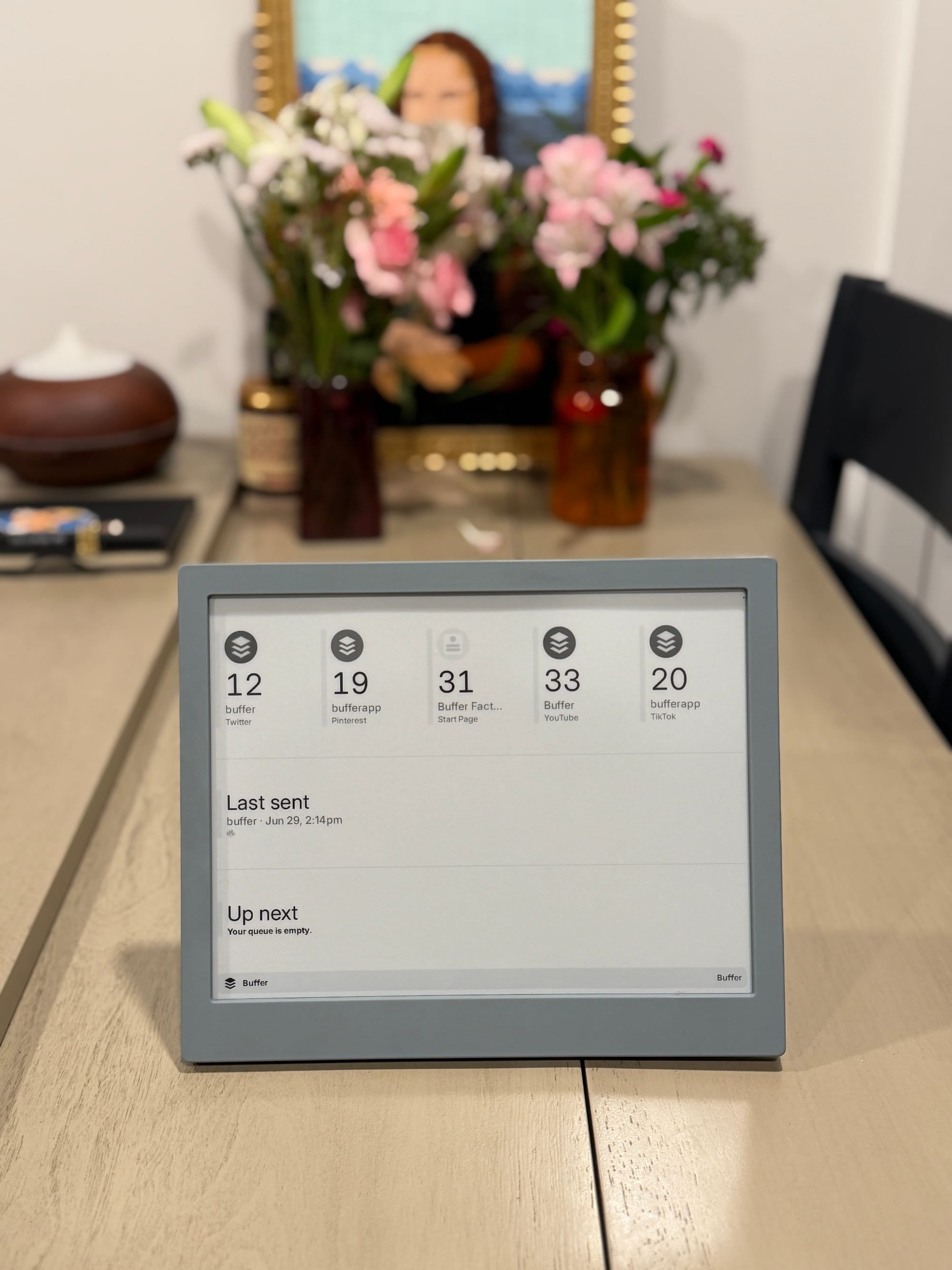
What TRMNL’s scout team could not have known was the profound irony and impeccable timing of their inquiry. Andy Yates was not just a user of Buffer; he was an integral part of the company. Furthermore, Buffer’s long-anticipated public API was merely a week away from its official launch, a strategic move designed to foster external innovation and integration. This serendipitous overlap of a personal project, a scouting mission, and a major corporate API release has since become a compelling narrative, exemplifying the transformative potential unleashed when companies embrace open platforms and empower their developer communities. With the Buffer API now generally available, the story of the plugin, which now calmly glows on Andy Yates’s desk, offers a powerful testament to the collaborative spirit and the unforeseen benefits of developer-first strategies.
The Genesis of an Idea: A Personal Project Turns Public
The origins of the Buffer TRMNL plugin are rooted in a common developer impulse: curiosity and the desire to customize one’s own digital environment. Andy Yates, having recently acquired a TRMNL display, was exploring its capabilities and enjoying the process of building small, functional plugins. His natural inclination led him to ponder how his Buffer social media queue, a critical component of his daily workflow, might be visualized on the sleek, low-power e-ink screen. TRMNL displays are built upon a core philosophy: to provide users with a calm, non-demanding way to access essential information. They are designed to show a select handful of crucial data points – calendars, weather updates, to-do lists – without the constant alerts and distractions typical of other digital screens. Hundreds of community-built plugins already populate this ecosystem, catering to diverse needs. Yates’s contribution, initially a private endeavor, was conceived to display his Buffer queue: showing queue counts, a recently sent post, or an upcoming scheduled item, all refreshed automatically.
The TRMNL team’s discovery of Yates’s private "Buffer" plugin underscores the vibrant, community-driven nature of their platform. Their proactive approach to identifying and encouraging promising developments highlights a key strategy for cultivating a thriving developer ecosystem. For a company like TRMNL, which thrives on the breadth and quality of its third-party integrations, discovering such a well-made, relevant plugin was a significant find. The subsequent invitation to Yates to make his plugin public was a standard procedure for them, yet it unknowingly set in motion a chain of events that would become a showcase for the power of open APIs.
Buffer’s Strategic Move: The Power of an Open API
Buffer, a leading social media management platform, has long understood the importance of enabling seamless workflows for its users. The decision to launch a public API (Application Programming Interface) was a strategic one, aimed at expanding the utility of its platform beyond its native applications. An API acts as a bridge, allowing different software applications to communicate and exchange data. For Buffer, this meant opening up its core functionalities – such as scheduling posts, managing queues, and accessing analytics – to external developers. This move is critical in today’s interconnected digital landscape, where users increasingly expect their tools to integrate effortlessly with one another.
The timing of TRMNL’s outreach to Andy Yates, just a week before Buffer’s API was set to go live, was more than mere coincidence; it was a perfect storm of readiness. It meant that a robust, officially supported pathway for integration was about to become available, making the transition of Yates’s private hack into a public, officially supported plugin not only feasible but strategically advantageous for both companies. The launch of the Buffer API represented a significant investment for the company, reflecting a commitment to fostering innovation, expanding its reach, and empowering its user base through third-party integrations. This approach aligns with broader industry trends, where open APIs are increasingly seen as fundamental to building scalable, interconnected platforms that can adapt to evolving user needs and technological landscapes.
TRMNL’s Vision: Ambient Displays and Thriving Ecosystems
TRMNL’s e-ink displays embody a growing trend towards "ambient computing" – technology that provides information subtly, without demanding constant attention or interaction. Unlike traditional screens that bombard users with notifications and bright interfaces, e-ink displays offer a calm, persistent presence. Their low power consumption and paper-like display quality make them ideal for displaying static or slowly changing information. The philosophy behind TRMNL devices is that the desk should be a space for calm focus, where essential information is available at a glance, without pulling the user away from their primary tasks.
The success of TRMNL’s plugin ecosystem is a testament to this philosophy and the robust development tools they provide. By offering an accessible platform for developers to create and share plugins, TRMNL has cultivated a diverse array of utilities that extend the functionality of their devices far beyond what could be achieved by a single company. From displaying local weather and stock prices to personal productivity dashboards and now, social media queue management, the ecosystem enhances the core value proposition of the TRMNL hardware. The discovery and subsequent integration of the Buffer plugin serve as a prime example of how this open approach can lead to unexpected and highly valuable additions to their platform, enriching the user experience and attracting new demographics.
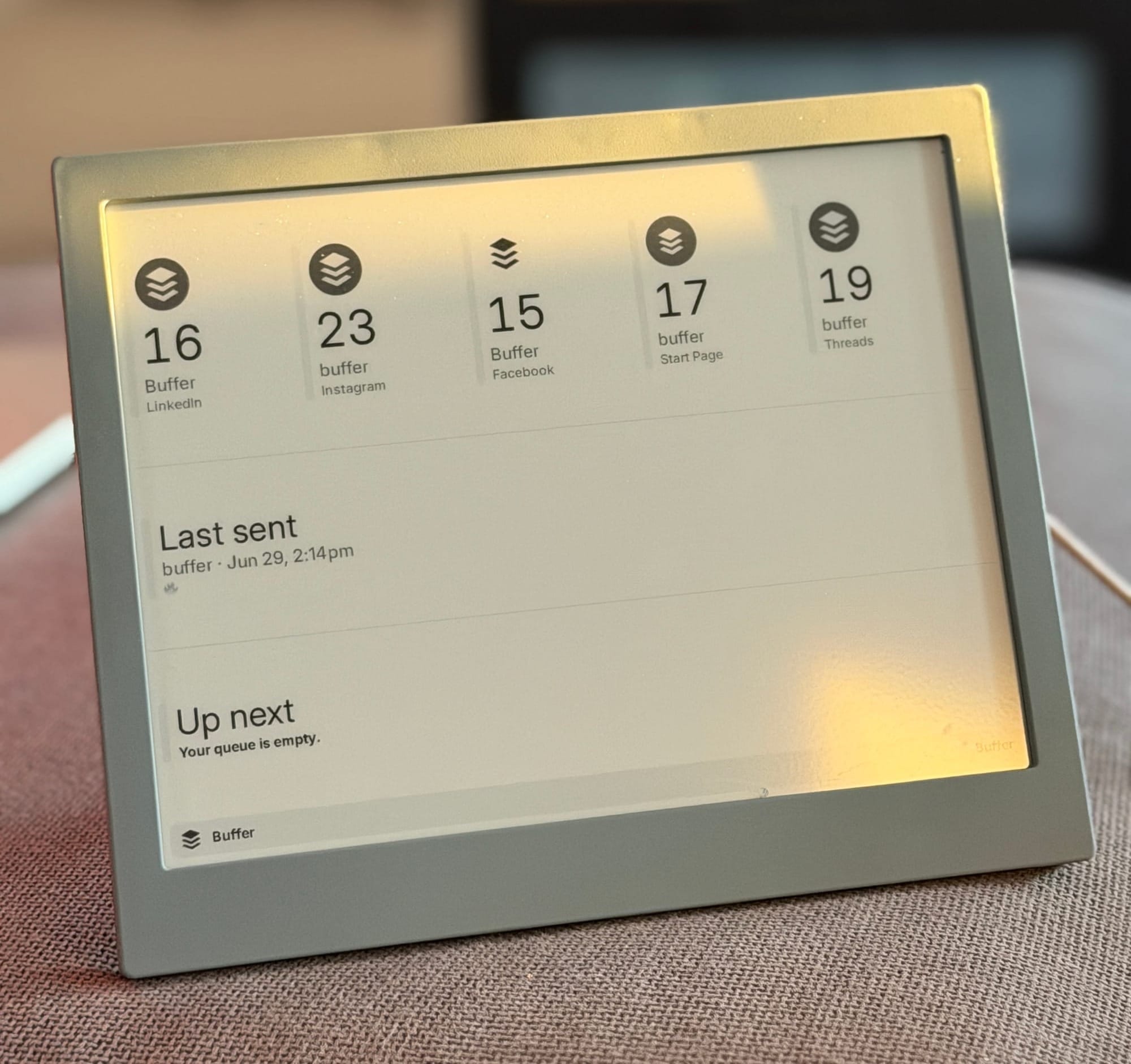
A Timeline of Serendipity and Collaboration
The unfolding of this story can be charted through a distinct chronology of events, highlighting the blend of individual initiative and strategic corporate action:
- Early Weeks/Months Prior to API Launch: Andy Yates, a Buffer engineer and early adopter of TRMNL, begins developing a private plugin for his e-ink display. His goal is to visualize his Buffer social media queue, treating it as a personal hack to enhance his workflow. This development occurs independently, utilizing existing (but soon-to-be-deprecated) Buffer API access or a custom workaround.
- A Few Weeks Ago: The TRMNL team, through their ongoing scouting efforts, identifies Yates’s "Buffer" plugin. Impressed by its functionality and potential, they send an email to Yates’s personal address, inviting him to release it publicly. Critically, TRMNL is unaware of Yates’s employment at Buffer.
- Simultaneously (One Week Before Email): Buffer’s internal teams are in the final stages of preparing for the general availability launch of their new, robust public API, a project that has been in development for a significant period.
- Upon Yates’s Receipt of Email: Yates realizes the extraordinary coincidence: TRMNL wants to publish a plugin for a service he works for, just as that service is about to launch a comprehensive public API designed precisely for such integrations.
- Immediate Aftermath: Yates communicates with both TRMNL and Buffer’s API team, facilitating the necessary connections and discussions.
- Post-API Launch: With Buffer’s public API officially live, the technical groundwork for a secure and scalable integration is readily available.
- Collaborative Development Phase: Ikraam from the TRMNL team begins working directly with Andy Yates. This collaboration refines the plugin, adding new features, improving the user experience, and simplifying the setup flow for public consumption. Ikraam also contributes the Buffer connector, leveraging the new API flow, to TRMNL’s public providers repository, ensuring future developers can easily build their own Buffer integrations.
- Official Plugin Launch: The "Buffer" plugin for TRMNL is officially released, becoming available to all TRMNL users.
- July 13-20: To commemorate the launch, Buffer and TRMNL announce a joint giveaway, offering four TRMNL devices and Buffer swag bundles.
- July 27: Winners of the giveaway are announced. TRMNL also makes a special discount code ("bufferxtrmnl") available for $10 off any device, valid until September 7.
This timeline illustrates how a series of seemingly independent events converged to create a powerful example of community-driven innovation facilitated by open platforms.
Technical Deep Dive: How the Plugin Works
The technical implementation of the Buffer TRMNL plugin is a testament to modern API security and platform architecture. A key aspect highlighted is that the plugin runs entirely on TRMNL’s side. This means Andy Yates, or any individual developer, does not need to manage or "babysit" a dedicated server to host the plugin’s logic. TRMNL’s platform provides the infrastructure, significantly lowering the barrier to entry for developers and ensuring reliability for users. This serverless approach for individual plugin developers is a substantial advantage, abstracting away the complexities of hosting and maintenance.
For secure access, the plugin connects directly to Buffer’s OAuth flow using PKCE (Proof Key for Code Exchange). PKCE is a modern, secure method for an application to obtain authorized access to a user’s data without ever exposing sensitive credentials like API keys directly to the client-side application. This protocol is crucial for public clients (like a TRMNL device plugin) that cannot securely store a client secret, ensuring that user data remains protected during the authentication process. This robust security measure means users can confidently connect their Buffer accounts to their TRMNL devices without concerns about data breaches or unauthorized access.
The collaborative development between Andy Yates and Ikraam from the TRMNL team was pivotal in refining the plugin. Ikraam’s involvement was not just about technical integration but also about enhancing user experience. New features were added, and the initial setup flow, which might have been cumbersome in a personal "hack," was streamlined for public consumption. This hands-on support from the TRMNL team is a hallmark of their commitment to fostering a vibrant plugin ecosystem. Furthermore, Ikraam’s contribution of the Buffer connector, utilizing the new API flow, to TRMNL’s public providers repository is a significant step towards enabling future innovations. This means that any subsequent developer looking to build a Buffer-related plugin on the TRMNL platform will have a ready-made, secure, and tested framework to start from, embodying the "build once, reuse often" principle that accelerates development and encourages further community engagement.
The Transformative Impact of Ambient Information
The integration of Buffer’s social media queue onto an ambient e-ink display represents a subtle yet profound shift in how users can interact with their content schedules. Traditionally, managing a social media queue involves a deliberate act: opening the Buffer application or website, navigating to the queue, and actively checking its status. This conscious effort, while necessary, can lead to delays or oversights, particularly for busy individuals or small businesses trying to maintain a consistent online presence. The "oh no, nothing’s lined up for Thursday" moment often comes with a small jolt of anxiety, requiring immediate action.
An ambient display fundamentally changes this dynamic by bringing the information to the user passively. The Buffer plugin, by displaying queue counts and upcoming posts, acts as a gentle, persistent reminder. If the queue is running low, it’s visible without needing to actively seek it out. This constant, yet unobtrusive, visual cue helps individuals and teams maintain consistency in their social media output, a critical factor for audience engagement and growth. Data consistently shows that consistent posting leads to better engagement rates and audience retention across various social media platforms. For instance, studies by social media analytics firms often indicate that brands posting daily or multiple times a week see significantly higher engagement compared to those posting infrequently.
Beyond the practical benefits of consistency, there’s a psychological satisfaction in seeing one’s work manifest as a physical object on the desk. Instead of an abstract row in a digital dashboard, the social media queue becomes a tangible element, a visible representation of effort and strategy. This physical presence can reinforce the importance of social media planning and provide a sense of accomplishment as posts are sent and the queue updates. It transforms an often-abstract digital task into something more grounded and integrated into the physical workspace, aligning perfectly with the TRMNL philosophy of calm, glanceable information.
Broader Implications: Open Platforms and Developer Innovation
The story of the Buffer TRMNL plugin extends beyond the immediate benefits for Buffer, TRMNL, and their users; it offers a compelling case study for the broader tech industry regarding the value of open platforms and the cultivation of developer ecosystems.
For Buffer, this incident immediately validated its strategic investment in a public API. It demonstrated that even before the API was fully launched, there was a clear demand for integrations, and that its own employees were eager to build on its platform. This organic adoption and community-driven innovation serve as a powerful endorsement, attracting more developers and fostering a more vibrant ecosystem around Buffer’s services. The more applications and services that integrate with Buffer, the more sticky and indispensable Buffer becomes to its users.
For TRMNL, the integration of a widely recognized social media management tool like Buffer significantly enhances the appeal and utility of its e-ink displays. It showcases the versatility of their platform and its ability to integrate with mainstream digital tools, moving beyond niche applications. The collaborative development process also highlights TRMNL’s commitment to supporting its developer community, which is crucial for the long-term growth and diversity of its plugin offerings.
More generally, this event underscores the principle that open APIs are catalysts for innovation. By providing well-documented, secure, and accessible interfaces, companies empower external developers to create unforeseen applications and use cases. These innovations can extend the reach of a platform, enhance user value, and uncover new market opportunities that the original company might not have envisioned internally. The serendipitous nature of the Buffer TRMNL plugin — where a personal hack met a corporate API launch — is a perfect illustration of how fostering an open environment can lead to unexpected and highly beneficial outcomes. It reinforces the idea that the developer community is not just a consumer of tools but a vital partner in expanding the utility and relevance of a platform.
Community Engagement: A Launch Marked by Generosity
To mark the official launch of the Buffer TRMNL plugin and celebrate this unique collaboration, Buffer and TRMNL have partnered to host a joint giveaway. Running from July 13 to July 20, the promotion offers participants the chance to win one of four TRMNL devices, along with exclusive Buffer swag bundles. This initiative serves multiple purposes: it generates excitement around the new integration, rewards existing and potential users, and further strengthens the collaborative ties between the two companies.
Entering the giveaway is designed to be straightforward, requiring three specific steps on Buffer’s LinkedIn post. This approach leverages social media to maximize visibility and engagement, reaching a wide audience of professionals and tech enthusiasts. The winners are slated to be announced on July 27, creating anticipation and a clear timeline for participants.
Recognizing that not everyone can be a winner, TRMNL is also offering a consolation prize: a special discount code, "bufferxtrmnl," providing $10 off any TRMNL device. This code is valid from July 27 through September 7, extending the promotional period and offering value to a broader segment of interested customers. The full terms and conditions of the giveaway are conveniently linked in the first comment of the LinkedIn post, ensuring transparency and clarity for all participants. This multi-faceted approach to the launch, combining a direct giveaway with a discount offer, effectively maximizes reach and encourages adoption of both the new plugin and the TRMNL devices themselves.
The Buffer TRMNL plugin represents a compelling narrative of how individual ingenuity, a forward-thinking platform, and a strategically timed API launch can converge to create significant value. It stands as a testament to the power of open ecosystems, demonstrating that sometimes, the most innovative solutions emerge from unexpected collaborations and the simple desire of an engineer to see his queue "glowing on his desk." This collaboration not only enriches the user experience for both Buffer and TRMNL customers but also serves as an inspiring example for the broader tech industry on the immense potential unleashed when platforms truly open their doors to developer communities.