AWS Expands Developer Ecosystem with New AI Agent Integration and Global Community Engagement Initiatives

Amazon Web Services (AWS) has introduced a suite of new tools designed to streamline the integration of artificial intelligence coding agents with serverless infrastructure, marking a significant step forward in the company’s "AI-first" developer experience strategy. The announcement, headlined by a new one-click setup prompt for AWS Lambda, coincides with high-level community engagement efforts in the Asia-Pacific region and the resolution of a technical discrepancy within the AWS Billing and Cost Management console. These developments reflect a broader industry trend toward "agentic" workflows, where autonomous AI systems assist in the creation, deployment, and management of cloud-native applications.
Streamlining Serverless Development with AI Coding Agents
The centerpiece of last week’s technical updates is the introduction of a specialized setup prompt for AWS Lambda, designed to interface seamlessly with modern AI coding agents. As software development increasingly shifts toward the use of Large Language Models (LLMs) and autonomous agents, the friction between natural language instructions and complex cloud configurations has become a primary bottleneck. AWS aims to mitigate this by providing a standardized "one-click" configuration that embeds serverless best practices directly into the agent’s operational context.
This new prompt configures coding agents with specific AWS Serverless skills and integrates the Serverless Model Context Protocol (MCP) server. The MCP is an emerging standard that allows AI models to securely and efficiently access external data sources and tools. By adopting this protocol, AWS ensures that agents such as Claude Code, Cursor, GitHub Copilot, and Devin Desktop have a structured framework to interact with AWS resources without requiring the developer to manually write boilerplate integration code.
To implement this, developers can now access a "Copy agent prompt" button within the Lambda console. This action provides a URL—specifically pointing to AWS documentation—that can be pasted into an AI agent’s interface. Once processed, the agent gains the ability to reference the Lambda agent setup guide, which includes pre-validated installation commands for a wide array of industry-leading tools, including Kiro, Codex, and OpenCode. This move is expected to reduce the time-to-market for serverless applications by allowing AI agents to handle the heavy lifting of environment configuration and resource provisioning.
Strategic Community Engagement in the Asia-Pacific Region
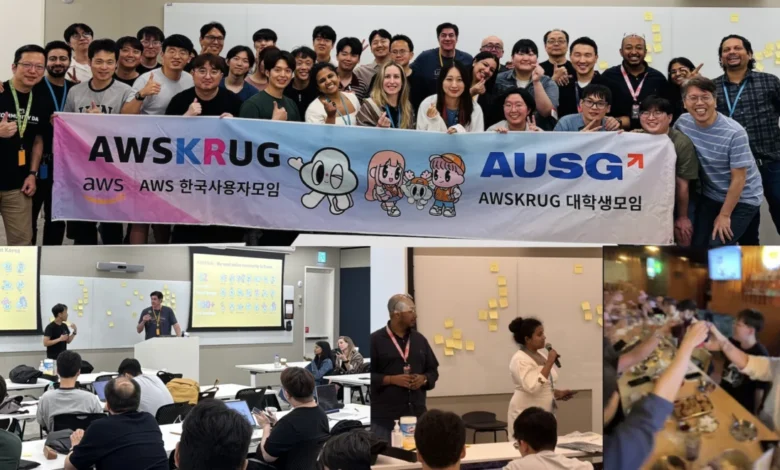
Parallel to these technical releases, the AWS Developer Experience (DevEx) team has intensified its outreach efforts, recently concluding a high-level summit with the leaders of the AWS Korea User Group (AWSKRUG) in Seoul. South Korea remains one of the most critical hubs for cloud innovation in the Asia-Pacific region, and AWSKRUG stands as the largest developer community in the country. With 20 distinct meetup groups organized by technical specialty and geographic area, the organization hosts over 100 events annually, serving as a vital feedback loop for the AWS product teams.
The meeting in Seoul was structured as a retrospective and planning session, where community leaders provided candid feedback on the developer experience during the first half of the year. Key topics of discussion included the ease of adoption for new AI services, the clarity of technical documentation, and the specific needs of the Korean startup ecosystem. Such engagements are part of a broader AWS strategy to decentralize developer support and ensure that global product roadmaps are informed by local market requirements.
The emphasis on community-driven development is a response to the growing complexity of the cloud landscape. By maintaining a direct line of communication with "power users" in regions like Seoul, AWS can identify friction points in its service offerings before they become systemic issues. The interaction also highlighted the cultural nuances of developer relations, including the tradition of "Chimaek" (chicken and beer) sessions, which foster the informal networking essential for maintaining a vibrant open-source and developer community.
Technical Analysis: The Agent Toolkit and MCP Integration
The push toward AI-integrated development is further supported by the "Agent Toolkit for AWS," a resource designed to grant coding agents real-time knowledge of AWS services and secure access to cloud resources. A critical component of this toolkit is the AWS MCP Server. By using a specific fetch command directed at the toolkit’s GitHub repository, developers can install a bridge that allows an AI agent to query the current state of an AWS environment safely.
This approach addresses one of the primary risks of using AI in cloud development: the "hallucination" of outdated or non-existent API parameters. Because cloud services evolve rapidly, static training data in LLMs often becomes obsolete within months. The MCP integration allows the agent to "ground" its suggestions in the actual, live documentation and resource schemas of AWS. This ensures that when an agent suggests a security group configuration or a Lambda function trigger, it is doing so based on the latest architectural standards and security protocols.

Furthermore, the toolkit emphasizes safe resource access. As AI agents gain more autonomy to execute commands via Command Line Interfaces (CLI), the risk of accidental resource deletion or security misconfiguration increases. The Agent Toolkit provides a managed framework for these interactions, ensuring that agents operate within the bounds of Identity and Access Management (IAM) policies while still maintaining the speed of autonomous development.
Resolution of Billing Data Discrepancies
While the week was marked by advancements in AI integration, AWS also addressed an operational challenge regarding its financial reporting tools. Over the recent weekend, some customers reported inaccuracies in the data displayed within AWS Cost Explorer. This issue led to a series of downstream effects, including erroneous budget alerts and false positives from cost anomaly detection systems. In some instances, customers observed significantly inflated estimates of their usage and projected monthly spend.
AWS leadership confirmed that the issue was identified and a fix was deployed shortly thereafter. The company issued a formal apology for the incident, noting that all services have returned to normal operation. A thorough retrospective is currently underway to determine the root cause of the billing data lag. For enterprise customers who rely on Cost Explorer for real-time financial governance, such incidents underscore the importance of robust monitoring and the need for high-fidelity data in cloud financial management (FinOps).
The incident has prompted AWS to commit to improvements in how billing-related anomalies are communicated to customers. The AWS Health Dashboard remains the primary source for updates on such operational issues, and the company is looking into ways to make budget alerts more resilient to temporary data ingestion delays in the billing pipeline.
Timeline of Recent Developments
The past seven days have seen a rapid succession of updates and events that illustrate the current trajectory of the AWS ecosystem:
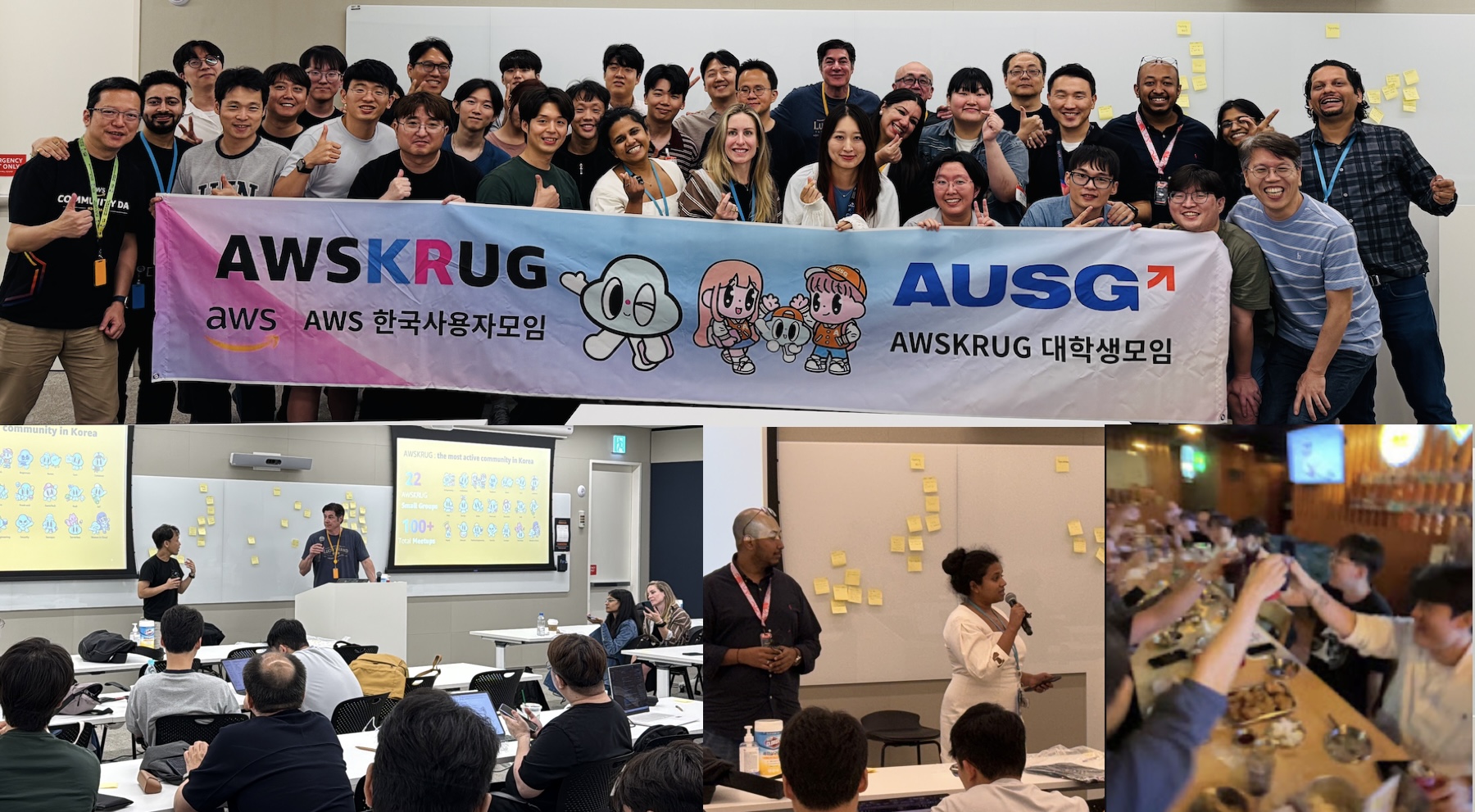
- Early Week: The AWS Developer Experience team arrived in Seoul for meetings with AWSKRUG, focusing on regional feedback and community growth strategies for the latter half of 2024.
- Mid-Week: Formal launch of the one-click Lambda setup prompt for AI agents. Documentation was updated to include support for a diverse range of third-party coding assistants.
- Weekend: Reports began to surface regarding inaccurate estimated billing data in the AWS Management Console.
- Monday: AWS confirmed the resolution of the billing issue and published a summary of the week’s technical launches, emphasizing the new Agent Toolkit and MCP server integrations.
Broader Impact and Industry Implications
The integration of AI agents into the AWS workflow represents a fundamental shift in how cloud infrastructure is managed. For over a decade, the industry moved from manual console configurations to Infrastructure as Code (IaC) using tools like AWS CloudFormation and Terraform. The current shift toward "Agentic Infrastructure" suggests a third wave, where natural language becomes the primary interface for complex cloud orchestration.
By providing "one-click" prompts for agents, AWS is effectively commoditizing the expertise required to set up complex serverless environments. This has significant implications for the talent market; as AI agents become more proficient at handling routine configuration tasks, the role of the cloud architect may evolve to focus more on high-level system design and security oversight rather than syntax-level troubleshooting.
Moreover, the focus on the Asia-Pacific region highlights the shifting geography of tech innovation. As companies in South Korea and surrounding nations lead the way in AI adoption, the feedback from these regions becomes critical for global providers. The success of the AWSKRUG model—combining hyper-local meetups with direct access to AWS product teams—is likely to be replicated in other emerging tech hubs.
In conclusion, the events of the past week demonstrate AWS’s dual focus on cutting-edge technological integration and foundational community support. While the billing incident served as a reminder of the operational complexities inherent in global cloud infrastructure, the advancements in AI agent support point toward a future where cloud development is more accessible, automated, and integrated with the next generation of artificial intelligence tools. Developers and enterprises are encouraged to monitor the "What’s New" and "AWS Blogs" pages for continued updates as these AI-driven features move from initial launch to widespread adoption.