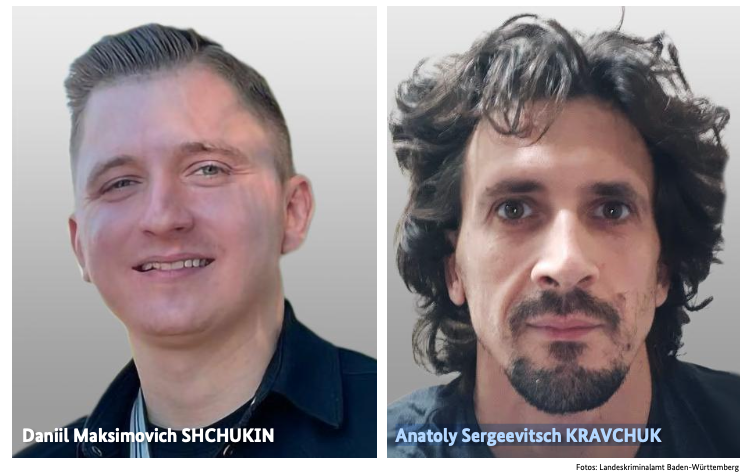
German law enforcement officials have publicly identified a 31-year-old Russian national as the elusive mastermind behind two of the most prolific and damaging ransomware operations in the history of cybercrime. According to the German Federal Criminal Police (Bundeskriminalamt or BKA), Daniil Maksimovich Shchukin, who operated under the digital pseudonym "UNKN" (also known as "UNKNOWN"), was the primary figurehead leading the GandCrab and REvil cybercrime organizations. Between 2019 and 2021, Shchukin is alleged to have orchestrated at least 130 acts of computer sabotage and extortion, specifically targeting critical infrastructure and private enterprises within Germany and across the globe.
The announcement marks a significant milestone in international efforts to dismantle the Ransomware-as-a-Service (RaaS) model, which has plagued global commerce for nearly a decade. Shchukin was named alongside another Russian national, 43-year-old Anatoly Sergeevitsch Kravchuk. The BKA alleges that the duo was responsible for extorting approximately $2 million in ransom payments across two dozen documented cyberattacks, resulting in a staggering total economic damage exceeding 35 million euros.
Unmasking the UNKN Entity
For years, "UNKNOWN" was a legendary figure within the dark web’s most exclusive Russian-language forums. He was known for his professional demeanor, his significant financial backing, and his ability to coordinate complex operations involving hundreds of "affiliates"—independent hackers who used his malware to breach corporate networks.
The identification of Shchukin as the face behind the UNKN handle provides a rare glimpse into the transition from a common cybercriminal to a digital kingpin. Intelligence suggests that Shchukin, a resident of Krasnodar, Russia, followed a trajectory common among elite hackers in the region. His earlier digital footprints, uncovered by cyber intelligence firm Intel 471, link him to a hacker identity known as "Ger0in." Active between 2010 and 2011, Ger0in specialized in operating large-scale botnets and selling "installs," a service that allowed other criminals to distribute malware across thousands of compromised computers simultaneously.
While there was a gap between the activity of Ger0in and the rise of UNKN, investigators believe Shchukin spent that time refining his technical capabilities and building the infrastructure that would eventually power GandCrab.
The Genesis of GandCrab: A New Era of Cybercrime
The GandCrab ransomware affiliate program first emerged in January 2018, fundamentally altering the cybercrime landscape. Unlike previous ransomware variants that targeted individual users for small sums, GandCrab popularized the affiliate model. The core developers, led by Shchukin, provided the ransomware code and the command-and-control infrastructure, while affiliates handled the difficult task of infiltrating high-value networks.
GandCrab was notable for its rapid development cycle. Over its 18-month lifespan, the developers released five major revisions to the code. Each update introduced new evasion techniques designed to bypass security software and sophisticated features that streamlined the extortion process. By the time the group announced its "retirement" in May 2019, it claimed to have extorted more than $2 billion from victims worldwide.
The group’s farewell address was famously brazen, stating: "We are a living proof that you can do evil and get off scot-free. We have proved that one can make a lifetime of money in one year." This perceived immunity, however, was short-lived, as law enforcement agencies began the slow process of tracing the group’s financial and digital movements.
Transition to REvil: Sophistication and Professionalization
Shortly after GandCrab’s purported dissolution, a new threat emerged: REvil (also known as Sodinokibi). Cybersecurity analysts quickly noted technical overlaps between the two strains, concluding that REvil was essentially a reorganized and more professionalized version of GandCrab.
REvil, again fronted by UNKN, took the "Big Game Hunting" strategy to new heights. The group pivoted away from small-scale targets, focusing instead on organizations with annual revenues exceeding $100 million. This era saw the introduction of the "double extortion" tactic. Under this model, attackers would not only encrypt the victim’s files but also exfiltrate sensitive data. Victims were then pressured to pay twice: once for the decryption key to restore their systems, and a second time for a guarantee that their stolen data would not be leaked to the public or sold to competitors.
In a rare 2020 interview with cybercrime researcher Dmitry Smilyanets, UNKN described his motivation as a classic "rags-to-riches" story. He claimed to have grown up in extreme poverty in Russia, walking miles to school and going days without food, before his success in the cybercrime underworld made him a millionaire.
The Infrastructure of the Ransomware Economy
The success of Shchukin’s operations was not merely due to technical prowess but also to the sophisticated business structure he implemented. As documented in "The Ransomware Hunting Team" by Renee Dudley and Daniel Golden, REvil operated with the efficiency of a legitimate software corporation.
The organization outsourced specific tasks to specialized "contractors" within the criminal underground. These included:
- Initial Access Brokers: Specialized hackers who found vulnerabilities or stole credentials for corporate networks and sold that access to the ransomware group.
- Cryptor Providers: Developers who ensured the ransomware remained undetectable by standard anti-malware scanners.
- Money Launderers: Specialized "tumblers" and mixers who obscured the path of Bitcoin and Monero payments to hide the proceeds from law enforcement.
This division of labor allowed Shchukin and his core team to focus on the high-level strategy and the continuous improvement of the ransomware code, ensuring that security firms remained one step behind.
The Kaseya Breach and the FBI Counter-Operation
The turning point for REvil came in July 2021, during the Independence Day holiday weekend in the United States. The group executed a supply-chain attack against Kaseya, a provider of IT management software. By compromising a single point of failure, REvil was able to deploy ransomware to more than 1,500 of Kaseya’s downstream customers, including schools, small businesses, and local governments.
The scale of the Kaseya attack triggered an unprecedented response from the U.S. government. Unbeknownst to REvil, the FBI had already infiltrated the group’s internal servers. Following the Kaseya breach, the FBI was able to obtain and release a universal decryption key, allowing victims to recover their files without paying the multi-million dollar ransoms demanded by the group.
This intervention, combined with coordinated international law enforcement pressure, led to the eventual collapse of REvil’s infrastructure. Shchukin’s digital persona, UNKN, vanished from the forums shortly after, leading to speculation that he had either been arrested or had gone into deep hiding.
Financial Impact and Asset Seizures
The financial scale of Shchukin’s operations is difficult to fully comprehend. While the BKA focused on the 35 million euros in damage within Germany, the global impact is estimated in the billions. In February 2023, the U.S. Department of Justice filed for the seizure of various cryptocurrency accounts linked to REvil.
Court documents revealed that a single digital wallet directly tied to Shchukin contained over $317,000 in ill-gotten cryptocurrency at the time of the filing. This represents only a fraction of the total wealth generated by the group, much of which is believed to be laundered through complex networks or held in cold storage wallets that remain inaccessible to authorities.
Digital Footprints and the Path to Identification
The unmasking of Shchukin was the result of meticulous digital forensics and open-source intelligence (OSINT). While Shchukin maintained strict operational security (OPSEC) for his criminal activities, his personal life left a trail.
Investigators utilized facial recognition tools like Pimeyes to scan the internet for images matching the mugshots provided by the BKA. This led to the discovery of photos from a birthday celebration in Krasnodar in 2023. The images featured a man identified as "Daniel" wearing a luxury watch identical to the one seen in investigative photos. This "real-world" footprint allowed authorities to bridge the gap between the digital phantom "UNKN" and the physical person Daniil Shchukin.
Furthermore, a 2023 presentation at the Chaos Communication Congress (37C3) in Germany had previously hinted at Shchukin’s identity, providing audio recordings and investigative data that pointed directly to his leadership role in REvil.
Geopolitical Obstacles and Legal Outlook
Despite the formal identification and the public "wanted" notices issued by the BKA, the prospects for Shchukin’s immediate arrest remain slim. He is currently believed to be residing in Krasnodar, Russia. Given the current geopolitical climate and the lack of an extradition treaty between Russia and the West, Shchukin is likely protected as long as he remains within Russian borders.
The BKA’s advisory noted, "Based on the investigations so far, it is assumed that the wanted person is abroad, presumably in Russia. Travel behaviour cannot be ruled out." This serves as a warning that should Shchukin attempt to travel to a country with an extradition agreement with Germany or the United States, he would likely be apprehended.
The unmasking of Shchukin and Kravchuk serves a dual purpose. First, it dismantles the "myth of the anonymous hacker," proving that even the most sophisticated actors leave traces. Second, it restricts the movement and financial freedom of these individuals, effectively trapping them within the borders of a single nation. As law enforcement continues to share intelligence across borders, the world is becoming increasingly small for the architects of the ransomware era.
Related posts: