Google NotebookLM Evolves into Gemini Notebook, Prompting Urgent Action for Website Owners


Google has officially rebranded its AI-powered research assistant from NotebookLM to Gemini Notebook, a significant shift that impacts how website owners interact with Google’s user-triggered fetchers. This transition necessitates an update to website configurations, particularly for those who have previously implemented blocking or tracking mechanisms based on the older user agent. While the core functionality of the tool remains the same, the name change and associated documentation updates require immediate attention from SEO professionals and site administrators to ensure continued control over their web content. A grace period of a few weeks is in effect before the legacy Google-NotebookLM user agent ceases to be recognized in August 2026, underscoring the urgency for a proactive approach.
The Genesis of Gemini Notebook and its Fetcher Mechanics
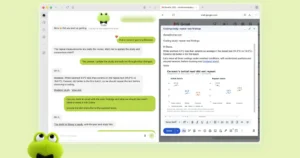
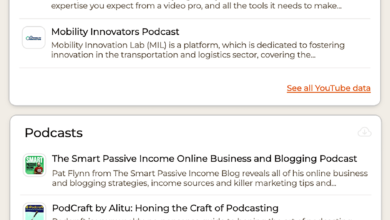
Gemini Notebook, formerly known as NotebookLM, is an advanced AI research assistant designed to empower users with enhanced information retrieval and content synthesis capabilities. At its core, Gemini Notebook allows users to upload proprietary documents, which then serve as the foundational "ground truth" for the AI. This enables the generation of more accurate, contextually relevant answers and facilitates deeper research and learning processes. The tool’s multimodal nature is a key differentiator, allowing it to process and integrate information from various sources, including YouTube videos and audio files. Conversely, it can transform uploaded documents into audio podcasts or video explainers, offering a versatile approach to content consumption and knowledge acquisition.
The critical aspect for website owners and search engine optimization (SEO) specialists lies in Gemini Notebook’s ability to access and process web content. This interaction occurs through two primary mechanisms: users can manually input specific URLs, or they can leverage the "Discover Sources" feature. This latter function automates the identification and aggregation of relevant online articles and web pages, directly contributing to a user’s research project. The fetchers or crawlers employed by Gemini Notebook are classified as "user-triggered fetchers." This designation is crucial because, by their nature, user-triggered fetchers are initiated by a direct user action and, consequently, do not adhere to the directives outlined in a website’s robots.txt file. This distinction means that traditional methods of blocking bots via robots.txt are ineffective against Gemini Notebook’s fetchers.
Reasons for Website Owners to Block Gemini Notebook
The operational mechanisms of Gemini Notebook present several scenarios where website owners may wish to restrict its access to their content. One prominent concern is the "Discover Sources" feature, which can scrape online articles to gather information for a user’s query or topic. This process can involve fetching up to ten sources without explicit permission from the site owner. The output of this feature includes an AI-generated summary of the scraped content, and critically, it generates no referral traffic back to the original source. This lack of attribution and potential for content repurposing without direct benefit to the originating website is a significant point of contention for many online publishers.
Furthermore, Gemini Notebook’s audio and video overview features raise concerns about content repurposing. The tool can transform existing online content into audio podcasts or video explainers. If these AI-generated outputs are then published online, they can directly compete with the original source material. This creates a scenario where a website’s unique content is effectively "repackaged" and disseminated in a new format, potentially cannibalizing the original traffic and engagement that the content was intended to generate. The underlying intent of these features is to automate the process of content aggregation and transformation, drawing from unique online assets without necessarily providing explicit attribution or benefit to the creators. This automated, permissionless approach to content utilization is a primary driver for website owners seeking to implement blocking measures.
To effectively block Gemini Notebook’s fetchers, website owners must implement changes beyond the robots.txt file. This typically involves updating firewall rules or modifying .htaccess files to create specific directives that prevent the Gemini Notebook user agent from accessing content.
The Transition: From NotebookLM to Gemini Notebook
The rebranding of NotebookLM to Gemini Notebook is not merely a cosmetic change; it signifies Google’s integration of its advanced AI models into a more cohesive ecosystem. Gemini Notebook represents the same core functionality and operational principles as its predecessor, NotebookLM. The name change reflects Google’s broader strategy to unify its AI offerings under the Gemini brand, leveraging the capabilities of its most advanced large language models.
The documentation updates accompanying this rebranding are crucial for understanding the implications. The previous documentation explicitly mentioned "Google-NotebookLM" as a distinct user agent associated with its fetcher. This section has now been entirely removed and replaced with updated information detailing the "Gemini Notebook" user agent. The new documentation provides specific user agent strings for both mobile and desktop agents, alongside a clear indication that the former agent, "Google-NotebookLM," is supported only until August 2026. This phased deprecation schedule is designed to allow users and developers ample time to adapt their configurations.
Project Mariner’s Disappearance from Documentation
A subtle but noteworthy change within the updated documentation is the complete removal of any mention of "Project Mariner." Previously, the documentation referenced Project Mariner as an example of an agent hosted on Google infrastructure that navigates the web and performs actions upon user request, utilizing IP ranges from user-triggered-agents.json. The fact that Project Mariner has been retired as of May 2026, and its omission from the current documentation, suggests a streamlining of Google’s internal processes and a focus on the current iteration of its AI-driven fetching mechanisms. While Project Mariner’s operational role may have been superseded, its historical presence highlights Google’s ongoing commitment to developing sophisticated web-crawling technologies that respond to user-initiated tasks.
The Technical Details: User Agents and Blocking Mechanisms
The primary technical implication for website owners revolves around the user agent string. For Gemini Notebook, the new user agent strings are:
- Mobile Agent:
Mozilla/5.0 (Linux; Android 10; K) AppleWebKit/537.36 (KHTML, like Gecko) Chrome/138.0.0.0 Mobile Safari/537.36 (compatible; Google-GeminiNotebook; +https://developers.google.com/crawling/docs/crawlers-fetchers/google-gemininotebook) - Desktop Agent:
Mozilla/5.0 (X11; Linux x86_64) AppleWebKit/537.36 (KHTML, like Gecko) Chrome/137.0.0.0 Safari/537.36 (compatible; Google-GeminiNotebook; +https://developers.google.com/crawling/docs/crawlers-fetchers/google-gemininotebook)
The former user agent, Google-NotebookLM, will remain functional until August 2026, providing a transitionary period. Google’s changelog explicitly advises that "If you hardcoded the old value in your code, update the string to avoid potential bugs. We will continue to support the old value to allow for a smooth transition." This underscores the importance of migrating to the new user agent string to avoid future disruptions.
As previously established, user-triggered fetchers, including those from Gemini Notebook, do not obey robots.txt. This is because robots.txt is a set of directives, not a mandatory protocol that all bots must follow. For crawlers initiated by user actions, compliance with robots.txt is not a given. Therefore, website owners must rely on more robust methods to control access.
Implementing Blocking Measures: Firewalls and .htaccess
To block Gemini Notebook, site administrators can implement rules on their firewalls or modify their .htaccess files. A common approach using .htaccess involves redirecting or denying access based on the user agent string. An example of such a rule is provided:
RewriteEngine On

# Block Google-GeminiNotebook
RewriteCond %HTTP_USER_AGENT Google-GeminiNotebook [NC]
RewriteRule ^ - [F,L]
This configuration block first ensures that the rewrite engine is active. The RewriteCond directive checks if the HTTP_USER_AGENT header contains "Google-GeminiNotebook" (case-insensitive, denoted by [NC]). If this condition is met, the RewriteRule then denies access to the requested resource with a 403 Forbidden status ([F]) and stops further processing of rules ([L]). This is a direct and effective method for preventing Gemini Notebook fetchers from accessing specific parts of a website or the entire site.
Broader Implications for Content Creators and SEO
The evolution of tools like Gemini Notebook presents a complex landscape for content creators and SEO professionals. On one hand, these tools offer powerful new ways to research and synthesize information, potentially democratizing access to knowledge. However, the automated scraping and repurposing of content without direct attribution or benefit raise significant ethical and economic questions for publishers who invest heavily in creating original material.
The fact that user-triggered fetchers do not adhere to robots.txt highlights a growing challenge in content governance. While firewalls and .htaccess rules offer a technical solution for blocking, they require a proactive stance and technical expertise. For smaller website owners or those less technically inclined, managing access to their content against sophisticated AI crawlers may become an increasing burden.
The grace period until August 2026 provides a critical window for adaptation. Websites that rely on the old Google-NotebookLM user agent for tracking or blocking purposes must update their systems before this deadline. Failure to do so could result in unintended content access by Gemini Notebook’s fetchers or a loss of visibility into their activity.
The move to Gemini Notebook also signifies Google’s commitment to integrating AI across its product suite. As AI models become more sophisticated and their capabilities for content generation and consumption expand, the dynamics of the web will continue to shift. Website owners and content creators will need to remain vigilant, adapting their strategies to navigate this evolving digital environment, ensuring that their content is protected, properly attributed, and utilized in ways that align with their goals. The ongoing dialogue between AI developers and content creators will be crucial in shaping a future where AI-driven tools can coexist with a thriving and sustainable online publishing ecosystem.