Navigating the Complexities of Influencer Compensation: The Imperative for Automated Solutions

The burgeoning influencer marketing industry, projected to reach unprecedented valuations in the coming years, has fundamentally reshaped how brands connect with consumers. While influencer discovery, campaign ideation, and content execution have become sophisticated processes for marketing teams, the often-overlooked administrative burden of managing influencer payments remains a significant hurdle. This intricate financial workflow, encompassing everything from tracking payment details and securing approvals to ensuring tax compliance, is frequently tedious, susceptible to delays, and a source of frustration for both brands and creators. As creator programs scale, these challenges—magnified by an increasing volume of tax documents and invoices—underscore the urgent need for automated tools and streamlined processes to transform fragmented, manual payment workflows into efficient, headache-free operations.
The Evolution and Scale of Influencer Marketing
Influencer marketing has evolved dramatically from its nascent stages of informal product gifting to a sophisticated, multi-billion-dollar global industry. What began as organic endorsements by early internet personalities has matured into a cornerstone of digital advertising strategies for businesses of all sizes. Industry reports consistently highlight the sector’s exponential growth; for instance, the global influencer marketing market size was estimated at over $16 billion in 2022 and is projected to continue its upward trajectory, potentially surpassing $200 billion by the end of the decade. This rapid expansion signifies a shift from ad-hoc engagements to professionalized, strategic partnerships that demand robust operational infrastructure, particularly in financial management.
In the early days, compensation often involved product samples, experiences, or simple exchanges of services. However, as creators professionalized their craft and brands recognized the tangible ROI of influencer campaigns, monetary compensation became the norm. This professionalization has transformed influencer payments from a simple transaction into a critical business operation workflow, necessitating close collaboration between social media managers, marketing teams, and finance departments. This interdepartmental coordination is crucial not only for budget allocation and payment disbursement but also for navigating the intricate web of compliance and reporting.

Understanding Influencer Payments: Beyond a Simple Exchange
At its core, an influencer payment is the compensation provided to social media creators in exchange for their promotional efforts, which may involve showcasing a brand, its products, or services. This compensation recognizes the influencer’s reach, their time investment, and their skill in content creation. While in-kind payments (products, services) still exist, particularly for nano-influencers or seeding campaigns, the predominant model now involves monetary remuneration.
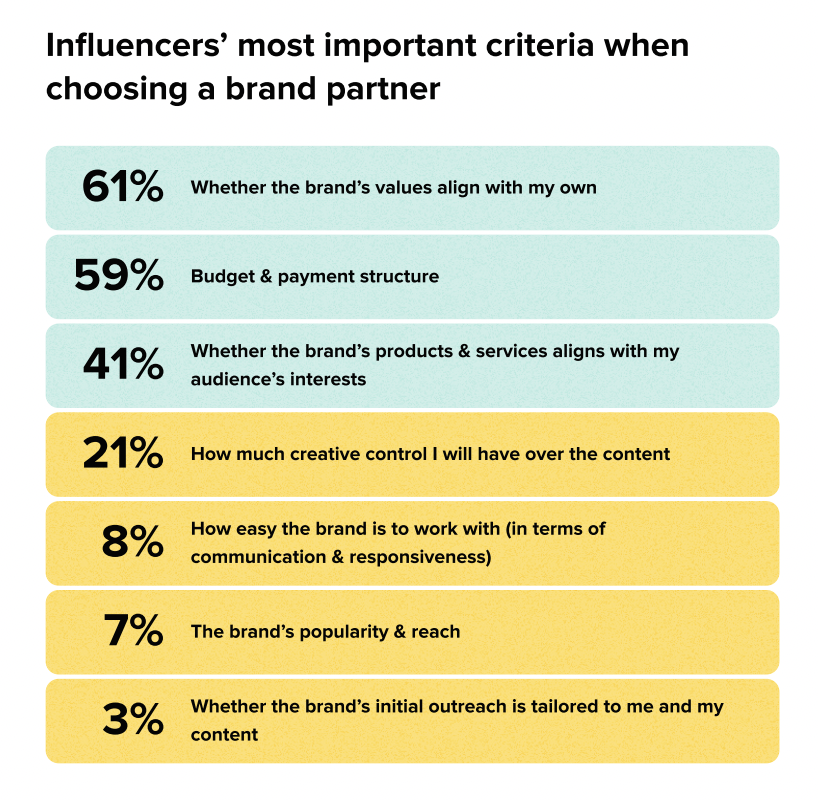
The choice of payment model is a strategic decision for brands, influenced by budget constraints, campaign objectives, and the specific needs of their influencer marketing strategy. This decision critically impacts a creator’s willingness to collaborate. According to insights from The State of Influencer Marketing Report, a significant 59% of influencers prioritize budget and payment structure as the most important criteria when evaluating potential brand partnerships. This statistic underscores that an attractive and efficient payment system is not merely an administrative detail but a powerful tool for attracting and retaining top-tier talent.
Common Compensation Models in Detail
Brands employ various compensation models to suit diverse campaign goals:
-
Flat Fee Per Post (Fixed Rate): This remains the most prevalent model, offering a straightforward approach where a predetermined price is paid for a specific deliverable (e.g., $500 for one Instagram Reel). Its primary advantage lies in budget predictability, allowing brands to accurately forecast campaign expenses based on negotiated influencer pricing. This model is particularly effective for one-off campaigns focused on brand awareness where the primary goal is reach rather than direct conversions. Integrated platforms often facilitate the creation of payment drafts within campaign workflows, simplifying expense logging.
-
Performance and Affiliate Commissions: Directly tying influencer fees to business outcomes, this model compensates creators with a percentage of sales generated through unique tracking links or promotional codes. It is highly profitable for brands as it ensures a direct ROI. However, it places a significant onus on influencer marketing teams to meticulously track affiliate terms, including commission percentages, conversion data, and attribution models, to ensure accurate and timely payments. Tools that centralize influencer performance data are indispensable here, enabling precise calculation of payouts based on actual conversions. This model thrives in direct response and e-commerce campaigns.
-
Product Gifting and In-Kind Exchanges: Often reserved for collaborations with nano-influencers or for influencer seeding initiatives, this model involves providing free merchandise, complimentary services, or exclusive experiences in exchange for content. While highly cost-effective for brands, tracking the return on investment (ROI) becomes more complex as no cash transaction occurs. Brands must diligently record the perceived monetary value of these gifts or "in-kind" exchanges to accurately measure the overall ROI of their influencer marketing efforts. This helps in understanding the true cost and benefit of such non-monetary partnerships.
-
Long-Term Retainers and Hybrid Models: Recognizing the value of sustained partnerships, many brands opt to retain top-performing creators on an ongoing monthly basis. While seemingly more costly upfront, influencer marketing statistics indicate that long-term collaborations often yield greater value and can even result in cost savings. For instance, data suggests that 71% of influencers offer discounts when contracted for multiple posts over an extended period. This fosters deeper brand loyalty, more authentic content, and consistent brand messaging. Some innovative brands further refine this by adopting hybrid models, combining a baseline flat fee with performance-based bonuses. This strategy balances payment predictability for the brand and influencer with the potential for scalable outcomes driven by strong performance, making it ideal for performance-driven, long-term partnerships.
The Administrative Gauntlet: Challenges of Manual Payment Systems
The administrative burden associated with manual influencer payment processes is multifaceted and can significantly impede the efficiency and scalability of marketing campaigns. Key challenges include:
- Data Collection and Verification: Gathering accurate payment details (bank accounts, PayPal emails, tax IDs) from a diverse global pool of influencers is a time-consuming and error-prone process.
- Invoice Management: Tracking, verifying, and approving countless individual invoices, often from different platforms or formats, creates a logistical nightmare for finance teams.
- Payment Delays: The manual back-and-forth often leads to late payments, which can damage brand reputation and sour relationships with creators. Influencers, often operating as small businesses, rely on timely payments.
- Tax Compliance: Navigating the labyrinth of varying domestic and international tax regulations (W-9s, W-8BENs, 1099s, 1042-S forms) for a growing roster of creators is arguably the biggest compliance challenge. Errors can lead to significant legal and financial penalties.
- Audit Trail Maintenance: Ensuring a clear, comprehensive, and easily accessible audit trail for all campaign expenses, including influencer payouts, is critical for internal reconciliation and external audits. Manual systems make this exceedingly difficult.
- Siloed Operations: Disconnects between marketing, finance, and legal departments often result in miscommunications, redundant tasks, and a lack of unified visibility into payment statuses and budgets.
Technological Advancements: Popular Payment Methods and Tools
The industry has responded to these challenges with a suite of technological solutions designed to simplify and streamline influencer payouts.
-
Direct Peer-to-Peer Platforms (e.g., PayPal): Platforms like PayPal offer a seamless way to send payments directly to a creator’s associated email address, eliminating the need to exchange sensitive banking information. They are highly convenient for quick, one-off global creator payments, often supporting automatic currency conversions. Many influencer marketing tools integrate with these platforms to centralize payment records. While excellent for individual transactions, their tax compliance features are primarily US-centric (1099-K thresholds) and may not suffice for large-scale, international operations requiring comprehensive vendor management.
-
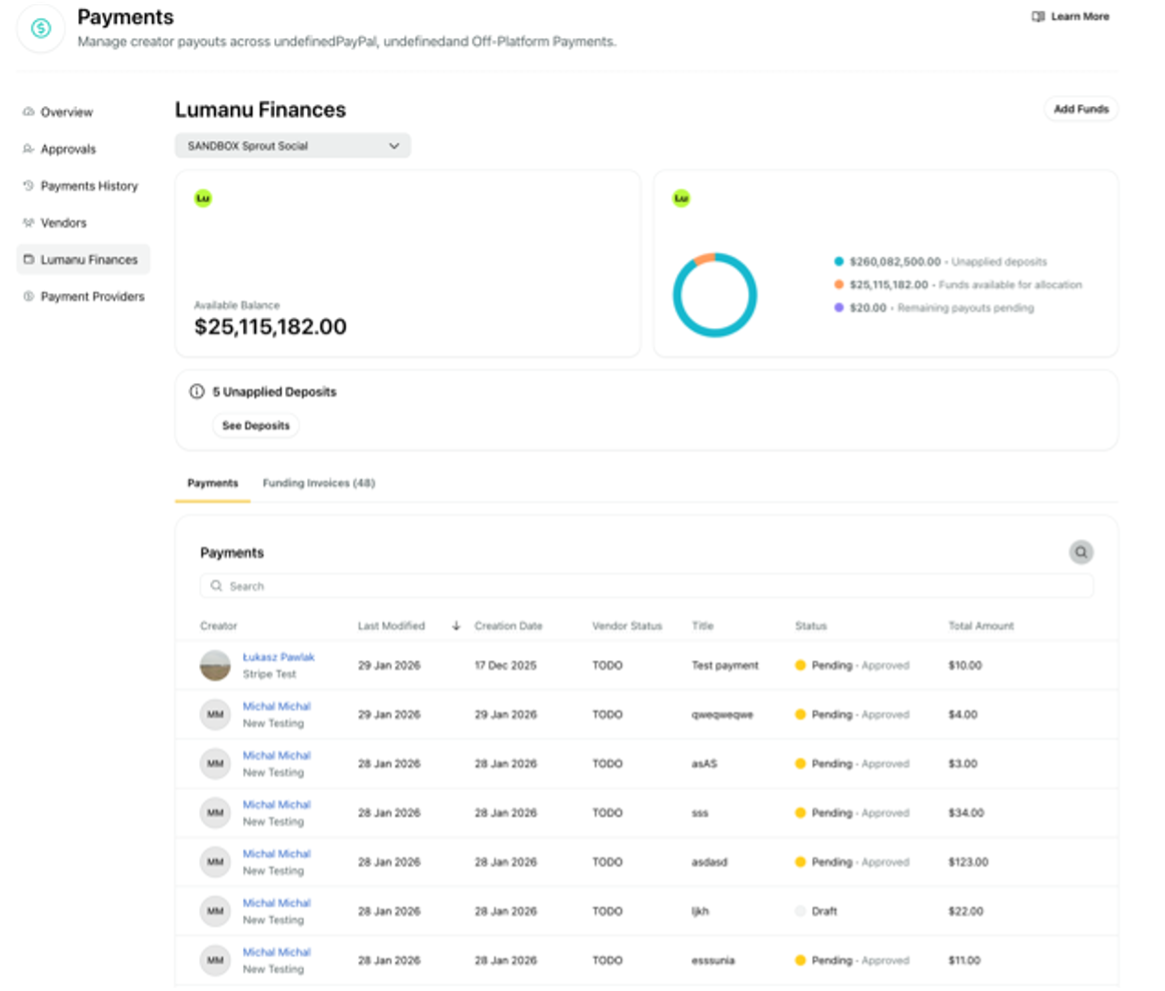
Invoice-Based Compliance Networks (e.g., Lumanu): For brands managing large-scale, global influencer programs, specialized payment platforms like Lumanu are becoming indispensable. These networks centralize compliance and invoicing, employing an invoice-based funding model that allows corporate finance departments to fund a secure balance for multi-currency disbursements. Acting as a master vendor, such platforms streamline critical administrative tasks related to influencer onboarding, tax documentation, and compliance. Integrations with leading marketing platforms offer real-time visibility into payment statuses and ledger balances, ensuring transparency and control. These solutions are particularly suited for enterprise accounts scaling global payouts, mitigating the complexities of international tax laws and varied payment preferences.
-
Traditional Off-Platform Methods (Wire Transfers, Checks, ACH): While increasingly manual and prone to errors, direct payments via physical checks, wire transfers, or Automated Clearing House (ACH) remain options, offering flexibility for specific payment preferences. However, tracking these transactions outside of dedicated platforms is challenging, demanding meticulous manual documentation for internal audit trails. Modern influencer payment solutions often provide functionalities to record and track these off-platform transactions, ensuring a centralized record even if funds do not move through the platform itself.
Best Practices for Managing Influencer Payments with Modern Tools
To effectively manage influencer payments and mitigate the associated administrative burden, brands should adopt a strategic approach incorporating best practices and leveraging integrated technology:
-
Establish Clear Contracts and Payment Schedules: From the outset, set clear expectations regarding payment due dates and preferred methods. This might involve bulk payment scheduling (e.g., the 5th of every month) rather than individual payments post-content submission. Early negotiation prevents delays, fosters trust with creators, and allows finance teams to anticipate cash flow needs.
-
Simplify Tax Compliance and Reporting: Tax documentation is a major friction point. As programs scale, managing W-9s, W-8BENs, and other forms across diverse geographic locations becomes complex. Dedicated tools and third-party settlement networks automate this process, managing collection and issuing 1099s/1042-S forms on behalf of the brand. This significantly reduces manual effort and minimizes the risk of compliance errors, especially for international collaborations. Integrated platforms can also introduce approval gates, ensuring finance teams control fund release for a secure payout process.
-
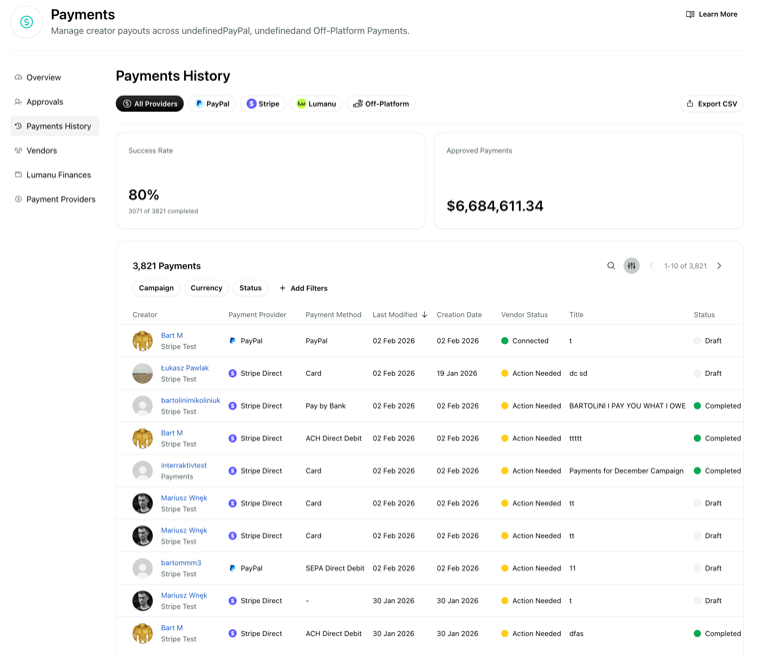
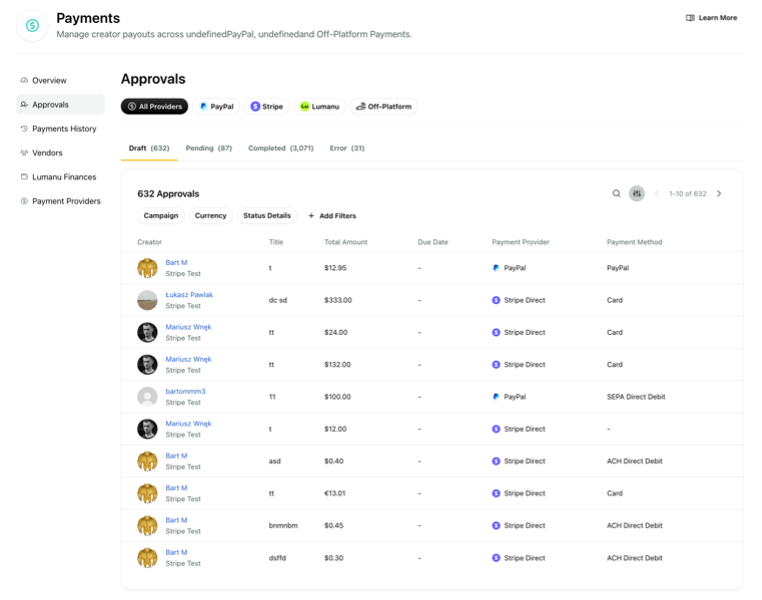
Maintain a Robust Audit Trail: Every campaign expense, from creator payments to platform fees, must be meticulously recorded for seamless audits and financial reconciliation. Relying on disparate spreadsheets is inefficient and error-prone. Dynamic reporting tools within integrated platforms allow for organized payment records, filterable by campaign, currency, or creator status. The ability to export audit-ready CSV files is crucial for transparent corporate reconciliation.
-
Leverage All-in-One Influencer Payment Platforms: While standalone payment tools offer robust features, switching between multiple platforms for campaign management, content review, and payment processing is inefficient. An all-in-one platform streamlines the entire workflow. For instance, solutions that integrate payments directly into the campaign workflow allow brands to recruit, onboard, collect payment details, approve content, track performance, and disburse payouts from a single interface. This eliminates platform-switching, reduces administrative overhead, and provides granular control over user rights and payment approvals.
-
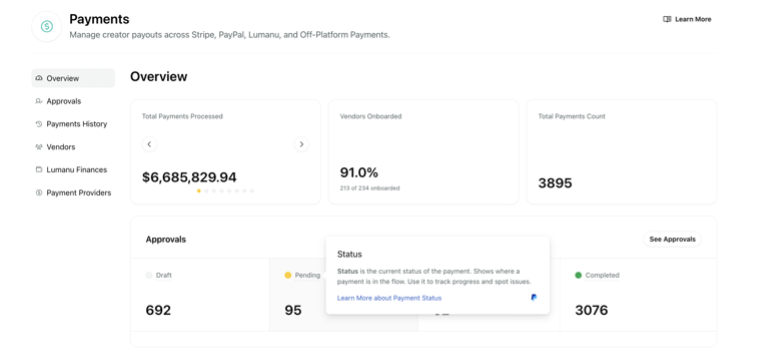
Centralize Payouts with a Dedicated Dashboard: A common challenge is the siloed nature of marketing and finance, leading to a lack of shared visibility into budgets and payment statuses. A native payments dashboard breaks down this silo, offering instant, high-level visibility into campaign financials. Teams can track total payments processed, monitor payment statuses (Draft, Pending, Completed, Error), and quickly identify and rectify payment errors or onboarding issues before they disrupt the workflow. This shared operational view enhances collaboration and financial control.
-
Empower Creators with Self-Service Tools: Constant back-and-forth between brands and influencers regarding invoices or payment information is inefficient. Providing creators with a dedicated "Creator Hub" or portal allows them to securely manage their payment details, submit invoices, and proactively track their payout statuses. This self-service model reduces administrative queries for marketing teams, protects sensitive brand financial data, and fosters a more professional and transparent relationship with influencers. Crucially, creators only see their relevant payment and campaign information, without access to internal brand budgets or broader campaign metrics.
Broader Impact and Implications
The implications of adopting streamlined, automated influencer payment solutions extend far beyond mere administrative convenience. They fundamentally impact:
- Influencer Relationships and Retention: Timely, transparent, and hassle-free payments are a cornerstone of strong influencer relationships. A positive payment experience encourages repeat collaborations and attracts top talent, while payment delays or complications can damage trust and lead to creators seeking partnerships elsewhere.
- Brand Reputation: A brand’s efficiency and professionalism in managing payments reflect directly on its overall image. A reputation for timely and fair compensation enhances brand equity within the creator community.
- Scalability: As brands aim to expand their influencer programs to hundreds or even thousands of creators globally, manual payment systems become an insurmountable bottleneck. Automation is the only viable path to scalable growth.
- Regulatory Compliance and Risk Mitigation: With increasing scrutiny on digital advertising and cross-border transactions, robust compliance mechanisms are essential. Automated tax compliance features minimize legal and financial risks associated with incorrect reporting or non-compliance.
- Operational Efficiency and Cost Savings: By reducing manual tasks, errors, and the need for extensive human intervention, automated payment systems free up marketing and finance teams to focus on strategic initiatives rather than administrative drudgery. This translates into significant operational efficiencies and cost savings over time.
Conclusion
While the initial excitement of influencer marketing often centers on creative campaigns and audience engagement, the underlying financial infrastructure is equally critical to its long-term success. The complexities of managing hundreds of tax documents, multiple currencies, and lengthy invoice approval processes can quickly overwhelm even the most sophisticated marketing teams.
Integrated payment solutions, such as those offered by platforms like Sprout Social, are transforming this landscape by embedding payment workflows directly into the broader influencer marketing ecosystem. By centralizing documentation, automating compliance, and integrating with leading payment providers like PayPal and Lumanu, brands can eliminate platform-switching, reduce administrative burdens, and ensure timely, accurate payments. This strategic shift from fragmented, manual processes to an automated, all-in-one approach is not merely an upgrade; it is an imperative for brands looking to scale their influencer programs efficiently, maintain strong creator relationships, and secure their financial compliance in a rapidly evolving digital marketplace. The future of influencer marketing hinges not just on captivating content, but on seamless, professional, and intelligently managed compensation.