The Great AI Schism: Trump Administration Faces Internal Friction Over Chinese Open-Source Advances and Domestic Regulation

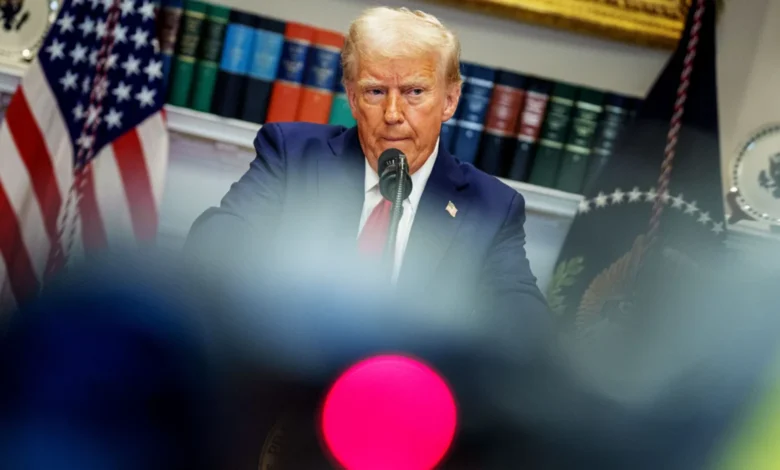
The internal stability of the Trump administration’s technology policy appears to be fracturing as high-ranking current and former advisors engage in a public and increasingly vitriolic debate over the future of artificial intelligence. Over a recent weekend, the ideological divide within the president’s inner circle spilled into the public domain, characterized by sharp insults and fundamental disagreements over how the United States should respond to the rapid advancement of Chinese AI capabilities. The friction centers on the emergence of high-performing, open-source models from China, which threaten the market dominance of American firms like OpenAI and Anthropic, while simultaneously challenging the administration’s regulatory and national security frameworks.
The public discord reached a fever pitch when David Sacks, who served as President Trump’s AI and cryptocurrency "czar" until March, launched a scathing critique of domestic AI leaders. Sacks characterized models produced by Anthropic as "lobotomized" and "woke," suggesting that excessive safety guardrails have rendered American technology less competitive and ideologically biased. This sentiment was met with a swift and harsh rebuttal from within the current administration. Emil Michael, a senior official at the Department of Defense, publicly dismissed criticisms from Dean Ball—a former Trump advisor now at OpenAI—by labeling him the industry’s "supreme village idiot." The exchange highlights a deepening rift between those who advocate for a libertarian, open-source approach to AI and those who believe the government must exert tighter control over the technology to ensure national security.
The Kimi Catalyst: A Shift in the Global AI Balance
The primary catalyst for this recent volatility is the release of Kimi, a sophisticated, free, and open-source AI model launched last week by the Beijing-based startup Moonshot AI. Moonshot, founded by computer scientist Yang Zhilin, has positioned Kimi as a direct competitor to the "frontier" models developed by Silicon Valley’s elite. Preliminary benchmarks suggest that Kimi’s performance rivals that of OpenAI’s GPT-4 and Anthropic’s Claude 3.5, particularly in its ability to process massive amounts of data within a single prompt—a feature known as a "long context window."
The arrival of Kimi presents a multifaceted crisis for the Trump administration. Economically, the availability of a free, high-quality Chinese alternative undermines the subscription-based revenue models of US AI companies. These domestic firms have been a primary driver of US economic growth and stock market performance over the last two years. When Chinese models offer comparable intelligence for free, US corporations have less incentive to invest in domestic licenses. Anton Leicht, a fellow at the Carnegie Endowment for International Peace, noted that these developments are a direct "threat for an administration that really doesn’t want more economic bad news." Indeed, the release of recent Chinese models has already caused measurable fluctuations in US technology stocks, as investors weigh the long-term viability of proprietary American AI.
Factions Within the Administration: Open Source vs. Regulatory Control
The debate over Kimi has exposed two distinct factions within the president’s orbit. The first faction, represented by David Sacks and other Silicon Valley libertarians, argues that the best way to defeat China is through radical openness and deregulation. Sacks has criticized top US AI firms for seeking what he calls a "government-enforced monopoly." He argues that by requesting regulation, companies like OpenAI and Anthropic are trying to eliminate open-source competition that they cannot beat on merit. Sacks further contends that Chinese models are gaining global traction specifically because they lack the restrictive "safety" filters that he believes stifle the utility of American AI.
Conversely, a second faction, which currently holds more sway within the White House and the Pentagon, views AI as a strategic weapon that requires strict federal oversight. This group, including Emil Michael and Secretary of Defense Pete Hegseth, emphasizes that as AI models become powerful enough to assist in cyberwarfare or the development of biological weapons, they can no longer be treated as mere consumer products. This perspective has led to the implementation of a new White House review process designed to vet the security of AI models before their public release.
This regulatory shift has drawn fire from industry insiders. Dean Ball, during his tenure as an advisor and now in his capacity at OpenAI, has described the new review process as a "de facto licensing regime for frontier AI." Ball suggested that the administration might use "soft power" to discourage US companies from using Chinese models like Kimi, effectively blacklisting foreign open-source software through informal pressure. Emil Michael’s "village idiot" retort was a direct response to this suggestion, as he insisted that the government’s actions are part of a transparent "democratic process" rather than a clandestine "Deep State scheme."
Chronology of Recent AI Policy Shifts
To understand the current tension, one must look at the rapid succession of policy changes that have occurred over the last several months:
- April 2026: The Trump administration announces a major crackdown on "distillation," a process where foreign entities use the outputs of US models to train their own AI, essentially "stealing" the intelligence of American systems.
- May 2026: Controversy erupts over Nvidia’s export licenses. In a move to bolster federal revenue, President Trump allows Nvidia to sell advanced H100 chips to certain Chinese firms in exchange for a direct percentage of the sales—a decision that critics argued would accelerate China’s AI development.
- June 2026: The US government briefly shuts down access to a specific Anthropic model, citing an immediate national security threat related to the model’s capabilities in autonomous hacking.
- July 12, 2026: New York State imposes a first-of-its-kind moratorium on the construction of new data centers, citing energy grid stability and environmental concerns. This move creates a bottleneck for US AI infrastructure.
- July 15, 2026: Moonshot AI releases Kimi, demonstrating that despite chip restrictions and distillation crackdowns, Chinese AI remains on par with US technology.
- July 19-21, 2026: High-level advisors engage in public infighting via social media, signaling a breakdown in policy consensus.
The Technical Mystery: How Did China Close the Gap?
One of the most pressing questions for US intelligence and technology analysts is how Moonshot AI managed to produce a model of Kimi’s caliber. For years, US policy—spanning both the Biden and Trump administrations—has focused on "chokepoint" strategies, primarily by restricting China’s access to high-end semiconductors manufactured by TSMC and designed by Nvidia.
Despite these export controls, China has demonstrated remarkable resilience. Some analysts suggest that Chinese firms have become masters of "compute-efficient" training, achieving better results with fewer chips. Others point to the persistence of chip smuggling and the use of cloud-based services to bypass physical hardware bans. Furthermore, the practice of distillation remains a significant concern. While the Trump administration has attempted to curb this, the sheer volume of data generated by US AI models makes it nearly impossible to prevent Chinese researchers from using that data to fine-tune their own systems. The reality that Kimi is free and nearly as capable as the world’s most advanced protected models suggests that the "chip curtain" may not be as effective as policymakers had hoped.
Economic and Public Sentiment Implications
The administration’s struggle is compounded by a shifting public mood. According to recent data from the Pew Research Center, there is a growing distrust of major AI corporations among the American public. Many citizens view the "frontier" AI companies as monopolistic entities that are more interested in protecting their profit margins than in the public good. This sentiment makes it politically difficult for the president to justify government intervention that appears to bail out or protect companies like OpenAI from foreign competition.
If the administration chooses to protect US firms by banning or discouraging the use of Kimi, it risks being seen as anti-consumer, as it would be forcing Americans to pay for a service that is available for free elsewhere. However, if it allows Kimi to proliferate, it risks the hollowing out of the domestic AI industry and the potential exposure of US data to Chinese state surveillance, as all Chinese AI models are subject to domestic censorship and data-sharing laws.
Analysis: A Turning Point for US Tech Hegemony
The weekend’s sparring suggests that the Trump administration is at a crossroads. The internal conflict is not merely about personalities; it is a fundamental disagreement over the nature of power in the 21st century. Is power derived from the freedom of the marketplace and the lack of restrictions, as Sacks argues? Or is it derived from the state’s ability to gatekeep and secure transformative technologies, as Michael and the Pentagon contend?
The "Kimi problem" serves as a wake-up call. It proves that the technological lead the United States enjoyed is fragile and that the strategy of using export controls to "freeze" Chinese progress has reached its limit. As the administration moves forward, it will have to reconcile these internal factions to create a coherent strategy. Failure to do so could result in a "worst of both worlds" scenario: a domestic industry hamstrung by new regulations and licensing requirements, while foreign competitors continue to innovate rapidly in an unrestricted, open-source environment.
The coming weeks will likely see a formalization of the White House review process, but whether that process will include the "soft power" strong-arming predicted by Dean Ball remains to be seen. For now, the "supreme village idiots" and the "czars" of the AI world remain locked in a battle for the president’s ear, while the global AI race continues to accelerate regardless of the discord in Washington.