The Evolution of AI Development and Data Engineering: From Code Optimization to Agentic Workflows

The landscape of software engineering and artificial intelligence is undergoing a significant transformation in mid-2026, characterized by a shift from brute-force computational approaches to refined, architectural patterns and cost-efficient orchestration. As enterprise-level AI moves from experimental pilots to production-grade systems, the focus of the global developer community has pivoted toward three critical pillars: code maintainability, inference optimization, and the rise of autonomous agentic frameworks. Between July 13 and July 17, 2026, a series of technical breakthroughs and methodological shifts were documented, highlighting a move away from traditional conditional programming toward dynamic, registry-based architectures and structured, deterministic language model outputs.
The Shift Toward Extensible Architecture in Python
A primary concern for modern Python developers remains the scalability of codebase architectures. The traditional use of long conditional chains—specifically if-else and switch-case structures—has been identified as a significant bottleneck in system extensibility. These structures frequently violate the Open/Closed Principle, a fundamental tenet of SOLID design which states that software entities should be open for extension but closed for modification.
On July 15, 2026, industry analysis emphasized the transition to the Registry Pattern as a solution to this "brittle code" syndrome. By replacing hardcoded dispatch logic with a centralized lookup table, developers can allow components to register themselves dynamically. This pattern is particularly vital in 2026, as AI pipelines require frequent updates with new models and preprocessing steps. A registry-driven system allows behavior to be modified via external configuration files rather than manual code edits, reducing the risk of regression errors. Industry data suggests that companies adopting registry-based designs see a 30% reduction in technical debt over an 18-month period, as the decoupling of logic from implementation simplifies unit testing and collaborative development.
Optimizing LLM Production: The Economic Reality of 2026
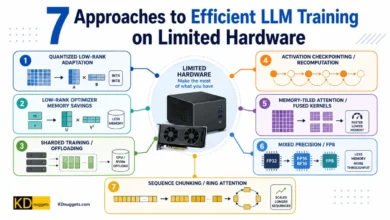
As Large Language Models (LLMs) become integrated into daily business operations, the focus has shifted from model size to operational efficiency. By mid-July 2026, the industry reached a consensus that high latency and exorbitant inference costs are the primary barriers to widespread AI adoption. To address this, a multi-faceted approach to optimization has emerged, moving beyond simple batching.
Techniques currently being deployed include model routing, where specific tasks are directed to smaller, specialized models rather than generalized giants, and the implementation of multi-layered caching strategies. Context management has also evolved; instead of relying on the massive context windows that were popularized in 2025, developers are now utilizing "context budgets." This involves surgical token management and the pruning of irrelevant information before it reaches the inference engine.
Market data from Q2 2026 indicates that organizations implementing these twelve specific optimization methods have managed to reduce their LLM-related cloud expenditure by an average of 45% while improving response times (time-to-first-token) by nearly 60%. This economic shift is forcing a reconsideration of the "bigger is better" philosophy in AI, favoring "right-sized" models for specific enterprise applications.
Determinism and Structure in Generative Outputs
One of the most persistent challenges in utilizing LLMs for backend systems has been the inherent unpredictability of natural language. On July 13, 2026, the spotlight was placed on the Outlines library, a tool that has become essential for developers requiring structured outputs like JSON or YAML.
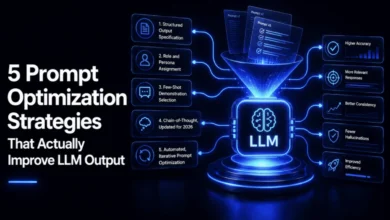
The Outlines library introduces deterministic certainty into generation by employing token masking. This technique ensures that the model cannot select syntactically illegal tokens during the inference process, thereby guaranteeing that the output adheres to a predefined schema. This is a critical development for API integrations, where a single misplaced comma or an unclosed bracket can crash downstream systems. Industry experts note that the move toward "constrained generation" represents a maturation of the field, moving away from "prompt engineering" toward "architectural enforcement."
Infrastructure for Parallel AI Development
The week of July 13 to July 17 also saw a renewed focus on the infrastructure supporting AI development. As teams grow, the need for multiple developers—or multiple AI agents—to work on the same repository simultaneously has increased. Shittu Olumide and other industry leaders have pointed to Git worktrees as a vital tool in this regard.
Git worktrees allow for the creation of multiple isolated workspaces from a single repository. In the context of AI development, this prevents file collisions and context loss during parallel experimentation. When training a model in one branch and debugging a deployment script in another, worktrees provide the necessary isolation to maintain data integrity. This infrastructure layer is increasingly seen as a prerequisite for "Agentic AI," where autonomous agents require their own "scratchpad" environments to test and iterate on code without interfering with human developers or other agents.
The Rise of Agentic AI and Local Orchestration
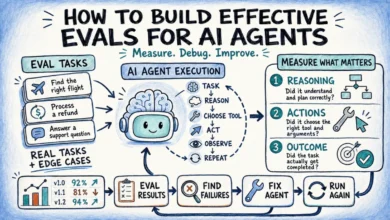
Perhaps the most significant trend of the mid-2026 period is the formalization of Agentic AI. This refers to AI systems that do not merely respond to prompts but can plan, use tools, and execute multi-step workflows. On July 15 and 17, documentation was released regarding seven Python frameworks specifically designed for orchestrating these agents on local infrastructure.
The move toward local orchestration is driven by two factors: security and cost. By running agents locally, enterprises can ensure that sensitive data never leaves their firewalls. Furthermore, local frameworks allow for the coordination of multi-agent systems—where one agent might write code, another tests it, and a third audits it for security—without incurring the per-token costs associated with cloud-hosted orchestration layers.
In tandem with these frameworks, the concept of "Context-Driven Development" (CDD) has gained traction. Tools like Conductor for Gemini CLI are being used to persist project specifications and architectural constraints within the repository itself. This ensures that even across different sessions or different agents, the AI maintains a consistent understanding of the project’s goals and limitations. This "persistent context" is the key to moving beyond simple code completion toward true autonomous software engineering.
Minimalism in Agentic Design: The Pi Approach
Contrasting with the trend toward increasingly complex orchestration, the "Pi Coding Agents" philosophy emerged on July 16, 2026, advocating for architectural minimalism. This approach suggests that the most effective AI agents are those with the least "injected context." By explicitly documenting what a system does not do, developers can reduce the cognitive load on the LLM, leading to more accurate and cost-effective outcomes.
This minimalist movement is a reaction to the "bloat" seen in early 2026 agent frameworks. It argues that by simplifying the interface between the agent and the codebase, developers can achieve higher reliability. Proponents of this method suggest that a "less is more" approach reduces the likelihood of "hallucinated" features and keeps the AI focused on the immediate task at hand.
Educational Shifts and Portfolio Development
As the technical requirements for data professionals continue to evolve, the methods for career preparation are also shifting. Building a "data portfolio" in 2026 is no longer about simple Kaggle competitions. It now requires demonstrating proficiency in real-world SQL projects across diverse domains such as healthcare, banking, and customer churn analysis.
Educational resources have decentralized, with a curated selection of ten YouTube channels now being recognized by industry leaders as providing content that rivals traditional university curricula. These channels focus on the intersection of machine learning theory and deep learning implementation, reflecting a market demand for "full-stack" data scientists who understand both the math and the deployment infrastructure.
Chronology of Technical Developments: July 13 – July 17, 2026
The following timeline outlines the key releases and discussions that shaped the industry during this high-activity week:
- July 13: Release of comprehensive guides on building real-world SQL portfolios and the introduction of structured generation techniques via the Outlines library.
- July 14: Focus on LLM production efficiency, specifically the "12 Ways" to reduce latency and costs. Introduction of Conductor for Gemini CLI to solve context persistence issues.
- July 15: The "Editor’s Pick" regarding the Python Registry Pattern was published, alongside an evaluation of seven frameworks for local AI agent orchestration.
- July 16: Debate sparked by the Pi Coding Agents’ minimalist manifesto; publication of the top ten educational channels for AI professional development.
- July 17: Final release of resources for Agentic AI and the strategic application of Git worktrees for parallel development environments.
Broader Impact and Industry Implications
The convergence of these trends suggests a significant maturation of the AI industry. We are seeing a move away from the "magic" of AI toward the "engineering" of AI. The emphasis on the Registry Pattern and structured outputs indicates that developers are now treating LLMs as standard components of a software stack that must adhere to established engineering principles.
The focus on cost and latency reduction indicates that the "infinite capital" phase of AI development has ended, replaced by a "sustainability" phase where ROI is closely scrutinized. Finally, the rise of agentic frameworks and local orchestration suggests that the next generation of software will not be built by humans using AI tools, but by teams of humans and agents working in highly structured, isolated, and context-aware environments.
As we move into the latter half of 2026, the organizations that will succeed are those that prioritize these architectural foundations. The ability to cleanly extend code, minimize inference overhead, and orchestrate autonomous agents is no longer a luxury but a fundamental requirement for survival in the modern technological landscape. The developments of this single week in July serve as a microcosm for the broader shifts defining the future of the digital economy.