Celebrating Two Decades of Elasticity: How Amazon EC2 Redefined Global Computing Infrastructure


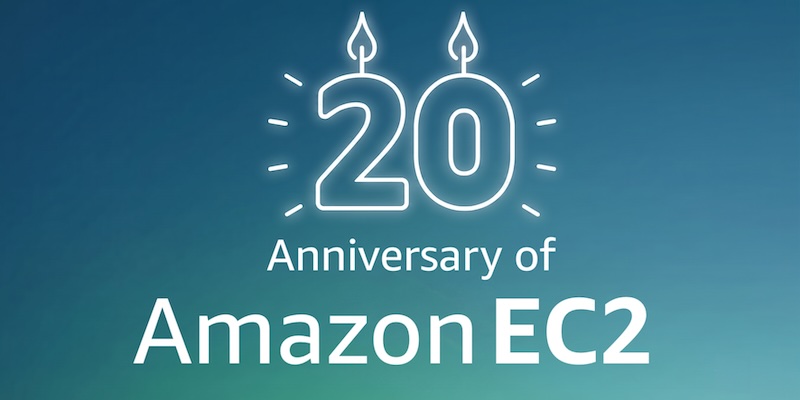
Twenty years ago, a solitary blog post published by technologist Jeff Barr fundamentally altered the trajectory of the information technology industry. On that day, the Amazon Elastic Compute Cloud (Amazon EC2) Beta was introduced to the world, offering developers and enterprises the unprecedented ability to provision resizable Linux virtual servers in the cloud, billed on a flexible, hourly basis. At its inception, the service comprised a single instance type—the modest m1.small—housed within a single AWS Region in US East. What began as a minimal yet profoundly useful utility has since matured into the invisible backbone of the modern digital economy, laying the groundwork for the multi-trillion-dollar cloud computing market we know today.
The launch of EC2 arrived at a time when procuring enterprise computing infrastructure was an arduous, capital-intensive endeavor. Organizations traditionally spent weeks or months forecasting capacity, ordering physical hardware, racking servers, and provisioning data center space just to launch a new web application or database. Amazon EC2 replaced this high-friction procurement cycle with an API-driven, pay-as-you-go model. For the first time, startups and multinational corporations alike could scale their computing resources up or down in minutes, eliminating the financial risk of over-provisioning and democratizing access to enterprise-grade infrastructure.
A Chronology of Innovation: Two Decades of Architectural Milestones
To understand how Amazon EC2 evolved from a basic Linux virtual server into a sophisticated global compute engine, one must examine the critical technological breakthroughs that punctuated its twenty-year history. The service’s growth has been marked by a continuous rollout of foundational building blocks that solved successive layers of enterprise IT complexity.
The foundational era of EC2 expansion began in earnest shortly after its initial beta release. In 2008, Amazon introduced Amazon Elastic Block Store (EBS), providing high-availability, persistent block storage volumes that could be attached to running EC2 instances, making database deployments and stateful applications viable in the cloud.
The following year, 2009, proved to be a watershed moment for application architecture and security. AWS rolled out Elastic Load Balancing (ELB), Auto Scaling, and Amazon CloudWatch, equipping developers with the tools required to build fault-tolerant, highly available applications that could automatically respond to traffic fluctuations. Simultaneously, the introduction of Amazon Virtual Private Cloud (VPC) gave customers the ability to provision logically isolated, highly secure virtual networks under their own administrative control, satisfying critical compliance and security requirements for enterprise adoption.
As the decade progressed, hardware innovation became a primary driver of performance and efficiency. In 2017, AWS unveiled the AWS Nitro System, a combination of dedicated hardware and specialized software offloading virtualization functions from the CPU to custom chips. This architecture drastically reduced virtualization overhead, enhanced security, and accelerated the pace at which AWS could release new instance types. Building upon this silicon capability, AWS introduced its custom ARM-based Graviton processors in 2018, specifically designed to deliver superior price-performance for cost-sensitive scale-out workloads.
Concurrently, the physical boundaries of the cloud expanded far beyond traditional centralized regions. In 2018, AWS Outposts brought native EC2 infrastructure directly into customer on-premises data centers. By 2019, the deployment model broadened further with the introduction of AWS Local Zones—which placed compute and storage closer to major population and industry centers—and AWS Wavelength, which embedded EC2 compute inside global 5G telecommunications networks to support ultra-low-latency mobile applications.

Expanding the Spectrum: From One Instance Type to Over 1,200 Configurations
Over the past twenty years, the sheer diversity of Amazon EC2 has scaled exponentially to match the specialized demands of modern software engineering. From the original m1.small instance, the catalog has expanded to encompass over 1,200 distinct instance types categorized into families optimized for general-purpose computing, high-end compute, memory-intensive operations, storage performance, accelerated computing via GPUs, and high-performance computing (HPC) clusters.
This vast array of configurations is distributed across 39 geographic AWS Regions worldwide, ensuring that global enterprises can deploy localized workloads with minimal latency and strict data residency compliance. Furthermore, the foundational compute capacity pioneered by EC2 has long since transcended raw virtual machines. Today, EC2 serves as the computational bedrock for a vast ecosystem of higher-level AWS services, including Amazon ECS, Amazon EKS, AWS Lambda, AWS Fargate, AWS Batch, Amazon EMR, Amazon SageMaker AI, and Amazon Bedrock. Whether a customer is hosting a basic static website or orchestrating distributed training clusters for trillion-parameter artificial intelligence foundation models, the underlying infrastructure ultimately traces back to an EC2 instance launch.
Industry Impact and Economic Implications
The emergence and maturation of Amazon EC2 catalyzed a seismic shift in global corporate expenditure, fueling the transition from capital expenditure (CapEx) models to operational expenditure (OpEx) frameworks. By removing the financial and logistical barriers to entry, EC2 enabled the modern software-as-a-service (SaaS) boom, allowing thousands of startups to bootstrap complex technology stacks without securing massive venture capital rounds for hardware.
Industry analysts note that EC2 effectively established the blueprint for modern Infrastructure-as-a-Service (IaaS). Competitors across the technology sector were forced to reevaluate their business models, giving rise to rival hyperscale clouds from Microsoft, Google, and others. Yet, EC2’s early mover advantage and relentless iterative development allowed AWS to maintain a dominant market share, continually anticipating enterprise demands well before they became mainstream industry requirements.

Economic observers also highlight the profound impact of EC2 on enterprise agility and risk management. During periods of macroeconomic uncertainty, organizations have leveraged the elastic nature of EC2 to rapidly scale down non-essential computational loads, conserving cash flow. Conversely, during periods of rapid digital acceleration—such as the sudden shift to remote workforces or the recent explosive demand for generative artificial intelligence—enterprises have scaled compute capacity infinitely on demand, avoiding the supply chain bottlenecks that historically plagued hardware procurement.
Strategic Foundation for the Artificial Intelligence Era
As Amazon EC2 enters its third decade, its strategic importance has shifted toward powering the next generation of computational workloads, most notably artificial intelligence and machine learning. The same core value proposition that resonated in 2006—secure, resizable compute capacity provisioned in minutes, billed strictly on consumption, and scaled without long-term commitments—remains entirely intact. However, the scale at which this flexibility must now operate is orders of magnitude greater.
The integration of specialized accelerator instances, high-throughput networking, and custom-designed silicon tailored for machine learning inference and training demonstrates that AWS has successfully future-proofed the EC2 architecture. By continuing to iterate rapidly in response to customer feedback while maintaining backward compatibility and rock-solid foundational stability, Amazon EC2 has secured its position as the central engine of enterprise IT.
Looking ahead, industry leaders and systems architects anticipate that the next twenty years of cloud computing will introduce computational paradigms that remain difficult to conceptualize today—ranging from quantum-classical hybrid processing to ubiquitous edge intelligence. As these nascent technologies mature, the fundamental design philosophy established by Jeff Barr and the AWS team two decades ago—delivering minimal yet powerful building blocks designed for rapid iteration—will continue to guide the evolution of infrastructure. Amazon EC2 stands poised to remain the reliable, foundational layer where the world’s most demanding digital workloads will execute for decades to come.