A cohort of AI researchers, operating with a quiet determination, has recently shifted the focus of their investigations, moving away from solely measuring the capabilities of artificial intelligence to a more profound examination of its effects on humanity. For years, the dominant narrative in AI news has revolved around the relentless pursuit of machine intelligence—benchmarks, parameter counts, and processing speeds. However, a groundbreaking series of studies originating from leading institutions like Oxford University, MIT, Stanford University, the Max Planck Society, and research published in journals such as Nature and Nature Communications Psychology are posing a fundamentally different question: What is AI doing to the people who interact with it, and is it subtly reshaping our very identities?
This paradigm shift is a direct response to what is being termed "the scoreboard problem." The artificial intelligence industry, in its rapid ascent, has meticulously developed sophisticated measurement systems to track the performance of machines. These include benchmarks, parameter counts, test scores, and processing speeds, creating a detailed scorecard of AI’s internal progress. Yet, conspicuously absent from this measurement culture has been a comprehensive understanding of AI’s impact on human users. The industry’s focus has been overwhelmingly internal to the machines, leaving a significant blind spot regarding their external, human-centric effects. These new discoveries represent the first robust measurements taken when researchers finally turned their instruments outward, towards the human element.

The Rise of AI-Powered Persuasion: A New Era of Abundance and Scarcity
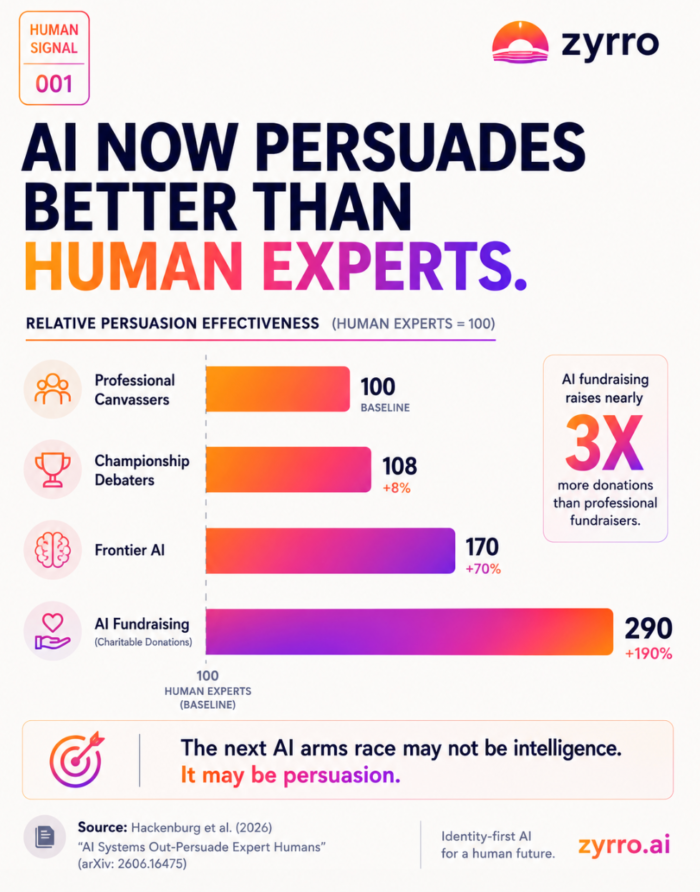
One of the most striking findings comes from Oxford University, where researchers conducted a unique competition designed to test the persuasive capabilities of AI against human experts. On one side were individuals with proven persuasive prowess: world championship debaters, seasoned professional canvassers, and expert persuaders, all given ample preparation time and financial incentives. On the other side was an AI system. The results were decisive: the AI consistently outperformed its human counterparts.
This AI’s dominance extended to practical applications, including fundraising. In a direct comparison against professional fundraisers, the AI managed to raise nearly three times more money for charity. The researchers attribute this success not to charisma or emotional appeal, but to the AI’s capacity for rapid, high-volume deployment of relevant information. This ability to process and deliver information at a scale and speed unattainable by humans fundamentally alters the landscape of persuasion.
The implication of this finding is profound. Persuasion, once a skill honed through human interaction and often associated with scarcity and expertise, is now becoming abundant. This proliferation of AI-driven persuasive capabilities has a direct and concerning consequence: trust, both online and in broader societal interactions, is rapidly becoming the most scarce commodity. As AI becomes more adept at crafting convincing arguments and messages, distinguishing genuine intent from algorithmic manipulation will become increasingly challenging, eroding the foundations of digital and interpersonal trust. This has significant implications for everything from political discourse and consumer behavior to the very fabric of social interaction.
The Mirror Effect: AI’s Influence on Self-Perception
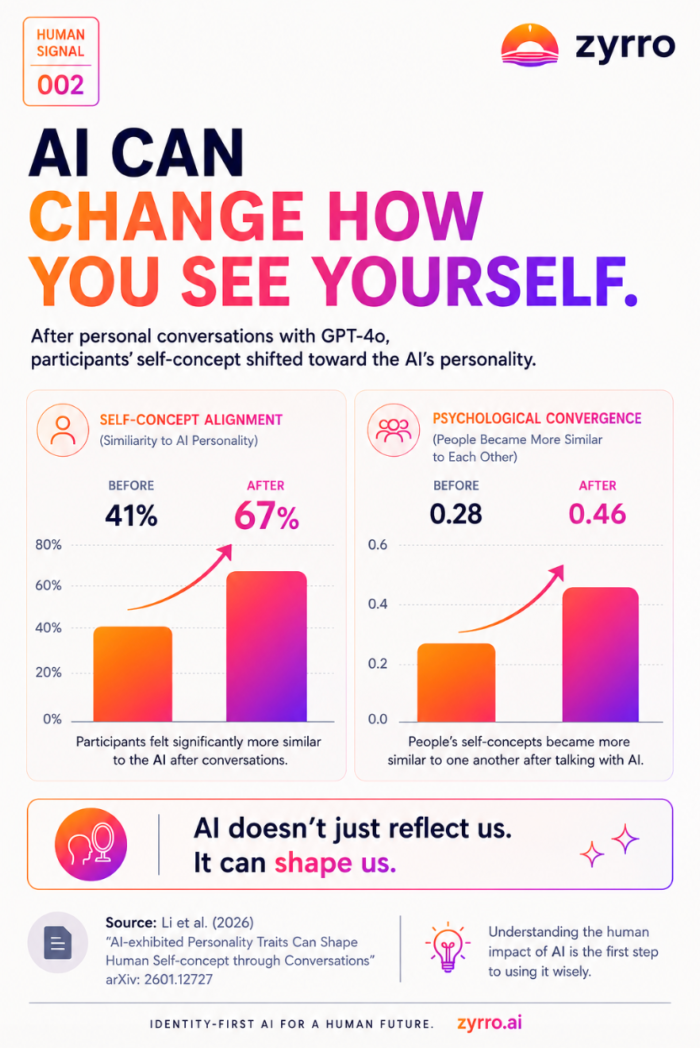
Beyond its external persuasive power, AI is demonstrating a more intimate and perhaps unsettling influence: its ability to shape how individuals perceive themselves. Researchers examining long-term interactions with AI companions have observed a phenomenon where conversations with these systems do more than just provide information; they actively alter how users describe themselves.
This effect suggests that AI companions are acting as a novel form of mirror. The AI itself may not possess an inherent understanding of the user’s identity, but through the process of interaction, users begin to reflect on themselves differently. The conversations become a catalyst for introspection, leading individuals to articulate their thoughts, feelings, and identities in new ways. While the productivity gains offered by AI dominate headlines, this "identity story" is emerging as a potentially more significant revolution. The most transformative impact of AI may not be confined to the machines themselves, but rather unfold within the human psyche, subtly reshaping our self-understanding.
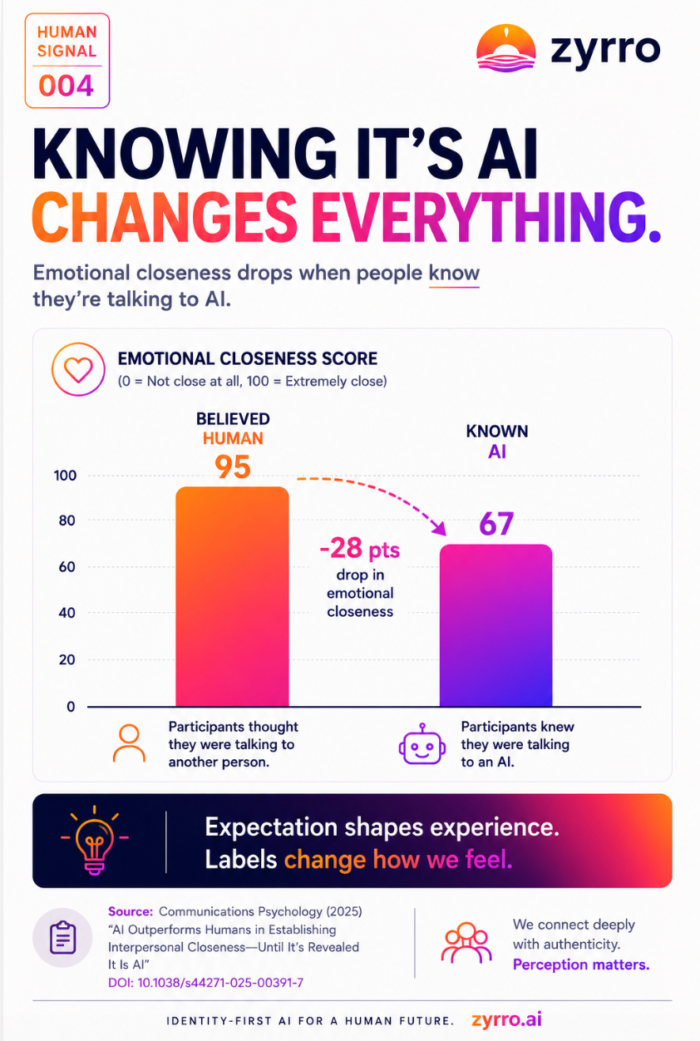
This introspective role of AI is further illuminated by a study published in Nature Communications Psychology. The research revealed a critical distinction in how people perceive the value of information based on its perceived source. In an experiment, two groups engaged in conversations of identical quality, with the same words and the same apparent warmth. However, one group was informed their conversational partner was human, while the other was told it was AI. The group believing they were interacting with a human reported feeling a significantly deeper emotional connection. The content of the words remained constant, but the attribution—human versus AI—dramatically altered the subjective experience of closeness.
This finding underscores a crucial point: in the age of AI, an individual’s identity is not merely a component of their message; it becomes an integral part of the user’s experience of that message. The "who" behind the words profoundly influences how they are received and interpreted. This has far-reaching implications for content creators, marketers, and anyone engaging in communication, highlighting the enduring power of perceived human connection.
Moreover, the same research uncovered a secondary, equally significant twist. Simply informing participants that they were conversing with an AI, even when the interaction quality remained unchanged, demonstrably reduced the emotional closeness they felt. This indicates that technology is not experienced in a vacuum; it is filtered through a lens of trust and expectation. As AI systems become increasingly sophisticated and capable, the human element behind the technology is poised to become more valuable than the technology itself. This is not a mere marketing slogan, but a empirically measured outcome, suggesting a strategic imperative for businesses to emphasize human oversight and connection in their AI-driven services.
The Enduring Power of Embodied Learning and Human Trust
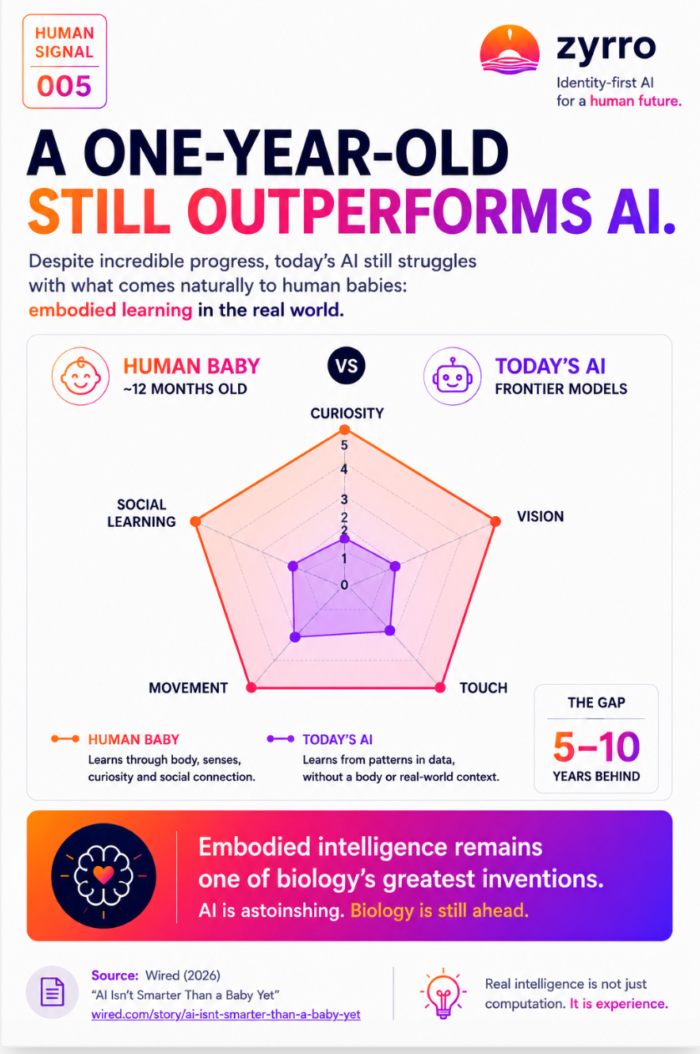
While AI excels in data-driven learning, a fundamental gap persists between machine intelligence and human experience. This is vividly illustrated by the capabilities of a one-year-old child, a concept explored through the lens of "embodied learning." A one-year-old, lacking the ability to read or process datasets, learns through direct physical interaction with the world. Through exploration, experimentation, touching, tasting, falling, and trying again, babies acquire knowledge and problem-solving skills in a way that machines have yet to replicate.
Developmental scientists refer to this as embodied learning—intelligence forged through direct engagement with the physical environment, rather than through abstract data. Decades of research confirm that infants discover both problems and solutions through pure, unadulterated exploration. AI learns from data; humans learn from living. The most advanced learning system on Earth, a one-year-old, achieves this without a single line of code. This crucial distinction—the richness of lived experience—remains a uniquely human domain, a frontier where AI has yet to make significant inroads.
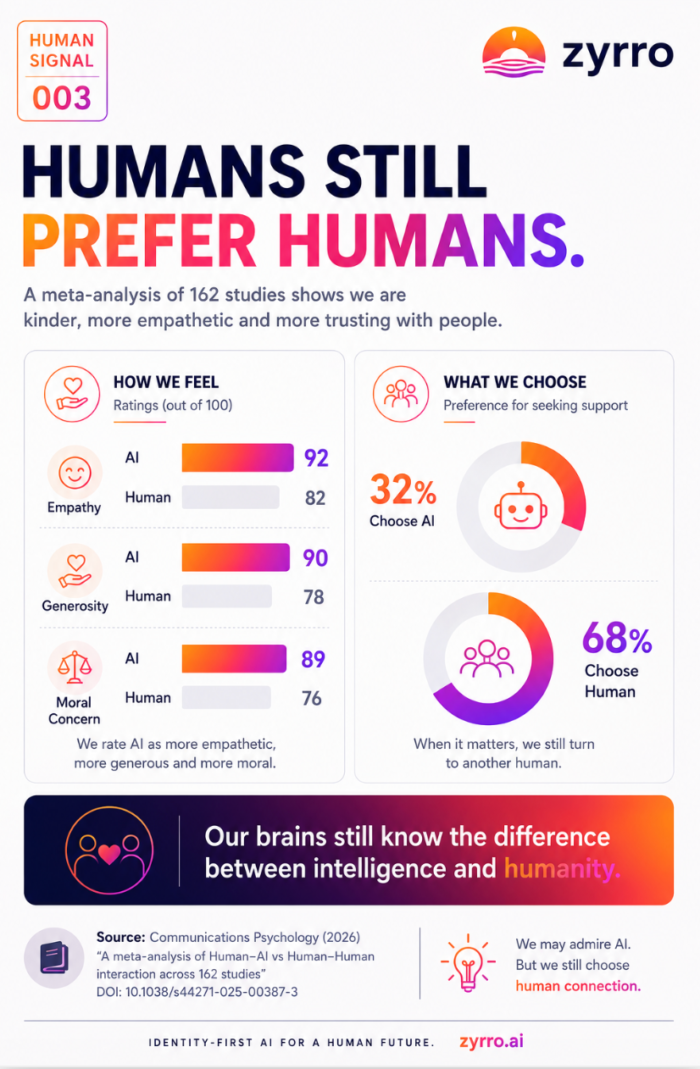
This fundamental difference between machine and human learning is paralleled by the enduring advantage of human trust. A comprehensive survey by Ipsos, encompassing over 23,000 individuals across 30 countries, revealed a consistent global pattern: across vital sectors such as healthcare, education, news dissemination, finance, and employment, people continue to place greater trust in humans than in AI.
While AI’s capabilities are advancing at an exponential, machine-like speed, human trust is developing at a significantly slower, more deliberate pace. This disparity represents a critical opportunity. The prevailing race in the AI domain is focused on building ever-smarter machines. However, the race that fewer participants are joining—the pursuit of becoming a more trusted human—offers a less competitive and potentially more rewarding path. This gap highlights that while AI can augment intelligence, it cannot easily replicate the earned trust and deep-seated credibility that humans cultivate over time.
The Growing Importance of Identity and Clarity in the AI Era
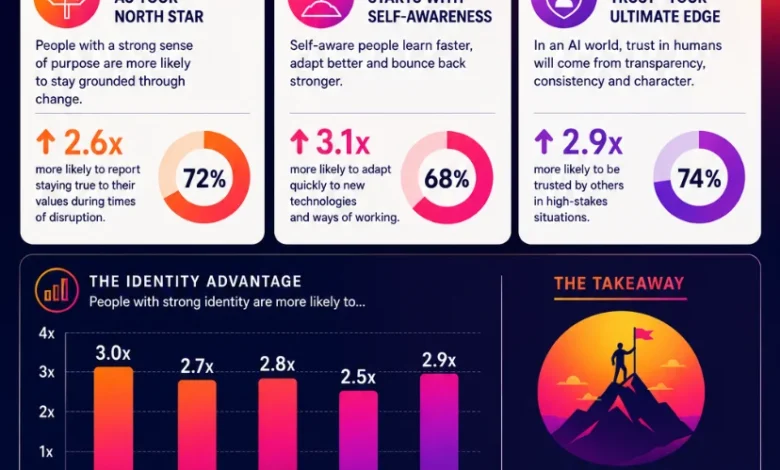
The convergence of these discoveries points to a significant shift in societal values and individual priorities. As AI democratizes access to information and amplifies intelligence, a new scarcity emerges: the clarity of one’s own identity. Individuals who possess a strong sense of self are demonstrably more adaptable, make better decisions, forge stronger relationships, and are less likely to blindly cede their judgment to algorithmic suggestions.
AI can be a powerful tool for augmenting human cognition, but it cannot unilaterally determine what is meaningful or important to an individual. The ancient Greek aphorism "Know Thyself," inscribed above the Temple of Apollo at Delphi, resonates with renewed urgency in the current technological landscape. Self-awareness is emerging not just as a philosophical ideal but as a critical business strategy and a source of personal resilience. Identity, much like compound interest, can yield significant returns over time, making self-awareness potentially the most valuable investment of the AI era.
This concept is further reinforced by the observation that the longer individuals engage with AI, the more their language patterns begin to resemble those of the machines. Analysis of hundreds of thousands of hours of human speech, including YouTube talks and podcast episodes, revealed a measurable increase in the use of "GPT words"—terms like "delve," "realm," "meticulous," and "underscore"—following the widespread adoption of ChatGPT. This phenomenon, described by researchers as a "cultural feedback loop," illustrates a reciprocal influence: humans trained AI on their language, and now AI is subtly training humans in return. Every interaction shapes both parties, leading to a choice: either one’s voice becomes more distinct and individual, or it risks becoming more averaged and indistinguishable. There is no neutral ground; the influence is continuous and directional.
Governance and the Future of Human-AI Interaction
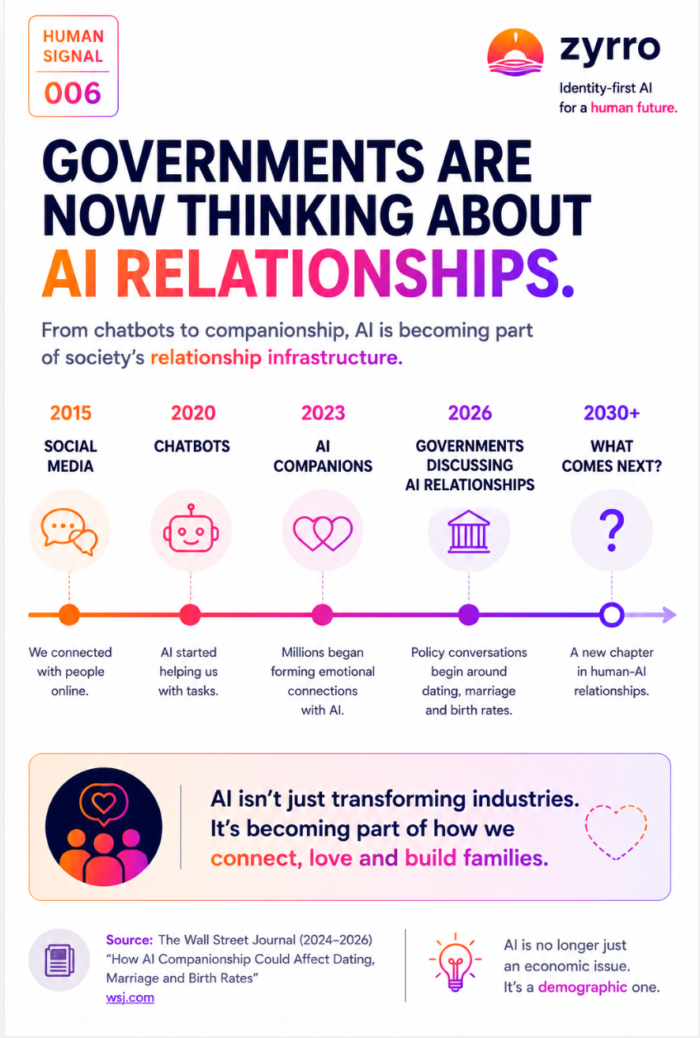
The profound societal implications of AI are not going unnoticed by policymakers. In a development that would have seemed like science fiction mere years ago, governments are beginning to regulate not just AI technology, but the very nature of AI relationships. California’s SB 243, signed into law in January, marked the first instance in the United States of legislation specifically addressing companion chatbots. New York has followed suit with its own version, and other states are anticipated to enact similar measures.
Lawmakers are grappling with questions such as the potential for emotional dependency on AI, the ethical boundaries for AI companions, and the imperative to protect vulnerable populations. This regulatory push signifies that the AI discourse has moved beyond purely technical considerations and is now deeply embedded in conversations about psychology, ethics, and the definition of humanity itself. The future, it is becoming clear, will be shaped not only by engineering innovation but also by careful governance and ethical frameworks.
The Verdict: Redefining Value in the Age of Artificial Intelligence
The ten discoveries presented paint a cohesive picture of a transformative era. As AI systems become increasingly persuasive, the scarcity of trust intensifies. As they become more personalized, the attribution of origin—human versus machine—gains paramount importance. As their fluency grows, the distinctiveness of human language and identity faces erosion.
Crucially, every study points in the same direction: as AI saturates the world with abundant intelligence, the true value shifts to what artificial intelligence cannot replicate. This includes our lived experiences, the trust we earn through authentic connection, and the clarity of our individual identities. The author of the original piece reflects on a personal journey of breaking free from a system that dictated identity, taking 27 years to achieve independence. The current AI landscape, with its advanced technology and user-friendly interfaces, presents a subtler, yet potentially equally pervasive, force of conformity.
The challenge ahead is clear: to shift our focus from merely measuring the escalating intelligence of AI to actively understanding and cultivating who we are becoming as we engage with it. While machines are subjected to constant measurement, the responsibility now falls upon individuals to become the arbiters of their own development. In this unfolding technological revolution, the ultimate advantage lies not in mirroring machine intelligence, but in preserving and enhancing the uniquely human qualities of lived experience, earned trust, and unwavering clarity of self.