Tractor Supply Faces Headwinds as Pet Business Falters, Economic Pressures Mount, and Amazon Advances

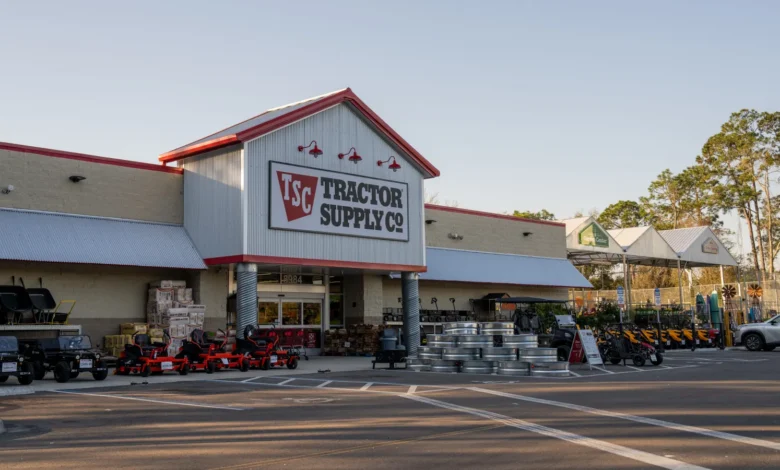
Tractor Supply is navigating a challenging period marked by a slowdown in its crucial pet business, escalating fuel costs impacting its core rural customer base, and increasing competition from e-commerce giants like Amazon. The company’s recent performance has led to a recalibration of its expansion plans, signaling a cautious approach amidst a complex economic landscape.
A Shift in Momentum for the Rural Retailer
The first half of 2026 has presented significant hurdles for Tractor Supply, a retailer long recognized for its strong connection with rural communities. While the company initially saw positive comparable store sales growth in April and June, this momentum was eroded by adverse weather conditions in May, particularly persistent drought across key Southeastern markets. This meteorological factor significantly curtailed typical seasonal activity, leading to a noticeable dip in demand for essential outdoor and lawn care products, according to CEO Hal Lawton.
This downturn follows a previous downward revision of expectations in January, underscoring a broader trend of recalibration. The pet segment, a historically strong performer and a key growth driver for Tractor Supply, is also reportedly falling short of projections. This development is particularly concerning given the significant investments made in expanding the company’s pet offerings, including services and specialized products.
Adding to these internal challenges are external economic pressures. The company is grappling with uncertainty surrounding potential tariff refunds, a factor that can impact cost of goods and pricing strategies. Furthermore, the broader economic climate, characterized by rising inflation and fluctuating consumer confidence, is forcing a strategic response from consumers. Lawton noted that while customers continue to prioritize spending on their pets, animals, and farm essentials, there’s a discernible pullback on discretionary purchases. This is leading to a consolidation of shopping trips, with consumers seeking to maximize value and efficiency.
Analyst Scrutiny and Market Dynamics
The recent sales performance has drawn attention from industry analysts. Neil Saunders, Managing Director at GlobalData, described the recent quarter as "one of the weakest sales performances Tractor Supply has produced in a while." He further commented that "at headline level, it suggests that the business is running out of steam," a candid assessment that highlights concerns about the company’s growth trajectory.
Saunders points to a critical evolving dynamic: the encroachment of major retailers into Tractor Supply’s traditional market stronghold. Amazon, in particular, has been making strategic moves to expand its reach into sparsely populated areas. The e-commerce behemoth announced plans last year to invest over $4 billion to bolster its logistics network in these regions, a move widely interpreted by analysts as a direct challenge to Tractor Supply’s customer base. While Amazon’s primary focus in these areas may be on commodity products, it represents an indirect threat by potentially capturing a share of the rural consumer’s wallet and eroding Tractor Supply’s perceived exclusivity.
"Admittedly, this is mostly for commodity products rather than specialist farm and ranch supplies – where Tractor Supply still has an advantage – but it is still an unhelpful trend that takes the edge off growth," Saunders stated. He emphasized the need for "sharper execution – particularly on range and pricing is needed" to maintain competitive footing.
Walmart, another retail giant, is also reportedly increasing its focus on rural markets, further intensifying the competitive landscape. This dual pressure from both online and brick-and-mortar giants necessitates a robust and agile response from Tractor Supply.
The Impact of Rising Fuel Costs
The economic strain on Tractor Supply’s core customer base is exacerbated by the surge in fuel prices. Farmers, ranchers, and other individuals living in rural areas are disproportionately affected by rising gasoline and diesel costs. These customers often live farther from essential services and rely heavily on fuel for both transportation and the operation of their agricultural equipment. Higher fuel expenses directly reduce disposable income available for discretionary spending, including purchases at Tractor Supply. Moreover, the increased cost of fuel for farm machinery can impact profitability, leading to tighter budgets for essential farm supplies.

Strategic Adjustments and Future Outlook
In response to these prevailing challenges, Tractor Supply is making strategic adjustments, most notably to its store expansion plans. The company announced a revised target of opening between 85 to 90 new locations in 2027, a reduction from its previous projection of 100 new stores. This measured approach to expansion reflects a pragmatic assessment of the current market conditions and a focus on optimizing existing operations.
Despite these headwinds, CEO Hal Lawton remains optimistic about the company’s long-term prospects. He reiterated his belief that Tractor Supply is "a growth company" and expressed confidence in continued growth, both from new store openings and from the performance of existing locations. The company is actively working to reinforce its value proposition, aiming to resonate with customers who are increasingly budget-conscious. This strategy involves highlighting the affordability and essential nature of its product assortment, which ranges from animal feed and pet supplies to clothing, tools, and hardware.
The company’s ability to adapt its product assortment, pricing strategies, and customer engagement initiatives in the face of evolving economic realities and competitive pressures will be critical in determining its success in the coming years. The ongoing performance of its pet business, the effectiveness of its value proposition messaging, and its capacity to innovate in a market increasingly influenced by large e-commerce players will be closely watched by investors and industry observers alike.
A Look Back: The Trajectory of Tractor Supply
Founded in 1938, Tractor Supply has built its brand on serving the unique needs of rural customers. Its initial focus was on animal feed, and over the decades, it has strategically expanded its product categories to encompass a wide array of goods essential for livestock, pets, home, garden, and maintenance of rural properties. The company’s success has been largely attributed to its deep understanding of its target demographic, its commitment to providing a wide selection of high-quality products, and its distinctive store experience, often characterized by a friendly, knowledgeable staff and a community-oriented atmosphere.
The company experienced a period of robust growth in the 2010s, driven by an expanding rural population, increased interest in homesteading and self-sufficiency, and a general economic recovery. The COVID-19 pandemic further bolstered its performance as consumers spent more time at home, investing in their properties and pursuing hobbies like gardening and pet ownership. This period saw significant increases in comparable store sales and a steady pace of new store openings.

However, the current economic climate, marked by persistent inflation, rising interest rates, and supply chain disruptions, presents a different set of challenges. The very factors that fueled past growth – consumer discretionary spending and a focus on home-based activities – are now being tested by broader economic anxieties and shifting consumer priorities. The strategic decision to temper store expansion plans is a clear indication of management’s recognition of these evolving market dynamics.
The Broader Implications for Rural Retail
The challenges faced by Tractor Supply are not isolated incidents but reflect broader trends impacting the rural retail landscape. As larger players like Amazon and Walmart enhance their logistical capabilities and expand their reach into less densely populated areas, the competitive barriers for niche retailers may diminish. This forces companies like Tractor Supply to not only compete on price and product but also on the unique value proposition they offer – often a combination of specialized expertise, community connection, and a deep understanding of rural lifestyles.
The company’s ability to successfully navigate this complex environment will depend on its agility in adapting to changing consumer behaviors, its capacity to innovate in its product and service offerings, and its commitment to maintaining the strong relationships it has cultivated with its customer base. The coming quarters will provide critical insights into the long-term sustainability of its growth strategy in an increasingly competitive and economically uncertain market.
Related posts: