The Abandoned Workforce: Why Enterprises Are Failing to Manage the Post-Deployment Lifecycle of AI Agents

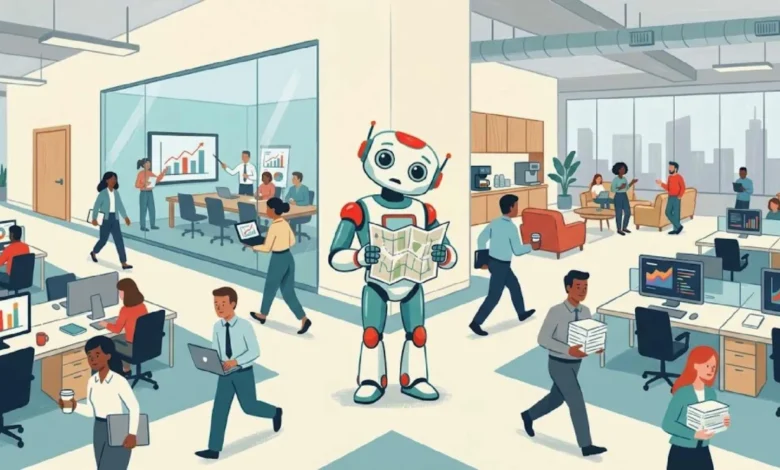
As artificial intelligence shifts from a theoretical testing ground into active enterprise deployment, organizations are discovering a critical operational blind spot: the total absence of post-launch ownership for autonomous AI agents. Recent industry data reveals that while a massive majority of large companies have successfully integrated custom AI agents into core departments like marketing and customer service, leadership teams have largely ignored who maintains, updates, and secures these systems once they go live.
This oversight has created a precarious landscape of orphaned software, permission creep, and unmanaged operational drift. To understand how modern enterprises arrived at this juncture, it is necessary to examine the rapid proliferation of agentic workflows, the governance tug-of-war between central IT and business units, and the historical lessons the software industry learned decades ago regarding the true cost of software maintenance.
The Proliferation of Autonomous AI Agents in the Enterprise
The question of whether businesses should adopt artificial intelligence has largely been settled. According to comprehensive market research published by Kana in mid-2026, which surveyed 225 senior leaders at large U.S. enterprises, 70 percent of organizations are already running custom AI agents on real, production-level marketing tasks. An astonishingly low 3 percent reported running no agents at all.
This rapid adoption rate represents a fundamental shift in how business operations are executed. Rather than merely assisting human workers with summarization or drafting, modern AI agents operate autonomously. They execute multi-step campaigns, manage lead qualification, interact directly with consumers, and dynamically adjust messaging based on real-time inputs. A prominent example comes from a major utility provider preparing to release 200 custom agents in a single quarter—most of which were developed directly within business functions like marketing rather than through traditional IT channels.
While this decentralized development model fosters departmental agility and accelerates deployment timelines, it introduces severe administrative complexities. When asked about agent maintenance protocols—specifically regarding what happens when underlying large language models update, corporate policies shift, or the creator of the agent changes teams—many organizational leaders lack cohesive contingency plans. The industry has become overwhelmingly proficient at building and shipping AI agents, yet it remains critically deficient in governing them after deployment.
The Ownership Tug-of-War: Central IT Versus Business Units

Compounding the maintenance crisis is a profound disagreement over who should ultimately be held responsible for operational oversight. Kana’s research highlights a significant philosophical divide regarding accountability. Approximately 40 percent of general senior leaders surveyed believe that a Chief AI Officer should own agentic workflows. Among dedicated enterprise AI leaders, that figure climbs to 52 percent. Conversely, marketing executives frequently lean toward departmental ownership or a shared governance model.
This divergence creates a dangerous organizational vacuum where two distinct, highly capable groups assume the other is monitoring the system. Central IT units approach the problem through the lens of risk mitigation. They correctly emphasize that AI agents handle sensitive customer data, carry substantial regulatory and compliance exposure, and operate with systemic access that no single business unit should be trusted to police independently.
On the other side of the aisle, marketing leaders argue that central IT teams possess little to no understanding of nuanced brand voice, rapidly changing promotional offers, or complex go-to-market segmentation logic. If a centralized technology group alters an agent without marketing oversight, the automated communications quickly become obsolete, tonally inappropriate, or factually incorrect.
Both camps present valid arguments, pointing toward a necessary division of responsibilities. A sustainable enterprise framework must decouple infrastructure from content. Centralized technology groups should retain ownership of access controls, data pipelines, and foundational model layers. Meanwhile, functional business units—such as marketing, sales, and customer success—must take ownership of natural language instructions, brand tone, guardrails, and core business logic. Without explicitly named individuals assigned to these distinct domains, organizations will continue to leave mission-critical infrastructure in a state of administrative ambiguity.
The Illusion of Control and Day-One Permission Sprawl
Despite the widespread belief among corporate executives that their AI deployments are strictly regulated, empirical security data reveals a stark disconnect between perception and reality. A comprehensive study conducted by Ivanti across 1,500 IT professionals in early 2026 exposed a staggering 43-point gap in enterprise governance. While 85 percent of IT professionals claimed that every AI agent in their organization had a clearly named owner, only 42 percent could actually verify who owned them when pressed for specifics.
This lack of clear oversight is further exacerbated by hazardous onboarding habits. Ivanti’s findings indicate that permission sprawl frequently begins on day one of an agent’s lifecycle. To expedite deployment, organizations frequently spin up new agents by cloning the user profiles of human employees. In a marketing context, this means an automated campaign agent might be operating with the comprehensive customer relationship management (CRM) access privileges of the specific marketing manager who initially configured it.
While such elevated access may be necessary during initial testing and launch phases, it represents an ongoing security vulnerability. If the employee who set up the profile moves to another department or leaves the company, the agent continues to execute tasks with unmonitored privileges. In many organizations, there are no automated alerts or regular audits in place to identify whether an agent’s access level remains appropriate weeks or months after deployment.
Governance by Launch Date versus Continuous Oversight
Enterprise governance structures are currently front-loaded, heavily favoring pre-deployment checklists over continuous operational monitoring. Ivanti’s research indicates that 65 percent of organizations enforce a formal review process before an agent is officially cleared for production. However, once the launch phase concludes, oversight typically transitions to a passive, quarterly rhythm, even though the AI agent continues to execute autonomous tasks and interact with customers on a 24/7 basis.
This reliance on periodic reviews is fundamentally mismatched with the velocity of digital business environments. A content generation agent trained in March against a specific promotional offer and seasonal pricing model may still be broadcasting obsolete material in June. An automated sales development representative (SDR) agent might operate using an ideal customer profile that predates a corporate merger or a fundamental shift in product positioning.
These discrepancies do not manifest as traditional software bugs or system crashes; the underlying code is executing precisely as written. Instead, they represent environmental drift—failures of maintenance born from an environment that changes faster than the static instructions governing the AI.
Lessons from the Software Industry: The Cost of Maintenance
To understand the trajectory of enterprise AI management, industry analysts often draw parallels to the history of software engineering. From the 1940s through the 1960s, computer code was largely treated as a static artifact—something written once, executed, and archived. However, as organizations began relying on software for continuous, mission-critical operations, this ad-hoc approach collapsed under its own weight.
The breaking point was formally addressed at the landmark 1968 NATO Software Engineering Conference in Garmisch, Germany, where international computer scientists and engineers gathered to confront what they termed the "software crisis"—a systemic inability to manage aging, outdated codebases. That conference helped establish the foundational software development lifecycle (SDLC) that remains the industry standard today: requirements, design, build, test, deploy, maintain, and retire.
The "maintain" and "retire" phases were added only after the industry learned through costly trial and error that complex systems do not sustain themselves. In 1980, researchers Bennet Lientz and Burton Swanson published a landmark study of 487 organizations, revealing that maintenance consumed approximately half of the average software budget.

Crucially, Lientz and Swanson broke down the nature of that maintenance work. The largest expenditure category was "perfective" maintenance—updating software because user requirements had changed. The second largest was "adaptive" maintenance, necessitated by changes in the surrounding technical or business environment. Fixing actual functional defects accounted for the smallest share of the workload. The vast majority of software maintenance was required simply because the world around the code kept moving.
Applying Software History to Autonomous AI Agents
When viewed through the prism of software history, the current enterprise AI boom mirrors the naive optimism of the early computing era. Companies are investing heavily in the creation and deployment phases while treating maintenance as an afterthought.
Consider the operational reality of an unmaintained enterprise agent. A brand voice guardrail tuned against a foundational model version that was deprecated during the summer will eventually begin producing erratic outputs as underlying platform APIs evolve. Promotion-specific logic embedded in a chatbot will continue offering expired discounts long after the finance department has sunsetted the campaign.
This creates a humorous yet alarming mental image: an autonomous corporate agent introducing itself at a departmental stand-up meeting by announcing that it was written in the first quarter against a promotion that ended months ago, yet it is still actively engaging clients with outdated terms.
Establishing Named Accountability Without Increasing Headcount
Solving the post-deployment crisis does not necessarily require hiring specialized armies of AI supervisors or expanding departmental headcounts. Rather, it demands the establishment of clear, named accountability distributed across existing organizational roles.
Industry thought leaders suggest breaking down agent governance into five fundamental questions that every enterprise should be able to answer for every production-level asset:

- What exact business outcome is this agent designed to drive?
- Who is the named human owner responsible for its operational output?
- What data sources, permissions, and customer profiles does it access?
- When was the last time its foundational instructions and guardrails were audited?
- Under what precise conditions should this agent be decommissioned?
While most technology teams can immediately answer the first question regarding the initial objective, questions two through five frequently go unanswered in decentralized deployments. Organizations can successfully distribute these responsibilities among existing personnel by aligning oversight with natural operational boundaries.
For smaller teams managing a modest portfolio of specialized tools, assigning a specific human owner to each individual agent is both feasible and highly effective. For larger enterprises operating sprawling ecosystems across multiple platforms, granular per-agent tracking becomes impractical. In these large-scale environments, ownership must be assigned at the platform level, with drift detection handled through systematic quality sampling rather than exhaustive manual reviews.
Emerging Frameworks and the Path Forward
Major enterprise software vendors are beginning to recognize this structural vulnerability and are introducing conceptual frameworks to address it. Salesforce, for instance, has introduced formalized guidance around an Agent Development Lifecycle, establishing distinct operational roles such as "Agent Supervisor" to bridge the gap between technical deployment and business oversight. As the broader market matures, competing platform providers are expected to introduce similar tooling and administrative controls.
However, while software vendors can provide the underlying architecture and management dashboards, organizational design remains the sole responsibility of the enterprise. Building sustainable governance habits is exponentially easier when an organization is managing a handful of agents rather than hundreds.
By confronting the realities of post-deployment ownership early, enterprise leaders can avoid the prolonged growing pains that plagued the traditional software industry, ensuring that their autonomous workforce remains secure, accurate, and aligned with corporate strategy long after the launch party has ended.