Microsoft Named a Leader in the 2026 Gartner Magic Quadrant for Container Management

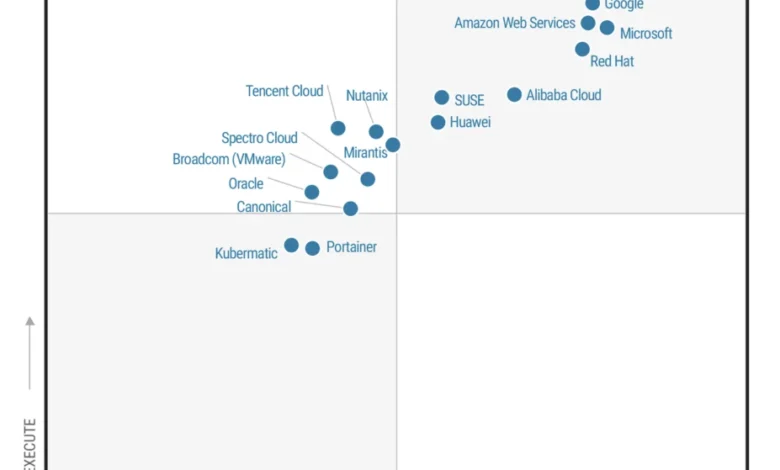
Microsoft has officially been recognized as a Leader in the 2026 Gartner Magic Quadrant for Container Management, a designation that underscores the company’s strategic shift toward supporting AI-heavy, distributed computing environments. The report, which evaluates vendors based on their ability to execute and completeness of vision, positions Microsoft furthest to the right in the “Leaders” quadrant. This recognition arrives at a pivotal juncture in the tech industry, where the demand for container orchestration has expanded beyond traditional microservices to accommodate complex, localized, and sovereign AI workloads.
A Decade of Evolution in Kubernetes
The journey toward this industry recognition began over ten years ago when Microsoft first deepened its commitment to the Kubernetes ecosystem. At the time, the industry objective was relatively narrow: to democratize distributed systems and simplify the deployment of reliable services. By abstracting the "where" from the "what" of a workload, the early Kubernetes architecture allowed for a scheduler that could make autonomous, efficient decisions without being tethered to specific hardware or environmental constraints.
This architectural agnosticism proved to be the platform’s greatest asset. As organizations moved from simple containerized applications to massive, complex AI model training and inference pipelines, the system’s ability to remain agnostic regarding the nature of the workload allowed it to scale into a universal standard. Today, the focus has shifted from mere orchestration to creating a consistent operating model that spans the public cloud, edge locations, and hybrid infrastructure.
The Impact of AI on Container Management
The emergence of artificial intelligence as a primary enterprise workload has fundamentally reshaped the requirements for container management platforms. Modern enterprises now require platforms that can handle three distinct pressures: the need to run models closer to data sources, the requirement to adhere to strict sovereign and regulatory data boundaries, and the necessity of managing GPU-heavy inference tasks.
Microsoft’s container portfolio—centered on Azure Kubernetes Service (AKS), Azure Container Apps, Azure Arc, and Azure Kubernetes Fleet Manager—has been re-engineered to address these pressures. By integrating AI toolchain operators and providing CNCF (Cloud Native Computing Foundation) AI Conformance certification, Microsoft has signaled to the market that its container stack is ready for the rigors of production-grade AI.
Architectural Models: Persistence vs. Elasticity
Industry analysis of current customer deployments reveals two dominant architectural models for AI operations. In the first model, centralized platform teams manage persistent serving layers, GPU allocation, and the complex compliance frameworks required for enterprise-grade models. Here, the focus is on governance and predictable performance. Microsoft has catered to this model by optimizing AKS to function as a stable, governed platform where application teams can consume infrastructure as a service, rather than managing the underlying hardware.
The second model is characterized by event-driven, serverless inference. In this scenario, applications or autonomous agents invoke compute power only when a task is active, releasing resources immediately upon completion. This model demands extreme elasticity and isolation. To meet this, Microsoft has leveraged Azure Container Apps, which utilizes serverless GPUs and hardware-isolated sandboxes to ensure that agent-based frameworks can run securely without the overhead of full cluster management.
The strategic challenge, and one that Microsoft aims to solve, is creating a seamless boundary between these two models. By unifying identity, network controls, and policy frameworks, Microsoft intends to allow enterprises to shift workloads between these models without requiring developers to rewrite applications or adopt entirely different operational paradigms.
Scaling Operations in a Distributed World
As AI workloads proliferate, the infrastructure landscape has become increasingly decentralized. Data sovereignty laws and the requirement for low-latency processing at the edge mean that organizations are no longer operating within a single, centralized region. This expansion often leads to "coordination failure," where configuration drift, uneven updates, and fragmented security policies create significant operational risk.

To mitigate this, Microsoft has deployed a strategy centered on consistency across the entire estate. Initiatives like "AKS Everywhere" aim to provide a uniform Kubernetes environment from the cloud down to the edge. For organizations managing hundreds or thousands of clusters across multiple clouds, Azure Arc provides a centralized control plane for policy, identity, and observability. Furthermore, the Azure Kubernetes Fleet Manager serves as an orchestration layer for multi-cluster environments, ensuring that updates and policy enforcement occur in lockstep, regardless of where the physical or virtual infrastructure resides.
The Role of Open Source in Corporate Strategy
Microsoft’s dominance in this space is inextricably linked to its contributions to open-source software. The company currently stands as the second-largest contributor to CNCF projects globally, and the primary contributor among major cloud providers over the last three years. This commitment is not merely philanthropic; it is a defensive and offensive strategic necessity. By ensuring that its managed services—such as AKS—remain strictly aligned with upstream Kubernetes, Microsoft prevents the "proprietary fork" trap that has historically hindered enterprise adoption of cloud-native technologies. This alignment ensures that code written by a developer on a local machine or in a private data center remains portable to Azure, fostering a sense of vendor neutrality that is highly valued by enterprise CIOs.
Toward Agentic Operations
Perhaps the most significant frontier in container management is the transition toward "agentic operations." As the number of clusters within a single organization grows, the traditional model of human-in-the-loop administration becomes unsustainable. The volume of alerts, diagnostics, and remediation tasks is rapidly outpacing the growth of human IT staff.
Microsoft is addressing this through the development of tools like the Azure SRE (Site Reliability Engineering) Agent and the AKS MCP (Model Context Protocol) Server. These tools are designed to automate the investigative phase of incident response, using the existing permissions and operational context of the platform to suggest or execute fixes. The ultimate goal is not to remove the human operator, but to strip away the repetitive, low-value investigation that currently consumes the majority of operational capacity.
Market Context and Customer Adoption
The 2026 Gartner Magic Quadrant for Container Management highlights that while many vendors provide orchestration, the competitive differentiation now lies in the ability to bridge the gap between legacy application management and the new world of agentic, AI-driven infrastructure.
Customer feedback supports this, with organizations like CallRevu reporting that the ability to scale GPU resources based on call volume—without needing to manually adjust production infrastructure—has been a major driver for their adoption of Azure. This capability is emblematic of the broader market trend: the transition from "managing containers" to "managing outcomes."
Implications and Future Outlook
The recognition of Microsoft as a leader in this space carries several implications for the broader tech market:
- Consolidation of Platforms: The era of fragmented toolchains is waning. Organizations are increasingly looking for a single pane of glass that can manage Kubernetes, serverless AI, and hybrid edge workloads.
- Standardization of AI Infrastructure: By certifying for AI conformance, providers like Microsoft are establishing a baseline for how AI models should be deployed, which will likely lead to greater interoperability across the industry.
- Shift in Engineering Priorities: For developers and platform engineers, the skill set is shifting away from "how to configure a cluster" toward "how to define an operational policy." The platform is increasingly handling the implementation details, leaving teams to focus on business logic and model performance.
As the industry moves toward 2027 and beyond, the success of container management platforms will be measured by their ability to remain invisible. The ideal platform is one that absorbs the complexity of distributed, AI-heavy, and hybrid environments, allowing businesses to iterate faster without being slowed down by the underlying infrastructure. With its current trajectory, Microsoft has established a significant footprint in this space, setting a high bar for competitors and defining the next decade of cloud-native development.
Gartner does not endorse any company, vendor, product, or service depicted in its research publications, and does not advise technology users to select only those vendors with the highest ratings or other designation. Gartner research publications consist of the opinions of Gartner’s research organization and should not be construed as statements of fact. Gartner disclaims all warranties, expressed or implied, with respect to this research, including any warranties of merchantability or fitness for a particular purpose.