A Comprehensive Guide to Optimizing Robots.txt Files for Traditional Search Engines and AI Crawlers in the Modern Web Ecosystem

Managing website crawl efficiency has grown increasingly complex as the digital landscape evolves beyond traditional search engine crawlers to encompass a vast array of artificial intelligence search tools, automated agents, and data scraping bots. At the center of this technical challenge remains the humble robots.txt file, a fundamental text document residing in a website’s root directory that communicates parsing instructions to automated visitors. In an era where large language models (LLMs) and advanced search agents heavily query web properties alongside established engines like Google and Bing, mastering robots.txt directives is critical for balancing content visibility against server resource preservation.
Improper configuration of these files can yield detrimental consequences for a digital property. Overly restrictive rules can inadvertently banish essential landing pages from search engine result pages (SERPs) and AI-driven retrieval systems, while unoptimized permissions can leave massive URL spaces exposed, quickly exhausting a server’s crawl budget. To navigate these complexities successfully, webmasters, developers, and technical SEO professionals must possess a comprehensive understanding of how robots.txt rules function, how modern search engines interpret precedence, and how to strategically manage access for both traditional indexers and emerging AI actors.
The Fundamental Mechanics and Directives of Robots.txt
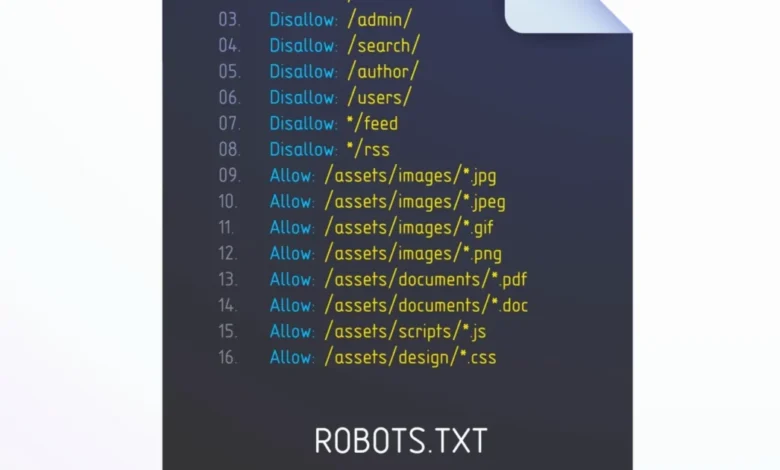
At its core, the robots.txt file operates as a set of voluntary guidelines for compliant web crawlers. Established decades ago as an industry standard, the file relies on specific syntax rules to govern access to designated file paths and directories. According to the Robots Exclusion Protocol (RFC 9309), the primary directives utilized within these files include the User-agent, Disallow, Allow, and Sitemap commands.
The User-agent directive specifies the exact crawler or bot to which subsequent rules apply. Utilizing an asterisk (*) serves as a global fallback mechanism, applying general instructions to any crawler that lacks a dedicated rule block. The Disallow directive instructs compliant bots to refrain from accessing specified URL paths, whereas the Allow directive explicitly grants crawling privileges to particular subfolders or files, even if a parent directory carries a Disallow command. Finally, the Sitemap directive indicates the absolute URL locations of XML sitemaps, helping search engines efficiently discover structured content.
When authoring these files, administrators must remember that URL path matching is strictly case-sensitive—meaning parameters such as "filter=" and "Filter=" are treated as entirely distinct entities. Conversely, directive names and user-agent matching remain case-insensitive. Furthermore, robots.txt syntax does not support full regular expressions, relying instead on limited wildcards such as the asterisk (*) to represent any sequence of characters and the dollar sign ($) to denote the end of a URL string.

Navigating the Order of Precedence and Conflict Resolution
Understanding how search engines resolve conflicting instructions is paramount when structuring a robust robots.txt file. When a webmaster establishes a dedicated rule block for a specific crawler—such as Googlebot—that crawler bypasses global fallback rules defined under User-agent: *.
Within an applicable user-agent group, search engines like Google adhere to two fundamental principles to resolve overlapping directives: the most specific rule and the least restrictive rule. The most specific rule principle dictates that any directive matching a greater number of characters in a given URL takes precedence. For example, if a file disallows /downloads/ but explicitly allows /downloads/free/, the crawler interprets the longer, more precise path as permitted, while keeping the rest of the parent directory blocked.
When multiple competing rules possess identical specificity, crawlers default to the least restrictive option. If both an Allow and a Disallow directive target the exact same URL path with equal character matching, the search engine will choose access, allowing the URL to be crawled. Recognizing these precedence hierarchies prevents unintended blocks that frequently compromise technical search engine optimization (SEO) campaigns.
Mitigating Server Strain and Protecting Crawl Budgets
For large-scale websites, particularly enterprise ecommerce platforms featuring hundreds of thousands of dynamic URLs, uncontrolled crawling can severely impact server performance and deplete valuable crawl budgets. E-commerce sites frequently generate infinite variations of product pages through faceted navigation, color sorts, price filters, and internal search queries. Without adequate restrictions in place, search engine bots may spend computational resources indexing redundant or non-unique content combinations.
Implementing targeted robots.txt restrictions helps mitigate this waste. By blocking dynamic action URLs—such as add-to-cart links, wishlists, and internal search parameters like ?s=—webmasters can redirect Googlebot and other indexers toward core product and service pages. While Google notes that saving crawl budget does not automatically transfer authority to remaining pages unless a site has reached its maximum crawl capacity limit, blocking low-value URLs significantly reduces unnecessary server load and contributes to lower computing power consumption, aligning with broader organizational sustainability targets.

Strategic Deployment Scenarios for Modern Websites
Applying robots.txt directives effectively requires a systematic evaluation of which website sections genuinely offer value to search engine users. Industry standard use cases for crawl restrictions span several key operational areas.
Blocking Internal Search Pages and Faceted Navigation
Internal search results pages rarely provide unique value for public SERPs and frequently generate infinite crawling loops when bots encounter randomized query parameters. Implementing rules such as disallowing /*?s= prevents bots from endlessly parsing internal search strings. Similarly, faceted navigation parameters—such as sorting mechanisms or redundant filter combinations—should be evaluated. While some faceted landing pages form intentional pillars of an SEO strategy (such as dedicated color-based apparel categories), standard sorting filters that merely duplicate product listings should be blocked via precise parameter matching rules.
Managing PDF Documents and Directory Paths
Websites housing extensive repositories of downloadable PDFs, product brochures, or whitepapers often need to control how those documents are indexed. A simple rule targeting URLs ending in the .pdf extension prevents automated bots from mass-downloading static files. However, administrators must remember that blocking a URL in robots.txt stops crawling but does not guarantee removal from search indices if external links point to the file. To completely de-index content, webmasters must pair crawl permission with an appropriate noindex HTTP header.
Similarly, restricting entire directory paths—such as backend form submission endpoints or user account management directories like /myaccount/—ensures that private transactional zones remain shielded from public indexing while keeping login portals accessible to standard users through strategic Allow overrides.

Balancing AI Crawlers, Scrapers, and Model Training Bots
The proliferation of artificial intelligence search agents, retrieval-augmented generation (RAG) tools, and large language model training systems has introduced a new dimension to robots.txt management. Publishers and digital platforms must now differentiate between training bots, which harvest web content to build foundational AI models, and retrieval or search bots, which fetch real-time information to answer user queries directly.
Data from industry analyses underscore the gravity of this shift. Research highlights that a substantial majority of major digital publishers actively block at least one model-training crawler to protect proprietary content and intellectual property. However, many brands simultaneously maintain access for retrieval-focused AI search bots, recognizing that visibility within AI-driven search answers can drive valuable referral traffic.
Managing this balance involves configuring distinct user-agent groups. For instance, site operators can block aggressive training crawlers like OpenAI’s GPTBot and Anthropic’s ClaudeBot by issuing a global disallow command, while concurrently permitting search-oriented user agents such as OAI-SearchBot or Claude-SearchBot. Furthermore, major tech providers offer specialized tokens—such as Google-Extended and Applebot-Extended—which specifically control whether scraped data can be utilized for Gemini or Apple foundation model training without restricting normal web search indexing.
It is important to note that while standard autonomous crawlers strictly obey robots.txt directives, user-requested retrieval fetchers—such as tools that fetch a live webpage explicitly on a user’s command—may occasionally bypass standard rules. True data security for private or sensitive user content must therefore rely on robust authentication and access control mechanisms rather than relying solely on exclusion files.
Validation, Troubleshooting, and Centralized Management
Once a robots.txt file has been crafted and deployed, rigorous testing is mandatory to prevent catastrophic visibility losses. Technical teams should utilize diagnostic utilities such as the Robots.txt Report within Google Search Console to monitor fetched versions, identify syntax parsing errors, and verify that critical resources or images have not been accidentally blocked. For advanced validation, open-source parsers that replicate official crawler matching logic allow developers to test modifications locally before pushing updates to production servers.

For organizations operating complex networks of subdomains, managing individual robots.txt files across dozens of distinct properties can introduce administrative friction. While robots.txt rules inherently apply strictly to the specific host, protocol, and port where they reside, administrators can streamline maintenance by implementing server-level redirects that point subdomain request files toward a centralized management repository.
Final Implications for Technical Architecture
Ultimately, the robots.txt file remains an indispensable instrument within the broader scope of technical SEO and website infrastructure management. Properly optimized files protect server resources, preserve vital crawl budgets, and empower organizations to dictate the precise terms of engagement with both traditional search engines and modern AI ecosystems. As digital discovery continues to fragment across multi-platform search engines and conversational AI agents, maintaining disciplined, well-validated robots.txt architecture will remain a core competency for digital publishers and enterprise webmasters alike.
Related posts: