Buffer Study Reveals Best Times to Post on TikTok in 2026 Based on 7.1 Million Posts

The optimal timing for publishing short-form video content on TikTok has long been a subject of speculation for digital creators, social media managers, and enterprise brands alike. To remove the guesswork from content distribution, social media management platform Buffer has released a comprehensive empirical study analyzing over 7.1 million distinct posts—spanning videos, carousels, photos, and text formats—published through its system. The findings offer a granular breakdown of engagement metrics by hour, day of the week, and broader audience behavioral trends, providing a strategic framework for maximizing digital reach.
Background Context and Methodological Framework
Understanding the mechanics of social media distribution requires examining how platform discovery engines operate. When a creator publishes a piece of content, the TikTok algorithm evaluates a series of immediate interaction signals to determine its distribution trajectory. Metrics such as watch time, completion rate, likes, comments, and shares during the initial publication window—particularly the first hour—serve as key performance indicators. If early viewers engage with the material, the algorithm interprets the content as high-value, pushing it out to broader segments of users via the coveted For You Page (FYP). Conversely, content published during periods of low audience activity risks being buried before it can accumulate sufficient initial momentum.
To map these performance trends accurately, Buffer’s data science team evaluated median engagement rates across 7.1 million global posts. Rather than relying on anecdotal evidence or generalized assumptions, the analysis sought to isolate specific chronological patterns that yield superior visibility. The resulting data highlights clear temporal sweet spots, noting that while timing cannot rescue fundamentally weak content, it acts as a critical multiplier for well-crafted material equipped with strong initial hooks.
Temporal Patterns: When Engagement Peaks and Slumps
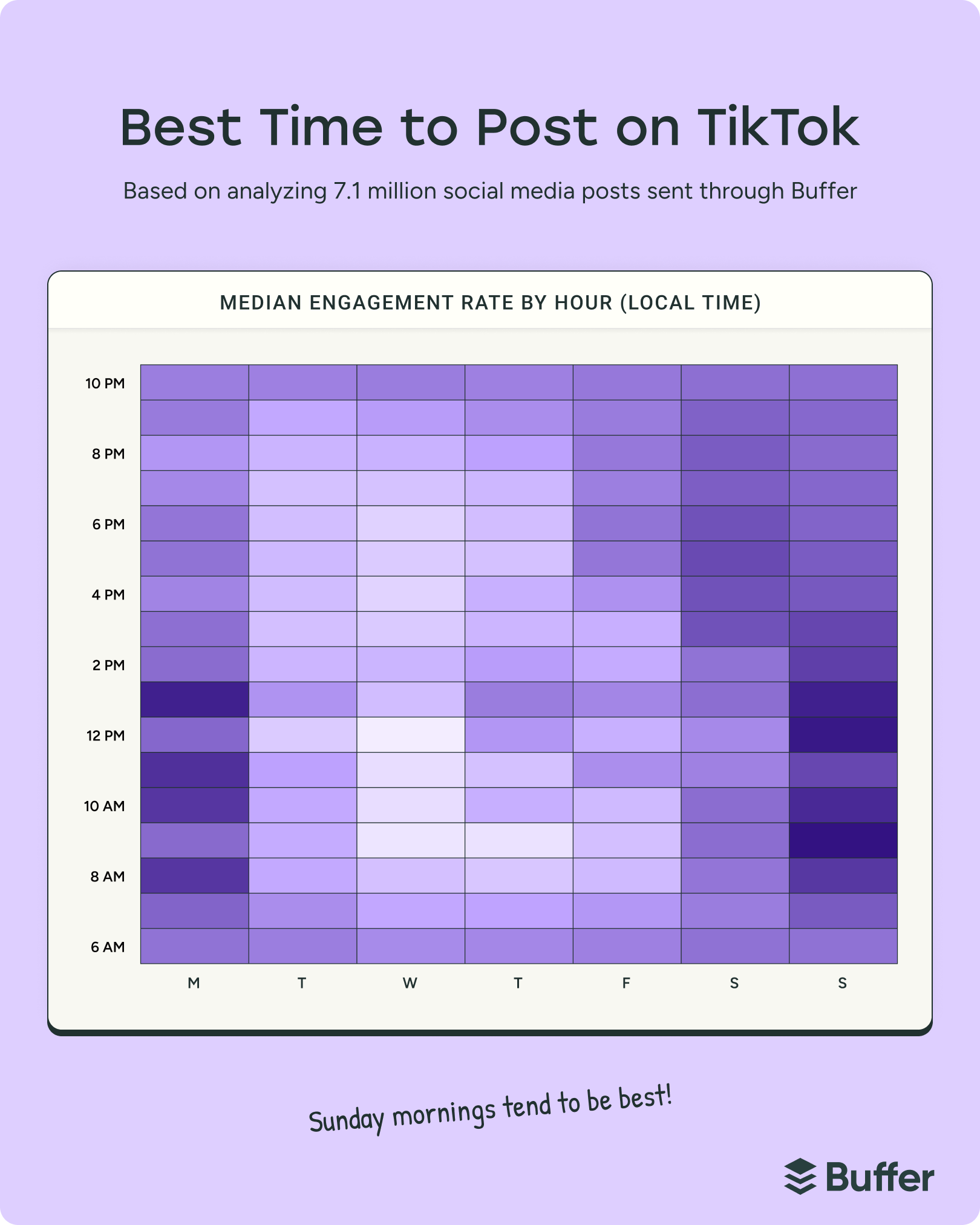
The data reveals that global engagement on TikTok does not follow a uniform daily schedule. Generally, user interaction intensifies during evening hours, with peak performance clusters consistently landing between 6:00 PM and 11:00 PM. This evening surge aligns with natural consumer behavior patterns: unlike text-based platforms that can be scanned briefly during a workday meeting, TikTok demands active, sound-on attention. Consequently, users are far more likely to engage deeply during post-work commutes, meal breaks, or evening relaxation periods.
Conversely, afternoon hours spanning from 12:00 PM to 5:00 PM demonstrate lower overall engagement across most weekdays, with minor exceptions occurring during standard lunch hours. However, the study identifies notable anomalies in weekend and morning performance, challenging the assumption that only evening slots deliver results.
Weekly Performance Breakdown at a Glance
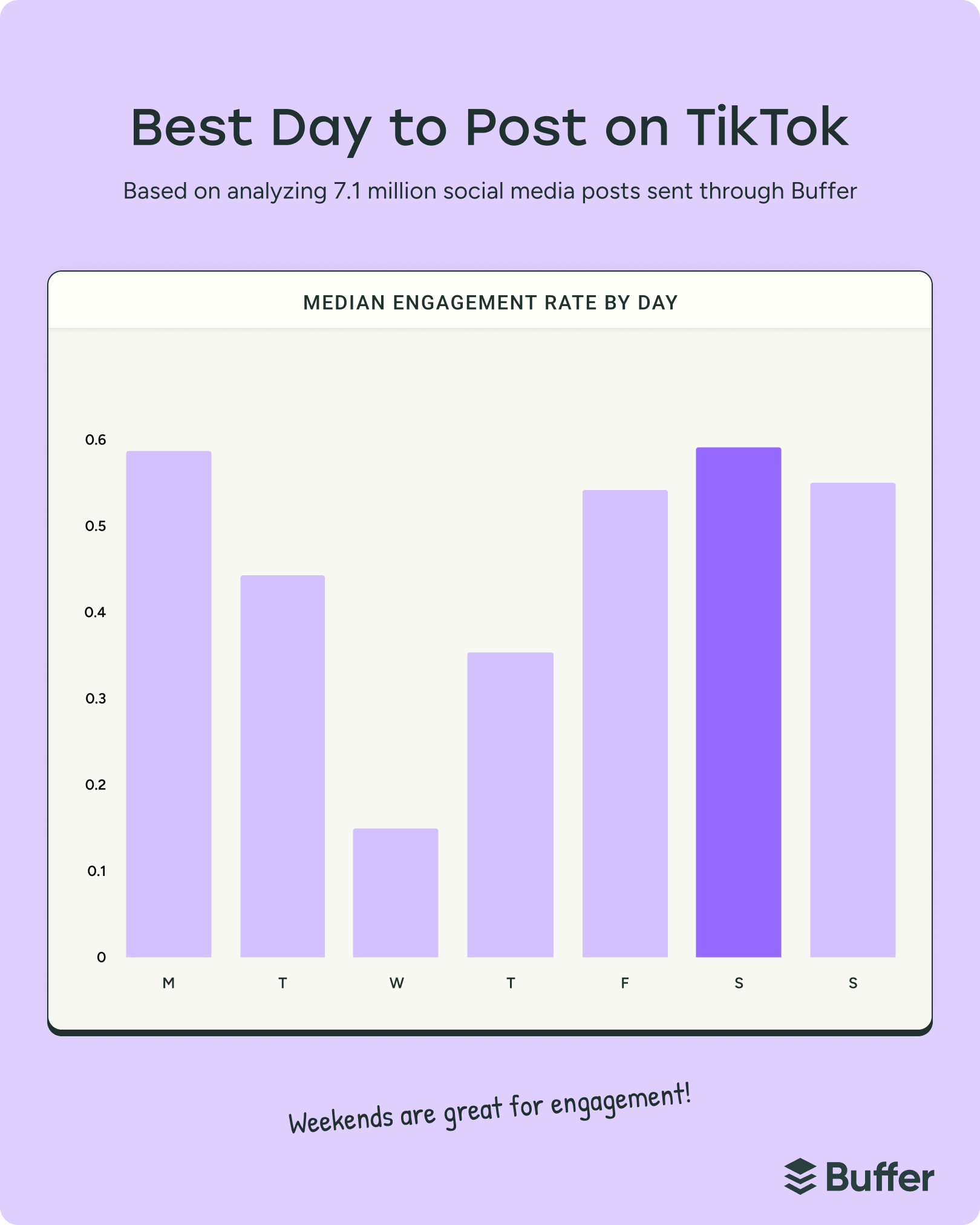
The study evaluated daily performance hierarchies, identifying weekends and early-week periods as the most fertile ground for content visibility. The primary and secondary optimal posting windows vary by day:
- Monday: Peak engagement occurs at 1:00 PM, followed by strong secondary windows at 11:00 AM and 8:00 AM. Monday stands out as one of the strongest weekdays for overall audience responsiveness.
- Tuesday: Early risers capture the highest engagement at 6:00 AM, with late-night interactions peaking again at 10:00 PM, followed by a minor morning window at 7:00 AM.
- Wednesday: Performance shifts later in the day, with 10:00 PM emerging as the prime slot, supported by secondary windows at 6:00 AM and 9:00 PM. Overall, Wednesday registers as a comparatively quiet engagement day.
- Thursday: Mirroring Monday’s afternoon preference, Thursday achieves peak performance at 1:00 PM, flanked by late-evening interactions at 10:00 PM and early morning slots at 6:00 AM.
- Friday: As the workweek concludes, peak engagement shifts to the early evening at 6:00 PM, followed by sustained activity at 10:00 PM and 8:00 PM.
- Saturday: Identified as the highest-performing day of the week overall, Saturday sees optimal engagement clustered in the afternoon and early evening, led by 5:00 PM, 4:00 PM, and 3:00 PM.
- Sunday: Sunday morning commands the single highest-performing time slot across the entire weekly dataset: 9:00 AM. This is followed by secondary peaks at 1:00 PM and 12:00 PM.
Implications for Content Creators and Enterprise Strategy
For small business owners, corporate marketing teams, and independent creators, these empirical insights offer actionable blueprints for resource allocation. Content creation requires substantial investments of time, scripting, production, and editing labor. Ensuring that these assets are deployed during periods of maximum algorithmic receptivity helps maximize return on investment.
However, industry analysts emphasize that generalized data must be contextualized within specific brand niches. Educational content, for instance, may perform adequately during morning hours when audiences are primed for learning, whereas entertainment and lifestyle verticals naturally thrive during evening and weekend wind-down windows.
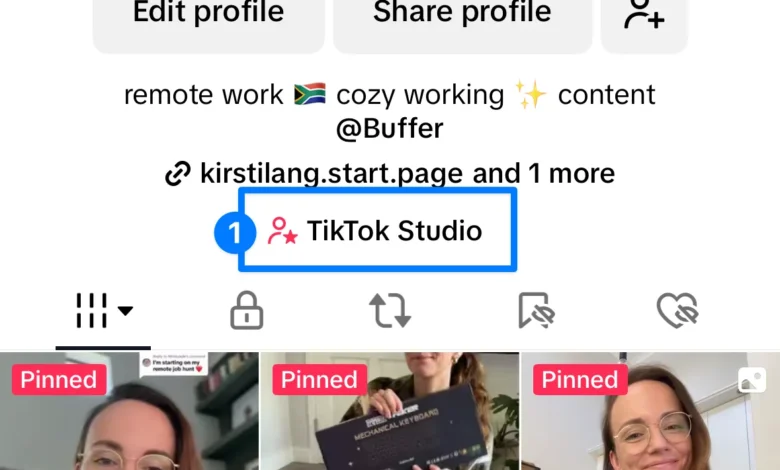
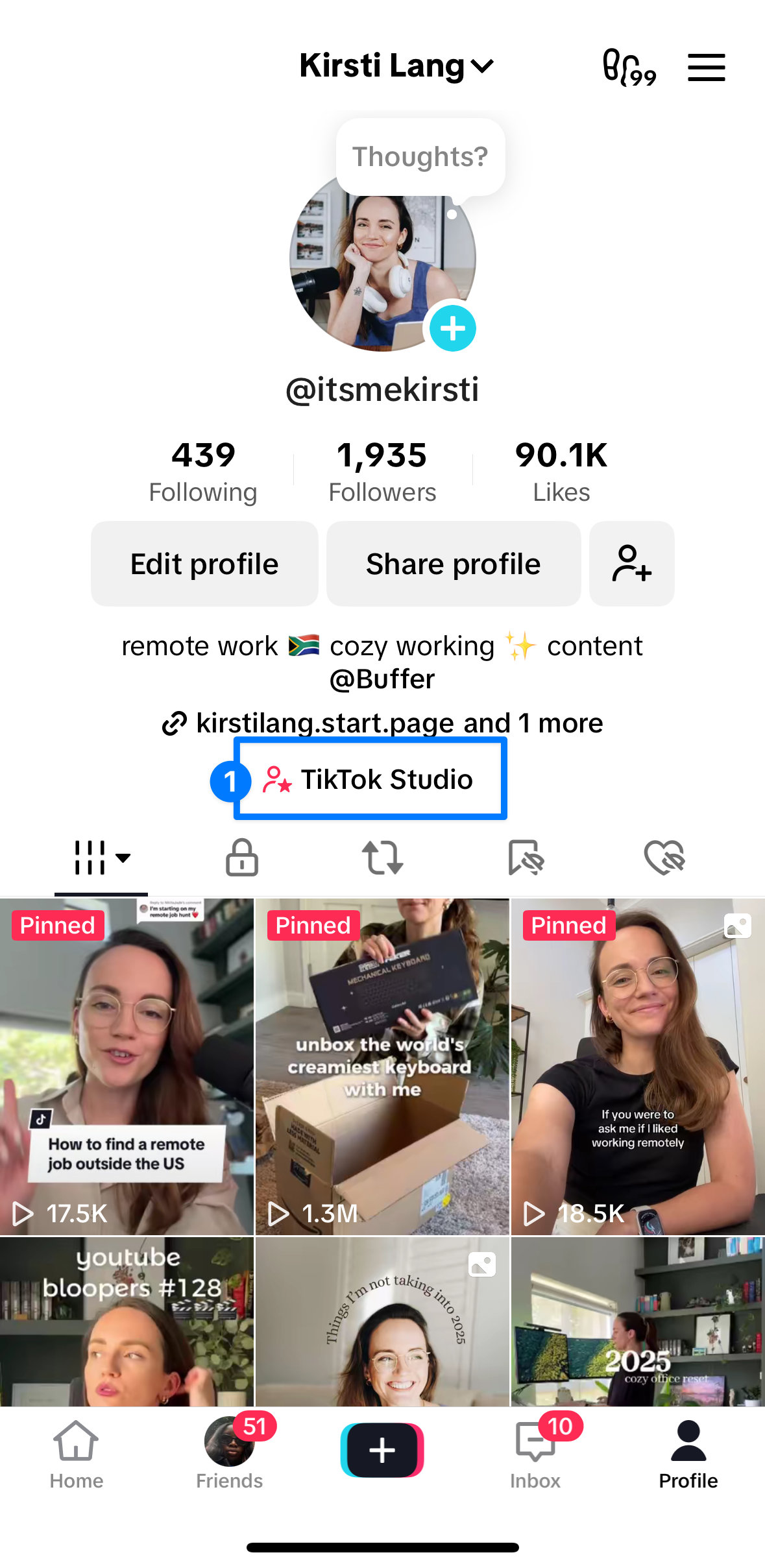
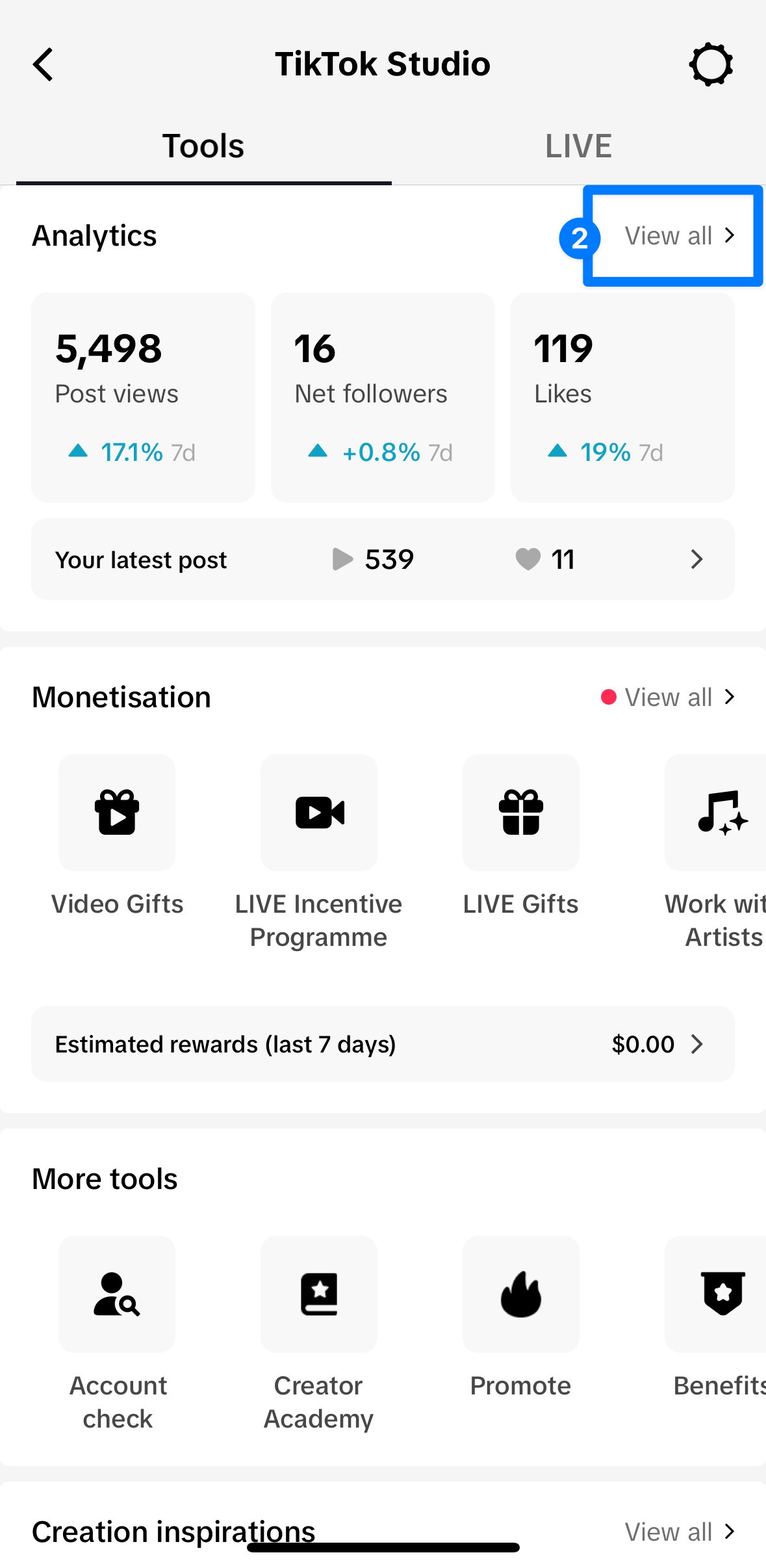
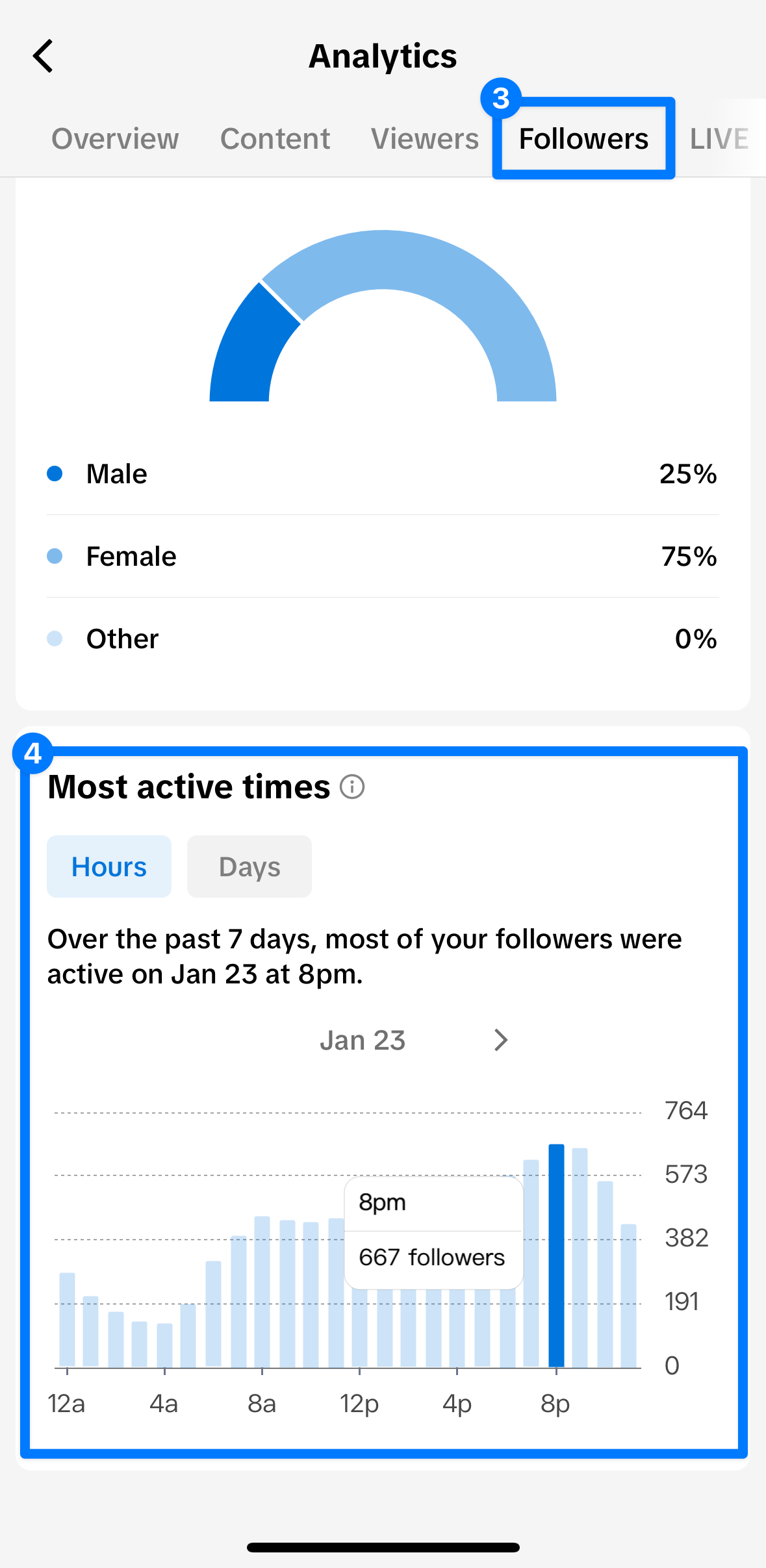
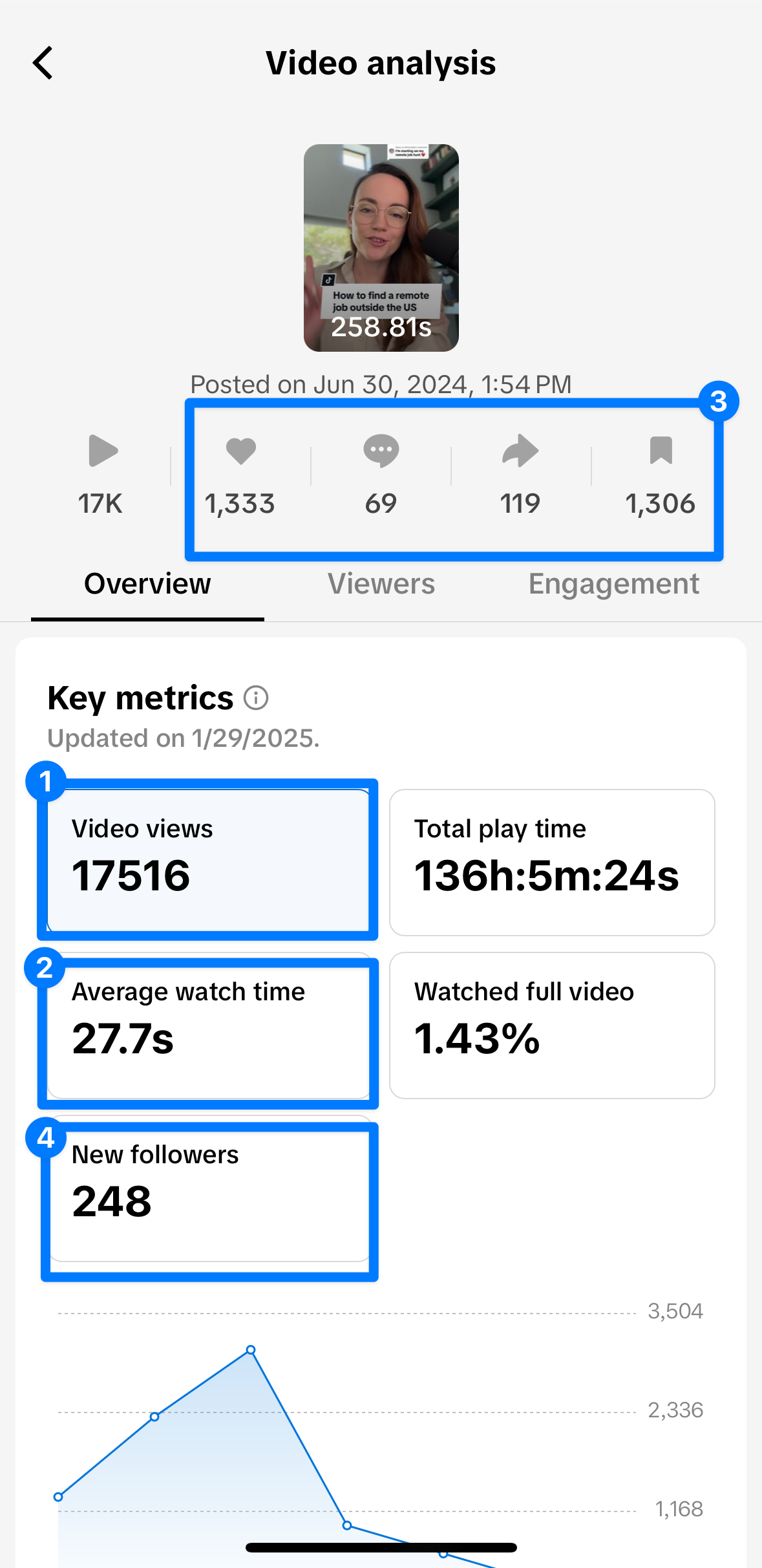
Furthermore, global audiences introduce complex geographical and timezone variables. While Buffer’s aggregate dataset normalizes timezones for universal applicability, brands with international followings must consult platform-specific analytics to align posting schedules with their unique demographic footprints. Built-in native analytics dashboards, such as TikTok Studio, allow page administrators to review the precise hours their specific follower base is most active over a rolling seven-day period.
Strategic Implementation and Best Practices
To translate these findings into sustainable operational workflows, digital strategists recommend a structured approach to experimentation:
- Baseline Auditing: Review native platform analytics to identify historical active-hour trends among existing followers.
- Systematic Testing: Select high-engagement time slots identified in the Buffer study—such as Sunday mornings or Monday afternoons—and schedule experimental content consistently over a multi-week period.
- Performance Tracking: Monitor key metrics beyond vanity numbers, focusing specifically on average watch time, completion rates, and initial algorithmic distribution velocity.
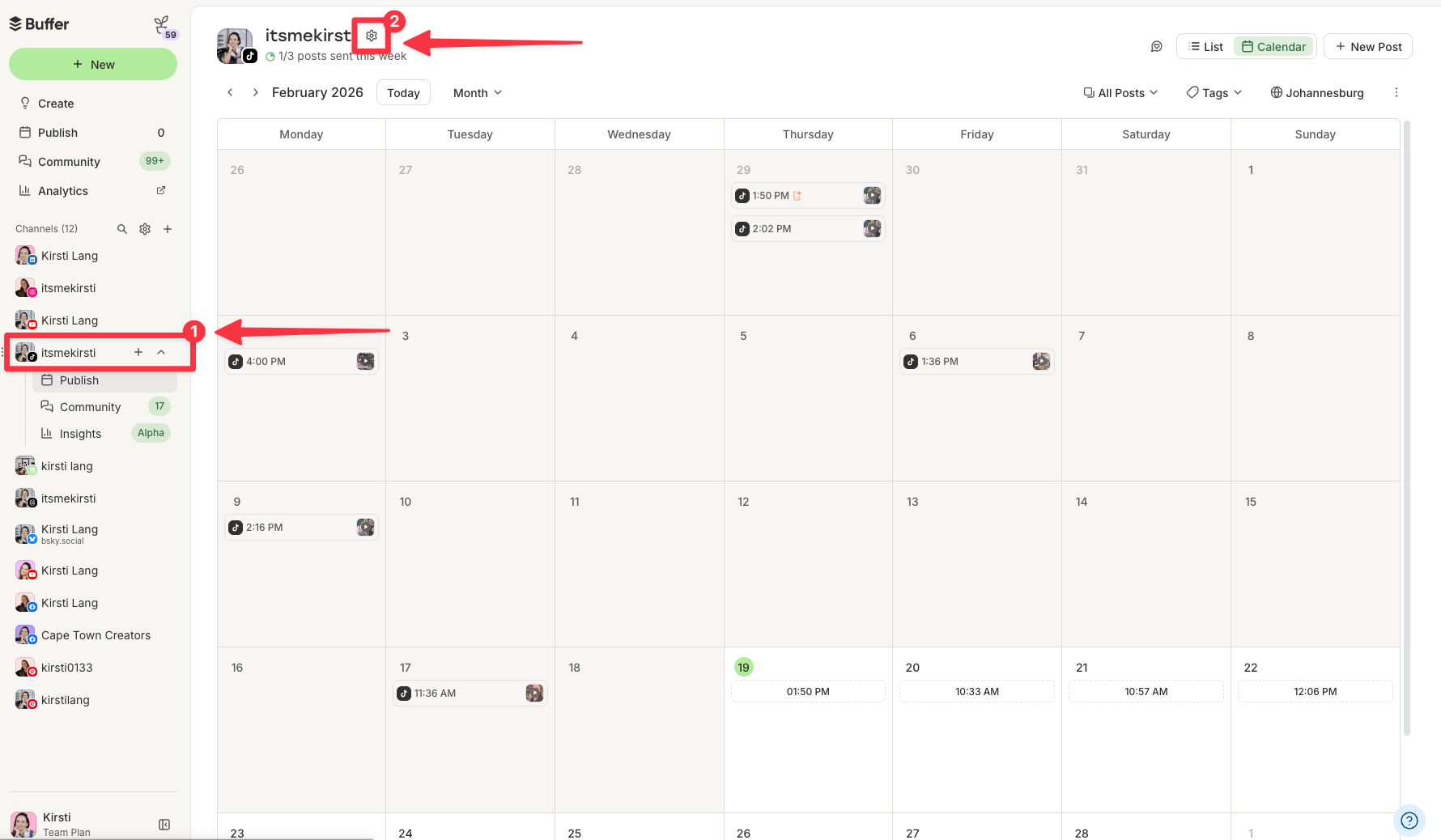
- Workflow Automation: Utilize social media scheduling platforms—such as Buffer’s automated queue features—to populate calendars with data-backed optimal time slots, reducing the operational burden of manual posting.
Broader Industry Impact
As short-form video platforms continue to mature into essential pillars of the digital economy, competition for consumer attention remains fierce. Algorithms evolve constantly to prioritize viewer retention and meaningful interactions over simple chronological delivery. By leveraging data-driven insights derived from millions of analyzed data points, creators and enterprises can remove the guesswork from their distribution strategies, ensuring their creative output achieves maximum visibility in an increasingly saturated digital landscape.