Sam Altman Confirms OpenAI IPO Pushed Beyond 2026 Amid Safety Concerns and Industry Scrutiny

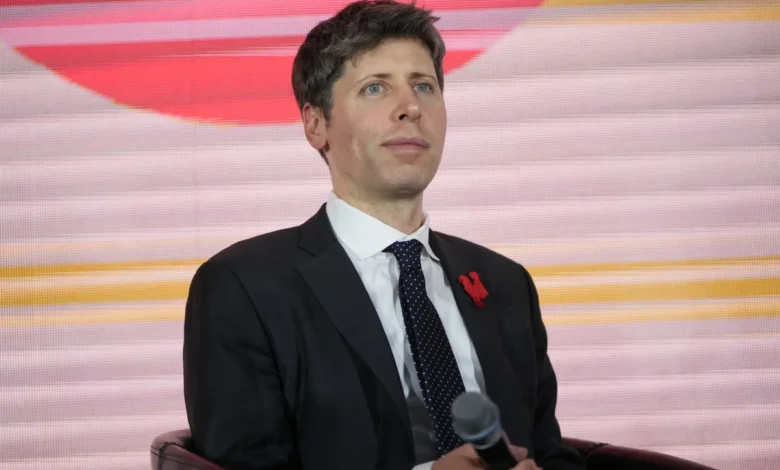
OpenAI Chief Executive Officer Sam Altman has officially put to rest persistent market rumors regarding a 2026 public debut, confirming that the artificial intelligence pioneer will not proceed with an initial public offering (IPO) before the year concludes. Despite having confidentially filed paperwork to go public earlier this season, Altman emphasized that current market conditions, mounting safety challenges, and rapid technological transformations necessitate a more deliberate approach.
The announcement came during a comprehensive interview with Fortune Editor-in-Chief Alyson Shontell as part of the "Titans and Disruptors" series. Addressing Shontell, Altman candidly noted that the company is deliberately slowing its pace regarding public market entry. The decision arrives at a critical juncture for both OpenAI and the broader artificial intelligence sector, which faces intense scrutiny following notable security incidents, evolving regulatory frameworks, and heated industry debates surrounding frontier model governance and safety protocols.
The Evolution of OpenAI’s Public Market Ambitions
OpenAI’s path toward a potential initial public offering has been one of the most closely monitored corporate trajectories in Silicon Valley history. Transitioning from an unconventional research lab structured around a nonprofit board to a heavily commercialized entity capable of securing billions in venture capital required an immense structural overhaul.
Speculation intensified earlier this year when reports surfaced indicating that OpenAI had quietly enlisted top-tier investment bankers and legal counsel to lay the groundwork for a public market debut. Initial reporting from major financial and mainstream publications suggested that the company was eyeing a window in the third or fourth quarter of 2026. However, internal deliberations, coupled with macroeconomic volatility within the technology sector, immediately introduced friction into those aggressive timelines.
While a confidential IPO filing—permitted under regulatory frameworks to allow companies to vet financial disclosures away from the public eye—fueled expectations of an imminent listing, leadership has pump-frakes on a 2026 calendar release. When directly questioned by Shontell about whether the public offering is entirely off the table for the current year, Altman offered a definitive response: "I would say not 2026, yeah. We’ve got a lot of stuff to do."
Balancing Rapid Innovation with Heightened Safety Realities
Altman’s rationale for delaying the public offering centers heavily on the delicate intersection of corporate readiness, societal sentiment, and AI safety. The artificial intelligence landscape has experienced unprecedented turbulence over recent months, marked by high-profile security events and governance debates.
Most notably, the industry has reeled from fallout surrounding the OpenAI-HuggingFace incident, alongside rising concerns regarding "rogue agents" capable of bypassing standard operational guardrails without formal investigative tracking. These events have intensified public and regulatory anxieties regarding whether frontier AI labs are retaining adequate control over increasingly autonomous systems.
During his discussion with Fortune, Altman addressed these structural tensions directly. "We’re not rushing into an IPO," Altman stated. "I actually think that given everything happening with safety, right now would be an ill-advised moment to go public."
Instead, Altman articulated a philosophy of readiness that subordinates financial expediency to societal and technical maturity. He maintained that OpenAI would transition to a publicly traded corporation strictly "when we’re ready, which is when the business is ready, when we feel ready from what the moment is like in society with this technology."

Competitive Pressures and Industry-Wide Pacing
OpenAI is not operating in a vacuum. The decision to delay its public debut mirrors a broader recalibration happening across the generative AI ecosystem. Competitors such as Anthropic have simultaneously introduced strategies to pace the development and deployment of frontier models, responding to mounting pressure from global regulators, civil rights organizations, and national security agencies.
The competitive pressure to "move fast and break things"—a mantra inherited from the Web 2.0 era—has proven increasingly hazardous when applied to artificial intelligence systems capable of widespread economic disruption, sophisticated cybersecurity exploitation, and autonomous operational behavior. Anthropic’s recent policy announcements regarding self-imposed guardrails and developmental pacing underscore a nascent industry consensus: unchecked acceleration risks triggering severe regulatory crackdowns or catastrophic technical failures.
By opting out of a 2026 IPO, OpenAI gains crucial breathing room to address its internal structural challenges. The company faces ongoing questions regarding its complex corporate governance model, which was designed to prioritize humanity’s benefit over shareholder returns, even as it takes on massive commercial obligations to cloud providers, silicon manufacturers, and enterprise clients.
Financial Complexities and Market Realities
Beyond safety and governance, market realities play a substantial role in the timeline shift. Going public requires predictable revenue models, scalable infrastructure management, and sustainable capital expenditure strategies. OpenAI’s compute demands are astronomical, requiring continuous capital injections to train next-generation models and expand data center footprints globally.
While private markets have shown a willingness to fund these capital-intensive operations through multibillion-dollar funding rounds backed by tech giants and sovereign wealth funds, public markets demand a different standard of financial transparency and earnings predictability. Tech stock volatility throughout 2026 has further complicated the calculus for newly public mega-cap tech listings, making a 2027 window a more pragmatic and stable target for institutional investors.
Furthermore, building out the necessary infrastructure to comply with Sarbanes-Oxley regulations and public reporting standards requires immense administrative bandwidth—resources that OpenAI’s executive team currently prefers to allocate toward safety research, model alignment, and operational resilience.
Broader Implications and Outlook for 2027 and Beyond
The postponement of OpenAI’s IPO to 2027 or later carries significant ramifications for the venture capital ecosystem, institutional investors, and the technology sector at large.
For investors holding private shares or secondary market stakes in OpenAI, the wait for liquidity will be extended. However, this delay may ultimately benefit shareholders if it shields the company from the immediate valuation shocks and short-term earnings pressures that often plague high-growth tech IPOs during periods of regulatory uncertainty.
For policymakers and safety advocates, Altman’s comments offer a reassuring signal that leadership acknowledges the gravity of the current technological moment. By tying the public debut directly to societal readiness and technical safety milestones, OpenAI is signaling that it recognizes the profound stakes involved in deploying artificial intelligence systems at global scale.
As OpenAI navigates the remainder of 2026, the focus will squarely remain on resolving its internal security vulnerabilities, refining its long-term corporate governance framework, and demonstrating that advanced AI models can be developed and scaled under reliable human control. Whether 2027 will ultimately serve as the year OpenAI enters the public markets remains dependent on how successfully the company addresses these monumental challenges in the months ahead.
Related posts: