AWS Elastic Beanstalk Unveils Fully Managed Cluster Mode Powered by Amazon EKS to Streamline Portfolio Operations at Scale

Fifteen years after its initial market debut in 2011, Amazon Web Services (AWS) has introduced a transformative chapter for its foundational application management service with the release of a fully managed Cluster Mode for AWS Elastic Beanstalk. Designed to natively bridge the gap between traditional developer-friendly deployment mechanics and modern container orchestration, the newly unveiled feature allows engineering organizations to deploy, scale, patch, monitor, and upgrade complex workloads continuously. By leveraging Amazon Elastic Kubernetes Service (Amazon EKS) as its underlying infrastructure engine, Cluster Mode addresses the modern enterprise challenge of managing a diverse portfolio of applications without incurring compounding operational overhead.
The announcement represents a significant milestone in the evolution of cloud computing management layers. Since its inception, Elastic Beanstalk has served as a trusted operational abstraction for developers utilizing Java, .NET, Python, Node.js, PHP, Ruby, and Go. By shouldering the responsibility of provisioning, scaling, and patching underlying server resources, the service allowed engineering teams to dedicate their primary focus to core business logic. Over the intervening decade and a half, AWS has systematically modernized the operational core of the platform—introducing AI-powered environment analysis for automated health diagnostics, official GitHub Action integrations for seamless CI/CD pipelines, OpenTelemetry-based observability, traffic-splitting deployments with automated rollbacks, event-driven autoscaling, and robust native integrations with AWS Secrets Manager and AWS Certificate Manager. Cluster Mode represents the culmination of this continuous re-engineering effort, offering a unified, high-density operational paradigm for multi-application architectures.
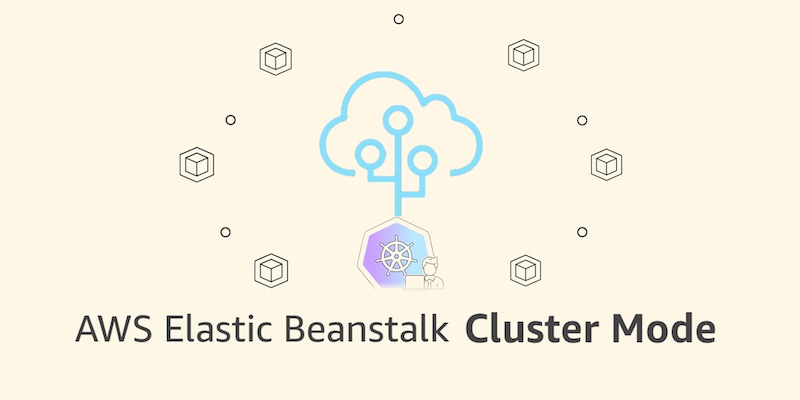
Architecture and Multi-Application Portfolio Management
Historically, operating applications at scale meant provisioning dedicated infrastructure environments for every distinct service or microservice. While effective for isolated systems, this approach introduced significant resource fragmentation, underutilized compute capacities, and complex configuration drift across distributed engineering teams. Cluster Mode fundamentally alters this dynamic by introducing a shared-infrastructure model.
Under this new architecture, teams running a portfolio of ten, fifty, or even hundreds of applications can consolidate their workloads onto a shared Amazon EKS foundation governed by a single operational baseline. Because multiple services share underlying cluster resources, per-application infrastructure costs scale down efficiently as the application portfolio expands. Crucially, this density is achieved without sacrificing operational consistency; every stack governed by Cluster Mode inherits the same high-tier operational guarantees, automated maintenance workflows, and security guardrails.
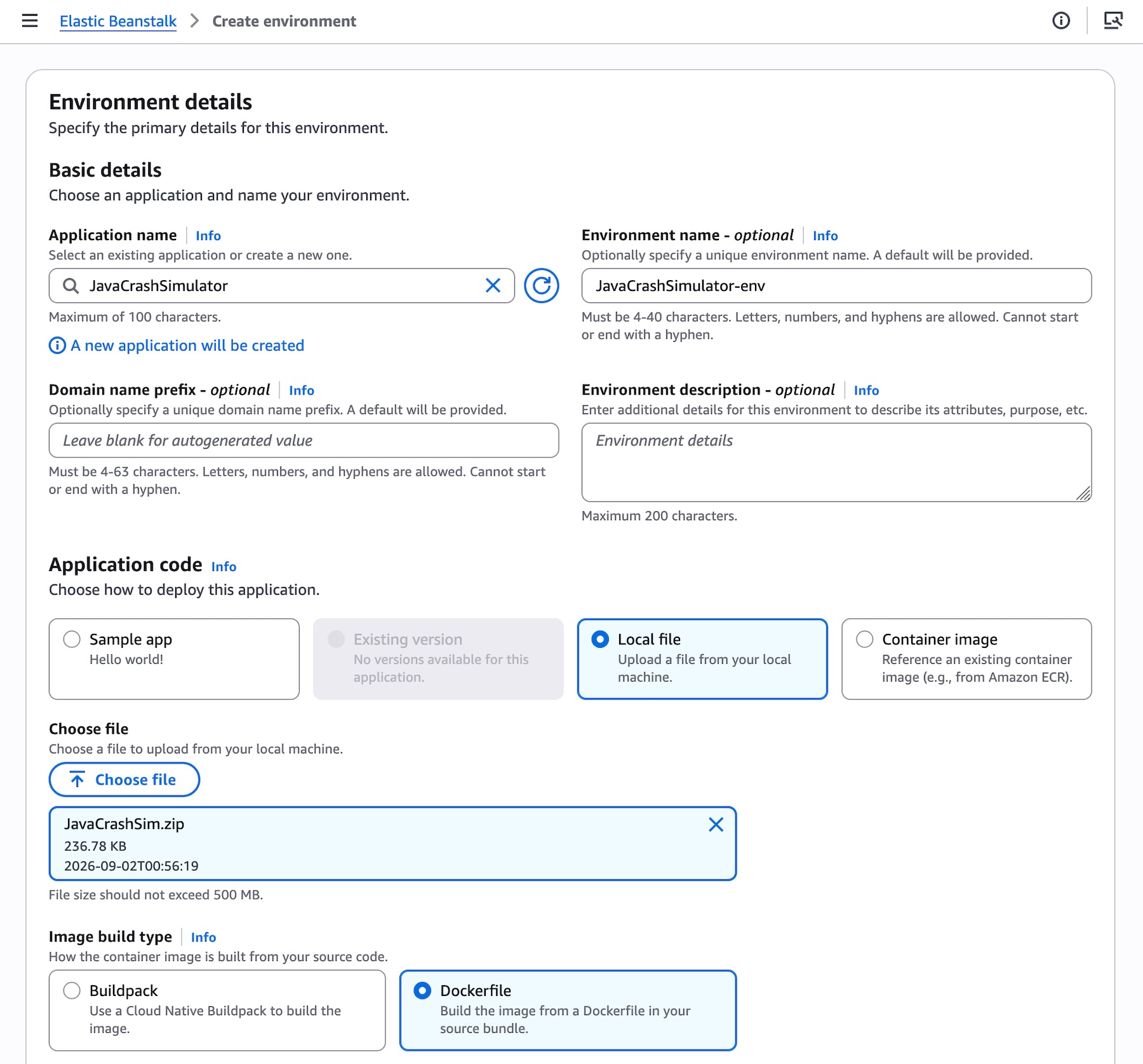
The deployment experience has been meticulously optimized for flexibility. Engineering teams can bring their applications to the platform in whatever state they exist today—whether raw source code, custom Dockerfiles, or pre-built container images stored in registries like Amazon Elastic Container Registry (Amazon EKS/ECR). Within the Elastic Beanstalk console, configuring a Cluster Mode environment requires selecting the "Cluster" option under the deployment type menu.

For teams utilizing automation tools, the AWS Command Line Interface (AWS CLI), the specialized EB CLI, or native AWS SDKs provide robust programmatic controls. Microservices architectures can be scripted seamlessly, allowing developers to define service parameters, resource quotas, and networking topology via structured JSON configuration namespaces. For instance, a multi-tier e-commerce demo comprising distinct frontend, cart, payment, and shipping microservices can distribute its traffic exposure strategically. The frontend service can be designated with an internet-facing Application Load Balancer and specific health check paths, while backend services remain isolated within the private networking layer of the cluster.
Chronology and Modernization of Elastic Beanstalk
The rollout of Cluster Mode is the latest in a carefully orchestrated multi-year modernization roadmap executed by AWS engineering teams to future-proof its application management portfolio.
The modernization timeline gained significant momentum in early 2026, when AWS released official GitHub Action integrations, allowing development squads to trigger direct, single-YAML-configuration deployments straight from their established version-control workflows. Shortly thereafter, in April 2026, AWS rolled out AI-powered environment analysis capabilities designed to autonomously diagnose subtle runtime health anomalies and issue prescriptive remediation recommendations. These incremental capability injections laid the technical groundwork for a deeper architectural overhaul—one that integrated OpenTelemetry observability standards, automated HTTPS provisioning via AWS Certificate Manager, and sophisticated traffic-splitting deployment strategies.
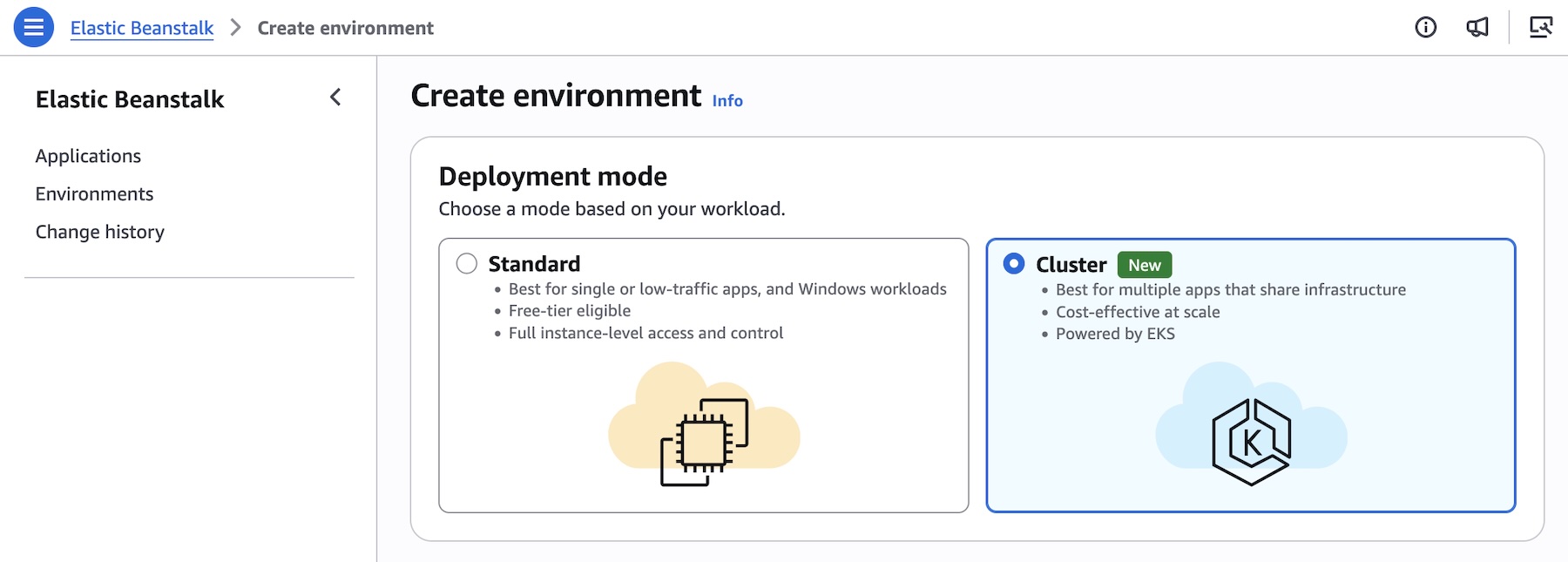
The introduction of Cluster Mode brings these disparate features together under a unified EKS-backed umbrella. Notably, AWS has ensured that the release of Cluster Mode does not disrupt existing legacy workflows. Elastic Beanstalk Standard Mode—powered by Amazon Elastic Compute Cloud (Amazon EC2)—remains fully supported. Standard and Cluster Mode environments are engineered to run side-by-side within the exact same Elastic Beanstalk application construct. This side-by-side capability is paired with automated compatibility validation checks, enabling enterprises to execute gradual, risk-mitigated migrations from EC2-backed architectures to EKS-backed clusters at their own pace without facing forced refactoring deadlines.
Industry Implications and Economic Model
From an industry perspective, the launch of Cluster Mode reflects a broader enterprise push toward abstraction consolidation. While Kubernetes has long been recognized as the gold standard for container orchestration and microservices scalability, its steep learning curve and intensive day-two operational requirements have traditionally created a barrier to entry for smaller development teams or organizations lacking dedicated platform engineering divisions. By wrapping Amazon EKS inside the simplified, familiar developer interface of Elastic Beanstalk, AWS effectively democratizes Kubernetes access, abstracting away complex cluster lifecycle management, node provisioning, and ingress configuration.
Financially, AWS has structured the pricing model of Cluster Mode to align with resource consumption transparency. There is no additional software surcharge or flat-rate licensing fee levied specifically for utilizing Elastic Beanstalk Cluster Mode. Instead, customers pay strictly for the underlying AWS infrastructure resources consumed by their workloads. This includes the standard Amazon EKS control plane fee, EKS Auto Mode compute resources (which carry an approximate 12% pricing premium on underlying EC2 instance costs), Amazon ECR storage, and Amazon CloudWatch telemetry logs. The service is not eligible for the AWS Free Tier, reflecting its positioning as an enterprise-grade production environment.
Furthermore, AWS has incorporated modern developer tooling integrations to support the adoption of Cluster Mode. Developers seeking to programmatically query API references, search documentation, check regional availability, or troubleshoot configuration errors can leverage the newly supported AWS MCP Server and associated plugins within their preferred AI-assisted development environments.
Availability and Outlook
AWS Elastic Beanstalk Cluster Mode is generally available starting today across all AWS Regions where standard Elastic Beanstalk operations are supported. Organizations evaluating regional compliance, data residency requirements, or long-term infrastructure planning can consult the official AWS Capabilities by Region directory for precise feature matrix availability.
As enterprises increasingly demand high-density application architectures that minimize operational overhead while maximizing resource utilization, the arrival of Elastic Beanstalk Cluster Mode marks a pivotal evolution in managed cloud infrastructure. By harmonizing the developer simplicity of Beanstalk with the industrial-grade scalability of Amazon EKS, AWS has provided a sustainable, future-proof pathway for modern engineering organizations to scale their portfolios efficiently.
Related posts: