Demystifying the Model Context Protocol (MCP): How Universal Tool Integration is Revolutionizing AI Agents

The rapid evolution of artificial intelligence has shifted the technological focus away from merely training larger language models toward making existing models more functional, autonomous, and context-aware. Central to this paradigm shift is a technology that has quickly dominated discussions surrounding modern AI architecture: the Model Context Protocol (MCP). Frequently cited in the context of advanced AI agents, sophisticated coding assistants, and seamless tool execution, MCP represents a critical bridge connecting isolated neural networks to the vast ecosystem of external software, enterprise databases, and live web services.
Despite its ubiquity in contemporary engineering discourse, the underlying mechanics of MCP remain opaque to many developers and industry professionals. While most understand its high-level objective—to provide AI applications with a standardized mechanism for interacting with external utilities—fewer grasp its operational architecture or how to implement it effectively in production environments. By establishing a universal translation layer, MCP eliminates the historic necessity of engineering custom, bespoke integrations for every distinct API, database, code repository, or browser interface an AI application might need to access.
To fully comprehend the significance of this protocol, one must examine its core components, architectural evolution, and practical implementations within developer environments such as Claude Code. As organizations increasingly deploy autonomous agents capable of independent reasoning and task execution, understanding standards like MCP is no longer optional; it is a foundational requirement for modern software engineering.
The Architectural Foundation: What Is the Model Context Protocol?
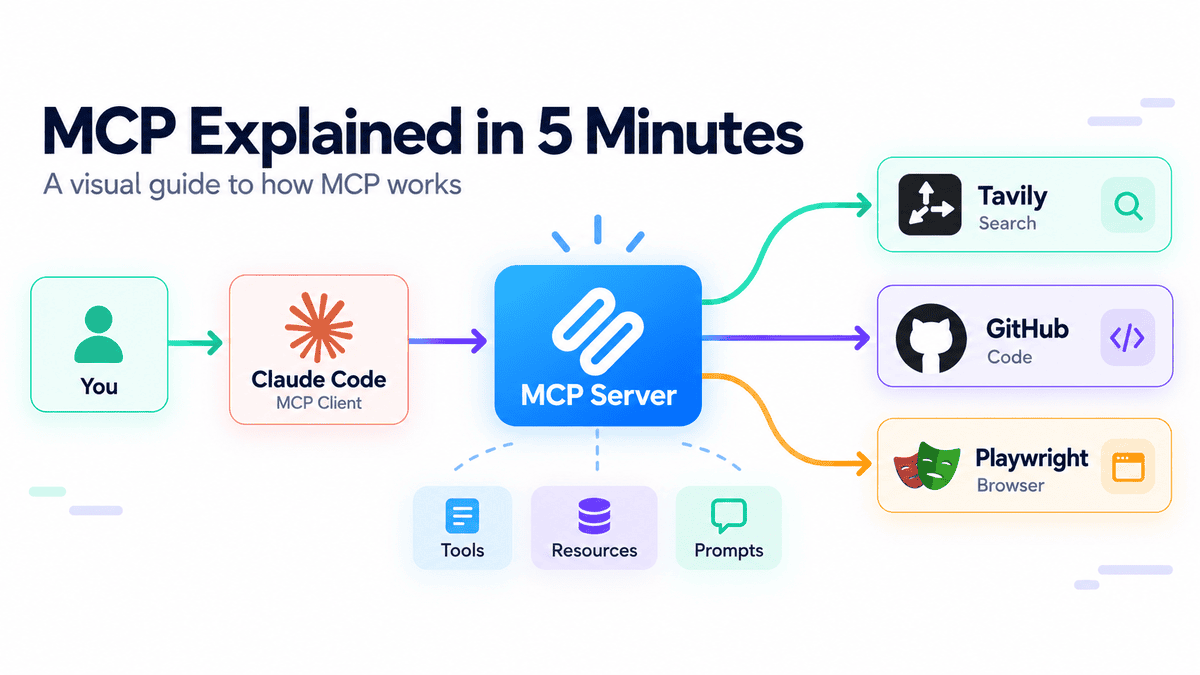
At its core, the Model Context Protocol functions as a universal communication standard designed to bridge the gap between artificial intelligence applications and the myriad external tools they require to execute complex workflows. Historically, connecting a language model to an external database, a cloud repository, or a live search engine demanded the creation of custom software wrappers and bespoke API integrations. Each new service introduced integration overhead, API drift, and maintenance burdens.
MCP fundamentally alters this dynamic by establishing a standardized interface. Rather than communicating directly with dozens of disparate backends, an AI application—functioning as an MCP host—connects to one or more standardized MCP servers. Crucially, MCP does not replace traditional application programming interfaces (APIs). Instead, an MCP server acts as an intermediary, querying the underlying API or software service on behalf of the AI application, while standardizing how those capabilities are discovered, presented, and invoked.
Through this architecture, an MCP server can expose multiple operational capabilities to a host application, transforming passive text generators into active agents capable of manipulating external systems. While these capabilities span various categories, tool exposure remains the most transformative for AI agents. Tools allow language models to transcend the boundaries of static text generation, granting them the agency to execute terminal commands, query corporate records, analyze software code, and interact directly with graphical user interfaces.
Client-Server Dynamics and the Execution Flow
The architecture of the Model Context Protocol relies on a robust client-server paradigm. Understanding this relationship demystifies how a language model transitions from processing a prompt to executing an external action.
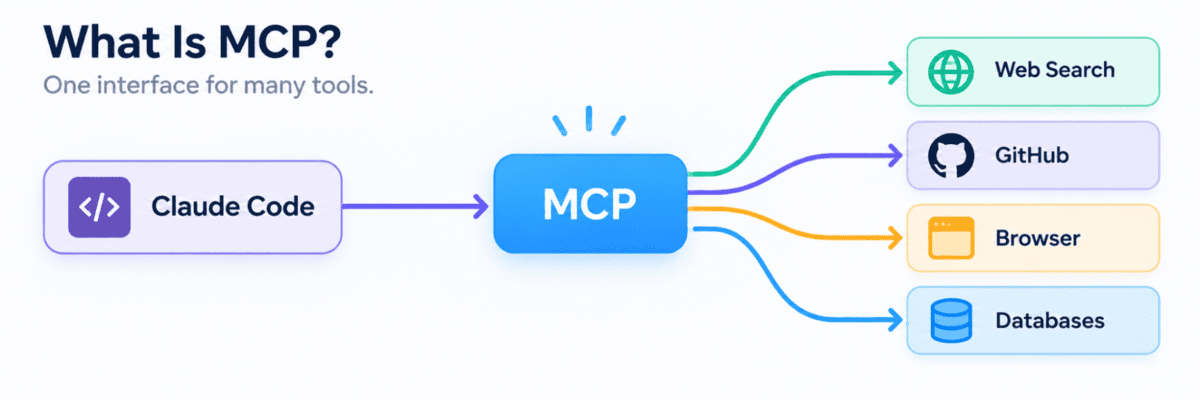
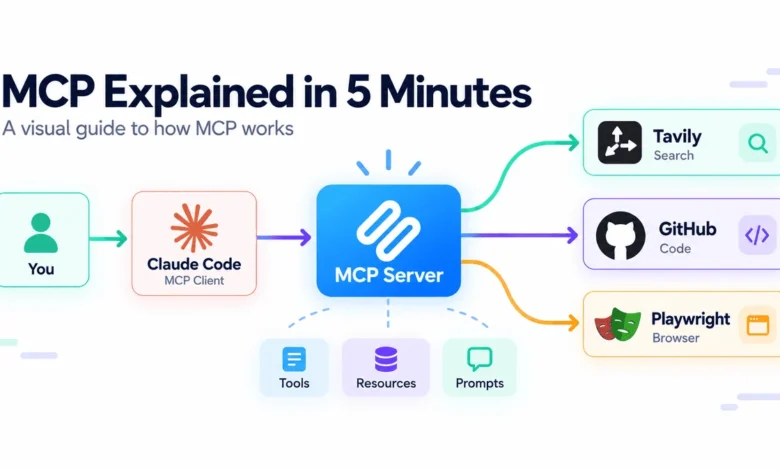
The system begins with the host, which is typically an AI-powered development environment or agentic application, such as Claude Code. Embedded within this host is an MCP client, whose primary responsibility is to manage connections to one or multiple MCP servers. These servers, running locally or remotely, expose specific tools, data resources, or prompt templates connected to external infrastructure.
Consider a practical, highly common developer query: "Search for the latest framework release notes and summarize the major architectural changes." Upon receiving this instruction, the language model does not immediately panic or hallucinate an answer. Instead, it evaluates its current knowledge limitations and recognizes the necessity for real-time, external data. The model inspects the catalog of available tools exposed by its connected MCP servers, selects the appropriate web-search utility, formats the query parameters, and transmits the request through the MCP client-server bridge.
A vital nuance of this architecture is that the Model Context Protocol does not perform any underlying logical reasoning. The neural network itself dictates when a tool is required, which specific tool to invoke, and how to synthesize the resulting data. MCP merely supplies the standardized, secure conduit through which these tools are made discoverable and callable.
Implementing MCP in Modern Development Environments
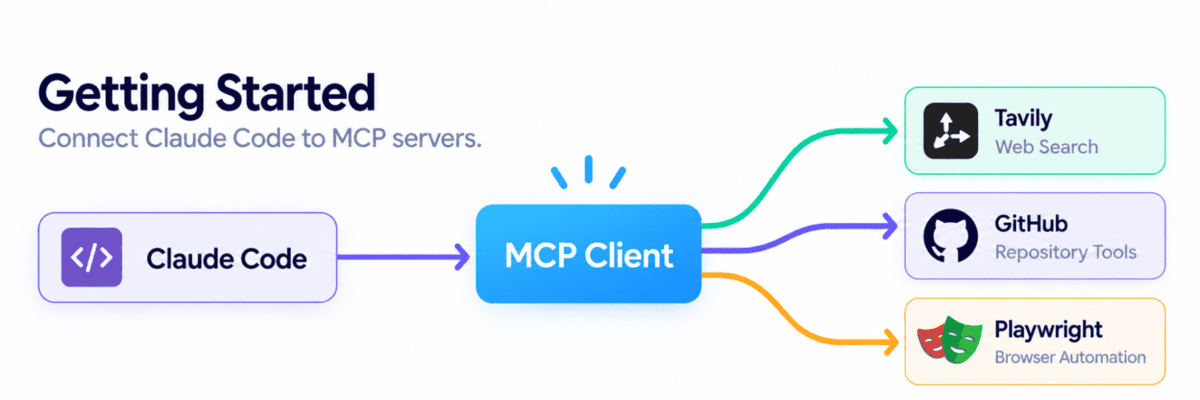
To appreciate the practical utility of the protocol, one can examine its integration within advanced developer tooling. Platforms like Anthropic’s Claude Code feature native support for managing MCP servers, allowing engineers to expand the capabilities of their coding assistants with minimal configuration overhead.
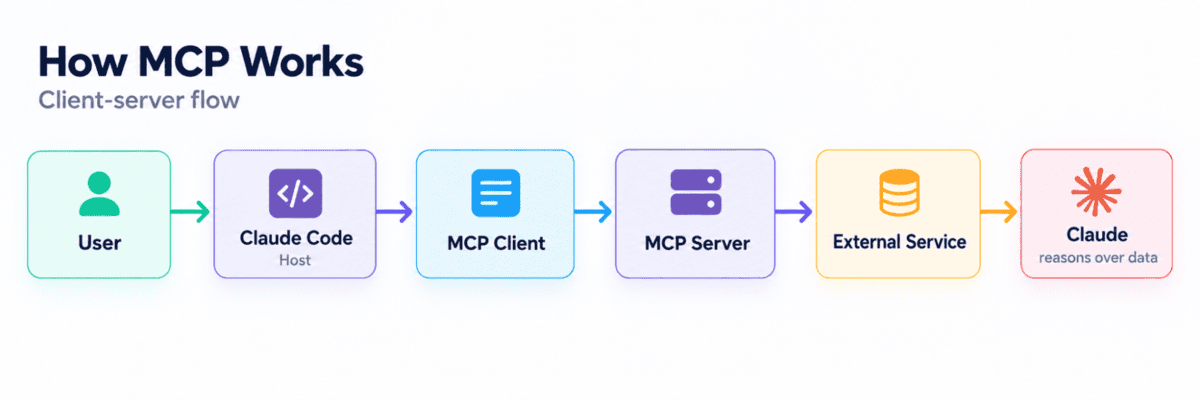
Developers can inspect their current environment by executing diagnostic commands such as claude mcp list, or manage active connections interactively via the /mcp interface. By integrating specialized servers, developers can drastically expand an agent’s operational scope, tackling complex tasks across web research, source code management, and browser automation.
Live Web Search Integration via Tavily
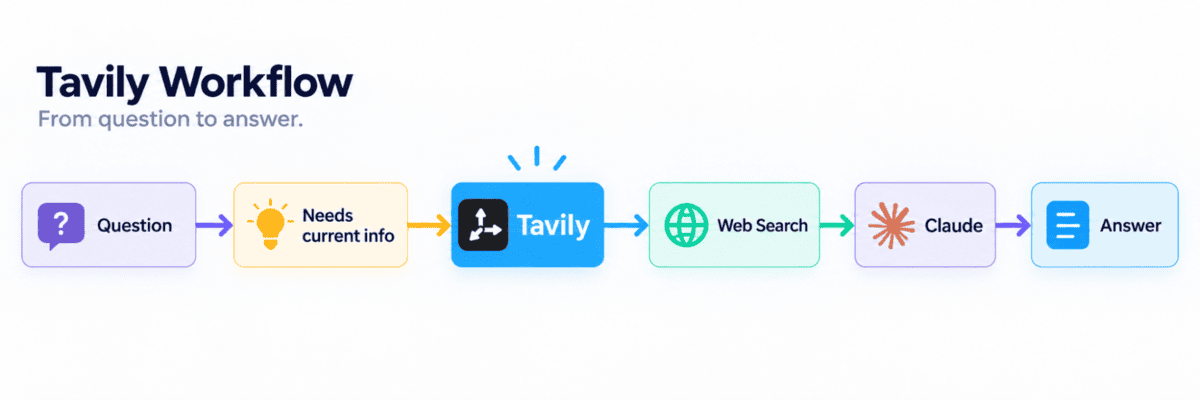
Large language models are inherently bounded by their training cutoffs, leaving them blind to real-time developments, newly released software packages, or breaking updates. To overcome this limitation, developers frequently integrate specialized search and data-extraction servers, such as those provided by Tavily.
Designed specifically for AI agents, Tavily equips coding assistants with capabilities for live web searching, automated content extraction, deep crawling, and programmatic research. By adding a remote Tavily MCP server—configured either via standard HTTP transport protocols or direct API authentication—the AI agent gains immediate access to the live internet.
When a user instructs the system to research a newly published software library, the agent automatically bypasses its static memory, queries the Tavily MCP server, retrieves the up-to-date documentation, and synthesizes a comprehensive summary. The underlying mechanics remain entirely abstract to the model, which treats the search utility as a native extension of its own cognitive toolkit.
Streamlining Software Workflows with GitHub Integration
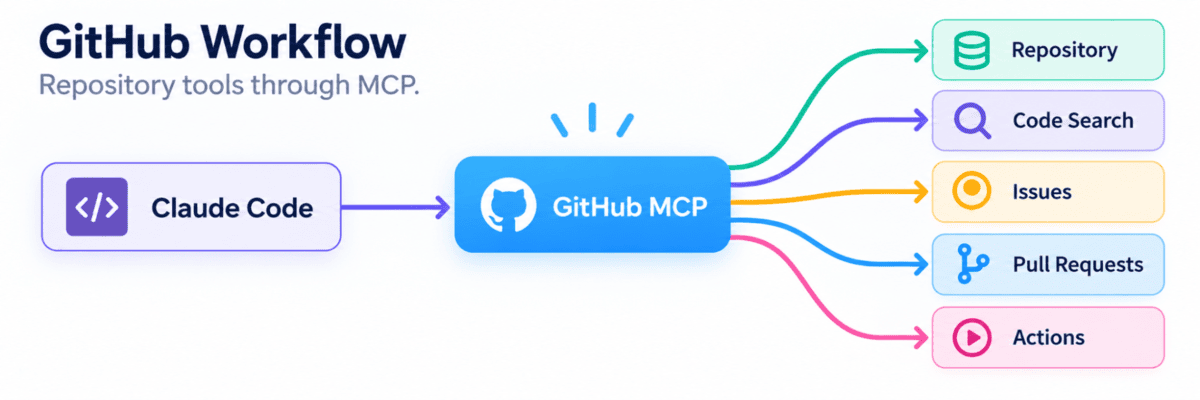
Source code management represents another critical frontier for agentic AI. The official GitHub MCP server transforms code repositories, issue trackers, and pull request workflows into native tools accessible directly from the command line or coding assistant.
Depending on the permissions granted via a secure Personal Access Token (PAT), an AI agent integrated with the GitHub MCP server can perform multifaceted repository operations. These include reading source files, executing code searches, reviewing recent commits, analyzing continuous integration workflows, and managing issues or pull requests.
For instance, a developer can prompt their AI assistant to review a complex pull request, identify latent software bugs, and highlight missing test coverage. Rather than manually copying code snippets and error logs into the chat interface, the agent leverages the MCP connection to autonomously retrieve the necessary context, inspect the codebase, and deliver a precise, actionable engineering review.
Browser Automation and Testing with Playwright
While APIs and code repositories cover a vast percentage of software engineering tasks, certain workflows demand graphical interaction. Agents frequently need to open live web applications, simulate user clicks, fill out complex form fields, navigate multi-page funnels, or execute end-to-end user interface testing.
Microsoft’s Playwright MCP server addresses this requirement by exposing browser automation capabilities directly to the language model. By leveraging structured accessibility snapshots rather than raw pixels, the Playwright server provides the AI with a clean, semantic representation of a webpage.
An engineer can thus instruct their assistant to launch a local development server and execute a complete user sign-up flow. The agent navigates the DOM, interacts with form elements, validates UI responses, and reports back on the success or failure of the user journey—all facilitated by the standardized translation layer of the protocol.
Architectural Evolution: The Stateless Specification
Since its initial introduction, the Model Context Protocol has undergone rapid refinement to meet the rigorous demands of enterprise production environments. A milestone in this evolution is the implementation of the modern MCP specification, which introduced a fundamental architectural shift: the protocol core is now strictly stateless.
In earlier iterations, maintaining active sessions between an AI host and specific servers introduced scaling bottlenecks, particularly in distributed cloud environments. Under the updated stateless paradigm, each individual request encapsulates all the necessary contextual metadata required to process it independently. This design choice dramatically simplifies the horizontal scaling of remote MCP servers across enterprise cloud infrastructure.
Furthermore, recent protocol updates have introduced enhanced security controls, finer-grained permission models, and optimized data transport mechanisms. These improvements ensure that as organizations deploy AI agents with broad access to internal corporate data and external APIs, administrative oversight and system security remain uncompromised.
Broader Implications and Enterprise Impact
The widespread adoption of the Model Context Protocol signals a mature phase in the commercialization of artificial intelligence. By decoupling the reasoning engine (the large language model) from the execution layer (the tools and databases), MCP fosters a modular ecosystem where third-party developers can build specialized servers without needing to adapt their software to every new model released by AI labs.
For enterprises, this modularity mitigates vendor lock-in and accelerates development velocity. Organizations can secure their proprietary databases and internal microservices behind standardized MCP servers, granting fine-grained, auditable access to internal AI agents safely. As the industry standardizes around protocols like MCP, the barrier to building truly autonomous, capable, and enterprise-grade AI systems continues to drop, paving the way for the next generation of intelligent software architecture.