AWS Elastic Beanstalk Enters a New Era With Fully Managed EKS-Powered Cluster Mode for Modern Microservices

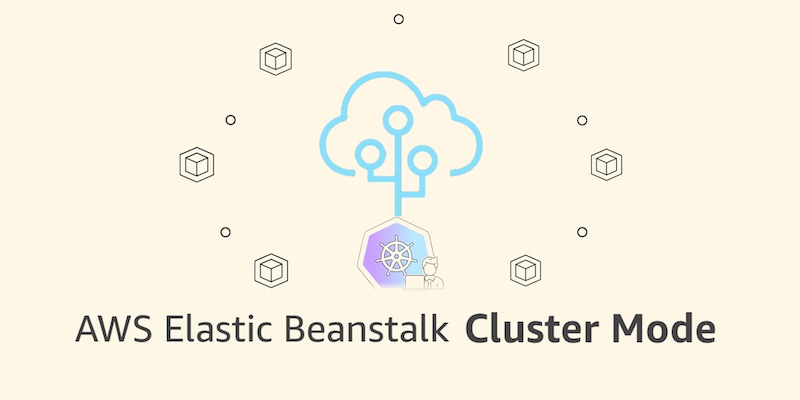
Fifteen years after its initial debut in 2011, Amazon Web Services (AWS) has announced a major evolutionary milestone for one of its foundational application management services. AWS Elastic Beanstalk has officially entered its next chapter with the introduction of a fully managed Cluster Mode, designed specifically to streamline the deployment, scaling, patching, and continuous monitoring of modern, containerized application portfolios. By integrating the architectural simplicity of Elastic Beanstalk with the raw power and orchestration capabilities of Amazon Elastic Kubernetes Service (Amazon EKS), AWS aims to alleviate the operational burdens traditionally associated with running complex microservice architectures at scale.
Since its inception, Elastic Beanstalk has earned the trust of developers and enterprise engineering teams globally by abstracting away the underlying infrastructure provisioning for applications written in languages such as Java, .NET, Python, Node.js, PHP, Ruby, and Go. Over the last decade and a half, the service has evolved in tandem with shifts in cloud computing paradigms. Today’s announcement signifies a profound re-architecting of the service’s operational engine, ensuring that organizations can continue focusing on core business logic while AWS assumes total operational responsibility for production environments throughout their entire lifecycle—whether workloads are supplied as raw source code, Dockerfiles, or pre-built container images.
Background and the Modernization Journey
When Elastic Beanstalk was launched in 2011, the primary architectural pattern for web applications relied heavily on monolithic or modular deployments running directly on virtual machine instances, such as Amazon Elastic Compute Cloud (Amazon EC2). Over the years, the software engineering landscape shifted dramatically toward containerization, microservices, and orchestration platforms like Kubernetes. While Kubernetes provided unprecedented scalability and portability, it also introduced a steep learning curve and significant operational overhead, particularly for small-to-midsize engineering teams lacking dedicated platform engineering departments.
Recognizing this market shift, AWS began aggressively modernizing the Elastic Beanstalk engine. In recent months, the company introduced a series of critical capabilities designed to bridge the gap between traditional PaaS (Platform as a Service) simplicity and modern cloud-native flexibility. Notable enhancements included the deployment of AI-powered environment analysis tools capable of diagnosing complex health issues and automatically recommending fixes, official GitHub Action integrations allowing development teams to deploy directly from CI/CD workflows using straightforward YAML configurations, and foundational infrastructure upgrades. These upgrades incorporated OpenTelemetry-based observability, traffic-splitting deployments with automatic rollback mechanisms, event-driven autoscaling, seamless secrets management via AWS Secrets Manager, and HTTPS configuration by default through AWS Certificate Manager.
The culmination of these technological advancements is the newly launched Cluster Mode, an architectural paradigm shift that transitions Elastic Beanstalk from an instance-centric deployment tool into a unified, multi-tenant application portfolio manager.
Architectural Overview of Cluster Mode
The newly introduced Cluster Mode is engineered specifically for organizations managing a portfolio of multiple interconnected microservices or applications. Under previous operational models, running multiple applications often required provisioning and managing discrete underlying environments, which could lead to resource fragmentation and rising operational complexity.
With Cluster Mode, engineering teams can run multiple applications that share a common, unified infrastructure powered by Amazon EKS, all governed by a single operational baseline. By allowing multiple applications to share underlying cluster resources, the per-application infrastructure cost decreases naturally as the application portfolio scales, eliminating the administrative friction typically associated with multi-stack architectures. Whether a company operates ten distinct applications or a hundred, administrators can oversee them through a unified management interface, guaranteeing consistent operational performance and security policies across every application stack.

Getting Started and Deployment Workflows
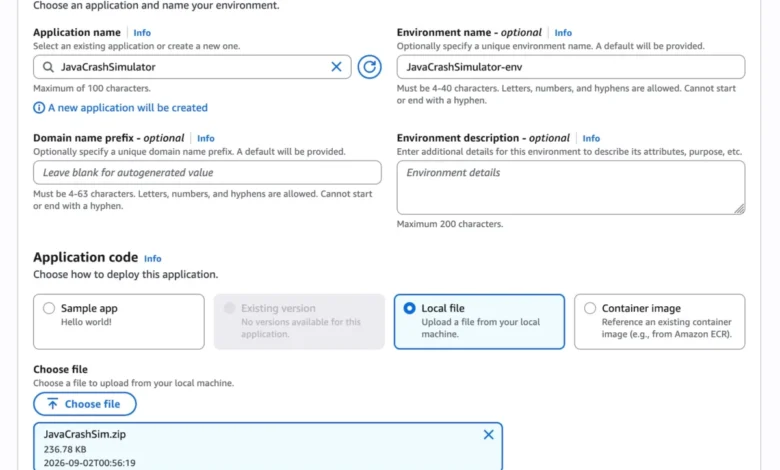
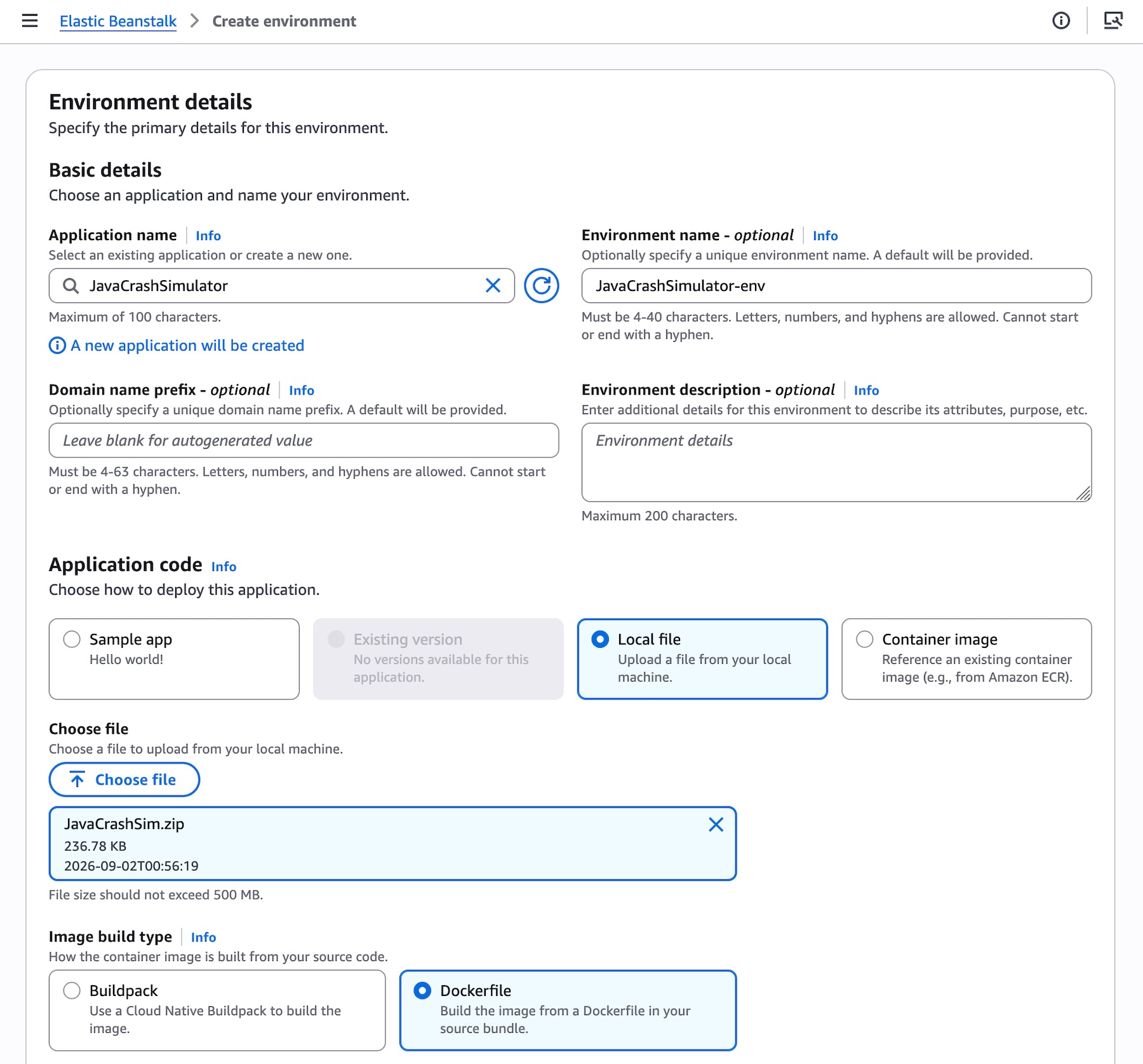
For development teams eager to test the new functionality, initialization is accessible directly through the AWS Elastic Beanstalk console. By creating a new environment and selecting "Cluster" under the designated deployment type configuration, administrators initiate the provisioning sequence. Elastic Beanstalk natively accepts source code, Dockerfiles, or direct container image references sourced from registries such as Amazon Elastic Container Registry (Amazon ECR).
During the initial environment creation, specifying a local file or container image build option triggers the underlying configuration. The initial deployment within a specific set of network subnets initiates the automated creation of the underlying Amazon EKS cluster—a background process that typically completes within approximately ten minutes. Subsequent deployments proceed significantly faster because they safely leverage and reuse the pre-existing EKS cluster infrastructure.
In addition to the web-based console, engineering teams can utilize the AWS Command Line Interface (AWS CLI), the specialized EB CLI, or standard AWS SDKs to automate provisioning pipelines. For example, a multi-service microservices application architecture can be established via programmatic commands. Developers can register pre-built container images residing in Amazon ECR as application versions, configure custom parameters such as CPU allocations, memory limits, and service ports, and deploy distinct microservices—such as a public-facing frontend integrated with an Application Load Balancer alongside internal backend services—with targeted configuration JSON files.
Coexistence with Standard Mode and Migration Strategies
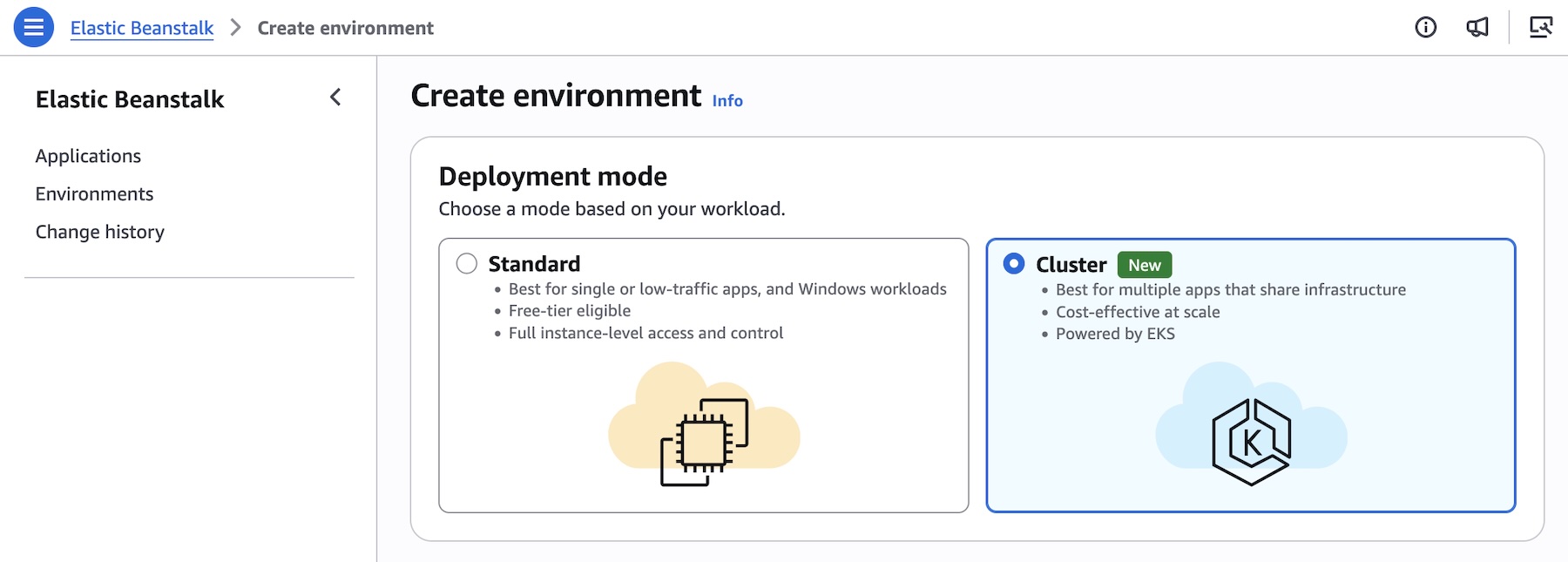
A critical design consideration for enterprise environments is continuity. AWS has confirmed that Elastic Beanstalk Standard Mode, powered by Amazon EC2, will remain fully supported. Standard and Cluster Mode environments are engineered to run side-by-side within the same overarching Elastic Beanstalk application structure.
This side-by-side compatibility allows engineering teams to execute migrations incrementally, moving one environment at a time at their own designated pace rather than being subjected to forced, disruptive platform overhauls. Automated validation checks execute prior to making modifications, ensuring complete stack compatibility and preventing accidental disruptions to production workloads. Standard Mode will continue serving as an ideal deployment target for traditional monolithic applications, legacy stateful workloads, and scenarios requiring direct operating system-level access to EC2 instances.
Industry Implications and Analysis
Industry analysts view the introduction of Elastic Beanstalk Cluster Mode as a strategic move by AWS to capture a broader segment of the enterprise market caught between the operational complexity of raw Kubernetes and the rigidity of traditional PaaS offerings. By abstracting Amazon EKS behind the familiar, simplified interface of Elastic Beanstalk, AWS is effectively lowering the barrier to entry for container orchestration.
This capability aligns with the broader industry trend toward platform engineering, where centralized IT and DevOps teams establish internal developer platforms (IDPs) to abstract infrastructure details from application developers. By embedding enterprise-grade observability, security, and autoscaling directly into the Beanstalk control plane, AWS enables development teams to achieve the velocity of containerized microservices without requiring deep, specialized expertise in Kubernetes cluster administration, security hardening, or network routing configurations.
Pricing, Availability, and Regional Support
AWS Elastic Beanstalk Cluster Mode is generally available starting today across all commercial AWS Regions where Elastic Beanstalk is currently supported. Organizations can verify precise regional availability and review the long-term product roadmap by consulting the official AWS Capabilities by Region portal. For teams looking to streamline API integration, search documentation, or troubleshoot configurations, AWS also supports utilizing the AWS MCP Server and associated plugins alongside preferred AI-assisted development tools.
Regarding financial structuring, AWS has confirmed that there is no additional service fee charged specifically for utilizing Elastic Beanstalk Cluster Mode. Customers are billed strictly for the underlying AWS resources consumed by their applications. These costs include standard fees associated with the EKS control plane, EKS Auto Mode compute resources, Amazon ECR storage and data transfer, and Amazon CloudWatch monitoring metrics. Administrators should note that Elastic Beanstalk Cluster Mode environments are not eligible for the AWS Free Tier. Detailed pricing information remains available on the official AWS Elastic Beanstalk Pricing webpage.
Looking Forward and Community Feedback
As organizations increasingly adopt cloud-native and containerized strategies, the launch of Cluster Mode represents a pivotal enhancement to the AWS application management ecosystem. AWS encourages developers and enterprise architects to test the new functionality within the Elastic Beanstalk console and provide operational feedback through the official AWS re:Post community tags dedicated to Elastic Beanstalk, or through standard enterprise AWS Support channels. This direct feedback loop will play a vital role in shaping subsequent feature releases and roadmap enhancements as AWS continues to refine its fully managed application deployment strategy.