The Lessons of Digital Transformation: Why AI Adoption is Failing Organizations Today

The contemporary rush to integrate artificial intelligence into the corporate ecosystem is increasingly mirroring the chaotic and often unsuccessful implementation of digital transformation initiatives from the previous decade. Data from industry analysts, including Gartner and McKinsey, suggest that a significant majority of digital transformation projects have historically failed to meet their intended objectives, often due to a myopic focus on technological procurement rather than human-centric organizational change. As businesses now pivot toward generative AI, the recurring pattern of top-down implementation, insufficient training, and stifling governance threatens to derail the potential benefits of this new technological wave.
The Historical Precedent: The 2014 Digital Adaptation Crisis
To understand the current friction in AI adoption, one must examine the state of enterprise technology circa 2014. During that period, organizations underwent rapid digitization, often forcing employees to migrate to new Content Management Systems (CMS), Customer Relationship Management (CRM) platforms, and internal intranets. The primary failure of that era was the "technological implementation" trap—a belief that deploying software was synonymous with achieving organizational agility.
Historical reviews of these projects indicate that internal adoption rates frequently languished below 30% in the first year. The disconnect between IT infrastructure and the practical needs of the workforce resulted in massive sunk costs and employee disengagement. The current AI landscape—defined by the rapid rollout of tools like Microsoft Copilot and various enterprise-grade Large Language Models (LLMs)—is displaying identical markers. When senior management treats AI as a "plug-and-play" solution, they inadvertently ignore the procedural and cultural shifts required to make such tools functional.
The Human Capital Paradox: Why Productivity is Not Enough
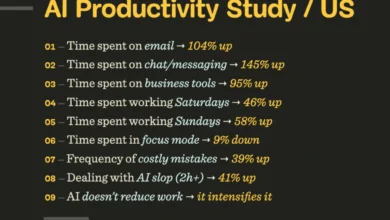
A fundamental conflict exists in the modern workplace regarding the motivation for AI adoption. Executive leadership consistently cites "productivity gains" as the primary driver for AI investment. However, data from recent workforce surveys suggest that employees view these productivity gains with skepticism. When AI is introduced without a corresponding adjustment in workload, employees often perceive the technology as a mechanism for increased performance pressure rather than a tool for professional enhancement.

The implications of this are significant. According to organizational psychology research, when employees feel that a new technology threatens their job security—a fear exacerbated by widespread media discourse on AI-driven automation—their resistance to adoption becomes a rational survival strategy. Unlike the digital transformations of the 2010s, which were viewed as "upgrades," the current AI transition is viewed by many as a potential "replacement." Consequently, organizations that fail to incentivize adoption through career progression, skill-building, or actual workload reduction face a structural barrier that no amount of software training can overcome.
Chronology of Corporate AI Adoption
The trajectory of AI integration in the enterprise has followed a distinct, three-phase timeline over the past 24 months:
- The Hype Cycle (2022–Early 2023): Initial interest sparked by the public release of generative AI tools. Organizations began drafting "AI policies" and forming steering committees.
- The Blanket Deployment (Late 2023–Mid 2024): Large-scale procurement of enterprise licenses (e.g., Copilot Studio, ChatGPT Enterprise). This phase is characterized by generic, company-wide training sessions that often lack role-specific utility.
- The "Shadow AI" Emergence (Late 2024–Present): As internal tools prove insufficient or overly restrictive, employees are increasingly turning to unauthorized, personal accounts to complete tasks, leading to significant data security and compliance risks.
The Data Gap: Why Standardization Fails Specialized Roles
One of the most critical failures in current AI strategy is the "one-size-fits-all" approach to software deployment. In sectors such as UX design, engineering, and legal research, generic AI tools often lack the depth or integration required for high-level technical tasks. When IT steering groups block access to specialized, high-performance tools in favor of standardized enterprise software, they effectively force high-value employees to revert to manual, less efficient processes or, worse, to engage in "Shadow AI."
Shadow AI represents a significant risk profile for modern firms. By bypassing corporate IT, employees may inadvertently expose proprietary data to third-party models that do not adhere to the organization’s security standards. Analysis suggests that the existence of Shadow AI is not a sign of employee negligence, but rather a diagnostic indicator that official internal tooling is failing to meet professional requirements.
Fostering a Culture of "Safe Failure"
The most successful organizations in navigating technological change are those that cultivate a culture of psychological safety. In the context of AI, this means re-evaluating Key Performance Indicators (KPIs) to allow for a "learning phase." When employees are judged by the same rigid metrics during a period of intense technological transition as they were prior to the transition, they are naturally incentivized to avoid experimentation.

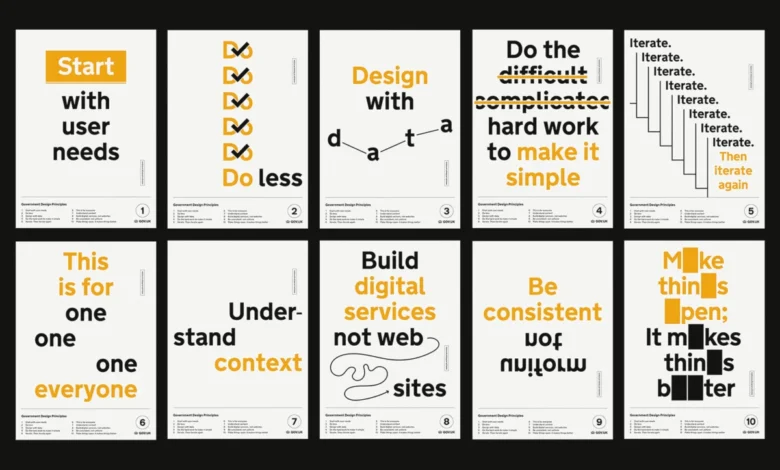
Industry analysts suggest that organizations should adopt a "principles-based" governance model rather than a "rules-based" one. By providing clear, concise design principles—similar to those utilized by the UK Government’s digital services—management can empower staff to use their professional judgment. This approach shifts the focus from policing usage to encouraging responsible exploration, which is essential for discovering the most effective use cases for AI within a specific company context.
The Role of Social Proof and Internal Champions
Rather than relying on top-down mandates, empirical evidence from previous digital transformations suggests that the most effective path to adoption is through "internal champions." Every organization possesses a segment of the workforce already experimenting with AI tools of their own volition.
Management strategies that identify, support, and highlight these early adopters create a form of "social proof." When employees observe a peer in a similar role successfully leveraging AI to automate tedious tasks, the technology ceases to be an abstract management demand and becomes a tangible, helpful tool. This organic spread of knowledge is consistently more effective than formal training programs, which often fail to account for the nuanced workflows of specific departments.
Future Implications and Strategic Recommendations
The cost of inaction is high, but the cost of ill-conceived action is higher. Organizations that continue to treat AI as a purely technical implementation are destined to repeat the failures of the previous decade’s digital transformation projects. To succeed, leadership must pivot toward a strategy that prioritizes:
- Human-Centric Change Management: Acknowledging that AI is a cultural shift that requires transparent communication regarding job roles and long-term professional development.
- Decentralized Experimentation: Allowing for a period of controlled chaos where departments can test various tools, provided they adhere to core security principles.
- Iterative Governance: Moving away from rigid, restrictive policies that stifle innovation and toward a trust-based framework that evolves as the organization gains experience with the technology.
As the AI era progresses, the competitive advantage will likely go to those companies that treat their staff not as units of production to be optimized by machines, but as partners in the integration of new tools. The history of digital adaptation is clear: technology is merely the lever, but the people who use it remain the fulcrum upon which success or failure rests. Organizations must recognize that the most significant risks—and the greatest opportunities—are found in the human dimension of the AI transition. Those who master this will not only survive the current wave of technological change but will be positioned to leverage it for sustained, long-term growth.