The Evolution of Brand Monitoring: Navigating the Real-Time Digital Landscape with AI

The traditional news cycle, once dictated by print deadlines and scheduled broadcasts, has been effectively dismantled and replaced by an unrelenting torrent of real-time updates breaking across myriad social media platforms. According to findings from the Q1 2026 Pulse Survey, social media has unequivocally emerged as the primary conduit through which individuals now consume news and information. Headlines no longer originate solely from established newsrooms; they can surface anywhere from captivating viral videos on TikTok, to breaking news alerts on X (formerly Twitter), insightful professional commentary on LinkedIn, or granular community discussions on Reddit. This profound shift represents a fundamental transformation in how information propagates and how public perception is shaped.
In this hyper-connected environment, conversations about brands are no longer confined to controlled channels or specific hours. They are happening continuously, across platforms simultaneously, often cross-pollinating and reverberating across the internet from one network to another with remarkable speed. Brands are now mentioned in more places and at a significantly faster volume than at any previous point in history. The sheer velocity and decentralization of these discussions mean that public perception can now pivot dramatically within minutes. Consequently, merely tracking direct mentions or exclusively monitoring traditional press coverage is no longer sufficient for comprehensive brand management. It has become critically imperative for organizations to implement a robust, comprehensive, and proactive monitoring and listening strategy. This strategy must be designed to not only understand what is being said about the brand, but also where it is being said, by whom, and, crucially, if immediate action is required as a result. Without such a unified and agile approach, businesses face the substantial risk of overlooking invaluable customer feedback, or worse, being blindsided by a nascent public relations crisis that has already snowballed into a major incident by the time it is detected.
Defining Cross-Network Brand Monitoring in the Modern Era
Cross-network brand monitoring is the sophisticated practice of systematically tracking, aggregating, and analyzing mentions of a brand, its products, services, and key executives across a multitude of diverse digital platforms concurrently. This methodology involves synthesizing disparate data streams from across the entire web, encompassing not only major social networks but also niche discussion forums, comprehensive review sites, influential blogs, and digital news publications, into a single, unified view.
Historically, brand monitoring often involved siloed efforts, with different teams perhaps tracking specific platforms manually. The modern iteration, however, usually integrates advanced social listening and media monitoring software. These powerful tools are engineered to scan the vast expanse of the internet for targeted keywords, specific mentions, relevant phrases, and trending hashtags. The crucial distinction lies in unifying this fragmented online chatter into coherent, actionable data points. This transformation allows organizations to move beyond mere observation, enabling them to make informed decisions for various critical functions, including enhancing customer care, driving product enhancements based on user feedback, or strategically responding to and mitigating potential crises before they escalate.
The Indispensable Role of a Unified Monitoring Strategy
Implementing a unified cross-network monitoring strategy is not merely advantageous; it is an indispensable component of modern business operations, vital for a multitude of critical reasons. The digital landscape is a complex tapestry of voices, where a single comment can ignite a viral trend or a damaging rumor.
Paul Quigley, GM of Listening at Sprout Social, succinctly articulates this shift: "Today, narratives—both opportunities and threats—can kick off anywhere. From a news story, a discussion on Reddit, a TikTok, a Substack post. Brands risk exposure and missed opportunities if their listening focuses too heavily on just a couple of sources. They need nothing less than the full media landscape at their fingertips." This statement underscores the urgent need for a holistic approach that leaves no digital stone unturned.
Beyond crisis prevention, a unified strategy offers profound insights into market trends, competitive intelligence, and evolving consumer sentiment. It allows brands to identify emerging opportunities, gauge the effectiveness of marketing campaigns in real-time, and understand the nuances of their audience’s preferences and pain points. For instance, a surge in discussions about a competitor’s new feature on a specific forum might signal an impending market shift, while widespread positive sentiment around a brand’s new campaign on Instagram could indicate a successful messaging strategy. Without a cross-network view, such critical signals would likely be missed, leaving brands at a competitive disadvantage.
Establishing a Unified Foundation for Cross-Network Monitoring
Building an effective cross-network brand monitoring program necessitates a robust and unified data foundation. Attempting to monitor the entirety of the internet without a clear strategy, defined goals, and the right tools inevitably leads to missed information, disjointed insights, and an inability to translate data into actionable outcomes. Successful monitoring is not a chaotic free-for-all; it requires a structured approach, typically involving two distinct yet interconnected phases: meticulously mapping relevant digital channels and rigorously categorizing strategic objectives.
Centralizing Network Monitoring: Identifying Key Digital Pillars
The initial and perhaps most fundamental step in this process is to develop a comprehensive understanding of every digital network that holds relevance for your brand. The precise "pillars" of this monitoring framework will inherently depend on the specific characteristics of your target audience, the industry in which you operate, and the specific objectives you aim to achieve through tracking. However, a comprehensive list could encompass a strategic combination of the following:

- Major Social Media Platforms: X (formerly Twitter), Facebook, Instagram, LinkedIn, TikTok, Pinterest, Snapchat, etc. These platforms are crucial for real-time sentiment, trend identification, and direct consumer engagement.
- Micro-Blogging Platforms & Forums: Reddit, Quora, industry-specific forums, niche communities. These often host deeper, more authentic, and unfiltered discussions.
- Review Sites: Yelp, Google Reviews, Amazon reviews, industry-specific review platforms (e.g., G2, Capterra for software; TripAdvisor for travel). Critical for product/service reputation and customer feedback.
- Blogs & News Sites: Industry blogs, personal blogs, digital news publications, online magazines. Important for tracking traditional media coverage, influencer mentions, and thought leadership.
- Video-Sharing Platforms: YouTube, Vimeo. Essential for monitoring brand mentions in video content, user-generated reviews, and sponsored content.
- Messaging Apps & Dark Social (where possible): While harder to track directly, understanding the impact of discussions on platforms like WhatsApp or private Slack channels can be crucial, often requiring inference from public mentions.
- Podcasts & Audio Platforms: Tracking mentions within podcast transcripts or discussions.
Once these relevant channels have been identified, the subsequent, vital step is to aggregate these disparate data streams into a single, cohesive dashboard. This centralization is paramount for eliminating organizational silos, ensuring that all relevant departments within your company—from marketing and PR to customer service and product development—are operating from the same source of truth. This, in turn, fosters a truly unified strategy across various functions. Such integrated social intelligence can even ascend to the highest echelons of the organization, reaching product development teams and the C-suite, thereby influencing broader, business-wide decisions that extend far beyond the traditional marketing department. This holistic view ensures that insights gleaned from online chatter are not just marketing fodder, but strategic assets.
Setting Strategic Tracking Objectives: Beyond Raw Data
Data, in its raw form, is only as valuable as the goals it is designed to serve. Therefore, once the robust monitoring foundation has been established, the next critical phase involves setting clear, measurable strategic targets. To achieve this, it is essential to define specific metrics and measures that can be consistently tracked and benchmarked against. This allows for a quantifiable assessment of performance and impact.
While specific brand needs will naturally dictate the precise objectives, some illustrative examples include:
- Brand Reputation Management: Tracking sentiment shifts (positive, negative, neutral) around your brand, products, or campaigns. Identifying potential PR crises early.
- Customer Feedback & Product Improvement: Aggregating mentions related to product features, bugs, user experience, and feature requests.
- Competitive Intelligence: Monitoring discussions about competitors, their product launches, marketing campaigns, and customer satisfaction.
- Campaign Performance Measurement: Tracking mentions, sentiment, and engagement around specific marketing campaigns or events.
- Influencer Identification: Discovering key opinion leaders and influencers who are discussing your brand or industry.
- Market Trend Analysis: Identifying emerging trends, consumer needs, and industry shifts that could impact strategy.
- Crisis Management & Mitigation: Establishing alerts for unusual spikes in negative sentiment, specific keywords associated with crises, or high-volume negative discussions.
- Customer Service Enhancement: Routing specific customer complaints or queries to the appropriate support channels in real-time.
Once the "what" of tracking has been mapped and strategic goals have been meticulously set, the primary challenge transitions to efficiently processing a potentially massive influx of data without losing the crucial ability to quickly act upon the insights it contains. This necessitates a shift from passive observation to proactive engagement.
From Reactive Dashboards to Proactive Agentic Monitoring
The traditional paradigm of brand monitoring has historically relied heavily on marketing and public relations teams manually checking dashboards. This often involved logging into various platforms, poring over retrospective graphs, and analyzing data weeks or even months after significant shifts had already occurred. This "rear-view mirror" approach is fundamentally inadequate for modern monitoring requirements. To effectively safeguard and elevate a brand’s reputation and strategic position in today’s dynamic information ecosystem, organizations require an additional, more advanced layer of autonomous monitoring—and this is precisely where agentic monitoring emerges as a game-changer.
Passive dashboards, by their very nature, require a human operator to actively log in, interpret complex charts, and then make a judgment call on whether a particular data point warrants action. This process is inherently time-consuming, introduces significant delays, and leaves considerable room for human error or oversight. Agentic monitoring, in stark contrast, eliminates these risks by continuously scanning the identified networks in real-time, around the clock, without human intervention for initial detection.
Paul Quigley further emphasizes this evolution, noting that "the era of logging into dashboards to check things is over. Now 94% of NewsWhip data is consumed off platform – pushed to teams by monitoring agents, predictive alerts and other formats, and landing into the right inboxes, Teams channels and Slack groups." This statistic highlights a significant industry shift towards automated, push-based intelligence rather than manual pull-based analysis.
At the heart of agentic monitoring are sophisticated AI agents. These agents are designed to be deeply integrated with a brand’s strategic goals and objectives, enabling them to understand the contextual nuances required to accurately interpret shifts in data. Once objectives are clearly defined, these autonomous agents operate ceaselessly, pulling in every relevant data point that corresponds to the monitoring goals. Critically, custom alert thresholds can be configured to deliver instant email or chat notifications when meaningful changes or predefined triggers occur. This proactive alerting system liberates human teams from the laborious task of "dashboard triage," allowing them to focus their valuable time and expertise entirely on strategic analysis and, most importantly, on taking decisive action.
For example, specialized autonomous agents, such as Sprout Social’s proprietary AI agent, Trellis, empower organizations to detect critical shifts as they unfold. Rather than merely observing keyword volume, these advanced agents delve deeper, analyzing engagement metrics to reveal what content or narratives are genuinely resonating with the target audience. They are capable of detecting early narrative shifts, sudden and anomalous spikes in conversation volume, and critical drops in sentiment. When specific, pre-defined thresholds are met, these agents automatically issue alerts – functioning much like an always-on human analyst. They not only flag the issue but also begin to dig into the underlying context: what is happening, where did it originate, how rapidly is it spreading, and why is it significant to the brand.
By entrusting these autonomous agents with the computationally intensive task of data collection, synthesis, and initial interpretation, human teams gain invaluable bandwidth. This allows them to pivot towards judgment-dependent tasks that truly require human intellect and creativity, such as crafting nuanced crisis communication plans, refining brand messaging based on deep insights, or developing innovative marketing strategies.
Utilizing Trellis to Extract Business Answers from Data
Receiving a concise brief delivered directly to one’s inbox is a significant advancement, but in an ideal scenario, analysts and social media managers require the capability to dynamically interrogate the data in real-time. Sprout Social’s agent, Trellis, serves precisely this purpose by acting as a conversational layer. It seamlessly connects data across various facets of the Sprout ecosystem, including Publishing, Listening, Reporting, and the Smart Inbox. This integration eliminates the cumbersome and inefficient process of manually piecing together insights from disparate data sources.
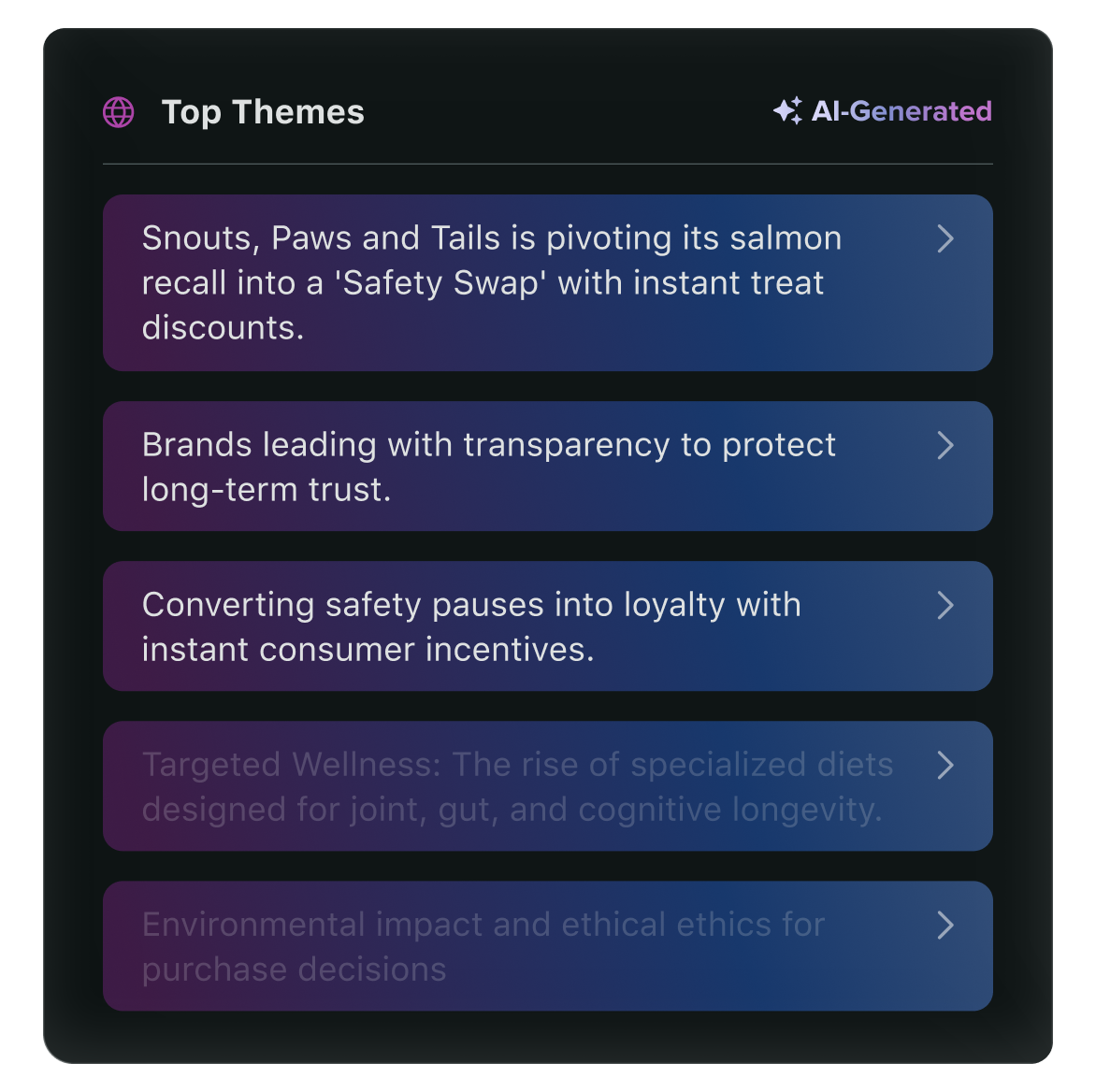
Teams can frame complex prompts using natural language, effectively querying billions of social data points with the ease of a conversation. For instance, a user might ask, "What are the primary drivers behind yesterday’s sentiment drop on Reddit?" or "Summarize our competitors’ product flaws based on this week’s reviews." Trellis is engineered to provide immediate, contextually rich, and highly relevant answers, transforming raw data into intelligible narratives.
Trellis excels at converting fragmented digital signals into executive-ready recommendations and strategic directives. This capability significantly closes the gap between raw social data and actionable outcomes. "Action" is indeed the operative word in this framework, emphasizing a shift beyond insight purely for the sake of understanding. To translate these insights into effective action, organizations must also establish the correct internal pathways and protocols.
Building Pathways for Data Escalation
Even the most profound brand monitoring data loses its strategic value if it remains confined within marketing or public relations departments. The creation of customized intelligence pathways is essential for breaking down organizational silos, ensuring that specific, tailored insights reach the teams that can most effectively utilize them, based on what is being monitored. This proactive distribution could involve a variety of automated workflows: automatically funneling feature requests or recurring software bugs directly to the product and engineering teams, escalating high-priority customer complaints to the customer care team for immediate resolution, or instantly flagging significant sentiment drops with the communications team for rapid response.
Automated workflows are instrumental in streamlining data escalation, but they must be implemented with careful guardrails to ensure compliance with internal policies and regulatory requirements. By setting strict, predefined parameters around what constitutes an "escalation" – for example, a specific threshold of negative mentions, a critical keyword combination, or a rapid surge in conversation volume – organizations can scale their proactive monitoring efforts without risking brand misalignment, information overload, or generating unnecessary concerns. This structured approach ensures that the right information reaches the right people at the right time, enabling a swift and coordinated response.
Turning Digital Noise into a Strategic Advantage
Successfully scaling and fostering brand growth in the contemporary digital landscape unequivocally demands a sophisticated cross-network monitoring strategy, built upon a unified data foundation. However, the true competitive edge is realized when this foundation is further enhanced by proactive, AI-driven insights and clearly defined, efficient escalation pathways. The paradigm shift from antiquated, dashboard-centric monitoring to always-on, agentic systems unlocks the immediate business intelligence necessary to not only react to market dynamics but to proactively drive the organization forward. This transformative approach ensures that brands are not merely observers of the digital conversation but active participants, capable of shaping narratives, addressing challenges, and seizing opportunities in real-time.
Ready to transform your organization’s cross-network monitoring strategy and leverage the power of advanced AI? Discover how Sprout Social and its proprietary AI agent, Trellis, can unify your entire data ecosystem, automate critical workflows, and deliver executive-ready insights in real time, empowering your brand to thrive in the complex digital age.
FAQs
What are the best tools for cross-network brand monitoring?
The most effective tools for cross-network brand monitoring are those that unify data from various sources—including web, forums, review sites, and social media—into a single, comprehensive dashboard. These tools are further enhanced by a built-in agentic monitoring strategy that provides proactive insights. Leading examples in this category include Sprout Social Listening and NewsWhip by Sprout Social, which offer robust capabilities for real-time data aggregation and analysis.
How does brand monitoring differ from social listening?
While often used interchangeably, brand monitoring and social listening serve distinct analytical purposes, operating at different scales. Brand monitoring focuses primarily on direct tracking: it systematically gathers specific brand mentions, reviews, and direct comments about your particular brand, products, or services. Its main objectives are typically related to customer care, direct feedback collection, and managing immediate public relations crises. Social listening, on the other hand, adopts a more macro, broader analytical approach. It aggregates cross-network conversations around entire industries, monitors competitor trends, identifies cultural shifts, and tracks emerging topics to inform long-term corporate strategy, product innovation, and market positioning.
What keywords should I track for my brand?
To achieve a comprehensive view of your online footprint and conversations, it is advisable to group your tracking keywords into several strategic categories. These should include:
- Core Brand: Your brand name, common misspellings, and official hashtags.
- Products and Features: Names of your key products, specific features, and associated terms.
- Key Executives: Names and titles of prominent leaders within your organization.
- Competitors: Names of direct and indirect competitors, their products, and relevant campaign hashtags.
- Industry Topics of Interest: Broader terms and trends relevant to your industry, allowing you to gauge market sentiment and identify emerging opportunities or threats.