The Evolution of Collaborative AI Systems and the Future of Human-Centric Machine Intelligence

The traditional paradigm of artificial intelligence—often characterized by a "prompt in, response out" workflow—is undergoing a fundamental transformation as global industries shift toward collaborative AI systems. In this emerging model, artificial intelligence is no longer viewed as a black-box oracle that provides final answers, but rather as a sophisticated partner that surfaces patterns, generates options, and flags anomalies for human verification. This shift represents a move away from simple automation toward "human-in-the-loop" (HITL) systems, where the synergy between machine speed and human judgment produces results that neither could achieve in isolation. This evolution is particularly visible in high-stakes fields such as drug discovery, pathology, and global finance, where the margin for error is slim and the need for contextual reasoning is paramount.
The Paradigm Shift in Scientific Research and Drug Discovery
The integration of collaborative AI has perhaps been most disruptive in the biological sciences. Historically, the process of protein folding and drug discovery was a labor-intensive endeavor that relied on decades of trial-and-error experimentation. The emergence of Google DeepMind’s AlphaFold marked a turning point by predicting protein structures with unprecedented accuracy. However, industry experts note that the AI’s output is only the beginning of the scientific process. While AlphaFold can predict a structure in hours, it remains the responsibility of human scientists to interpret the significance of these proteins and design the subsequent laboratory experiments to validate their biological functions.
Building upon this foundation, biotech firms like Insilico Medicine have pioneered an end-to-end collaborative pipeline. Traditional drug development typically requires four to five years and hundreds of millions of dollars just to identify a viable "lead compound." Insilico’s AI platform utilizes generative adversarial networks (GANs) and reinforcement learning to screen millions of potential molecules, narrowing the field to a handful of high-probability candidates.
The results of this collaboration are statistically significant. Insilico reported that their AI-driven approach reduced the lead-discovery timeline by approximately 75%, moving from a five-year average to just 18 months. Crucially, the final decision to synthesize a molecule remains with medicinal chemists, who refine the AI-generated structures based on their specialized knowledge of chemical stability and toxicity. This collaborative loop was instrumental in the development of ISM001-055, a drug for idiopathic pulmonary fibrosis, which became one of the first AI-discovered molecules to enter human clinical trials.
Enhancing Diagnostic Precision in Modern Healthcare
In the clinical environment, the collaboration between pathologists and AI is redefining the standards of diagnostic accuracy. Pathology, which involves the examination of tissue slides to identify diseases like cancer, is a field prone to human fatigue and "missed catches" due to the sheer volume of data on a single slide.
PathAI, a leader in this space, has developed systems that analyze digitized tissue samples at a scale impossible for a human eye. According to a landmark study conducted by the Beth Israel Deaconess Medical Center, AI-assisted pathologists achieved a cancer detection accuracy rate of 99.5%. In contrast, pathologists working independently achieved a 96% accuracy rate. The AI excels at identifying subtle morphological patterns across thousands of cells, while the human pathologist provides the critical clinical context—such as the patient’s medical history and the nuances of disease progression—that the AI cannot perceive. This "augmented" approach not only increases accuracy but also significantly reduces the time required for slide review, allowing pathologists to focus on the most complex and ambiguous cases.
The Financial Sector: Scaling Decision-Making in Global Markets
The financial services industry has also moved beyond simple algorithmic trading toward complex collaborative ecosystems. Two primary examples—JPMorgan Chase and BlackRock—illustrate how AI can manage vast data volumes while keeping human expertise at the center of the strategy.
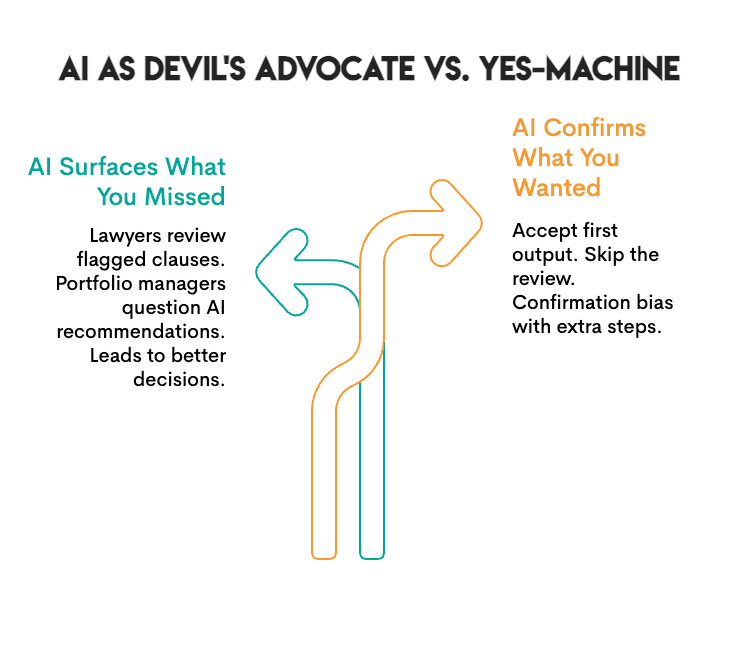
JPMorgan Chase faced a massive operational bottleneck in its legal department, where attorneys and loan officers spent approximately 360,000 hours annually reviewing commercial loan agreements. To address this, the bank developed COiN (Contract Intelligence), a platform powered by natural language processing (NLP). COiN can extract key data points and identify questionable clauses in seconds—tasks that previously took thousands of man-hours. Despite the efficiency of the AI, JPMorgan’s legal teams do not simply accept the machine’s output; they use the flagged items to inform their negotiations and strategy. This partnership has resulted in an 80% reduction in compliance errors and has freed legal professionals to focus on higher-value advisory work.
Similarly, BlackRock, the world’s largest asset manager, utilizes the Aladdin (Asset, Liability, Debt, and Derivatives Investment Network) platform to manage over $21 trillion in assets. Aladdin processes massive amounts of market data to run risk simulations and identify potential market disruptions. However, the system is designed to provide "decision support" rather than "decision execution." BlackRock’s portfolio managers review Aladdin’s real-time analytics to make final asset allocations. The firm has reported that portfolios managed through this collaborative approach consistently outperform both purely algorithmic models and purely human-led strategies. Today, the Aladdin platform is so integral to the global financial infrastructure that over 200 other financial institutions license the technology for their own risk management operations.
The Mechanics of Effective Human-AI Collaboration
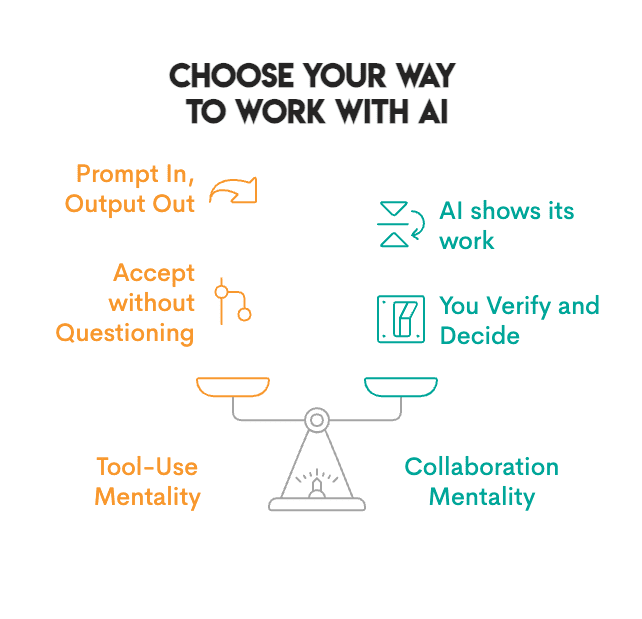
Not all AI implementations are inherently collaborative. The distinction lies in transparency and the "show your work" principle. Collaborative tools are designed to provide the reasoning, sources, and code behind their outputs, allowing the human partner to verify the logic. This is the difference between a "tool," which acts as a servant to a command, and a "collaborator," which acts as a peer in a problem-solving process.
Industry analysts have identified three primary metrics for evaluating the success of these collaborative systems:
- Efficiency Gains: Measuring the reduction in time spent on repetitive or high-volume tasks (e.g., the 75% reduction in drug discovery time at Insilico).
- Accuracy and Error Detection: Monitoring whether the human-AI team catches more errors than either could alone (e.g., the 99.5% accuracy rate in pathology).
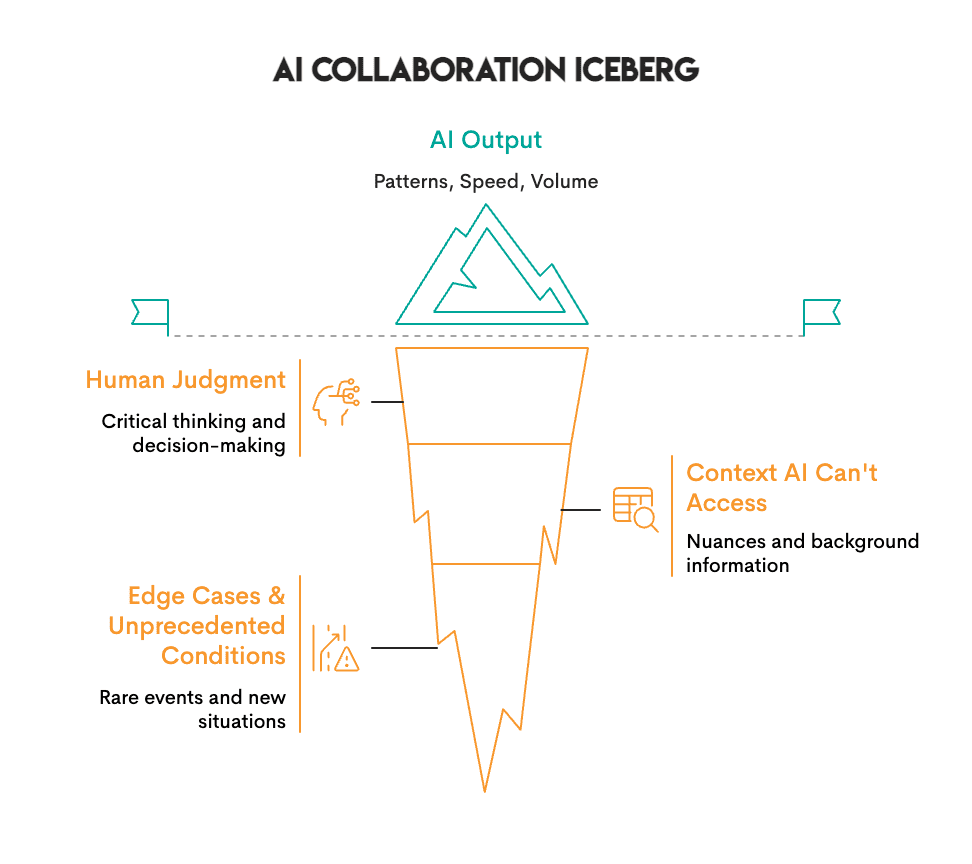
- Trust and Verification Levels: Tracking how often human users verify the AI’s output versus "rubber-stamping" it. A high rate of uncritical acceptance is often a sign of "automation bias," which can lead to catastrophic failures if the AI hallucinates or encounters an edge case.
Implications for the Professional Workforce and Hiring
The rise of collaborative AI is fundamentally altering the skills required in the modern job market. In data science and engineering interviews, companies are no longer just looking for candidates who can generate code; they are looking for those who can critically evaluate AI-generated code. Recruiters at top-tier tech firms have noted that candidates who blindly follow an AI’s suggestions during technical assessments are often disqualified for a lack of judgment. Conversely, candidates who use AI to generate a baseline and then identify its flaws, optimize its logic, and add necessary context are viewed as the "collaborators" of the future.
This shift suggests that "AI literacy" is moving toward "AI critical thinking." Professionals must remain sharp enough to function without the AI, ensuring they maintain a baseline level of expertise. This prevents "skill atrophy," where the human becomes so dependent on the machine that they lose the ability to recognize when the machine is wrong.
Chronology of AI Integration in Professional Environments
The journey toward collaborative AI has followed a distinct timeline over the last decade:
- 2014–2016: The Tool Era. AI was primarily used for specific, narrow tasks like spam filtering or basic image recognition. Interaction was limited and one-way.
- 2017–2020: The Insight Era. The introduction of transformer models and more advanced NLP allowed AI to provide deeper insights and patterns, such as the early iterations of JPMorgan’s COiN.
- 2021–Present: The Collaborative Era. With the advent of generative AI and more transparent "chain-of-thought" processing, AI has become an active participant in workflows, capable of explaining its reasoning and adapting to human feedback in real-time.
Broader Impact and Future Outlook
The broader implication of collaborative AI is the democratization of high-level expertise. By handling the "heavy lifting" of data processing and pattern recognition, AI allows junior professionals to perform at a more senior level while enabling senior experts to focus on the most creative and complex aspects of their fields.
However, the transition is not without risks. Critics argue that an over-reliance on collaborative systems could lead to a loss of institutional knowledge. If the AI is doing the "work," the next generation of experts may not develop the "gut feeling" or intuition that comes from years of manual practice. To mitigate this, many forward-thinking organizations are implementing "manual days" or periodic audits where processes are completed without AI assistance to ensure core competencies remain intact.
Ultimately, the most successful organizations of the next decade will not be those with the most powerful AI, but those that have developed the best culture of collaboration between their people and their machines. The goal is a system where the AI surfaces the signal within the noise, and the human provides the wisdom to know what to do with it. This partnership represents the next frontier of professional productivity, promising a future where human potential is not replaced by machines, but profoundly amplified by them.