The Silent Watchers: How Surveillance Technology Fails Migrants in the Borderlands

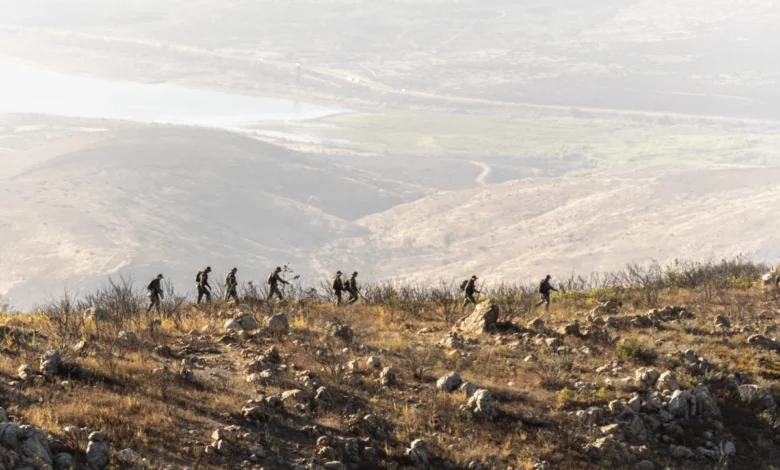
She had only walked for a couple of hours, and already she was lost. On the afternoon of September 14, 2025, 30-year-old Graciela Gómez Hernández crossed the border from the eastern edge of Tijuana into the rugged expanse of Southern California. With her three children and aging parents in southern Mexico depending on her to secure a livelihood, she had embarked on a journey she kept secret until the final hours. By the time a forensic crew recovered her remains two weeks later, the harsh realities of the Otay Mountain Wilderness had reduced her to a site of tragic, solitary discovery.
The circumstances of Gómez Hernández’s death are not an isolated anomaly but rather a harrowing example of a systemic failure within one of the most heavily surveilled environments on the planet. Her journey, which she navigated by voice messages sent to her sister, Irma, ended within a mile of a multi-million-dollar, AI-enabled surveillance tower. While the U.S. government has invested over a billion dollars in a "smart" border wall—a sprawling network of electro-optical cameras, infrared sensors, and autonomous detection systems—migrants continue to perish in plain sight, often within the very range of technology designed to intercept them.

A Chronology of a Final Journey
Gómez Hernández’s decision to cross was born of acute financial desperation. Her husband, who had previously migrated to find work, had ceased sending remittances, leaving her family unable to afford basic necessities. Her 11-year-old son’s simple wish for a bicycle underscored the modest, human scale of her ambitions.
On September 14, 2025, she initiated her crossing. She did not use a professional guide for the entire trek; instead, she paid 20,000 pesos—roughly $1,150—for the coordinates and instructions on where to traverse. Her phone was tasked with pinging her location to smugglers based in Tijuana.
The timeline of her final hours is preserved in the digital trail of her WhatsApp messages. By 2:00 p.m., she was already experiencing the onset of exhaustion. "I can’t do it anymore," she whispered to her mother. At 4:00 p.m., the final location ping was transmitted. According to her sister, Gómez Hernández encountered another individual on the trail who remarked that there was "no time," a chilling indication of the pressure migrants face to move quickly to avoid detection. By late afternoon, the messages stopped.

The Myth of Total Visibility
The border region of San Diego is blanketed by a sophisticated, interconnected surveillance apparatus. According to the Electronic Frontier Foundation, more than 120 towers stand along the California border alone. These structures, manufactured by defense contractors such as General Dynamics and Anduril, feature long-range cameras capable of tracking movement from up to seven miles away.
Despite this, the human cost remains staggering. An investigation by the Times of San Diego and MIT Technology Review identified at least 138 cases over the past four years where human remains were discovered within the nominal range of these surveillance installations. A topographical analysis suggests that in at least 81 of those cases, the victims were in an area with a clear line of sight to a camera, unblocked by mountains or foliage.
This discrepancy raises a fundamental question: Is the technology failing, or is the human response to it insufficient?

In October 2024, an internal memo leaked to NBC News revealed that approximately 30% of older, legacy surveillance towers were non-operational, with many suffering from outdated components or missing parts. While the government has since initiated efforts to retrofit these towers with modern, AI-enhanced systems, the technical and logistical hurdles remain significant. Military reports from early 2026 noted that even newer, combat-grade surveillance units in the Otay Mountain Wilderness have struggled with maintenance issues, including battery depletion, rodent damage, and camera malfunctions caused by vibration during transport.
The Human Cost of Strategic Deterrence
Border Patrol officials have long argued that the presence of surveillance technology acts as a deterrent. However, critics and search-and-rescue volunteers argue that this deterrence has merely pushed migration into more extreme, dangerous, and remote terrain.
"People are crossing through areas that are further out and more extreme, where we have very little hope of finding them in a search," explains Rafael Hernández Larraenza, leader of the Desert Angels search group.

Furthermore, the technology itself may be influencing the pace of migration. Bryce Peterson, a researcher with the advocacy group No More Deaths, notes that migrants are increasingly aware of the 15-minute response window for border agents. Consequently, they often run or move at unsustainable speeds, skipping critical hydration and rest to reach "safe-ish" zones before they are detected. This high-speed, high-stress traversal directly contributes to the deaths of those who succumb to heatstroke or hypothermia.
There is also the question of operational priorities. When agents are alerted to a single individual, they may choose not to intervene, opting instead to wait for larger groups to maximize the efficiency of their patrols. "They want to be able to catch a whole group of people," Peterson says. This tactical prioritization leaves vulnerable, isolated individuals like Gómez Hernández to die in the wilderness, effectively invisible to those who are technically "watching" them.
Official Stance and Accountability
The defense contractors behind these systems maintain that their technology is effective. Anduril, for instance, has claimed its autonomous systems have "directly contributed to saving lives." Yet, these companies rarely address the performance of their towers in the specific, mountainous conditions where most deaths occur.

The Border Patrol has remained largely silent on the specifics of individual cases, such as that of Gómez Hernández. When questioned, representatives often refer inquiries to standard procedure, which does not explicitly account for how surveillance is utilized for emergency medical intervention.
The Government Accountability Office (GAO) recently confirmed that the United States plans to expand this network to 2,300 towers by 2034, at an estimated cost of $1.4 billion. The rhetoric from government officials, such as border czar Tom Homan, frames this as a "smart system" that makes agents more effective. However, for the families of the deceased, the effectiveness of the system is measured not in interdictions, but in the failure to prevent avoidable loss of life.
A Legacy of Loss
For the family of Graciela Gómez Hernández, the technical explanations for why she was not saved provide little comfort. Her remains were eventually recovered after her sister forced the issue with the smugglers and, subsequently, provided the coordinates to the Armadillos search group.

The medical examiner’s report, which documented her skeletal remains, offered a final, haunting inventory: a purple bra, a black floral shirt, and, in her pockets, a few coins and bobby pins. No water, no food, and no hope.
Her sister, Irma, now cares for Graciela’s children, shielding them from the full extent of the tragedy. Every day, volunteers like Cesar Ortigoza continue to receive calls from families searching for missing loved ones, a testament to the persistent nature of the humanitarian crisis. As the government continues to build more towers, the landscape of the Otay Mountain Wilderness remains a place where the gaze of technology and the reality of human suffering are perpetually at odds.
The cross now standing at the site of Gómez Hernández’s death serves as a stark reminder of the limitations of modern security infrastructure. In the silence of the mountains, the cameras continue to rotate, scanning the dust for movement, while the families of those lost to the borderlands continue to wait for answers that the machines were never programmed to provide.
Related posts: