Bridging the Gap: How to Measure Social Media Performance and Business Impact with Google Analytics 4

In the modern digital economy, the disconnect between social media vanity metrics—such as likes, shares, and follower counts—and actual business revenue remains a significant hurdle for marketing departments. While native social media analytics tools provide a granular view of how content performs within a specific platform’s walled garden, they frequently fail to account for what happens once a user clicks through to a company’s website. To effectively translate social media engagement into tangible business outcomes, organizations must integrate external tracking mechanisms, most notably Google Analytics 4 (GA4).
According to the 2025 Impact of Social Media Marketing report, only 44% of marketing leaders consider their teams experts in measuring the business impact of social media. This data suggests a systemic shortfall in attribution modeling. Despite this, social media remains a critical engine for acquisition, accounting for 10.12% of global web traffic, a figure that surges to 15.23% in highly digital-mature markets like the United States. For organizations to justify social media expenditures, they must move beyond platform-specific insights and adopt a holistic, data-driven approach to tracking the customer journey from social click to final conversion.
The Evolution of Social Attribution
The historical struggle to attribute social media success to the bottom line stems from the siloed nature of digital ecosystems. In the early 2010s, social media was primarily viewed as a brand-awareness vehicle, separate from direct-response marketing. However, as consumer habits have shifted toward social-first product discovery, the pressure on social media managers to demonstrate return on investment (ROI) has intensified.
The 2025 Sprout Social Index highlights that 65% of marketing executives identify the alignment of social metrics with broader business goals as the primary requirement for securing increased budget allocation. This shift represents a maturation of the discipline; social media is no longer an ancillary channel but a primary driver of the sales funnel. By connecting GA4 with social media efforts, businesses can finally close the loop, mapping social interactions to lead generation, product purchases, and long-term customer lifetime value.
Dissecting Traffic: Organic versus Paid Dynamics
A fundamental component of accurate reporting in GA4 is the differentiation between organic and paid traffic. GA4 utilizes a complex set of rules to categorize these sources, which is essential for determining which strategies yield the highest quality traffic.

Organic social media traffic consists of users arriving at a website via non-paid links. GA4 identifies this by matching the referral source against a predetermined list of social platforms, or by detecting specific URL parameters indicating a social medium. In contrast, paid social traffic requires explicit tagging. When a brand runs sponsored campaigns, the medium must be identified via UTM parameters or automated tagging to trigger GA4’s "Paid Social" classification.
This distinction is vital for financial forecasting. Without clear segmentation, a brand may mistakenly attribute a spike in traffic to a successful organic viral post, when in reality, the surge was driven by a paid advertisement. Misinterpreting these sources leads to flawed strategy adjustments, potentially wasting budget on underperforming organic tactics while starving high-performing paid channels.
The Role of UTM Parameters in Precision Tracking
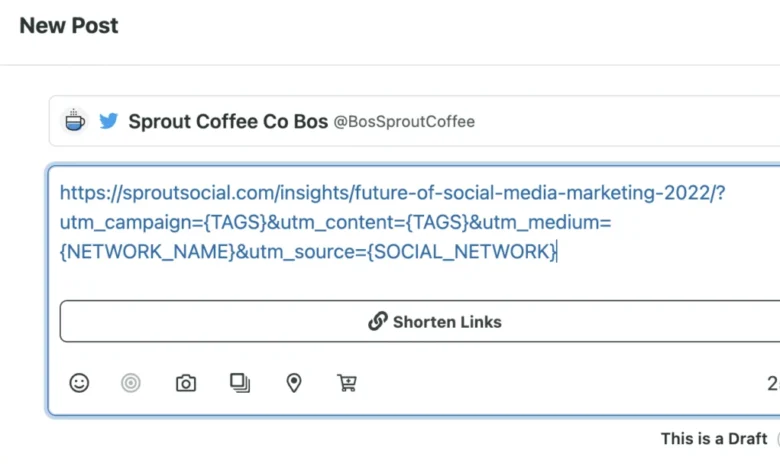
Universal Tracking Modules (UTMs) serve as the connective tissue between social media posts and web analytics. By appending specific parameters—such as source, medium, campaign, and content—to a URL, marketers gain the ability to trace a single visitor back to the exact post that prompted their action.
However, the manual implementation of UTMs is prone to human error. Inconsistent naming conventions (e.g., "Facebook" vs. "fb" vs. "facebook") can lead to fragmented data, rendering reports unreliable. Modern industry practice involves utilizing automated URL shorteners and management platforms to ensure that UTM structures remain standardized across an entire organization. This standardization is not merely administrative; it is a prerequisite for accurate data aggregation and long-term trend analysis.
Identifying Key Performance Metrics in GA4
To move beyond vanity metrics, teams should prioritize four specific data points within GA4 that correlate with business success:
- Demographics: By analyzing the location, age, and language of social visitors, brands can verify if their social media content is actually reaching their intended buyer persona. If a high volume of traffic from an irrelevant demographic is reaching the site, the social strategy must be recalibrated.
- Session Source/Medium: This metric identifies which social platforms are the most efficient at driving traffic. It allows for a comparative analysis, enabling teams to reallocate resources toward the platforms that deliver the highest conversion rates rather than just the highest number of clicks.
- Engaged Sessions: This GA4 metric tracks visits that last longer than 10 seconds, include a conversion event, or involve viewing two or more pages. This filters out "bounce" traffic, focusing the analysis on users who show genuine interest in the brand.
- Average Engagement Time: This measures the depth of the user’s interaction. A high click-through rate from social media followed by a low average engagement time on the website indicates a "clickbait" issue, where the content on the site fails to fulfill the promise made in the social post.
Measuring Conversions and ROI via Key Events
The transition from GA4’s previous "conversion" model to the "key event" model emphasizes the importance of tracking specific, valuable user actions. A key event could be anything from a newsletter signup or a whitepaper download to an actual e-commerce purchase.

To accurately measure ROI, organizations must define which of these events represent a "success." The implementation process involves ensuring that tracking tags—such as the "sign_up" or "purchase" event—are correctly fired within the GA4 property. Once these events are marked as "key," they become the primary focus of performance reports. This enables stakeholders to visualize the exact funnel path from a social media referral to a revenue-generating event.
Implications for Future Marketing Strategy
The ability to map social performance to business outcomes is more than a technical task; it is a strategic imperative. Organizations that fail to master this integration risk operating in a state of data blindness. As privacy regulations tighten and third-party cookies face obsolescence, first-party data collected through platforms like GA4 becomes the most valuable asset a brand possesses.
The future of social media marketing lies in the integration of cross-platform intelligence. By utilizing GA4 as the single source of truth, brands can move away from fragmented, platform-specific reports and toward a unified view of the customer. This level of insight allows for more agile decision-making, enabling teams to pivot their social strategies in real-time based on actual financial performance.
For the modern marketer, the challenge is no longer just about generating engagement; it is about proving the commercial utility of that engagement. By adopting a rigorous, systematic approach to Google Analytics and social media tracking, organizations can secure the executive buy-in necessary to treat social media not as an experimental channel, but as a core pillar of the business’s growth architecture. This shift requires both technical proficiency and a cultural commitment to accountability, ensuring that every post serves a broader organizational purpose. As tools continue to evolve, those who prioritize the alignment of social data with business outcomes will undoubtedly maintain a competitive advantage in an increasingly crowded digital marketplace.