OmniVoice Studio Emerges as a Local-First Open-Source Alternative to ElevenLabs with Support for Over 600 Languages

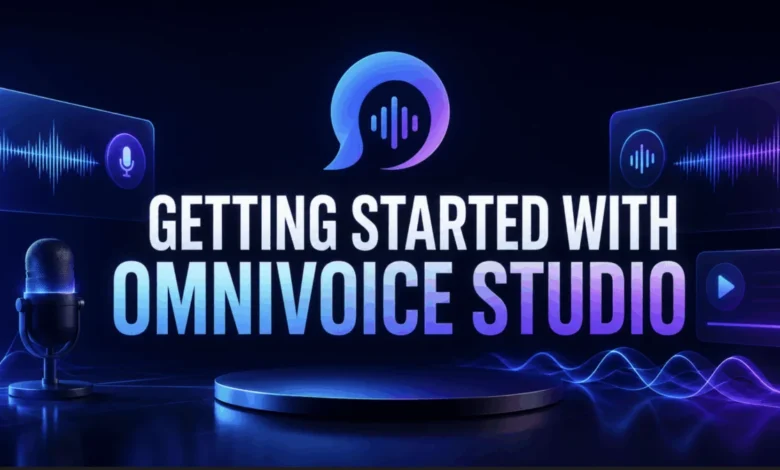
The landscape of artificial intelligence-driven voice synthesis is undergoing a significant shift toward local execution, as evidenced by the rapid rise of OmniVoice Studio. Positioned as a direct, open-source competitor to cloud-based industry leaders like ElevenLabs, OmniVoice Studio provides a comprehensive suite of tools—including voice cloning, video dubbing, and real-time dictation—all running entirely on the user’s local hardware. This development comes at a time when concerns regarding data privacy and the rising costs of Software-as-a-Service (SaaS) models are prompting developers and content creators to seek "sovereign" AI solutions. Released in its latest iteration, version 0.2.7, on May 3, 2026, the project has quickly gained momentum within the developer community, amassing over 7,100 stars and 1,100 forks on GitHub.
The Decentralization of Voice AI
For the past several years, the high-fidelity voice synthesis market has been dominated by cloud-native platforms. While these services offer impressive quality, they operate under a "pay-per-character" model that can become prohibitively expensive for large-scale projects. Furthermore, the requirement to upload proprietary scripts and reference audio to external servers has created a barrier for industries handling sensitive information, such as legal, medical, and corporate sectors.
OmniVoice Studio addresses these friction points by eliminating the need for API keys, subscriptions, and cloud-based inference. By leveraging the user’s local GPU or CPU, the application ensures that audio files, reference clips, and scripts never leave the machine. This "local-first" approach is not merely a privacy feature but a fundamental architectural choice that allows for unlimited usage without the constraints of a character counter or monthly billing cycles.
Technical Architecture and Performance
The technical foundation of OmniVoice Studio is a sophisticated blend of high-performance frameworks and specialized AI models. The application is built using Tauri, a Rust-based framework that offers a more secure and resource-efficient alternative to the traditional Electron shell. This frontend is paired with a React interface and a FastAPI backend featuring 97 distinct API endpoints, with persistent state management handled by SQLite.
The AI pipeline is modular, utilizing four primary open-source components:
- WhisperX: An optimized version of OpenAI’s Whisper, used for high-accuracy speech-to-text and precise word-level timestamping.
- Pyannote: A speaker diarization library that identifies and separates different voices within a single audio stream.
- OmniVoice (k2-fsa): A diffusion-based text-to-speech (TTS) system capable of zero-shot voice cloning.
- Demucs: A deep learning model designed for music source separation, which in this context allows the app to isolate vocals from background noise or music during the dubbing process.
A key differentiator for OmniVoice Studio is its hardware flexibility. The software features an auto-detection engine that routes workloads based on the available hardware. It supports NVIDIA’s CUDA for high-end Windows and Linux machines, Apple’s Metal Performance Shaders (MPS) and MLX for M-series MacBooks, and AMD’s ROCm. For users without dedicated graphics hardware, the system automatically offloads tasks to the CPU, ensuring that the software remains accessible even on lower-specification laptops, albeit at reduced processing speeds.
Comparison with Industry Standards
While ElevenLabs currently supports 32 languages, OmniVoice Studio’s integration of the k2-fsa model allows it to support a staggering 646 languages. This vast linguistic coverage makes the tool particularly valuable for global educational initiatives, non-governmental organizations (NGOs), and researchers working with underrepresented or marginalized dialects.
In terms of features, the application bridges the gap between basic TTS and professional post-production. While cloud services often limit voice design to age and gender, OmniVoice Studio includes granular controls for accent, pitch, speed, emotion, and specific dialects. Its video dubbing pipeline is perhaps its most complex feature: it can take a YouTube URL or local file, transcribe the original dialogue, translate it, clone the original speaker’s voice, and then re-integrate the dubbed audio with the original background music and sound effects—all in a single automated workflow.
Installation and System Requirements
As an active beta project, OmniVoice Studio requires a baseline of technical proficiency for installation, though the developers have released pre-built installers for major operating systems. The recommended specifications for a seamless experience include 16 GB of RAM and at least 8 GB of VRAM (such as an NVIDIA RTX 3060 or better).
Operating System Support and Dependencies
- macOS: Requires macOS 12 or higher. Users must install Python 3.11, Bun (for frontend dependencies), and FFmpeg via Homebrew. The application is optimized for Apple Silicon, utilizing the Apple Neural Engine to achieve throughput nearly double that of standard CPU paths.
- Windows: Requires Windows 10 (21H2) or higher. Installation involves Microsoft C++ Build Tools and Python 3.11. A notable "Performance" toggle in the settings allows Windows users with lower VRAM to disable
torch.compile, preventing Out-Of-Memory (OOM) errors during the first synthesis run. - Linux: Optimized for Debian/Ubuntu and Fedora. The installation requires various GTK and WebKit dependencies to support the Tauri shell.
The project also offers a Docker-based deployment for the backend only. This allows organizations to run the OmniVoice API on a centralized local server, enabling multiple team members to access the synthesis capabilities through their own tools without needing the full desktop GUI.
Strategic Integrations: The MCP Server
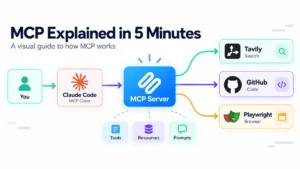
In a move toward broader ecosystem compatibility, OmniVoice Studio has implemented a Model Context Protocol (MCP) server. This allows the application to act as a tool for other AI clients, such as Claude Desktop or Cursor. By connecting to the local MCP server, users can command their AI coding assistants or chat interfaces to generate voice clips or dub videos using OmniVoice’s local engine.
This integration represents a significant step toward "agentic" workflows, where a primary AI can utilize specialized local tools to perform complex multi-modal tasks. For instance, a developer could ask an AI assistant to "Read this documentation in a professional voice and save it as an MP3," and the assistant would handle the communication with the OmniVoice backend to produce the file locally.
Chronology of Development
The journey of OmniVoice Studio reflects the broader trend of rapid open-source iteration:
- Initial Concept: Developed as a response to the "black box" nature of cloud-based voice synthesis.
- GitHub Launch: The project saw a surge in interest in early 2026, quickly crossing the 5,000-star threshold as users looked for ElevenLabs alternatives.
- Version 0.2.0: Introduced the multi-language dubbing pipeline and WhisperX integration.
- Version 0.2.7 (May 3, 2026): The current stable beta, which added refined Apple Silicon optimizations and the MCP server functionality.
While no official statement from ElevenLabs has been issued regarding the rise of local competitors, industry analysts suggest that the pressure from open-source projects like OmniVoice Studio is forcing cloud providers to innovate more rapidly in "expressive" AI and emotional prosody—areas where cloud-scale compute still holds a slight edge over consumer-grade local hardware.
Broader Impact and Implications
The emergence of OmniVoice Studio carries significant implications for the future of digital content. For independent creators, it democratizes high-end production values that were previously locked behind subscription paywalls. For the global community, the 646-language support provides a vital tool for preservation and accessibility.
However, the ease of local voice cloning also raises ethical and security concerns. Unlike cloud platforms that can implement centralized moderation and "voice-printing" to prevent deepfakes of public figures, local-first tools offer no such oversight. The developers of OmniVoice Studio emphasize that the tool is intended for personal and professional use where the user owns the rights to the audio, but the decentralized nature of the software means that ethical usage is ultimately at the discretion of the end-user.
As the project moves toward its version 0.4 release—which is expected to include signed and notarized installers for macOS and Windows to bypass Gatekeeper and SmartScreen warnings—it stands as a testament to the power of the open-source community. By providing a professional-grade AI desktop application that "never phones home," OmniVoice Studio is not just a tool for voice synthesis; it is a blueprint for the next generation of private, powerful, and accessible artificial intelligence.