Venture Capital Titan Neil Rimer Predicts Inevitable Wealth Redistribution Amidst AI Boom, Urging Voluntary Action


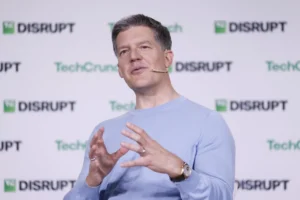
In late May, Neil Rimer, a co-founder of the highly successful venture capital firm Index Ventures, delivered a stark message during an interview in Athens that has resonated deeply within the tech and finance communities. Speaking at the vibrant new Panathenea tech festival in the Greek capital, Rimer addressed the unprecedented accumulation of wealth fueled by advancements in Artificial Intelligence (AI). He articulated a strong conviction that "there will be some sort of a redistribution" of this burgeoning wealth. Emphasizing the binary nature of this impending shift, he continued, "It’ll either be voluntary or it’ll be involuntary, but it’ll happen, and I hope it’s voluntary," adding his belief that tech leaders "can play a leading role in seeing that through."
This statement, while potentially sounding like conventional populist rhetoric from many, carries significant weight given its source. Rimer, a pivotal figure in one of the most successful venture firms of the past three decades, rarely makes such publicly provocative declarations. His perspective offers a unique blend of insider knowledge regarding tech’s financial trajectory and a growing concern for its broader societal implications.
The Architect of Index Ventures: A Legacy of Success
Neil Rimer’s career is synonymous with the meteoric rise of Index Ventures. Co-founded by Rimer, his brother Danny, and Giuseppe Zocco, Index Ventures has established itself as a global powerhouse in the venture capital landscape. Since its inception, the firm has raised approximately $15 billion from external investors, cultivating a portfolio that has yielded exceptional returns, particularly in recent years. In 2023 alone, major exits included the successful IPO of Figma and Google’s acquisition of the cybersecurity firm Wiz, which reportedly netted Index Ventures an estimated $9 billion. These figures underscore the firm’s strategic acumen and its profound influence on the tech ecosystem, directly contributing to the very wealth accumulation Rimer now discusses.
Rimer himself transitioned from day-to-day investing in 2021, shifting his focus towards more strategic advisory roles and philanthropic endeavors. He now spends a significant portion of his time in Athens, a city with personal ties through his wife and children, who treasure their Greek passports. This personal detachment from the daily grind of deal-making may afford him a more reflective vantage point on the industry’s trajectory. Despite his immense success and influence, Rimer reportedly maintains a modest personal style, often appearing in a rumpled button-down and jeans, a contrast to the quarter-zips and fine knitwear typically favored by many of his peers.
Beyond his direct financial contributions, Rimer has actively engaged in giving back. He serves on the board of Endeavor Greece, an organization dedicated to mentoring entrepreneurs in emerging markets, fostering local innovation and economic growth. From 2019 to 2025, he also chaired the board of Human Rights Watch, a global non-governmental organization that conducts research and advocacy on human rights. In late 2021, Rimer, along with his father and two brothers, made a substantial $13 million donation to McGill University. This generous contribution facilitated the renovation of a campus building, now proudly named the Rimer Building, and established a new Institute for Indigenous Research and Knowledges, reflecting a commitment to cultural preservation and academic advancement.
A Declining Culture of Philanthropy Amidst Soaring Wealth
Rimer’s call for voluntary redistribution comes at a particularly challenging juncture for philanthropy. Data suggests a troubling trend of declining charitable engagement, particularly among the ultra-wealthy, even as their fortunes reach unprecedented heights.
The Retreat from the Giving Pledge:
Launched in 2010 by Warren Buffett and Bill Gates, The Giving Pledge aimed to encourage billionaires to commit at least half of their fortunes to charitable causes during their lifetimes or in their wills. Initially, the initiative garnered significant traction, with 113 families signing on in its first five years, signaling a promising era for high-net-worth philanthropy. However, its relevance has markedly diminished over time. A March 2023 report by The New York Times highlighted this decline, noting that only 72 families joined in the subsequent five-year period, followed by just 43, and a mere four in all of 2024. This trend signals a growing disinterest or perhaps even a philosophical shift among some of the world’s wealthiest individuals regarding traditional philanthropy. The report famously quoted Elon Musk, the world’s wealthiest person, stating that his businesses "are philanthropy," a sentiment that redefines the concept of giving by equating wealth creation and job generation with charitable acts, rather than direct financial donations.
Broader Trends in American Giving:
The decline is not isolated to the billionaire class. While total American charitable giving reached a record $592.5 billion in 2024, an impressive nominal figure, the underlying participation rate tells a different story. According to the Stanford Social Innovation Review, the number of Americans actively donating has fallen for five consecutive years, decreasing by 4.5% in 2024 alone. The proportion of households donating has shrunk significantly, from two-thirds in 2000 to roughly half today. This indicates a worrying trend where a larger share of total giving is coming from a smaller segment of the population. Even among affluent households, a demographic historically reliable for charitable contributions, giving has slipped from 90% in 2017 to 81% last year, as per data from Bank of America and the Lilly Family School. This widespread disengagement from grassroots and high-net-worth philanthropy creates a vacuum that amplifies the urgency of Rimer’s message and raises questions about the future of civil society funding.
The Anthropic Paradox: Philanthropy in the AI Boom:
The phenomenon of shifting philanthropic priorities even surfaces within Index Ventures’ own portfolio, specifically with AI frontier company Anthropic. Business Insider recently explored the philanthropic intentions of newly wealthy clients, many of whom are Anthropic employees with ties to the "effective altruism" movement – a philosophical and social movement advocating for the use of evidence and reason to determine the most effective ways to benefit others. Anthropic itself facilitates giving by matching employee donations of up to 25% of their equity to charity. Yet, financial planner Alex Caswell observed that while some clients utilized this matching program, the majority were not integrating significant philanthropy into their long-term financial plans. Instead, their focus leaned towards angel investing or launching new ventures, indicating a preference for wealth generation and entrepreneurial impact over direct charitable redistribution. "That’s what I’m seeing more than the desire to become philanthropic," Caswell told the outlet, underscoring a prevailing mindset within the burgeoning AI wealth class that prioritizes reinvestment and economic expansion over traditional charity.
The Involuntary Path: Legislative and Structural Responses
The perceived absence of robust voluntary giving is inevitably colliding with increased governmental and public pressure for alternative forms of wealth redistribution. As Rimer suggested, if the voluntary path is not chosen, the involuntary one often follows, potentially through legislative or structural mandates.
California’s Proposed Wealth Tax:
In a significant move reflecting this shift, California voters are set to decide this year on a controversial 5% one-time wealth tax. This proposal specifically targets the state’s billionaires, aiming to address the escalating wealth disparity and fund crucial public services like education, infrastructure, or social programs. The mere prospect of such a tax has already spurred preemptive actions among some of the state’s wealthiest residents. Notable figures, including Google co-founders Sergey Brin and Larry Page, have reportedly relocated their primary residences to South Florida, a state without a similar wealth tax, illustrating the lengths to which some are willing to go to mitigate potential tax liabilities. This "billionaire exodus" highlights the challenges of implementing such policies in a mobile global economy.
The proposed tax could also influence major corporate decisions. OpenAI, one of the leading AI developers, is reportedly considering an initial public offering (IPO) in 2027. Cynical observers suggest that one potential, albeit unconfirmed, reason for this timing could be linked to the California wealth tax. If passed, the tax would calculate net worth based on an individual’s worldwide assets as of the end of the current calendar year. An earlier IPO could establish valuations that would then be subject to the tax, whereas a later one might allow for strategic planning around its implementation or avoidance, potentially delaying the creation of taxable wealth for its founders and early investors.
Unsurprisingly, the concept of a wealth tax of this magnitude faces considerable opposition. California Governor Gavin Newsom has voiced concerns, and economists widely caution against such measures. Many industrialized countries, including France, Germany, and Sweden, have repealed similar wealth taxes since the 1990s after observing capital flight and administrative complexities in valuation and collection. Critics argue that such taxes can disincentivize investment, encourage wealth migration, and prove challenging to implement fairly and efficiently, potentially leading to unintended negative economic consequences. Proponents, however, argue that in an era of extreme wealth concentration, such measures are necessary to ensure social equity and adequately fund public services.
OpenAI’s Equity Proposal to the Government:
Beyond direct taxation, other contentious ideas for wealth distribution are emerging. OpenAI has reportedly engaged in discussions about offering the U.S. federal government a 5% equity stake in the company. CEO Sam Altman has framed this proposal as a mechanism to "share AI’s upside with the public," suggesting a proactive approach to ensure that the economic benefits of advanced AI are broadly distributed to citizens. However, this idea has met with skepticism from critics who view it as a strategic move to "buy political cover" in Washington, D.C., rather than a genuine philanthropic gesture. Such a move could potentially grant OpenAI a favorable position with regulators and policymakers, mitigating future legislative or antitrust scrutiny, particularly given the growing concerns about AI’s power and societal impact.
The prospect of government ownership, even a minority stake, in a leading tech enterprise is highly unusual and raises significant questions about corporate independence and governmental influence. Silicon Valley, historically wary of government intervention, has rarely welcomed Uncle Sam onto its cap tables. Veteran investor Roelof Botha of Sequoia Capital captured this sentiment in a recent interview, quipping, "[Some] of the most dangerous words in the world are: ‘I’m from the government, and I’m here to help.’" This remark encapsulates the prevailing libertarian ethos within much of the tech industry, which often views government involvement as an impediment to innovation and free-market principles.
The Unprecedented Scale of Modern Wealth Concentration
The debate over wealth redistribution is set against a backdrop of truly staggering wealth concentration, particularly in the burgeoning AI sector, which has rapidly become a primary engine of new fortunes.
The Rise of Trillionaires and AI Billionaires:
Last month, Elon Musk achieved a historic milestone, becoming the world’s first person with a net worth exceeding $1 trillion following SpaceX’s IPO. This unprecedented personal fortune underscores the immense scale of wealth being generated in cutting-edge industries. The 2026 Forbes rankings further illustrate this trend, identifying 45 new AI billionaires with a combined net worth of $2.9 trillion, and this is before major players like Anthropic and OpenAI have even gone public. When these companies eventually list, the wealth generation will undoubtedly accelerate further, creating even more billionaires and potentially, the next trillionaires.
The local impact of this wealth is already palpable. A Business Insider report concerning Anthropic employees noted that once Anthropic and OpenAI complete their IPOs, their combined workforce would hold enough wealth to purchase nearly a third of all homes in the San Francisco metropolitan area. This vivid illustration highlights how concentrated tech wealth can distort local economies and exacerbate existing inequalities, particularly in housing affordability, pushing out middle- and lower-income residents.
Historical Parallels and Divergences with the Gilded Age:
While the current situation "feels" unprecedented, whether it represents an absolute historical extreme is a subject of ongoing debate among economists. The share of wealth held by the top 1% of U.S. households reached 31.7% in the third quarter of last year, a record high since the Federal Reserve began tracking this data in 1989. This figure is roughly equivalent to the combined wealth held by the bottom 90% of households, indicating a profound level of disparity that has not been seen in decades.
However, this still falls short of the 45% commanded by the top 1% at the peak of the Gilded Age in 1916. Yet, when the lens is narrowed to the "tippy top" – the very wealthiest individuals – the picture shifts dramatically. Renowned economist Gabriel Zucman’s research reveals that around 1910, at the height of the first Gilded Age, America’s four largest fortunes were worth a combined 4% of U.S. GDP. Today, the equivalent sliver of the population, now comprising 19 households instead of four, holds an astonishing 14% of the national GDP. This comparison suggests that while overall top-1% wealth concentration might have been higher a century ago, the sheer magnitude and economic power concentrated in the hands of a tiny elite are arguably more extreme and potentially more destabilizing today, raising concerns about their influence on democracy and economic policy.
Echoes from the Past: Carnegie and Long
Rimer’s proposed dichotomy of voluntary or forced redistribution finds strong historical precedents in America’s past, particularly during periods of intense wealth concentration that bear striking resemblances to the present.
Andrew Carnegie and "The Gospel of Wealth":
In 1889, during the zenith of the first Gilded Age, industrialist Andrew Carnegie articulated a philosophy that would lay the groundwork for modern philanthropy. In his seminal essay, "The Gospel of Wealth," Carnegie argued that a rich man should consider his fortune a trust, to be actively distributed for the public good during his lifetime. He famously declared it a "disgrace to die wealthy." Carnegie’s philosophy advocated for systematic, large-scale philanthropy aimed at creating opportunities rather than simply doling out charity. He believed in funding institutions like libraries, universities, and research centers that could uplift society as a whole. This essay became the intellectual antecedent to initiatives like The Giving Pledge, embodying the voluntary path to redistribution, where the wealthy actively engage in improving society through their own means and vision, often through structured foundations and endowments.
Huey Long and the "Share Our Wealth" Movement:
Carnegie’s vision, however, did not indefinitely forestall the demand for more coercive measures. By the mid-1930s, amidst the devastating Great Depression and continued stark economic inequality, Louisiana Senator Huey Long galvanized a national following with his populist "Share Our Wealth" program. Long’s radical proposals included steep taxes on the rich, capped personal fortunes, and a guaranteed annual income for every American household, funded by confiscatory wealth taxes. His movement reflected a powerful public sentiment that voluntary giving was insufficient to address systemic economic injustices, and that more direct government intervention was required to alleviate widespread poverty and suffering.
Fearing the erosion of working-class support to Long’s burgeoning movement, President Franklin D. Roosevelt responded with what the press dubbed the "soak-the-rich tax." This legislative package significantly raised the top marginal income tax rate, reaching as high as 79% for the highest earners. While it did not achieve the wholesale redistribution Long envisioned, it stands as the clearest historical example in American history of politically forced redistribution being enacted when voluntary philanthropic efforts proved inadequate to alleviate underlying social and economic pressures. This period demonstrated that public frustration with extreme wealth concentration, when unaddressed by voluntary means, can lead to significant government intervention.
Rimer’s Moral Compass for Tech
For Neil Rimer, these historical lessons are not abstract academic points but deeply relevant insights for the contemporary tech industry, an arena he has navigated for decades. His primary concern now revolves around what he terms "the moral center of tech companies." This fascination, he recounts, originated during his time as a Stanford undergraduate in 1984, an era when Apple discounted the first Macintosh for students, and figures like Steve Jobs were "heroes" for creating technologies he genuinely believed were beneficial for the world. The early days of Silicon Valley were often characterized by a utopian vision of technology as a force for good, democratizing information and empowering individuals.
What troubles him today is a noticeable shift in perception. He expresses concern over hearing his own children discuss certain contemporary tech companies in a manner akin to how earlier generations spoke of defense contractors or cigarette manufacturers.
Related posts: