Scaling Human Expertise: How Enterprise AI is Redefining Operational Velocity for Global Organizations


Business leaders are currently confronting a familiar operational challenge at an unprecedented scale: the requirement to accelerate market responsiveness while simultaneously managing rising customer expectations and the relentless pace of technological advancement. As organizations strive to deliver superior results without proportional increases in headcount or resources, the integration of Artificial Intelligence has shifted from a peripheral experiment to a core strategic mandate. Within large-scale enterprises like Microsoft, the successful deployment of AI is no longer characterized by the automation of simple tasks, but by the systemic scaling of institutional judgment, strategic frameworks, and success metrics.
The Evolution of the Corporate Operating Model
The pressure to perform in an era of hyper-competition has forced a radical change in production cycles. At the enterprise level, product launch cadences have transitioned from quarterly events to weekly—and in some cases, daily—rhythms. This acceleration is not merely a product of increased activity but a fundamental shift in how organizations manage the flow of information. Recent internal data indicates that teams are now supporting a volume of launches that has increased by 150% year-over-year.
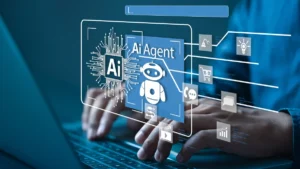
Historically, this volume would have necessitated a linear increase in personnel. However, the modern enterprise is utilizing AI agents—grounded in specific business knowledge and integrated into daily workflows—to maintain quality while significantly increasing output. By utilizing platforms such as Microsoft Foundry, organizations are now able to build, deploy, and manage AI applications that act as a force multiplier for human expertise.
Establishing the Data Foundation
A critical realization in the adoption of enterprise AI is the distinction between general-purpose models and domain-specific intelligence. While general-purpose AI is adept at content generation, it often lacks the nuanced context required for high-stakes business decision-making. Enterprise decisions rely on a complex ecosystem of documentation, workflows, business systems, and tacit institutional knowledge.
To bridge this gap, organizations are deploying frameworks like Microsoft IQ, which serves as a connective tissue between disparate data silos. By grounding AI agents in the same knowledge base that employees use daily, firms are enabling their teams to move beyond manual information retrieval. Instead of forcing staff to assemble fragmented data from emails, project management tools, and internal repositories, AI agents provide a unified source of truth. This shift fundamentally alters the role of the employee: rather than spending time gathering context, they spend time acting upon it.
Chronology of AI Integration and Scaling
The transition toward AI-driven operations within large organizations generally follows a three-phase trajectory:
- Foundational Grounding (Months 1–3): The initial phase focuses on data sanitation and the creation of a unified knowledge graph. Organizations identify the primary silos—such as marketing, product, and sales data—and integrate them into an AI-ready environment.
- Workflow Integration (Months 4–8): During this phase, AI agents are embedded directly into the tools where work is performed. This includes project management backlogs and content creation platforms, ensuring that AI is a "side-by-side" assistant rather than a standalone tool.
- Operational Scaling (Month 9 and beyond): Once an agent demonstrates value for a single team, its architecture is replicated across the enterprise. This creates a feedback loop where successful "AI skills" are shared, modified, and scaled across different departments.
Case Study: Standardizing Quality at Scale
One of the most significant bottlenecks in a high-velocity environment is the review process. When an organization publishes more than 200 blog posts annually, maintaining a consistent quality bar becomes an enormous burden on subject matter experts. Previously, these experts spent hundreds of hours applying the same rubric to draft after draft.
By digitizing these human-defined standards, companies have developed AI workflows that act as a "pre-flight" review. These agents do not replace the human reviewer; instead, they act as a filter that identifies gaps in logic, tone, or messaging before a human ever opens the document. In practice, this has resulted in the reclamation of over 2,000 work hours annually for a single department. The implication is profound: by automating the application of criteria, organizations ensure that human talent is reserved for tasks requiring complex judgment and strategic coaching.
Pressure-Testing Strategic Messaging
The acceleration of product cycles often creates a risk of "message drift," where the speed of communication outpaces the clarity of the value proposition. To mitigate this, organizations are increasingly turning to AI-driven simulation.
The use of AI Messaging Assistants (AMA) allows teams to simulate audience reactions by creating a "virtual congress of personas." These personas are based on historical customer conversations and real-time market data. Before a campaign is finalized, the messaging is evaluated against these personas to determine if it is actionable, relevant, and resonant. This approach shifts the culture from relying on internal, subjective opinions to validating communications against a data-driven model of the customer.
The Role of Systems over Individual Capabilities
Industry analysts have frequently noted that the transformational power of AI is not found in the technology itself, but in the systems that govern its deployment. Jay Parikh, a prominent voice in the tech sector, recently underscored that AI alone cannot transform a business; the system built around the AI is what drives sustainable change.
This perspective is supported by the observed results in organizational alignment. As teams struggle to keep up with shifting priorities and daily announcements, the manual effort of staying "in the loop" often becomes the primary impediment to productivity. By connecting planning backlogs and operational systems to AI agents, organizations are achieving a real-time state of alignment. Teams no longer need to wait for meetings or status reports to understand shifts in strategy; the information is pushed to them via their existing workflows.
Strategic Implications and Future Outlook
The implications for the broader labor market and organizational design are significant. The shift toward AI-assisted operations suggests a future where the definition of "productivity" is decoupled from the volume of tasks completed. Instead, value is increasingly defined by an individual’s ability to define the criteria, refine the strategy, and oversee the AI systems that scale those decisions.
While the technology will continue to evolve, the core requirement for leadership remains static. Leaders must provide the vision, define the ethical boundaries of AI usage, and ensure that the "human in the loop" remains empowered. The goal of this technological integration is not the reduction of the human element, but the expansion of its impact.
As enterprises continue to refine their AI agents, the focus will likely shift from internal efficiencies to external innovation. When the overhead of administrative coordination and basic quality assurance is managed by AI, the capacity for organizations to solve complex, novel problems increases. The successful companies of the next decade will not necessarily be those with the most advanced AI models, but those that have most effectively built the "system" required to scale the unique expertise of their people. By treating AI as an extension of institutional judgment rather than a replacement for it, businesses are positioning themselves to handle the accelerating velocity of the global economy without compromising the standards that define their success.