WordPress Market Share Slips Below 60 Percent as SaaS Competitors Gain Ground in 2026

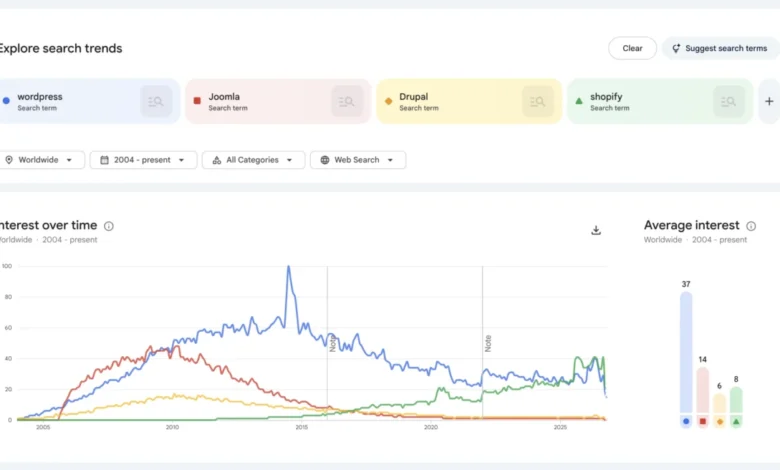
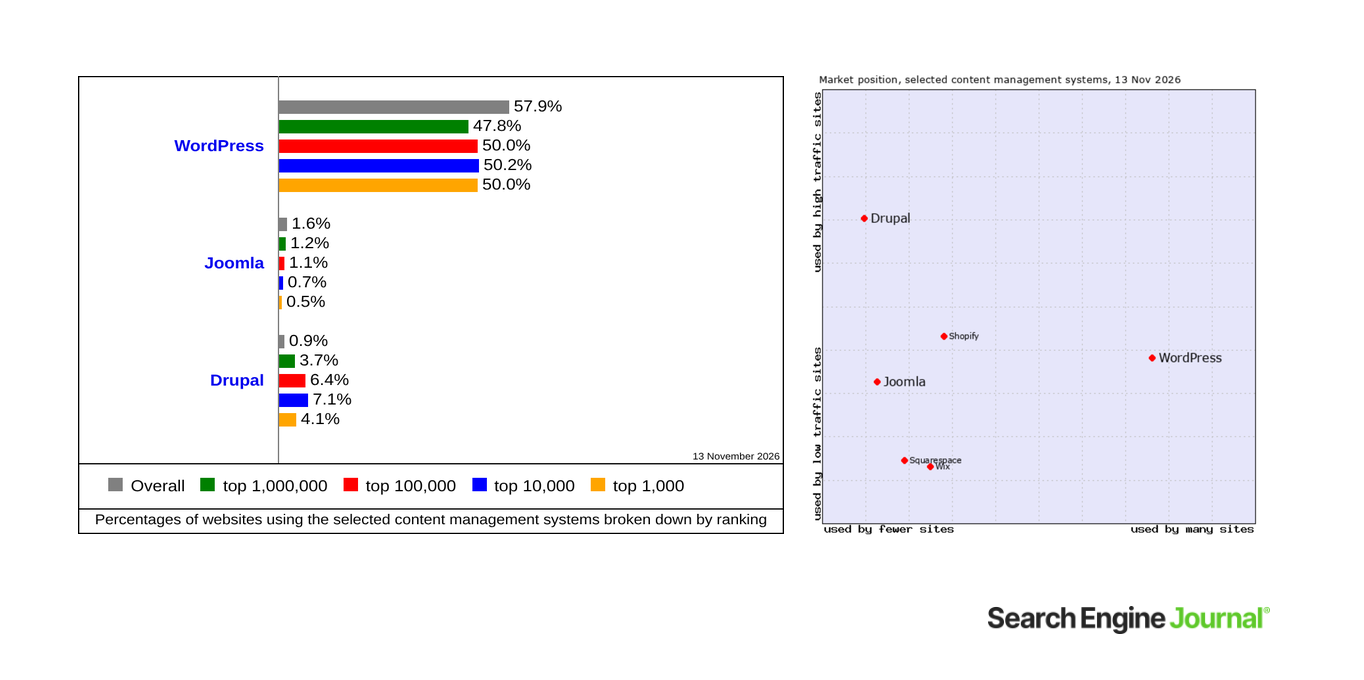
The global content management system (CMS) landscape is undergoing a notable structural shift as open-source giant WordPress experiences a steady erosion of its market dominance. According to tracking data released by W3Techs, WordPress’s overall market share among websites utilizing a known CMS has fallen to 57.9%, dipping below the 60% threshold for the first time since 2013. While the platform still maintains an overwhelming lead over its closest competitors, the steady rise of Software-as-a-Service (SaaS) website builders and dedicated e-commerce platforms points toward a maturing market where ease of use and reduced maintenance overhead increasingly dictate platform selection.

The broader implications of these metrics extend far beyond mere software preferences. With digital infrastructure underpinning modern enterprise visibility, shifts in CMS adoption directly impact search engine optimization (SEO) strategies, site architecture, and the allocation of corporate digital budgets. As businesses of all sizes reevaluate their technology stacks, industry analysts are closely monitoring whether this trend represents a temporary correction or a fundamental restructuring of how the web is built.
Historical Context and Chronology of the CMS Market
To understand the current positioning of WordPress, analysts often look back at its meteoric rise over the past decade and a half. Launching from a blog-centric background, WordPress expanded rapidly to power everything from small business portfolios to massive corporate portals. In January 2015, its usage across all surveyed websites stood at 23.3%, a figure that climbed steadily to a peak of 43.2% in January 2022, capturing roughly 65.2% of the known-CMS market.
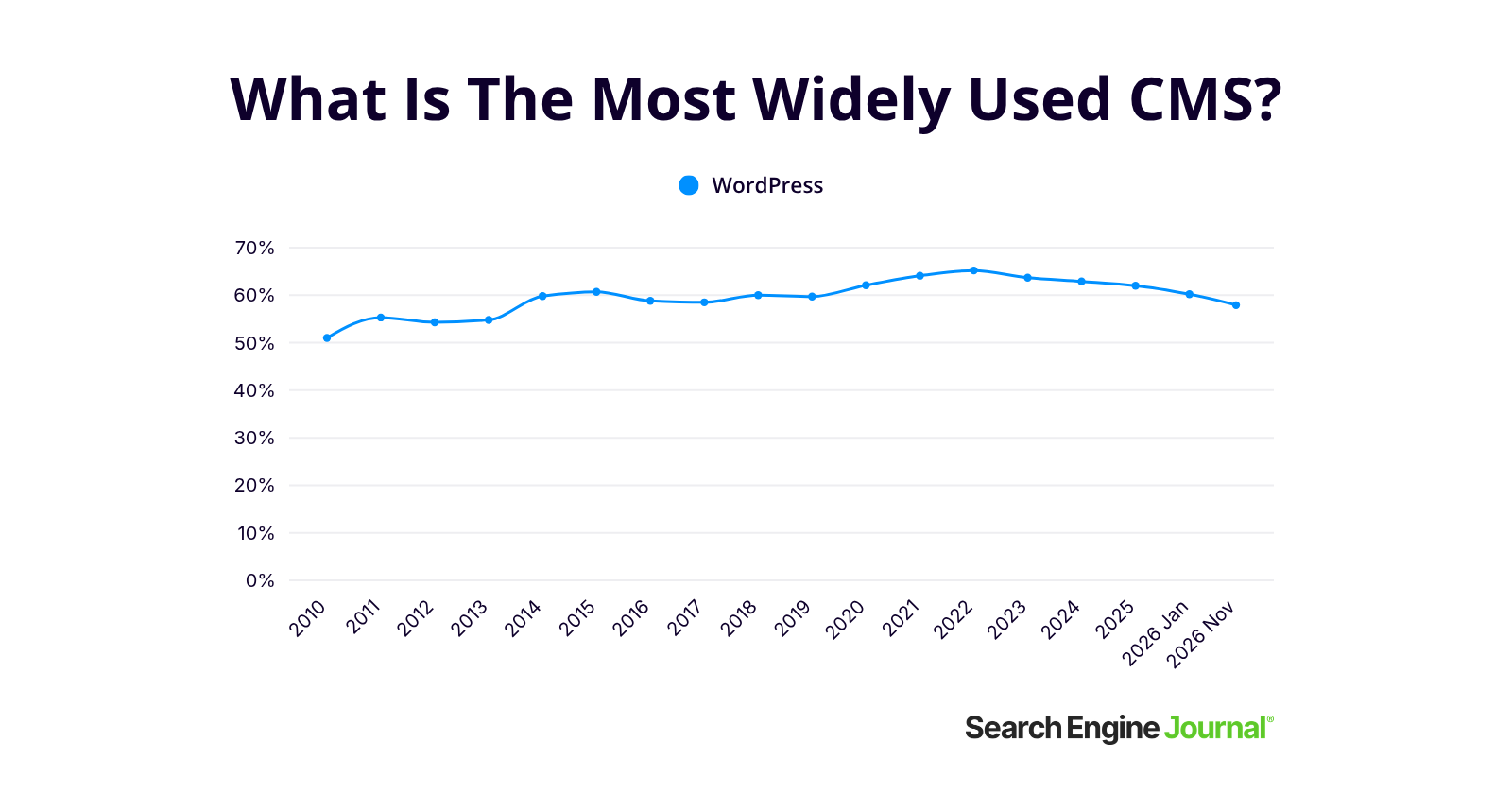
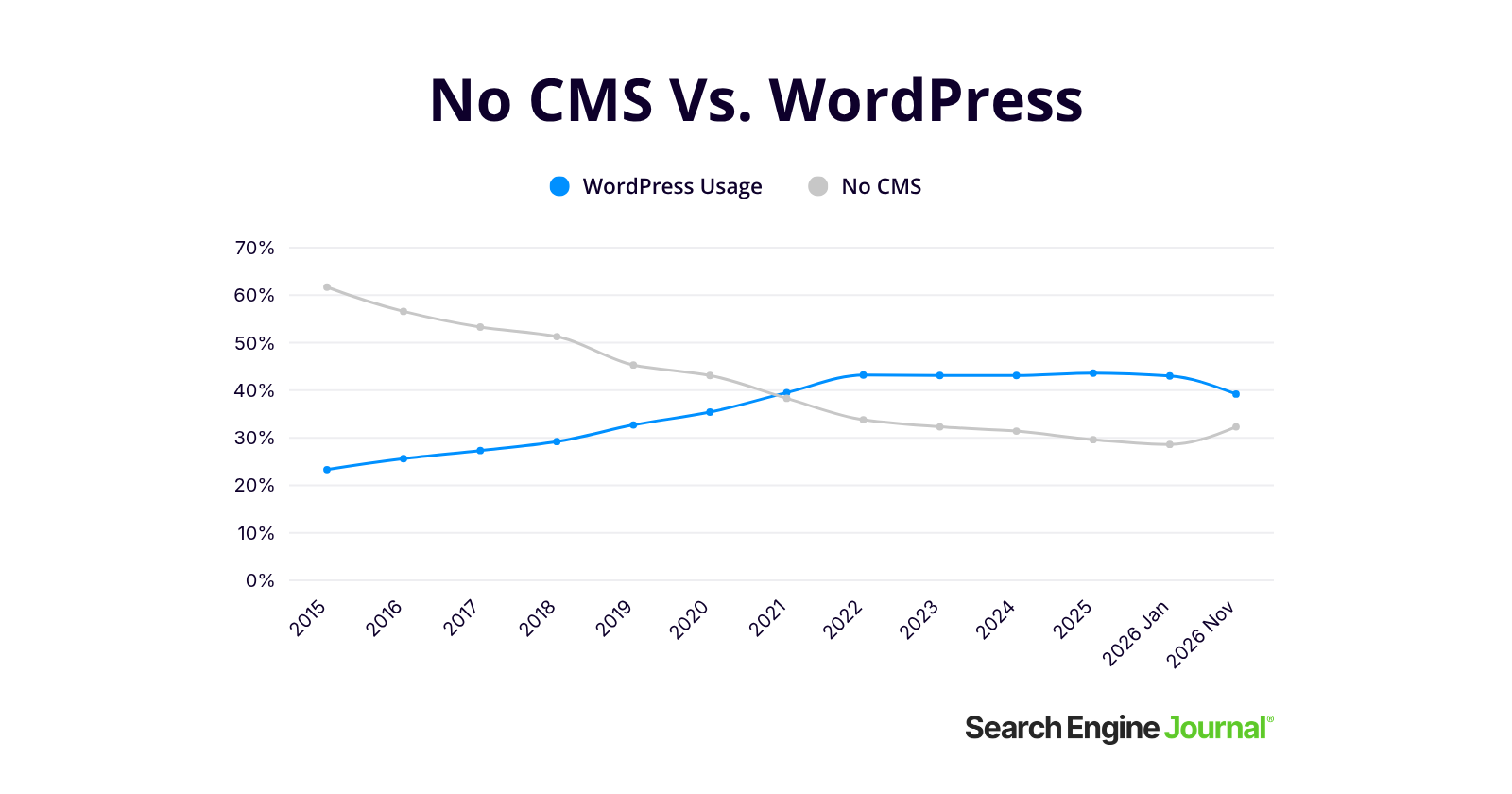
However, the post-pandemic digital landscape introduced new competitive pressures. Following its 2022 peak, WordPress began a slow, continuous descent. By the beginning of 2026, its known-CMS market share had slipped to 60.2%, before sliding further to the current 57.9% mark recorded in November 2026. Across all surveyed websites—including those utilizing no detectable CMS—WordPress usage contracted from 43.0% to 39.2% over the same period.
Concurrently, alternative platforms have chipped away at the margins. SaaS solutions such as Shopify, Wix, and Squarespace have capitalized on a growing demand for turnkey, low-maintenance digital solutions that eliminate the need for complex backend server management, manual security patches, and intricate plugin compatibility oversight.
Comprehensive Market Share Breakdown
Data compiled from W3Techs and Netcraft’s web server surveys illustrate a comprehensive picture of the current ecosystem. Out of an estimated 323 million active domains globally, roughly 67.7% utilize a recognized CMS, equating to an active market size of approximately 218.8 million websites.
The division of this vast digital real estate reveals stark contrasts between open-source legacy systems and modern managed platforms:
- WordPress: Retains the top spot with a 57.9% market share (39.2% usage across all sites), translating to roughly 126.7 million websites.
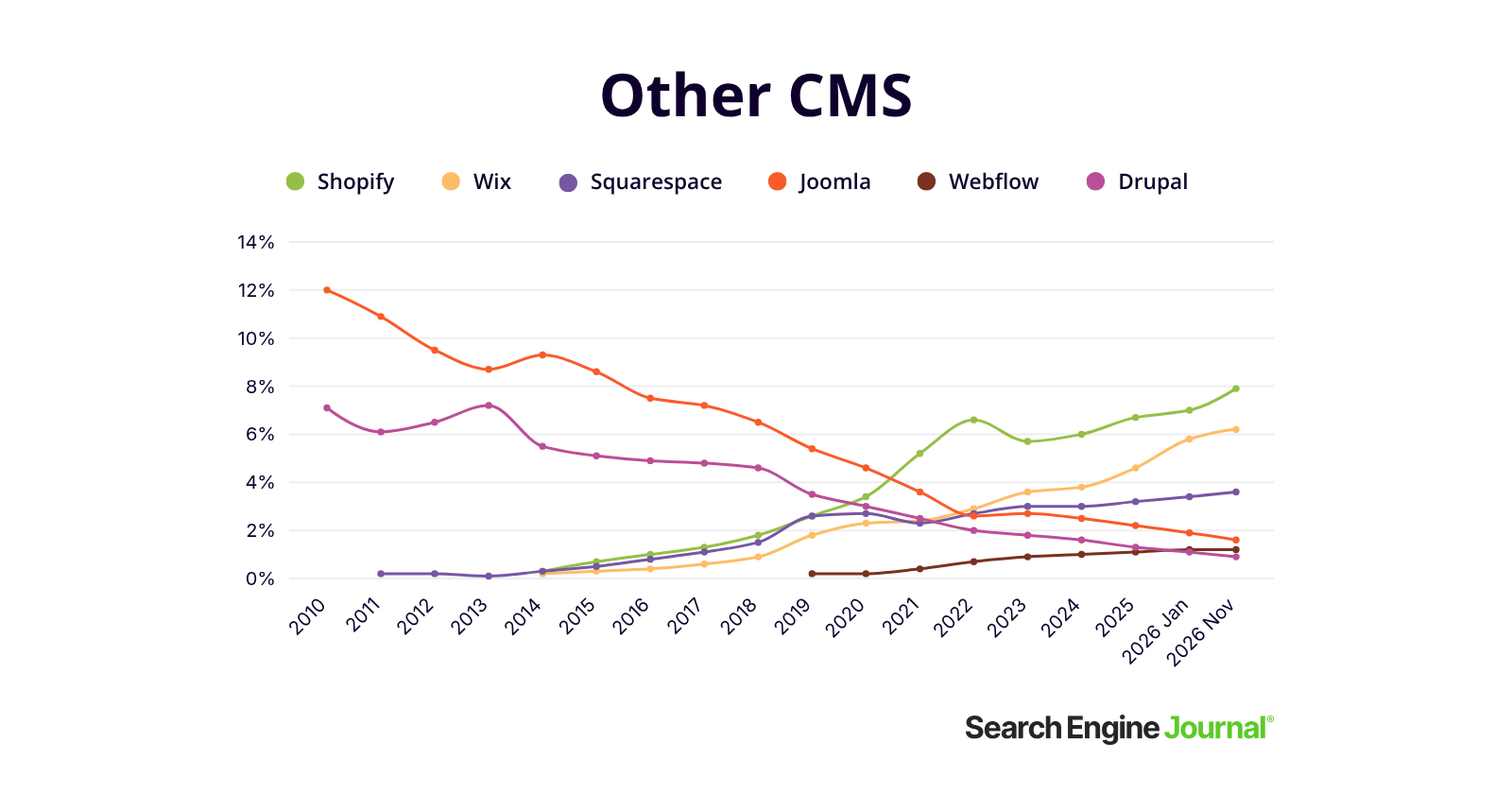
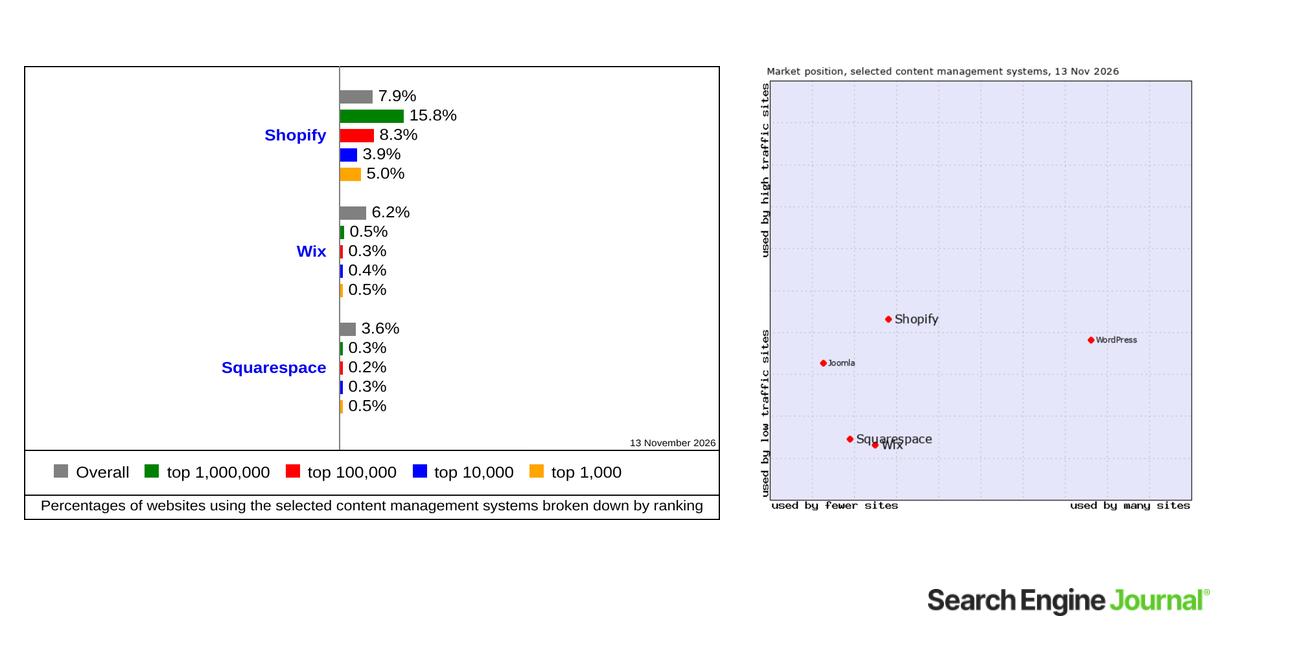
- Shopify: Secures second place with a 7.9% market share (5.4% usage), powering an estimated 17.4 million sites.
- Wix: Holds the third position with a 6.2% market share (4.2% usage), covering approximately 13.6 million websites.
- Squarespace: Continues its steady climb, claiming a 3.6% market share (2.4% usage) across roughly 7.8 million sites.
- Legacy Open-Source Platforms: Joomla and Drupal have retreated to 1.6% and 0.9% market share respectively, down significantly from their historical highs.
Meanwhile, the proportion of websites showing no detected CMS has rebounded, rising from 28.6% at the start of 2026 to 32.3% by November. While this category does not definitively prove a shift toward entirely custom-coded applications, it highlights a diversifying web architecture environment where standard monolithic platforms are not the universal default they once were.
The E-Commerce Battleground: WooCommerce Versus Shopify
Within the specialized sector of digital commerce, the competition is similarly intense. WooCommerce, operating as an extension of the WordPress ecosystem, historically dominated the e-commerce infrastructure space. However, its footprint has softened. WooCommerce currently commands an 11.4% share of websites with a known CMS (7.7% of all surveyed sites), retaining a leading position in broader e-commerce platform indices with roughly 47.0% of monitored online store systems.
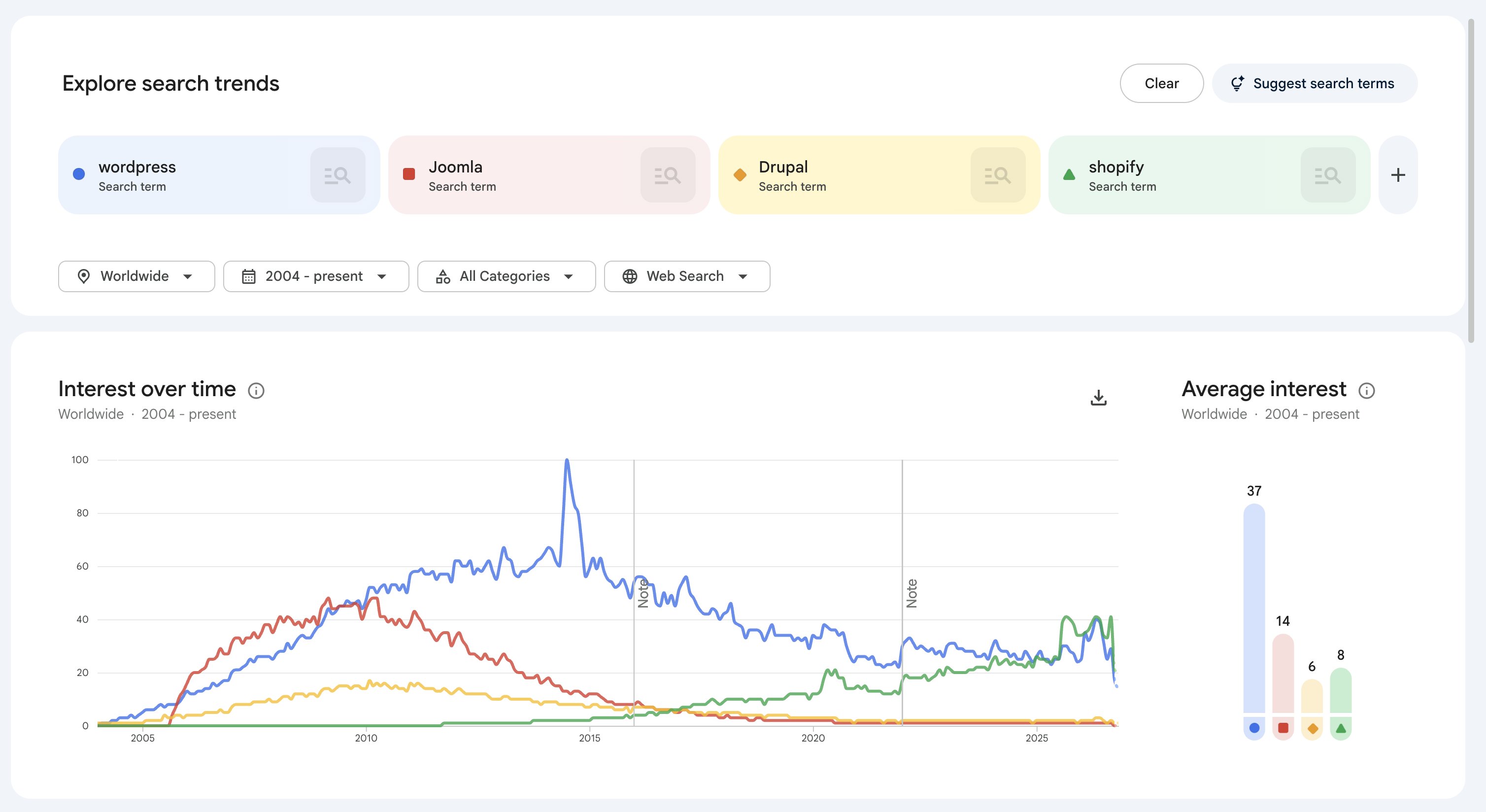
Conversely, Shopify has exhibited aggressive, sustained growth. Surging significantly through the pandemic years—recording market share growth rates exceeding 50% between 2020 and 2021—Shopify has continued to expand. By late 2026, Shopify captured 7.9% of the known-CMS market and roughly 32.7% of dedicated e-commerce systems.
Industry observers note that Shopify’s ascent is partially fueled by merchants migrating away from self-hosted solutions like WooCommerce in search of streamlined inventory management, integrated payment processing, and predictable scaling. This migration underscores a broader commercial preference for managed cloud infrastructure over traditional open-source setups that require proactive maintenance.
Implications for SEO and Digital Strategy
For digital marketers, developers, and corporate leadership teams, these shifting market shares carry direct operational consequences. Platform architecture dictates how efficiently a site can be optimized for search engines, how securely user data is protected, and how rapidly new features can be deployed.
While WordPress maintains the largest ecosystem—bolstered by powerful page builders like Elementor (installed on 18.2% of known-CMS sites) and extensive plugin libraries—its gradual contraction forces digital professionals to diversify their skill sets. Specialized expertise in Shopify SEO, Wix platform capabilities, and multi-cloud infrastructure is becoming increasingly valuable as mid-market enterprises and small-to-medium businesses (SMBs) select turnkey builders over customizable open-source frameworks.
Furthermore, the growing influence of artificial intelligence in web development, automated site generation, and emerging trends such as "vibecoding" introduce new variables to the long-term viability of traditional CMS models. As tools evolve to make custom site deployment more accessible without the heavy scaffolding of conventional content managers, the entire industry faces a pivotal crossroads.
Ultimately, while WordPress remains the undisputed heavyweight of content management, the 2026 data confirms that the web is no longer a one-horse race. The ongoing diversification of platform adoption reflects a maturing digital economy where businesses increasingly demand specialized, frictionless solutions tailored precisely to their operational and commercial goals.
Related posts: