YouTube Expands Studio Clips Tool to Enable Seamless Vertical Shorts Creation from Long-Form Content

The digital content ecosystem is undergoing a continuous shift toward short-form video consumption, prompting major platforms to bridge the gap between legacy horizontal broadcasting and vertical, bite-sized media. YouTube has officially expanded its native video clips functionality within YouTube Studio, allowing creators to seamlessly transform segments of long-form videos—such as extensive podcast episodes, webinars, and interviews—into vertical YouTube Shorts. Announced by TeamYouTube via a community support post, this update aims to streamline content repurposing for digital publishers, podcasters, and independent creators who rely on multi-format publishing strategies to maximize audience engagement and discoverability.
The rollout marks a significant milestone in YouTube’s long-term strategy to integrate artificial intelligence and streamlined editing suites directly into its backend infrastructure. By equipping creators with automated tools to slice, reframe, and caption legacy horizontal content, the platform is addressing historical friction points in cross-format publishing. As competition among short-form platforms intensifies, tools that reduce production latency are expected to heavily influence creator workflows across the globe.
Evolution of the Tool: A Timeline of Rollouts and Previews
The deployment of the clips-to-shorts feature follows a carefully orchestrated development timeline. Rumors and preliminary roadmap announcements regarding the feature first materialized earlier in the year. In an April system update, YouTube explicitly stated its intention to roll out Video Clips to Shorts capabilities later in the calendar year, setting expectations for a phased release schedule.
Evidence of the tool’s functional design appeared on public support documentation well before the official November announcement. An Internet Archive capture of YouTube’s official help pages dating back to September 10 confirmed that instructions regarding the Shorts transformation option were already embedded in the platform’s public-facing knowledge base. However, regional availability and language parameters during the early pilot phases were notably constrained.
Initially, AI-powered highlight detection and automated transcript outlining were restricted strictly to English-language videos housed within designated podcast playlists in the United States and Canada. By November 12, the formal announcement by TeamYouTube signaled a broader functional deployment, removing the strict playlist prerequisite while expanding geographic and linguistic frameworks to accommodate a wider international creator base.
Mechanics of the Integration: How the Studio Clips Tool Works
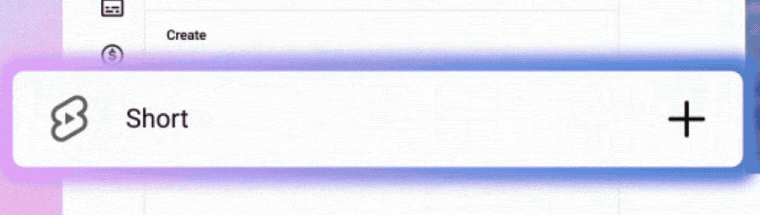
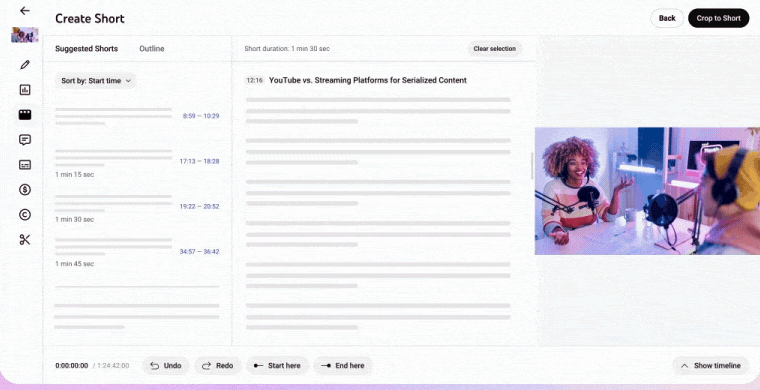
Operating the newly expanded tool within YouTube Studio requires a straightforward sequence of interactions. Creators navigate to their pre-existing long-form videos within the studio dashboard and access the dedicated editing options panel on the left-hand side of the interface, which houses choices for both traditional clips and Shorts.
Upon selecting the Shorts option, creators are presented with multiple avenues for content extraction. The most manual approach involves entering precise timestamps directly into the comprehensive timeline editor. Alternatively, creators can highlight specific blocks of text within the integrated video transcript panel. The system automatically cross-references the transcript with visual framing to isolate cohesive, standalone narratives.
Where supported, the interface prominently displays AI-powered suggestions generated by machine learning models trained to identify natural inflection points, conversational peaks, and standalone thematic segments within an episode. According to official platform documentation, these algorithms scan the audio and structural flow to highlight moments that make sense when viewed entirely out of context.
Once a segment is selected, the system executes a programmatic transformation of widescreen 16:9 source footage into a vertical 9:16 aspect ratio. The internal reframing technology employs smart-cropping mechanisms designed to keep the primary subject, speaker, or focal point centered within the vertical frame, minimizing the need for manual keyframing. Furthermore, automated caption generation overlays synchronized subtitles onto the video preview. Creators retain total editorial control, able to modify font styles, color palettes, caption positioning, or remove the text overlays entirely before finalizing the draft.
Automatic Source Attribution and Discovery Dynamics
One of the most consequential features of the expanded clips tool is its automated linking architecture. Historically, creators who repurposed external content into YouTube Shorts had to manually execute post-upload linking protocols to connect the short-form asset back to its parent video—a process that frequently required advanced channel feature access and careful navigation of platform settings.
Under the updated system, every Short generated via the native Studio clips tool automatically establishes a programmatic relationship with the original source video. A clickable link directing viewers back to the full-length episode is embedded directly beneath the channel handle on the Short’s interface. This creates a frictionless conversion funnel, allowing casual viewers who discover a creator via a bite-sized clip to instantly transition to the comprehensive long-form asset, such as an entire podcast interview or educational webinar.
Nevertheless, specific operational conditions govern this automation. Platform guidelines dictate that automated source linking is disabled if the resulting Short is classified as private, unlisted, or designated as "Made for Kids." For standard video clips generated alongside Shorts, YouTube maintains its recommendation that creators manually insert source links within the clip descriptions to maintain navigational continuity.
Global Availability and Language Support Parameters
While the deployment of the clips-to-shorts tool represents a global platform update, the availability of its advanced artificial intelligence suggestion features remains subject to distinct geographic and linguistic boundaries. According to updated platform documentation, AI-powered moment detection and transcript outlining are currently accessible to creators operating in ten countries: Brazil, Canada, France, Germany, India, Mexico, South Korea, Spain, the United Kingdom, and the United States.
Concurrently, linguistic support is restricted to seven primary languages: English, French, German, Hindi, Korean, Portuguese, and Spanish. Channels operating outside these designated jurisdictions or utilizing unsupported dialects must rely on manual timestamp entry or transcript text highlighting rather than automated AI curation. YouTube representatives have indicated that future infrastructure updates will progressively scale these AI capabilities to encompass additional regions and linguistic markets, though specific timelines have not been publicly disclosed.
Monetization, Copyright Policy, and the Reposting Debate
As content automation tools proliferate, questions regarding platform compliance, monetization eligibility, and copyright enforcement have taken center stage. Content creators frequently express apprehension regarding automated penalties associated with content repetition, particularly given YouTube’s strict enforcement stances on duplicate media and low-effort aggregation channels.
To alleviate these concerns, the official help documentation for the clips tool features an explicit assurance: creators will not face monetization penalties or algorithmic downgrades for utilizing their own proprietary content to generate clips or Shorts. This policy aligns with broader channel monetization frameworks, reassuring independent publishers that internal repurposing does not violate guidelines against unoriginal content.
This clarification is particularly salient in light of recent algorithmic adjustments. YouTube previously announced policy updates designed to curtail the algorithmic reach of channels that systematically aggregate, re-upload, or re-package third-party clips without introducing substantial creative value or transformation. By drawing a clear administrative line between external content scraping and self-repurposing, YouTube has sought to protect legitimate media networks and podcasters who utilize cross-format clipping as a primary audience acquisition strategy.
Strategic Implications for Digital Publishers and Podcasters
The integration of native clipping tools into YouTube Studio carries profound implications for digital content strategy. For video podcast networks, educational creators, and corporate communications teams, the barrier to entry for short-form marketing has been lowered substantially. Producing promotional assets no longer necessitates third-party desktop editing suites or complex manual export workflows.
By streamlining the pipeline from long-form archival footage to vertical engagement drivers, YouTube is positioning its ecosystem as an all-in-one publishing powerhouse. Creators can rapidly test multiple narrative angles from a single episode, leveraging algorithmic suggestions to identify high-performing segments while capitalizing on automated source linking to drive retention and channel growth.
Looking forward, the success of this tool will likely hinge on the continued refinement of YouTube’s AI reframing and moment-detection models. As multi-format media strategies become the baseline standard for digital creators, platform-native utilities that combine AI efficiency with transparent attribution models will undoubtedly define the next era of content distribution and audience monetization.