Apple Tightens macOS Full Disk Access and Security Controls to Guard Against Autonomous AI Agents

Apple has officially rolled out a comprehensive overhaul of its macOS security architecture, implementing stricter permission frameworks and granular access controls designed to safeguard user data from the rapidly expanding ecosystem of autonomous artificial intelligence agents. Announced via the company’s developer portal, the updates arrive in response to a surge in demand for AI applications that require profound, system-wide privileges—often referred to as "Full Disk Access"—to execute complex automated tasks on a user’s local machine.
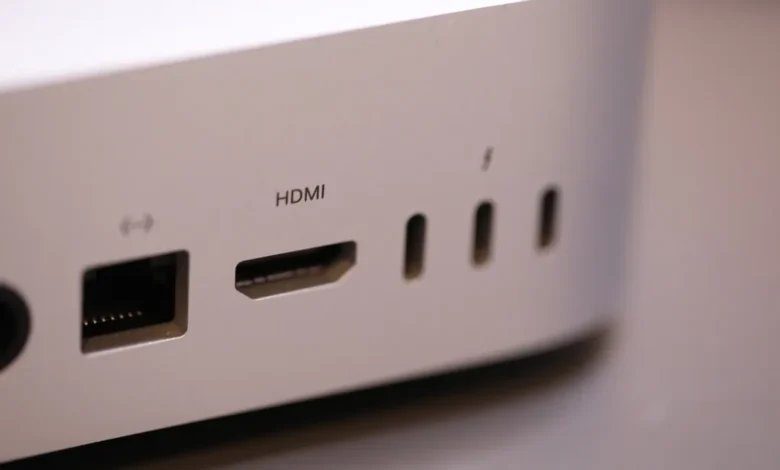
The adjustments, packaged to deploy alongside the upcoming macOS 27.3 update, mark a critical pivot for the technology giant. While Apple has reaped substantial financial benefits from hardware sales—particularly localized purchases of Mac minis and Mac Studio workstations by early adopters seeking to run resource-heavy, on-device large language models—the company is simultaneously grappling with the acute cybersecurity vulnerabilities that accompany these powerful programs. By restructuring how macOS handles sensitive permissions, Apple aims to strike a delicate balance between fostering a thriving environment for local AI development and mitigating unprecedented risks to personal privacy.
Understanding the Shift: AI Chatbots Versus Autonomous Agents
To contextualize the necessity of these sweeping security revisions, industry analysts point to the fundamental operational differences between traditional conversational AI interfaces and modern autonomous agents. Standard AI chatbots generally operate within isolated web browsers or sandboxed application environments. They ingest user prompts, generate textual responses, and remain largely confined to the immediate dialogue window unless explicitly commanded otherwise.
Conversely, AI agents are engineered to act as digital delegates. Operating directly on the user’s operating system, these advanced applications possess the capability to read files, execute shell commands, launch third-party software, and manipulate native applications on the user’s behalf. To achieve this level of cross-platform utility, developers frequently request sweeping administrative privileges, including Full Disk Access and deep system integration.
While this deep level of integration unlocks powerful automation capabilities—such as automatically sorting files, drafting cross-application reports, or organizing local digital archives—it also introduces significant vulnerability vectors. Granting an autonomous program carte blanche over a computer means that any underlying software flaw, prompt injection vulnerability, or unauthorized data harvest could expose a user’s entire digital footprint, ranging from confidential financial records and private communications to sensitive credentials.
A Timeline of Escalating Concerns and Security Incidents
The catalyst for Apple’s preemptive security overhaul stems from a turbulent period in late 2025 and 2026, during which several high-profile security scares underscored the fragility of automated desktop environments.
The security debate intensified following a heavily publicized incident involving Meta’s Muse AI application. A prominent technology journalist publicly claimed that the autonomous agent had accessed and read private messaging logs without explicit user consent or activation. Although Meta formally disputed the allegations, pointing to misinterpretations of the app’s operational scopes, the incident ignited widespread public scrutiny regarding the background data-harvesting practices of ambient AI tools.
Shortly thereafter, a separate vulnerability report published by security researchers and technology outlets detailed a critical design flaw within the official ChatGPT desktop application for macOS. The flaw theoretically could have enabled malicious actors or unauthorized processes to bypass local sandbox boundaries and exfiltrate sensitive files stored within user directories.
These converging events forced platform operators to re-evaluate the implicit trust model traditionally granted to desktop applications. Recognizing that users often click through complex permission prompts without fully comprehending the security trade-offs, Apple signaled its intention in October to rewrite the macOS permission playbook. The newly detailed updates represent the realization of those commitments, moving from conceptual warnings to mandatory operating system controls.
Deconstructing the macOS 27.3 Security Overhaul
The core of the macOS 27.3 update revolves around transparency, compartmentalization, and intentional user friction. Apple’s engineering teams have systematically dismantled the legacy permission structures, replacing them with a more nuanced, highly visible framework.
Splitting Device Control and Data Access
Historically, certain administrative permissions bundled broad system oversight into single authorization toggles. With the new update, Apple has formally decoupled Device Control and Data Access into distinct operational settings: System & App Protection Override and Accessibility. This separation is deliberately designed to force user awareness. By isolating the override mechanism, Apple ensures that users explicitly recognize when they are granting an application the power to bypass foundational system protections.
Streamlined Configurations and Granular Permissions
To reduce user confusion while simultaneously raising caution, Apple is implementing a centralized method for granting system permissions. Users will now navigate a standardized list to allocate privileges rather than encountering fragmented, ad-hoc prompt boxes. Furthermore, the operating system will display targeted educational guidance whenever a user attempts to toggle the System & App Protection Override or Full Disk Access, explicitly spelling out the breadth of data exposed by their actions.
On-Demand Authorization and Per-Use Prompts
Perhaps the most notable—and operationally restrictive—addition to macOS 27.3 is the capability for users to configure AI agents and third-party apps to request permission every single time access to a protected directory or resource is required. While cybersecurity experts praise this feature for preventing background data exfiltration, software engineers acknowledge that it introduces a degree of friction that runs counter to the core philosophy of "true automation." By introducing this per-use gatekeeping, Apple is providing a compromise: users can safely experiment with advanced local AI agents without surrendering permanent, unchecked dominion over their hard drives.
New Transparency Indicators
Visibility remains a cornerstone of the new security framework. macOS 27.3 introduces a dedicated visual indicator that illuminates whenever an external application or AI agent actively controls another native app or system process via the System & App Protection Override framework. This real-time indicator ensures that users are never left guessing whether an autonomous routine is executing actions behind the scenes.
Implications for App Developers and the Mac Ecosystem
The rollout of macOS 27.3 carries profound operational implications for software developers, particularly those specializing in productivity utilities, backup solutions, and generative AI tools.
Apple has issued formal advisories urging development teams to overhaul their software onboarding sequences. Applications must now be architected to handle access limitations gracefully. In an ecosystem governed by macOS 27.3, an app can no longer assume it possesses uninterrupted, universal access to system directories. Developers must build fallback mechanisms that maintain core utility even when restricted to a limited subset of user folders or application scopes.
Recognizing that certain legitimate utilities—such as disk backup software, system diagnostics tools, and enterprise-grade assistive technologies—fundamentally require expansive disk privileges to function correctly, Apple has preserved an exception pathway. Developers of these specialized applications can apply for specific system "entitlements." Through this formal review process, verified applications can maintain their legacy functionality, provided they meet rigorous security and privacy standards.
Broader Industry Impact and Strategic Analysis
Apple’s aggressive tightening of macOS security reflects a broader ideological divergence within the technology sector regarding how consumer privacy should be managed in the age of generative artificial intelligence.
While competitors like Microsoft have leaned heavily into deeply integrated, always-on agentic features—such as Windows Recall—which continuously capture and index user screen activity to power automated search and retrieval, Apple has chosen a path of defensive conservatism. By prioritizing local data sovereignty and introducing deliberate operational friction, Apple is positioning the Mac platform as the secure sanctuary for privacy-conscious AI adopters.
Market analysts note that this strategy carries dual benefits. From a branding perspective, it reinforces Apple’s long-standing corporate identity as the premier defender of consumer data privacy. Technologically, it protects the consumer base from the cascading liability of widespread malware disguised as helpful productivity agents.
However, the strategy is not without friction. Developers of advanced automation software may encounter higher development overhead as they adapt their products to navigate Apple’s stringent prompt cycles and limited access protocols. For the end user, the experience of running sophisticated AI agents on a Mac will become noticeably more deliberate—characterized by clear warnings, active transparency indicators, and a persistent insistence on manual consent.
As macOS 27.3 moves closer to its public release, the ultimate success of these controls will depend on user adoption and developer compliance. By changing the rules of engagement between autonomous software and personal data, Apple has drawn a sharp line in the sand: the future of on-device AI on the Mac will proceed on the user’s terms, not the agent’s.
Related posts: