Future-Proofing Your Social Media Strategy: Insights from Sprout Social’s Q4 2026 Breaking Ground Event


As the digital landscape approaches the threshold of 2027, the challenge for brand marketers has shifted from simply maintaining a presence to deriving actionable intelligence from an overwhelming sea of social data. During the final Breaking Ground virtual innovation event of 2026, industry leaders and Sprout Social product experts convened to outline a comprehensive, three-pillar framework designed to transition social media teams from reactive posting to proactive strategic planning. The event, which serves as a quarterly touchstone for the platform’s user base, emphasized that the upcoming year will be defined by the integration of sophisticated artificial intelligence, deeper cross-platform connectivity, and a more granular understanding of market-wide sentiment.

The Strategic Imperative: A Three-Pillar Approach
The core of the 2027 strategy presented during the session rests on a systematic cycle: analyzing internal data, contextualizing that data against broader market behaviors, and executing workflows that bridge the gap between insight and action. Industry data indicates that while 85% of marketing departments now utilize some form of social media analytics, fewer than 30% successfully translate those metrics into long-term strategic adjustments. To address this gap, Sprout Social introduced a suite of updates intended to automate the heavy lifting of data synthesis, allowing human experts to focus on creative and high-level decision-making.
Advancing Data Analysis through AI Integration
The cornerstone of the proposed 2027 strategy is the evolution of Trellis, the company’s proprietary AI agent. The objective is to move beyond static reporting toward a conversational interface where users can query their data in plain language. By integrating platform-wide search capabilities, Trellis now allows users to cross-reference tags, labels, and user profiles in a singular query.
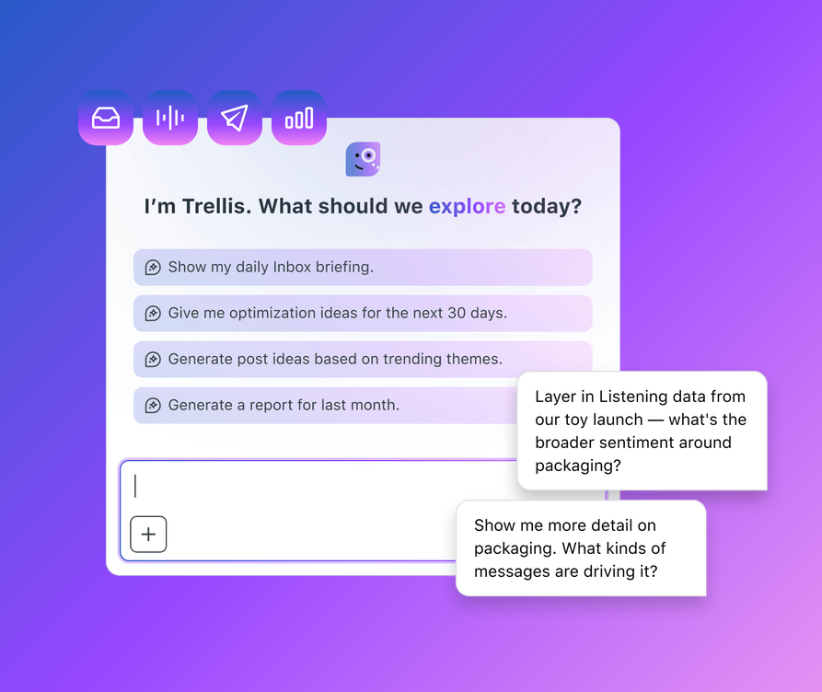
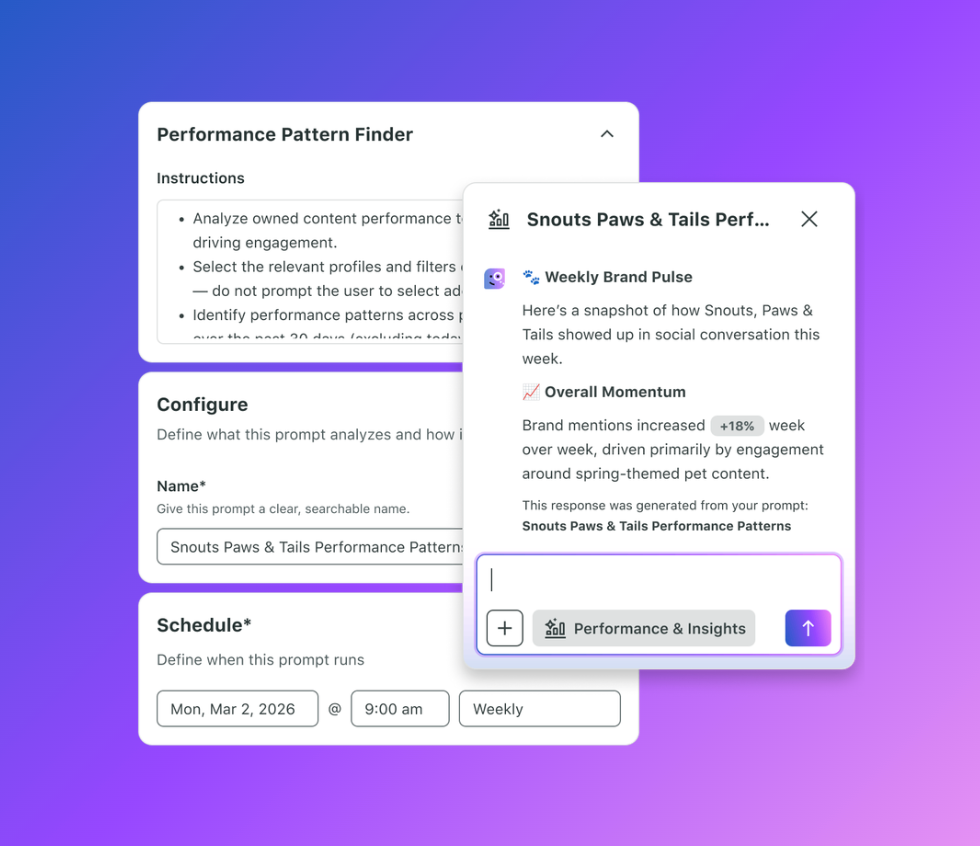
The practical application of this technology is significant. Rather than spending hours constructing custom dashboards to determine what drove engagement, a social media manager can now ask the AI to identify themes and trends, and then recursively refine the query to determine recommended next steps. This shift reduces the "time-to-insight" metric, a critical KPI for teams operating in high-velocity industries. Furthermore, the introduction of AI-recommended tagging and nested tagging hierarchies—extending up to seven levels deep—provides the structural precision required for complex organizational data management. These enhancements are supported by the new Trellis Plus: Shared Credits model, which replaces individual caps with an account-level pool, enabling teams to scale their AI usage based on seasonal demand rather than static individual allocations.
Contextualizing Social Intelligence with Market Data
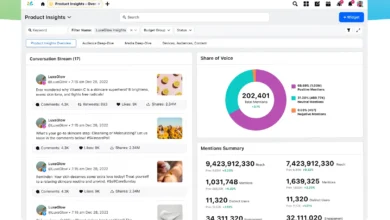
Internal performance data provides only a partial picture of brand health. To gain a complete understanding of market standing, organizations must contextualize their social interactions against the broader digital conversation. The Q4 event highlighted the rollout of "Listening Topic Highlights," a feature that proactively monitors Listening topics for meaningful statistical shifts. By flagging anomalies and providing concise summaries of why those shifts occurred, the platform eliminates the need for manual chart monitoring, allowing teams to respond to potential PR crises or emerging opportunities in real-time.
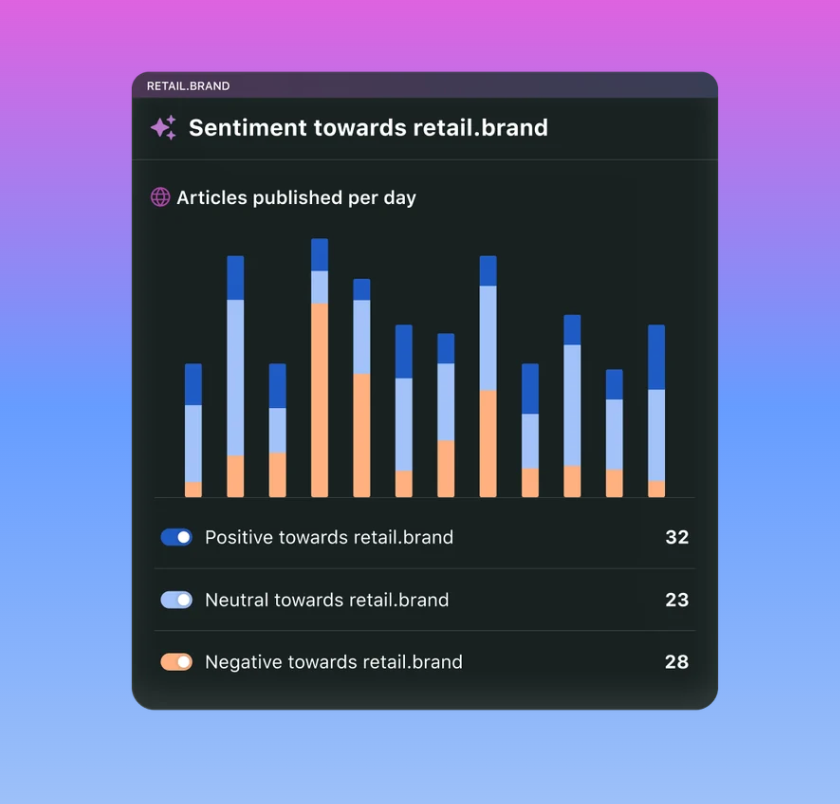
Complementing this is the launch of NewsWhip AI Sentiment Analysis. This tool addresses a long-standing challenge in corporate communications: determining how a brand is perceived in the context of global news coverage. By parsing web and news media through a brand-specific lens, the tool provides stakeholders with a clear narrative—answering the perennial executive question, "What does this news mean for our bottom line?" This capability marks a shift from sentiment analysis as a vanity metric to a core component of risk management and brand reputation strategy.
Expanding the Workflow: Publishing and Influencer Management
The third pillar of the 2027 strategy involves streamlining execution. As digital audiences become increasingly fragmented across niche platforms, the operational burden of managing disparate accounts has grown. Sprout’s expansion of publishing support to include Snapchat and Reddit, alongside the forthcoming Q4 2026 introduction of YouTube Posts, represents a strategic push to consolidate the fragmented social ecosystem into a unified command center.
The influencer marketing landscape is also undergoing a fundamental transformation. Influencer campaigns have historically been plagued by administrative friction, ranging from manual outreach tracking to the tedious organization of campaign deliverables in spreadsheets. The upcoming "Influencer Marketing AI Campaigns" feature aims to automate the end-to-end lifecycle of a partnership. By allowing users to upload a brief, the system identifies optimal creators and drafts outreach messages, while also automatically organizing results into structured, AI-summarized tables. This transition from manual coordination to AI-assisted management is expected to significantly increase the ROI of influencer marketing programs by allowing teams to pivot resources to higher-performing partners faster.
Industry Perspectives: Lessons from Indiana University and Bell Bank
The session featured a roundtable discussion with Jill Trimbach of Indiana University and Marie Obsuna of Bell Bank, both of whom provided a frontline perspective on the operational realities of 2026. Their dialogue underscored a consensus: the most successful social teams are those that remain agile enough to pivot when unexpected trends emerge.

Trimbach and Obsuna emphasized that the "non-negotiable" workflows of 2027 will rely on the ability to interpret real-time data spikes. They noted that the transition toward AI-driven, automated reporting has not replaced the need for human oversight; rather, it has elevated the role of the social media manager to that of a strategic curator. The ability to distinguish between noise and actionable intelligence, they argued, is the single most important skill for professionals entering the new year. Their experiences suggest that teams currently failing to audit their tagging structures or integrate automated listening tools will find themselves at a competitive disadvantage by Q1 2027.
Implications and Future Outlook
The technological advancements detailed in the Breaking Ground event reflect a broader industry trend toward "intelligent automation." As social media platforms continue to evolve into primary channels for customer support, market research, and brand advocacy, the sheer volume of data generated will exceed the capacity of human analysis. The introduction of tools like NewsWhip AI Sentiment Analysis and Trellis Studio skills signals that the next phase of social media management will be defined by the ability to orchestrate data-driven workflows at scale.

For organizations, the implication is clear: the focus must shift from "content volume" to "intelligence density." By implementing a rigorous tagging taxonomy, utilizing AI-driven sentiment analysis, and consolidating publishing workflows, brands can ensure they remain relevant in an increasingly crowded and fragmented digital environment. As the industry moves into 2027, the barrier to entry for effective social strategy will be the adoption of these sophisticated tools. Those who lean into this technological transition, as outlined by the Sprout Social roadmap, will likely find themselves better equipped to handle the unpredictable nature of global social trends, while those who remain tethered to manual, siloed processes may struggle to maintain visibility in the coming years.
The event concluded with a clear mandate for practitioners: start by auditing current tagging infrastructures, begin experimenting with Trellis prompts via the newly launched AI Prompt Library, and standardize reporting cadences using automated skills. By laying this groundwork now, teams are positioning themselves to enter 2027 not just with a strategy, but with a scalable infrastructure capable of turning every social interaction into an opportunity for growth.