The rapid evolution of social media marketing has fundamentally changed how businesses interact with their audiences. While platforms like Buffer gained early market dominance by simplifying the scheduling process for individual creators and small businesses, the current digital landscape demands a more sophisticated approach. As social media matures into a critical driver of revenue, customer service, and brand identity, many organizations are finding that basic scheduling tools no longer suffice. The shift from simple posting to comprehensive social media management is forcing marketing teams to reconsider their software stack, seeking alternatives that provide deeper analytics, robust social listening, and complex collaboration workflows.

The core motivation for this migration lies in the changing requirements of enterprise and agency-level operations. Data indicates that as a company expands its social footprint across platforms like Instagram, TikTok, LinkedIn, and X, the operational overhead of managing fragmented tools increases exponentially. Businesses currently prioritizing growth are transitioning toward integrated suites that combine organic publishing with paid campaign management, social listening, and advanced team-based governance.
The Shift from Basic Scheduling to Unified Management
Buffer has long served as an accessible entry point for social media management, focusing primarily on intuitive scheduling and basic analytics. However, the limitation of per-channel pricing models and the absence of integrated social listening have become significant bottlenecks for scaling organizations. When a social media strategy relies on disparate tools—one for scheduling, one for monitoring, and one for reporting—the fragmentation of data often leads to inefficient workflows and missed opportunities for engagement.

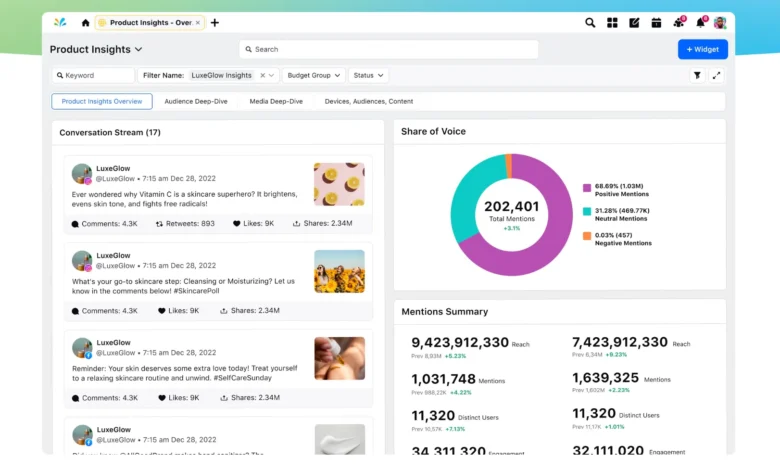
In the current market, the best alternatives are those that offer a "unified suite" experience. This transition is not merely about finding a different interface; it is about adopting a platform that can aggregate cross-platform performance data into a single source of truth. As of late 2026, the market leaders include Hootsuite, Publer, Metricool, Later, Agorapulse, Sprout Social, and the enterprise-grade behemoth, Sprinklr.
Comparative Analysis of Leading Platforms
Each of these alternatives caters to a distinct tier of the market, reflecting the diverse needs of modern social media teams.

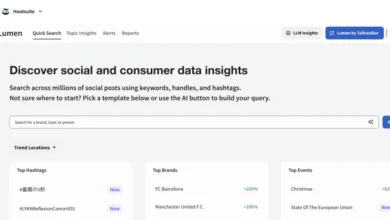
Hootsuite remains the industry standard for organizations seeking an all-in-one ecosystem. With a starting price point of approximately $99 per user per month, its value proposition lies in the integration of AI-driven content curation, comprehensive social listening, and advanced security protocols. For growing teams, the ability to maintain a single dashboard that handles everything from initial drafting to crisis management is a major operational advantage.
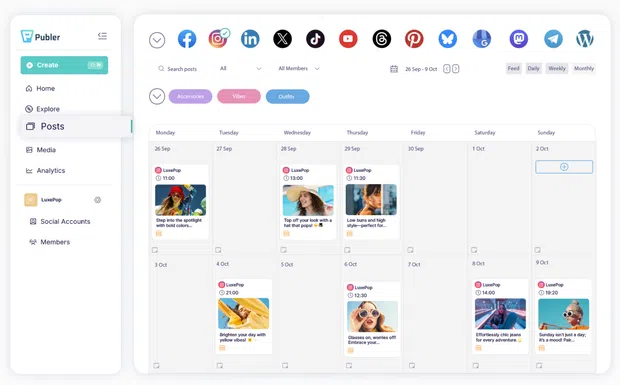
For those requiring a focus on visual-first platforms, Later continues to dominate the niche for Instagram and TikTok creators. Its primary strength is its visual planning interface, which allows teams to map out their feed aesthetics with precision. While its pricing is accessible, the functional ceiling is lower compared to comprehensive suites, making it ideal for creative-led brands rather than high-volume customer service operations.

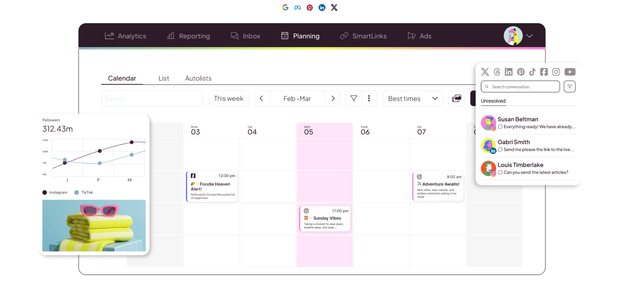
Metricool has carved out a unique position by bundling social accounts into "brands," effectively decoupling costs from the number of individual channels. This model is particularly attractive to agencies and data-focused professionals who require deep analytics for both organic and paid social media activity. By providing robust reporting without the typical "enterprise" price tag, Metricool serves as an essential bridge between entry-level tools and high-cost suites.
Agorapulse is increasingly recognized for its superior social inbox management. For teams where community engagement is as important as content production, the ability to assign, label, and manage high volumes of direct messages and comments within a collaborative environment is paramount. Their focus on the "social" aspect of social media makes them a primary contender for customer-centric brands.
The Financial and Operational Implications of Switching
The decision to migrate to a new social media management tool involves significant organizational overhead. Industry analysts suggest that teams should budget for a transition period of approximately 90 days. This timeline allows for 30 days of platform familiarization, 60 days of habit formation, and 90 days of realizing measurable performance improvements.
Matt Suffoletto, a veteran in digital strategy and CEO of PageSpeed Matters, emphasizes that the success of a migration depends more on process than technology. "The mistake many teams make is assuming the tool will fix the strategy," Suffoletto notes. "The reality is that a new platform is an opportunity to audit your existing workflows. By setting realistic expectations for the transition, you prevent the friction that often leads to staff frustration and the eventual abandonment of the new software."
Strategic Criteria for Selection
When evaluating potential replacements for a legacy setup, organizations should prioritize four key pillars:
- Scalability of Pricing: Does the model support growth, or does every new channel added exponentially increase the burn rate?
- Integrated Social Listening: Can the tool monitor brand sentiment, competitor activity, and industry trends without needing a third-party subscription?
- Collaboration and Governance: Does the platform offer multi-level approval workflows, internal note-taking, and granular permission settings to prevent unauthorized posting?
- Data Aggregation: Is the reporting robust enough to satisfy stakeholders, specifically regarding ROI and cross-channel performance comparisons?
The Future of Social Media Operations
The industry is moving toward a future where social media management is synonymous with customer relationship management (CRM). Enterprises are now looking for platforms that can bridge the gap between a public comment on a social post and a private support ticket in a CRM system.
Sprinklr, for instance, operates at the highest level of this requirement. By providing a unified customer experience across more than 30 digital channels, it acts as a central nervous system for global enterprises. While the complexity of implementation and the lack of transparent public pricing make it unsuitable for smaller teams, it illustrates the ultimate trajectory of the industry: the complete integration of social presence into the core of corporate operations.
Conclusion: Evaluating Your Next Move
The decision to move away from a foundational tool like Buffer is a milestone that indicates a company’s social media maturity. If your current workflow involves constant manual data entry, the use of multiple disparate apps to manage a single campaign, or a lack of visibility into how social interactions translate into business value, it is time to upgrade.
Choosing the right alternative requires an objective assessment of your team’s size, your primary objectives, and your long-term growth trajectory. Whether your focus is on visual storytelling, deep analytical insights, or high-volume customer care, the current market offers specialized solutions designed to replace the limitations of the past with the functional, data-backed requirements of 2026. By carefully auditing your internal needs and following a structured migration process, you can ensure that your transition not only preserves your current momentum but accelerates your future growth in an increasingly competitive digital landscape.