WhatsApp addresses critical security vulnerabilities including an actively exploited Android exploit

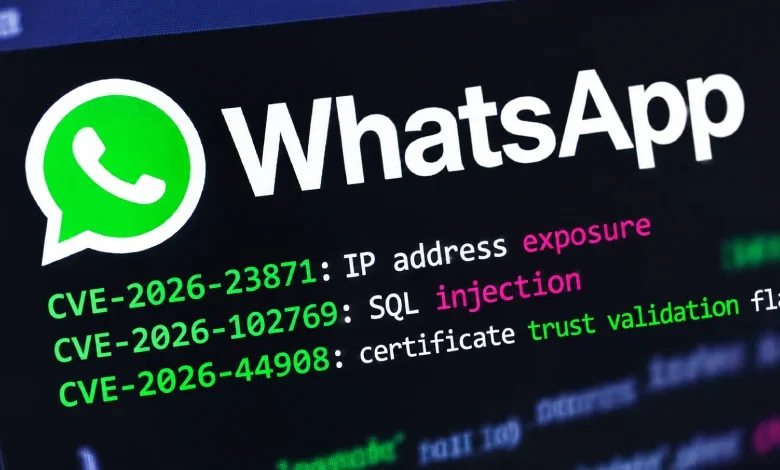
Meta-owned messaging giant WhatsApp has officially disclosed and patched a series of security vulnerabilities, one of which was actively leveraged by malicious actors to bolster the credibility of scam campaigns targeting Android users. The disclosure, released in late November 2026, highlights the ongoing cat-and-mouse game between platform security teams and cybercriminals who exploit features designed for business-to-consumer engagement.
The Core Vulnerability: CVE-2026-23871
At the center of the recent security update is CVE-2026-23871, a flaw categorized as an incomplete validation of external ad-reply URLs. The vulnerability affected both the standard WhatsApp for Android and the WhatsApp Business for Android application prior to version 2.26.17.4.
This security gap allowed an attacker to execute a sophisticated data-harvesting technique. When a user received a "Click to WhatsApp" advertisement—a feature that allows businesses to bridge social media ads with direct messaging threads—the application would improperly handle the underlying media rendering. If an attacker sent media from a controlled URL within a crafted ad-reply message, the recipient’s device would inadvertently transmit its IP address back to the attacker’s infrastructure.
By capturing the victim’s IP address, attackers were able to add a layer of perceived legitimacy to their scam operations. A WhatsApp spokesperson confirmed to cybersecurity researchers that the company identified this vulnerability during a proactive investigation into an ongoing scam campaign. The threat actors utilized the exploit to make their unsolicited messages appear more integrated with the platform’s legitimate business messaging features, likely increasing the click-through rates of their fraudulent links.
Timeline of Discovery and Remediation
The discovery of CVE-2026-23871 was credited to the internal WhatsApp Security Team. The timeline for the incident, based on technical reports, suggests that the vulnerability was likely identified during a broader audit of the platform’s business-facing APIs.
- Initial Discovery: WhatsApp’s internal security researchers identified the URL validation failure during an investigation into suspicious traffic patterns associated with scam-related business accounts.
- Analysis and Verification: Security teams confirmed that the vulnerability could be used to leak IP addresses, thereby compromising the anonymity of the user and assisting in targeted phishing.
- Patch Development: Engineering teams worked to implement stricter URL sanitization protocols to ensure that external media requests originate only from verified, trusted domains.
- Deployment: The patch was pushed to the Google Play Store in the 2.26.17.4 update, which was made available to the public in mid-November 2026.
Additional Security Flaws Disclosed
Beyond the actively exploited URL validation issue, WhatsApp also addressed two other vulnerabilities, underscoring the complexity of securing a platform with billions of active users.

The Timing-Based Side Channel (CVE-2026-102769)
The second vulnerability, CVE-2026-102769, represents a more theoretical but highly technical threat. This flaw involved a timing-based side channel that could theoretically leak information regarding a user’s chat database.
By inducing a crash in the delivery receipt mechanism, an attacker could potentially ascertain specific bits of information about the state of a victim’s database if the user was actively online when the message was received. While there is currently no evidence that this vulnerability has been exploited in the wild, the existence of such side-channel attacks highlights the risks inherent in complex asynchronous messaging systems where message delivery receipts must be processed in real-time.
Hardware Root of Trust Bypass (CVE-2026-44908)
The third vulnerability, CVE-2026-44908, is perhaps the most significant in terms of infrastructure security. It involved a potential bypass of the hardware root of trust within Meta’s own backend, specifically concerning Versioned Chip Endorsement Key (VCEK) certificates.
If exploited, an actor positioned within the internal infrastructure could have theoretically bypassed secure verification processes using a certificate not signed by the hardware manufacturer’s authorized key. However, WhatsApp’s security architecture includes a robust transparency ledger. Because every published VCEK certificate is recorded in a third-party binary transparency ledger, any unauthorized or malformed certificate would have been immediately flagged by the system’s auditing protocols. Meta confirmed that an audit of these ledgers showed no signs of exploitation, effectively neutralizing the threat before it could be weaponized.
The Anatomy of "Click to WhatsApp" Scams
The exploitation of CVE-2026-23871 serves as a stark reminder of the security implications associated with the "Click to WhatsApp" advertising ecosystem. Since its inception, this feature has been instrumental for businesses to drive engagement. However, the mechanism relies on deep linking—a process where an external URL triggers an action within the app.
When these links are not rigorously validated, they become an attack surface. In this instance, the attackers were not trying to gain remote code execution, but rather to use the platform as an information-gathering tool. By confirming the IP address of the user, scammers can verify if a target is a "live" lead, which is a critical step in the funnel for financial fraud, identity theft, or social engineering attacks.
Broader Implications for Mobile Privacy
The intersection of user privacy and platform features remains the primary challenge for Meta. With over two billion users, WhatsApp is a primary target for sophisticated threat actors. The ability to leak an IP address, while seemingly minor compared to full device compromise, is a significant privacy breach. An IP address allows an attacker to approximate the physical location of the user, identify their Internet Service Provider (ISP), and potentially map the user’s online identity to their physical presence.

Furthermore, the existence of a timing-based side channel (CVE-2026-102769) illustrates the difficulty of maintaining "zero-knowledge" privacy in an environment that requires constant synchronization. Every time a message is delivered or read, the application must perform complex calculations to verify the state of the conversation, creating small but measurable time variations that can be exploited by those with the technical capability to perform timing analysis.
Official Response and Best Practices
In response to these findings, WhatsApp has reiterated its commitment to security through its bug bounty program and internal auditing. The company maintains that the vast majority of its users remain protected provided they run the latest version of the application.
Security experts suggest that users take the following steps to mitigate future risks:
- Enable Automatic Updates: Ensure that the Google Play Store is configured to automatically download and install updates for WhatsApp and WhatsApp Business.
- Monitor for Suspicious Activity: Be wary of ads or messages that seem to load external content unexpectedly or cause the application to lag or crash.
- Use Privacy Features: Leverage built-in features such as IP address protection for calls (which relays calls through Meta’s servers to hide user IP addresses) and end-to-end encrypted backups.
- Report Suspicious Content: Use the in-app reporting tools to flag messages from unknown business accounts that appear to be engaging in spam or phishing.
Conclusion: The Security Lifecycle
The disclosure of these three vulnerabilities highlights the mature security lifecycle of a modern global platform. The fact that the most dangerous of these flaws—the URL validation issue—was discovered internally and patched before it could be weaponized at scale speaks to the efficacy of current monitoring systems.
However, the event serves as a warning that as messaging platforms evolve to support more complex business interactions, the attack surface expands accordingly. The use of side channels and infrastructure-level certificate vulnerabilities confirms that threat actors are moving beyond simple phishing and into highly technical domains that exploit the fundamental architecture of mobile operating systems and messaging protocols.
As WhatsApp continues to integrate new features, the burden of security remains a shared responsibility between the platform developers, who must prioritize code integrity and rigorous validation, and the end-users, who must maintain the hygiene of their digital environment by ensuring that all software is patched against known threats. The incident of November 2026 will likely be remembered as a pivotal moment in the hardening of the "Click to WhatsApp" business ecosystem, forcing a re-evaluation of how external data is handled within the secure walls of the messaging client.
Related posts: