How to Build a Consistent Brand Voice on Social Media with a Custom Social Media Style Guide

In the modern digital landscape, a brand’s identity is no longer defined solely by its website or corporate headquarters; it is forged in the ephemeral, high-speed environment of social media. As organizations expand their presence across multiple platforms—ranging from professional networks like LinkedIn to visual-centric hubs like Instagram and TikTok—maintaining a cohesive brand persona has become an increasingly complex operational challenge. A social media style guide has emerged as the essential strategic document designed to govern how a brand looks, sounds, and behaves in the public square. By codifying visual identity, tone of voice, and engagement protocols, companies are moving away from ad-hoc content creation toward a unified, scalable communication strategy.

The shift toward formalized social media governance is driven by the necessity of consistency in an era of decentralized content creation. Today, a single brand’s social output is often produced by a diverse array of stakeholders, including internal marketing teams, regional offices, external advertising agencies, and, increasingly, artificial intelligence models. Without a centralized "source of truth," these disparate inputs inevitably lead to a fragmented brand image that can erode consumer trust. According to research from Marq and Demand Metric, organizations that prioritize brand consistency across all channels report that it contributes to at least 10% of their total revenue growth. This data suggests that the style guide is not merely a creative document; it is a vital tool for business stability and financial performance.
The Anatomy of a Strategic Style Guide
A comprehensive social media style guide serves as more than a set of restrictive rules; it acts as an efficiency engine that removes decision fatigue from content teams. When creators are provided with clear parameters for punctuation, emoji usage, and hashtag strategy, they spend less time debating the nuances of a caption and more time executing high-level strategy.

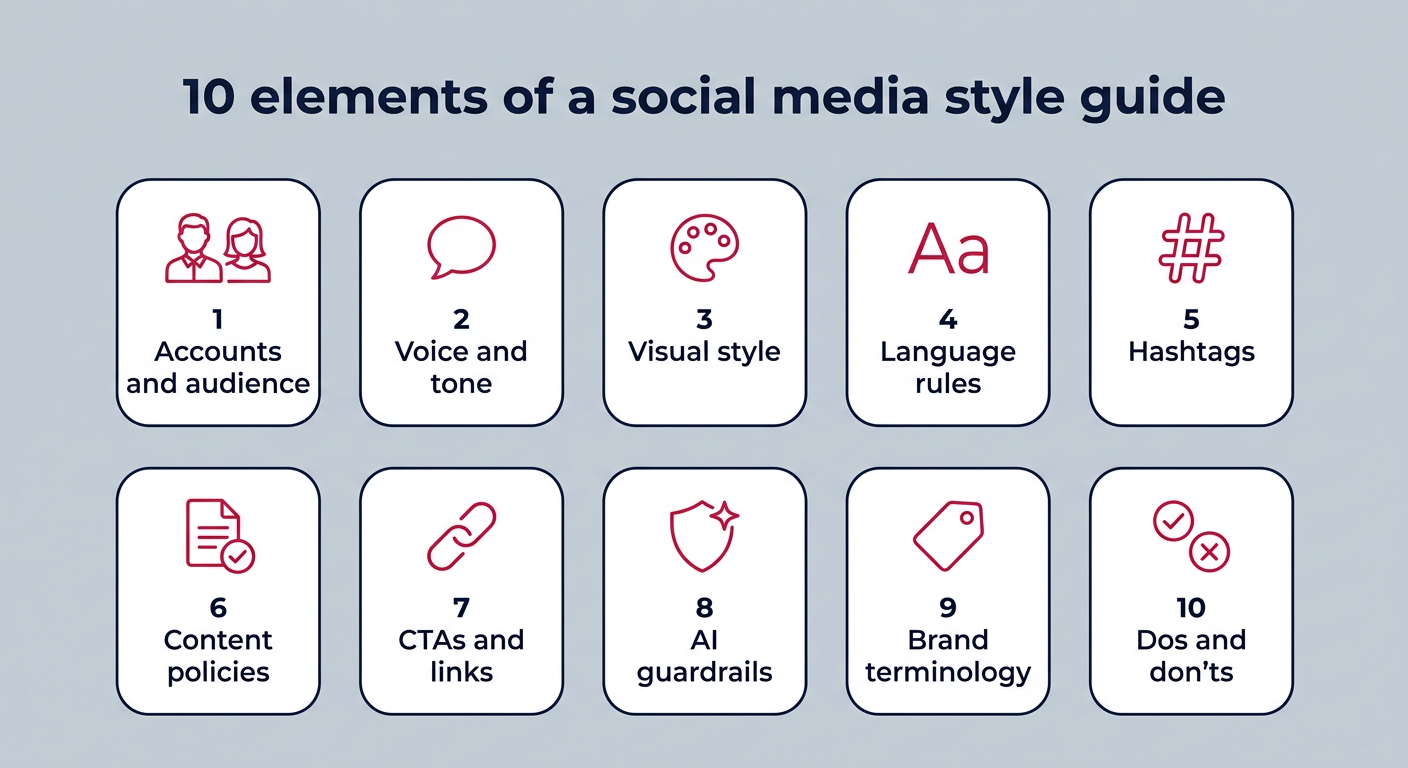
Effective guides are typically built upon ten foundational elements:
- Account and Audience Mapping: A definitive list of all active channels paired with specific audience personas. Knowing exactly who is being addressed on which platform prevents "broadcast" messaging that fails to resonate with target demographics.
- Voice and Tone Calibration: While voice—the brand’s core personality—should remain constant, the tone must adapt to context. For instance, a brand’s response to a customer service crisis requires a different tone than a product launch announcement.
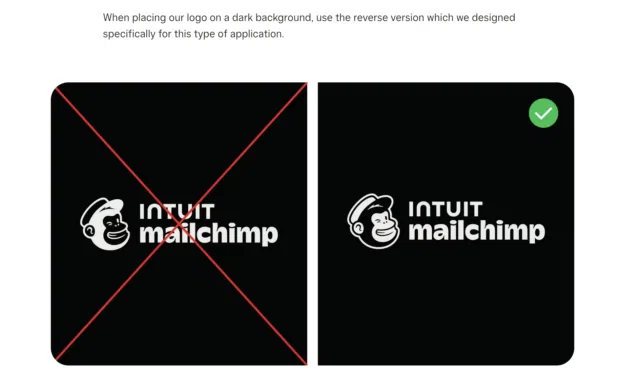
- Visual Asset Governance: Clearly defined specifications for logo usage, color palettes, and typography ensure that every graphic element remains instantly recognizable.
- Language and Grammar Standards: Establishing a baseline, such as the AP Stylebook or Chicago Manual of Style, prevents the "careless" appearance of inconsistent capitalization, date formatting, or spelling conventions.
- Hashtag and Discoverability Conventions: Guidelines on how many hashtags to use, whether to use branded tags, and how to track campaign-specific tags are essential for social SEO.
- Content Policy and Curation: Rules regarding the sourcing of user-generated content (UGC), legal disclaimers for reposts, and the ethics of content curation.
- CTA and Link Architecture: Standardized phrasing for calls-to-action (e.g., "Link in bio" vs. "Visit our website") prevents confusion in the customer journey.
- AI Usage Guardrails: A new but critical section defining which AI tools are approved, how to verify AI-generated content, and the human oversight requirements for every draft.
- Brand-Specific Terminology: A lexicon of approved product names, internal jargon to avoid, and industry-specific terminology that ensures professional accuracy.
- Actionable Dos and Don’ts: A simplified, scannable summary that serves as a quick-reference guide for team members under tight deadlines.
The Role of AI and Automation in Modern Brand Governance
The rise of generative AI has fundamentally altered the requirements for style guides. While AI can drastically increase content velocity, it also risks producing "generic" or off-brand output if not properly constrained. Leading organizations are now feeding their style guides directly into AI prompts, creating a feedback loop where the model learns the brand’s specific "this-not-that" preferences. This practice significantly reduces the time required for editors to polish AI-generated drafts, turning the style guide into a functional piece of software-ready documentation.
Operationalizing Consistency Across Global Teams
For enterprises with international or multi-departmental teams, the style guide acts as an onboarding document that preserves institutional knowledge. When key personnel move on, the style guide ensures that the brand’s "DNA" remains intact. By centralizing these guidelines, companies can authorize multiple teams to post independently without the constant requirement of executive approval for every minor update.
This decentralized model is supported by modern social media management platforms that offer integrated content libraries. These tools allow administrators to store approved assets and templates in a single, accessible location, ensuring that a designer in London and a social manager in New York are working from the same approved file versions.

Adapting to Platform-Specific Nuances
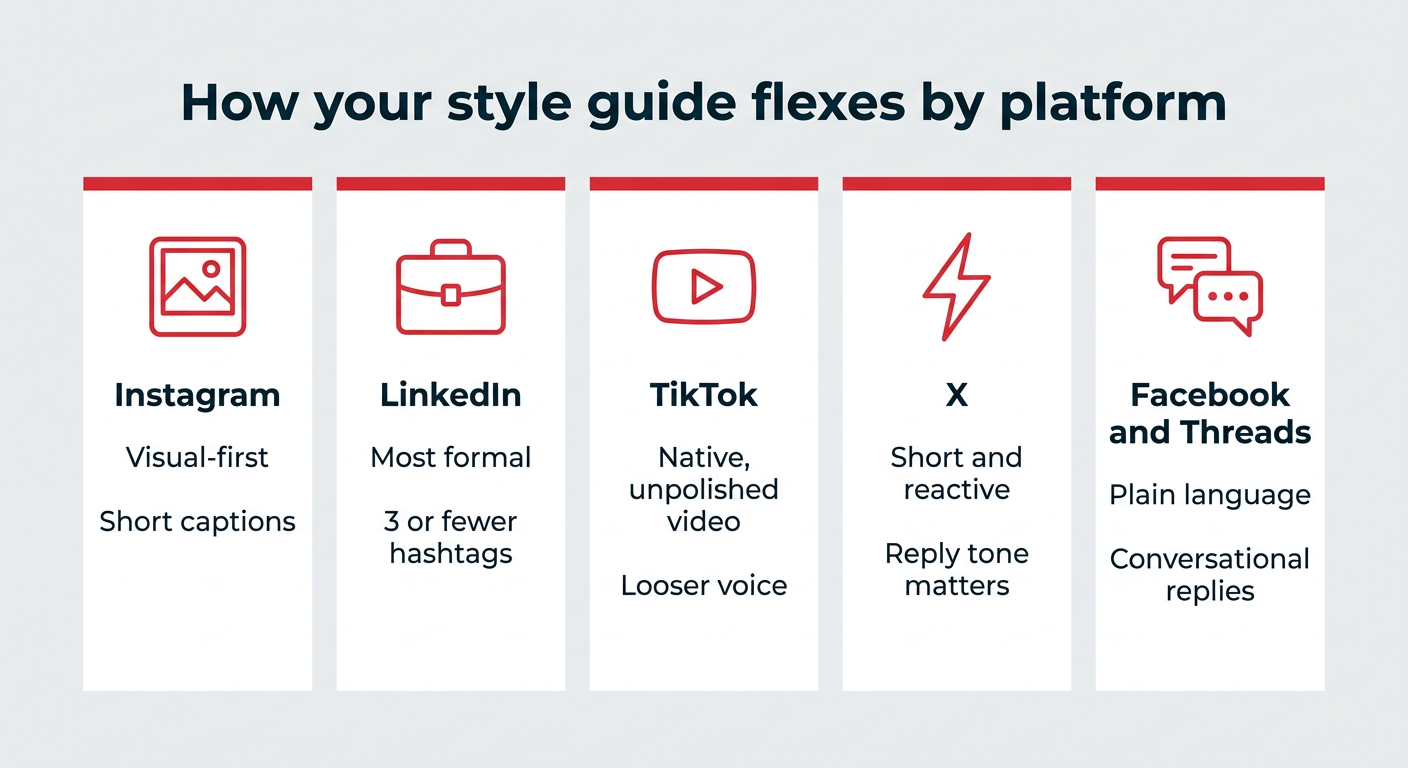
While the core brand identity must remain universal, the style guide must also account for the inherent differences in platform culture. A professional, long-form post on LinkedIn requires a vastly different structure than a fast-paced, trend-driven video on TikTok.
Expert practitioners suggest a "layering" approach: keep the brand-level rules for voice and visual standards as the base, then apply specific, brief additions for each platform. For example, a brand may use a "formal" voice on LinkedIn while adopting a "playful" or "community-first" tone on Instagram. By documenting these variations, organizations avoid the trap of being "too stiff" on casual platforms or "too casual" in professional settings.
Maintaining the Document as a Living Asset
A common pitfall in corporate communication is treating the style guide as a static, "set-it-and-forget-it" document. In reality, a style guide must evolve alongside shifting social trends and changes in organizational strategy.
Industry leaders typically schedule a quarterly review of their style guide. This process involves a 30-minute audit where the team compares the guide’s mandates against the actual content published over the preceding three months. If certain rules are consistently ignored or proven ineffective by engagement data, the guide should be updated to reflect reality. Off-cycle updates are also triggered by significant events, such as a company rebrand, the launch of a new product line, or a shift in the company’s stance on social issues.
Broader Implications for Brand Trust
The ultimate objective of a style guide is to foster trust. When a brand’s messaging is predictable and reliable, consumers develop a psychological association with that entity. In a crowded marketplace, this familiarity acts as a significant competitive advantage. Organizations that fail to implement such guidelines often suffer from "brand dilution," where the audience loses interest because they cannot determine what the company actually stands for or how it communicates.
As digital platforms continue to proliferate and the speed of content consumption increases, the need for a documented, adaptable, and strictly enforced style guide is no longer optional. It is the cornerstone of sustainable social media marketing. By investing in the documentation of voice and visuals today, brands protect their most valuable asset—their reputation—against the volatility of the digital age. Through clear guidelines, continuous auditing, and strategic alignment, organizations can ensure that every post, reply, and engagement contributes to a unified, long-term narrative that resonates with their target audience.