Microsoft Breaks Security Records with 570 Vulnerability Fixes in July 2026 Patch Tuesday as AI Accelerates Threat Discovery

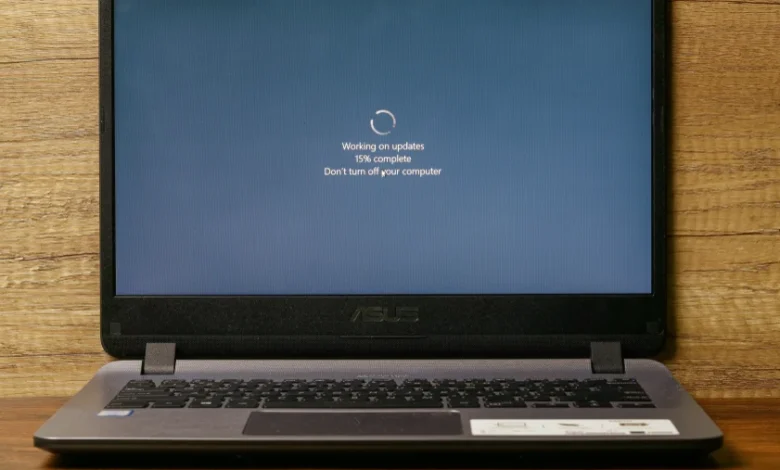
Microsoft Corp. has released a massive wave of security updates to address at least 570 security vulnerabilities across its Windows operating systems and broader software ecosystem, marking a historic shift in cybersecurity maintenance. This staggering figure represents nearly triple the number of flaws addressed in the company’s previous record-setting release just one month prior. Microsoft executives have explicitly attributed this exponential increase in vulnerability identification to the integration of artificial intelligence (AI) in the discovery process, signaling a new era where machine learning dictates the pace of digital defense and remediation.
The July 2026 Patch Tuesday release is not merely a quantitative milestone; it represents a qualitative shift in how software giants manage the security of billions of devices. Of the 570 vulnerabilities addressed, nearly 60 were designated with a "critical" severity rating. This classification indicates that the flaws could be leveraged by malicious actors or automated malware to seize remote control over a Windows device, often requiring little to no interaction from the end-user. Perhaps most concerningly, the release includes fixes for three zero-day vulnerabilities—security holes that were known to the public or already being exploited by hackers before a patch was available.
The Dawn of AI-Powered Vulnerability Discovery
The primary driver behind this unprecedented surge in security patches is the deployment of advanced AI tools within Microsoft’s internal security research divisions. Pavan Davuluri, Microsoft’s Executive Vice President, addressed the volume of updates in a public statement on July 9, noting that Windows users should prepare for a sustained "higher volume of security updates" moving forward.
"The pace of vulnerability discovery is changing with advances in AI making it possible to find more issues, faster, across more code, with new mechanisms that can accelerate both discovery and analysis," Davuluri explained.
By utilizing AI-driven fuzzing techniques and automated code analysis, Microsoft can now scan millions of lines of legacy and modern code for patterns that suggest potential weaknesses. While this allows the company to harden its software more comprehensively than ever before, it also creates a massive logistical challenge for IT administrators who must now test and deploy hundreds of patches simultaneously without disrupting business operations.
Analysis of Key Vulnerabilities: Zero-Days and Remote Execution
The July release highlights several high-risk areas, most notably the three zero-day flaws. Two of these vulnerabilities allow for the elevation of privilege (EoP), a common tactic used by attackers to gain administrative control after initial access is established.
- CVE-2026-56155 (Active Directory Federation Services): This flaw is particularly dangerous for enterprise environments. Active Directory is the cornerstone of identity management for most large organizations. An exploit here could allow an attacker to bypass authentication protocols and move laterally through a corporate network.
- CVE-2026-56164 (Microsoft SharePoint): As a widely used collaboration platform, SharePoint is a high-value target. This zero-day has already been added to the Cybersecurity and Infrastructure Security Agency’s (CISA) Known Exploited Vulnerabilities (KEV) catalog, indicating that active exploitation is occurring in the wild.
- CVE-2026-50661 (Windows BitLocker): This security feature bypass affects Microsoft’s drive encryption tool. While it requires physical access to the device, it poses a significant threat to lost or stolen laptops, potentially allowing unauthorized parties to access encrypted data.
Beyond the zero-days, the cybersecurity community has raised alarms regarding CVE-2026-48561, a remote code execution (RCE) vulnerability in Microsoft Copilot. Jack Bicer, director of vulnerability research at Action1, noted that this flaw carries a CVSS threat score of 9.6 out of 10. The vulnerability allows an unauthorized attacker to execute code over a network by tricking a user into visiting a malicious website. This site would then trigger Microsoft Edge for Android to send specially crafted prompts to the Copilot AI, effectively hijacking the assistant to perform malicious actions.
The Exploitability Index Controversy
As the volume of patches increases, so does the debate over how Microsoft communicates risk. For years, Microsoft has utilized an "exploitability index" to help IT managers prioritize which patches to install first. However, the advent of AI is making these human-centric risk assessments increasingly obsolete.
Satnam Narang, a senior staff research engineer at Tenable, argued that Microsoft’s rating system is failing to keep up with the "machine speed" of modern threats. He pointed to the SharePoint zero-day, which Microsoft initially labeled as "exploitation less likely," despite the fact that it was already being used in active attacks.
Narang cited research from Anthropic’s Red Team, which demonstrated that their "Mythos" AI model could successfully generate proof-of-concept exploits for 13 out of 14 vulnerabilities that humans had rated as "unlikely" to be exploited. "What this means is that our way of looking at Patch Tuesday has changed," Narang said. "The exploitability index is centered around humans, not AI tools. As these tools continue to improve, defense needs to improve alongside it."
A Broader Industry Trend
Microsoft is not the only software provider feeling the pressure of AI-accelerated discovery. The July 2026 update cycle reveals a broader industry-wide shift toward more frequent and voluminous patching schedules.
- Adobe: The company recently announced it would move to a twice-monthly security bulletin schedule, publishing updates on the second and fourth Tuesday of every month. Adobe also cited the use of AI in their development lifecycle as a reason for the increased cadence.
- Google: In June 2026, Google released a staggering 900 security fixes for its various platforms, setting a high bar for the industry.
- Cisco, Mozilla, and Oracle: All three have reported an increase in the frequency of their "out-of-band" and scheduled security releases over the first half of 2026.
Chris Goettl, Vice President of Security Product Management at Ivanti, observed that this trend is creating "patch fatigue" among IT professionals. The sheer volume of updates makes it difficult for organizations to perform due diligence, such as testing patches in a sandbox environment before deploying them to the entire fleet of company devices.
Chronology of the 2026 Patch Surge
The escalation in patch volume has been building throughout the year, as evidenced by the following timeline:
- January – March 2026: Microsoft maintains a standard average of 80–110 patches per month. Internal reports suggest the pilot phase of "Project Sentinel," Microsoft’s AI-driven code auditor, begins.
- May 2026: Microsoft announces a record 150 patches, hinting at "new internal efficiencies" in bug hunting.
- June 2026: The record is smashed again with nearly 200 patches. Industry analysts begin to suspect automated discovery is at play.
- July 1, 2026: CISA issues an emergency alert regarding SharePoint vulnerabilities, signaling that attackers are finding flaws as fast as—or faster than—the defenders.
- July 9, 2026: Microsoft releases the historic 570-patch update and officially confirms the role of AI in the process.
Implications for the Future of Cybersecurity
The release of 570 patches in a single day marks a turning point in the "arms race" between cybercriminals and security researchers. While the ability to find and fix 570 holes is a testament to Microsoft’s engineering prowess, it also highlights the fragility of modern software. If AI can find 570 bugs today, it is highly probable that adversary-controlled AI models are finding an equal or greater number of "n-day" and zero-day vulnerabilities.
For end-users and enterprise IT departments, the implications are clear: the window of time between the disclosure of a vulnerability and its active exploitation is shrinking toward zero. "Automated discovery requires automated defense," says Goettl. "If we are moving toward a world where 500+ vulnerabilities are found monthly, the human-in-the-loop model for patching will eventually break."
Security experts recommend that while immediate patching is vital for zero-day threats, the general public may want to wait 48 to 72 hours before applying the full July 2026 suite. Given the massive volume of code changes, the risk of "regression bugs"—where a security fix inadvertently breaks a different system function or causes stability issues—is significantly higher than usual.
As Microsoft and its peers continue to integrate AI into their security workflows, the tech industry must now grapple with a paradox: the tools designed to make software more secure are uncovering so many flaws that the process of fixing them may become the next great vulnerability.
Related posts: