Optimizely security breach triggers massive supply chain attack impacting 178 top-tier web destinations

In a sobering reminder of the fragility of the modern web’s interconnected architecture, at least 178 high-traffic websites—including major news organizations, financial institutions, and communication platforms—were recently compromised in a sophisticated supply chain attack. The breach originated within the infrastructure of Optimizely, a widely used platform for A/B testing and digital experience management. For a 24-hour period beginning November 16, 2026, visitors to these trusted sites were unwittingly exposed to malicious JavaScript payloads designed to exfiltrate sensitive data, hijack cryptocurrency transactions, and deploy zero-click exploits against mobile devices.
The incident highlights a critical vulnerability in the global web ecosystem: the pervasive reliance on third-party code. By leveraging Optimizely’s position as a primary script provider for major corporations, attackers were able to bypass traditional perimeter defenses, effectively turning the trusted infrastructure of global brands against their own users.
Chronology of the Compromise
The security incident surfaced on November 16, 2026, when researchers at the security firm Report URI identified an anomaly in the delivery of JavaScript files across a wide swath of the internet. Scott Helme, a researcher at Report URI, documented that the malicious payload was not static; it was dynamic and rapidly evolving. Throughout the day, the attackers rebuilt the malicious script 26 times, likely to evade signature-based detection mechanisms used by endpoint security software and browser-based defenses.
The malicious code was strategically designed to execute immediately upon page load. Because Optimizely snippets are often placed in the header of a website to ensure they render before a user interacts with the page, the exploit was delivered without the need for any user interaction, such as clicking a link or downloading a file.
By the time Optimizely moved to contain the breach, the scope of the infection had reached 178 distinct organizations. Among the affected entities were household names such as the BBC, CNN, Equifax, Ledger, and Zoom. The rapid containment efforts, which included revoking compromised tokens and resetting user access, effectively halted the active injection of code, but the 24-hour window of exposure provided ample opportunity for the attackers to harvest data from thousands of unsuspecting visitors.
Anatomy of the Payload
The threat actors behind this campaign utilized a multi-stage, multi-purpose malware kit. According to technical analysis, the JavaScript payload was programmed to perform three distinct malicious functions:
- Data Exfiltration: The script scanned the browser environment for session cookies, cached login credentials, and personal data that could be used for account takeovers.
- Financial Fraud: The code included routines specifically designed to monitor for cryptocurrency wallet addresses displayed on a page. When detected, the script would silently swap the legitimate address for one controlled by the attackers, redirecting funds during peer-to-peer or exchange-based transactions.
- Exploitation of Device Vulnerabilities: Perhaps most concerning was the inclusion of specialized exploit kits known as "DarkSword" and "Coruna." These kits were designed to target known vulnerabilities in legacy versions of Apple’s iOS. By chaining together approximately half a dozen security flaws, these kits could gain root-level, "zero-click" access to an iPhone or iPad, effectively seizing control of the device and allowing for the silent extraction of photos, messages, and biometric data.
The Role of Third-Party Dependencies
The incident at Optimizely serves as a case study for the risks inherent in the "dependency-first" model of modern web development. Today, the average website homepage loads at least 22 distinct JavaScript files from various third-party vendors. These files are essential for analytics, ad tracking, A/B testing, and social media integration.
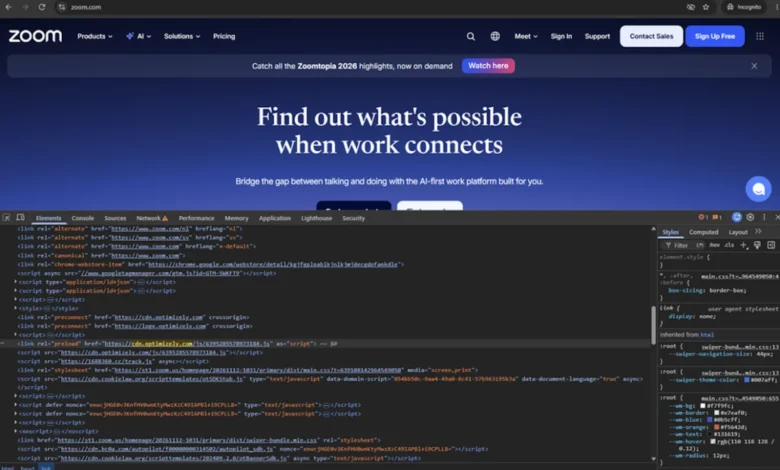
Zach Edwards, a researcher at Infoblox and co-founder of the ad-tracking analysis service DecryptAds, noted that the technical necessity of Optimizely’s service created the perfect environment for this attack. "To make the product work as expected, this code is set up to fire immediately on-page load, and not restrict rendering behind a consent dialog box," Edwards explained. "Most of the impacted clients would immediately serve up the payload as soon as someone loaded the page."
Because these snippets are often embedded as first-party code, they inherit the trust that users place in the primary domain they are visiting. If a user trusts CNN.com, they implicitly trust the scripts running on the page. When that trust is betrayed through a compromised third-party vendor, the browser has no inherent way of distinguishing between legitimate analytics code and malicious exfiltration scripts.

The Failure of Content Security Policies
The primary defense against this type of supply chain attack is the Content Security Policy (CSP). A CSP is an HTTP response header that allows site administrators to declare approved sources of content that browsers are allowed to load. A properly configured CSP would have prevented the browser from executing the unauthorized scripts injected by the attackers, even if those scripts were being served from a domain associated with the site.
However, data from Report URI paints a grim picture regarding the adoption of these safeguards. Of the 178 sites affected by the Optimizely incident:
- 68 sites (38%) had no CSP configured whatsoever.
- 50 sites (28%) maintained an overly permissive CSP that allowed the malicious payload to bypass restrictions.
- Only 24 sites (15%) possessed a sufficiently hardened CSP that successfully blocked the malicious script.
The low adoption rate of robust CSPs is often attributed to the complexity of implementation. Marketing and development teams fear that a misconfigured policy might break site functionality or interfere with revenue-generating ad-tracking scripts. Consequently, many organizations opt for "permissive" policies that offer a false sense of security while leaving the door wide open for sophisticated attacks.
Official Response and Remediation
Optimizely acknowledged the incident in a statement released shortly after the discovery of the breach. The company confirmed that an unauthorized party exploited a vulnerability within the "Optimizely Experimentation" platform to inject malicious code into specific customer projects.
"We acted swiftly to contain the incident and have fully remediated the identified vulnerability," the company stated. Their remediation process included:
- Disabling the vulnerable code path.
- Deploying a software fix to ensure the integrity of future script deliveries.
- Removing the injected malicious code from all affected client projects.
- Invalidating all active user sessions and revoking API tokens.
- Implementing enhanced security monitoring in collaboration with Cloudflare to prevent similar injections in the future.
The company has since engaged third-party cybersecurity experts to conduct a comprehensive forensic investigation into the root cause of the unauthorized access. A full report was provided to affected clients to assist in their own internal audits and customer notifications.
Implications for the Future of Web Security
The Optimizely incident is not an isolated event; rather, it is part of a growing trend of "JavaScript supply chain attacks" that target the weakest link in the digital supply chain. As artificial intelligence lowers the barrier to entry for writing complex, evasive malware, the frequency and sophistication of these attacks are expected to rise.
Security experts argue that the industry must shift toward a "zero-trust" model for third-party scripts. This involves not only the widespread adoption of CSPs but also the use of Subresource Integrity (SRI) hashes, which ensure that the file fetched by the browser matches a known, secure version, preventing tampering.
For the end user, the protection options remain limited. While script-blocking browser extensions like NoScript provide a high level of security, they are often too technical for the average consumer, as they require manual whitelisting of every site element. Modern ad-blocking software, which filters out many third-party trackers and scripts, currently serves as the most practical firewall for the average internet user.
Ultimately, the responsibility for securing the web rests with the operators of these platforms. As Scott Helme noted, "Organizations are running all this code, but they don’t know what it’s doing. This is why we keep seeing such large-scale breaches in places where there are no checks and rules in place on the code we’re running." The Optimizely breach serves as a definitive signal that the "Wild West" era of unchecked third-party script execution must come to an end if the integrity of the modern web is to be preserved.
Related posts: