Swiss Sneaker Brand On Scores Major Industry Coup by Signing Global Soccer Superstar Kylian Mbappé to Challenge Nike and Adidas Dominance

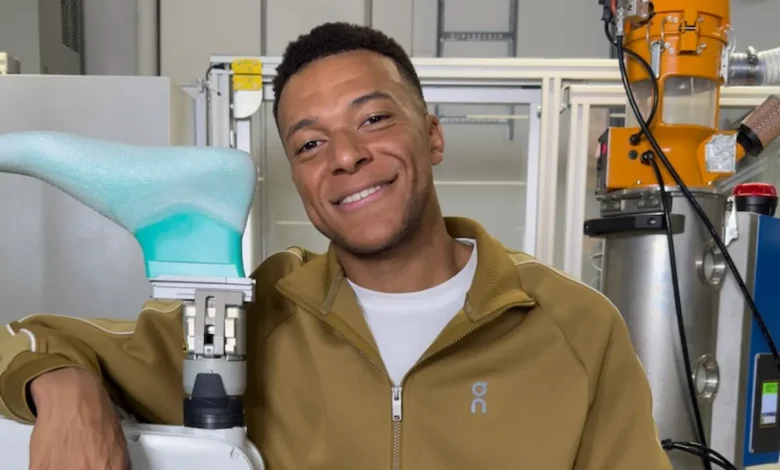
The athletic footwear and apparel landscape is bracing for a seismic shift as Swiss performance brand On officially announces the high-profile signing of global soccer icon Kylian Mbappé. The move, made public on September 18, 2026, marks a pivotal and aggressive escalation in On’s ongoing strategy to diversify beyond its running roots and capture a lucrative slice of the global soccer market. Mbappé, who has maintained a lifelong relationship with Nike dating back to his childhood, represents the pinnacle of sporting influence. By securing one of the most recognizable faces and lethal goalscorers in modern football, On is signaling its intention to go toe-to-toe with entrenched industry titans Nike and Adidas in a sector historically guarded by decades of legacy, heritage, and multi-billion-dollar marketing budgets.
The partnership represents more than just a standard endorsement deal; it is a calculated strategic maneuver designed to anchor On’s forthcoming entry into the highly competitive football category. As On prepares to roll out its initial soccer-focused product lines, industry experts, market analysts, and sports marketing professionals are intensely scrutinizing the viability of the Swiss brand’s blueprint. While welcoming a generational talent like Mbappé creates immediate global buzz and instant credibility, the road ahead is fraught with unique manufacturing, distribution, and cultural challenges that have historically humbled even the most ambitious athletic brands.
Background Context: On’s Meteoric Rise and the Soccer Ambition
Founded in Zurich in 2010 by former professional athlete Olivier Bernhard and his friends Caspar Coppetti and David Allemann, On initially built its reputation on disruptive running technology, specifically its patented CloudTec cushioning system. Backed early on by tennis legend Roger Federer as both an investor and active product collaborator, On achieved phenomenal growth, transitioning from a niche European running shoe company into a global publicly traded powerhouse. The brand captured the hearts and feet of urban commuters, marathon runners, and fashion-forward consumers alike, scaling its operations rapidly across North America, Europe, and Asia.
However, replicating the runaway success of the running segment in other athletic categories has always been a primary strategic objective for On’s executive leadership. Running is a notoriously fragmented market, characterized by low brand loyalty to a single manufacturer and high openness to innovation. This allowed On to carve out a massive market share without triggering direct counter-offensives from legacy duopolists Nike and Adidas.
Soccer, conversely, is an entirely different battleground. Global football is deeply entrenched in tribalism, heritage, and decades of accumulated performance trust. Consumers in this category rarely experiment with unproven footwear; they purchase boots from brands that have spent half a century outfitting World Cup finals, legendary clubs, and local academies. Entering this space requires a monumental financial and structural commitment. By bringing Mbappé into the fold, On is attempting to fast-track its cultural legitimacy, bypassing years of grassroots brand building through the sheer star power of the French forward.
Industry Reactions and Market Analysis
Financial analysts and market researchers have offered a diverse spectrum of perspectives regarding the high-stakes partnership. BMO Capital Markets analysts Kelly Crago and Owen Tunstill expressed optimism about the strategic audacity of the move, noting that signing Mbappé is arguably the most effective way for a challenger brand to make an immediate splash in a locked-down category.
"Other smaller players like Skechers and New Balance have tried to break into the category with smaller, less splashy endorsements, but have yet to move the needle from a market share standpoint," Crago and Tunstill noted in emailed commentary following the announcement. While brands like New Balance have successfully integrated high-profile players like Bukayo Saka and Raheem Sterling, and Skechers has slowly built a localized roster of professional talent, none have managed to fundamentally threaten the combined dominance of Nike and Adidas, which together command the vast majority of global soccer cleat sales.
Conversely, analysts at Evercore ISI, led by Michael Binetti, pointed out that On will likely navigate the category by heavily emphasizing lifestyle designs and off-pitch fashion rather than relying solely on traditional performance cleats and licensed fanwear. Binetti highlighted the notoriously low profit margins inherent in licensed apparel and professional club merchandising, suggesting that On’s well-documented prowess in lifestyle fashion will be critical to achieving sustainable profitability in the football vertical.
Adding a cautionary note, Jefferies analysts led by Randal Konik argued that securing a superstar is merely the warmup, drawing parallels to past industry attempts to capture basketball dominance. Jefferies compared the Mbappé signing to Under Armour’s high-profile partnership with NBA superstar Stephen Curry. While Curry became a cultural phenomenon and a transcendent talent, Under Armour ultimately struggled to establish its basketball division as a dominant, long-term threat to Nike’s Jordan Brand and core basketball ecosystem.
"The challenge is that football consumers buy boots from brands with decades of performance credibility," Jefferies stated in a research note. "Nike, Adidas, and Puma have a long track record of building athlete ecosystems, club relationships, and product legitimacy. Launching a football line is one thing; convincing players to switch equipment in a category where performance credibility drives purchase decisions is another. If consumers do not view [On] as a performance football brand, premium-priced football footwear will struggle to gain traction."
The Voice of the Star: Kylian Mbappé’s Vision

For his part, Kylian Mbappé remains firmly focused on the creative and collaborative potential of his new alliance with the Swiss brand. Transitioning away from Nike—the brand that signed him as a prodigy when he was just a child in the Parisian suburbs—represents a monumental personal and professional evolution for the French national team captain and Real Madrid talisman.
"From the beginning, what drew me to On was the opportunity to build something entirely new together that will help shape tomorrow’s game," Mbappé said in an official statement released Friday. "I want to bring my experience and perspective into what we create, push what’s possible through innovation, and always stay true to the joy of football. We have a shared dream, and this is only the beginning."
Executives at On echoed this sentiment, emphasizing that Mbappé’s involvement goes far beyond wearing a logo on the pitch. The athlete is expected to actively participate in the design, engineering, and cultural positioning of On’s upcoming football ecosystem, ensuring that the products meet the rigorous, uncompromising technical demands of elite-level professionals while resonating with youth culture globally.
The Broader Economic and Competitive Implications
The decision by On to target soccer reflects a broader macroeconomic reality facing high-growth athletic brands in the mid-2020s. To maintain premium valuations and satisfy public market growth expectations, companies that established themselves in a single vertical must successfully expand into adjacent categories with massive global addressable markets. Soccer represents the single most popular sport on the planet, boasting billions of fans and participants across Europe, Latin America, Africa, and Asia.
However, the capital expenditure required to secure top-tier talent, build global distribution networks, and develop advanced cleat technology—such as specialized traction plates, lightweight synthetic uppers, and biomechanically optimized stud configurations—is exceptionally high. Jefferies analysts noted that this partnership serves as definitive proof that On is willing to spend aggressively to purchase a seat at the table, transitioning from an organic growth model to a high-stakes, star-driven marketing strategy.
Furthermore, On must navigate the complex web of club sponsorships, tournament regulations, and athlete management agencies. While Mbappé provides an unparalleled focal point, a brand cannot sustain a soccer division on the back of a single player alone. Over the coming years, On will likely need to expand its roster to include rising academy prospects, veteran leaders, and prominent managers, while potentially securing kit supply deals with professional clubs to ensure its products are visible week in and week out on television screens worldwide.

Outlook: Can On Rewrite the Rules of Football Retail?
As the sports apparel industry watches closely, the partnership between On and Kylian Mbappé will serve as a definitive litmus test for modern athletic brand expansion. Can a company rooted in Swiss precision running technology successfully pivot to the gritty, heritage-driven world of global football?
The hurdles are immense. Nike and Adidas possess deep institutional knowledge, unmatched supply chain dominance in developing football-specific footwear, and entrenched relationships with elite European clubs and international governing bodies like FIFA and UEFA. Consumers are notoriously unforgiving of sub-par performance equipment, and a poorly performing cleat can quickly tarnish even the most meticulously crafted lifestyle hype.
Yet, On has repeatedly defied skeptics throughout its brief history. By leveraging the creative vision of Roger Federer in tennis and now partnering with the most dynamic footballer of his generation, the brand has demonstrated an uncanny ability to attract transcendent talent willing to build rather than merely endorse.
Whether Kylian Mbappé can help On shatter the duopoly of Nike and Adidas remains one of the most compelling storylines in the business of sports. For now, the opening whistle has sounded, and the race to capture the future of football footwear has officially begun.